Episode 23: Kim Harrison

An hour-long conversation with Kim Harrison, author of the New York Times #1 best selling Hollows series, as well as young adult novels, accelerated-science thrillers, several anthologies, and two original graphic novels set in the Hollows universe, plus traditional fantasy, written as Dawn Cook.

Website:
www.kimharrison.net

Twitter:
@BurningBunnies

Instagram:
@kim_harrison_author

Facebook:
@KimHarrisonHollows

Kim Harrison’s Amazon Page

The Introduction

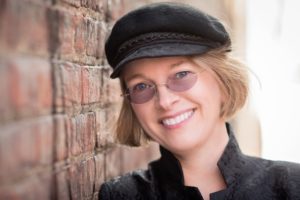
Kim Harrison
Photo by Myra Klarman Photography

Kim Harrison is best known as the author of the New York Times #1 best selling Hollows series, but she has written more than urban fantasy and has published more than two dozen books, spanning the gamut from young adult novels, accelerated-science thrillers, and several anthologies, to scripts for two original graphic novels set in the Hollows universe. Kim Harrison is a pen name; she has also published traditional fantasy under her real name, Dawn Cook.

Dawn was born and raised in the upper Midwest. After gaining her bachelor’s degree in the sciences, she moved to South Carolina, where she remained until relatively recently, moving back to Michigan because she missed the snow.

The (Lightly Edited) Transcript
So, Dawn, I always like to start by asking my guests to go back into the mists of time, which is…you know, those mists are deeper for some of us than others…and  find out how you first got interested in…well, first of all, I presume, reading science fiction and fantasy, and then how you finally got around to writing it, which we’re all glad you did.

Yes, yes, it was reading. I was an avid reader of science fiction and fantasy back in the heyday of the ’70s and the early ’80s, and I read everything, just gobbled it up, and you can see that if you pick my work apart, because I try to pace everything like a good science fiction novel, ’cause I think that’s the way all stories should read.

But, yeah, it wasn’t until later that I thought I could actually make a go at writing. So, I did not take any classes for writing at all. I avoided it like the plague. I’ve got a science degree, actually, and I use it every day, and my dad says, “You’re kidding! You went to school for science and now you’re writing,” and I say, “But, Dad, I use my degree every single day. But when I did decide that writing was something I wanted to do, I had a big learning curve that I had to handle because, like I said, I didn’t take any classes and I still, you know, I talk to literary people and they start spouting things like “the fourth wall” and I star at them blankly because I have no clue, I have to go Google it find out what they’re talking about. But a good story is a good story and if you can get it down, you know, more power to you.

It wasn’t until I got to move down to South Carolina and I found a writers’ critique group that…oh, it was dedicated. It was my Camelot, actually, because we’d meet every single week and we’d all get a chance to share our work. And I made the connections there that allowed me to break into print and hone my work and toughen up my skin. If it wasn’t for them I don’t think it would have happened. But they’re really hard to find these days.

Yes, and of course,, when I teach writing and when people ask about writing groups, I always say that you have to be careful, because if you have writers in the group and you’re all at a kind of a beginner level, you don’t help each other as much. You need to have people who are at a higher level than you, perhaps, to help lift you up.

Yes, yes. And I was fortunate enough that there was somebody like that.

Now, what were some of the books that you read as a kid that kind of drew you into this?

Oh, Anne McCaffrey was a favorite early on. I read a lot of Isaac Asimov. I didn’t understand him at the time, but I read him. Ray Bradbury was my favorite, back then, because he was the first person who showed me that the worst monsters are the ones that live next door to people. People are monsters…well, they can be. So I read a lot of Ray Bradbury. Jack L. Chalker, loved his stuff, so probably a lot…I’ve got a lot of old names here that people are going to be scratching their heads over…Aspirin, Robert Aspirin. He actually went to school, college, near my hometown, so I got to meet him when he was thin and gawky and just starting out. That was a thrill.

Well, they don’t have me scratching my head because I think I’m a couple of years older than you are, so it’s right in my era as well. I’ve read many of those same books. Now, you mentioned that your degree was in science. What specific discipline?

Well, I’ve got a degree in science engineering and technology, but I basically ran the the…I worked in the labs and I ran the greenhouse as a work study program. But mostly biology, mostly botany, and I am an avid gardener. You know, it’s hard to find a job in the sciences. My first job was at Dow Chemical and I was chaperoning an experimental fiber. I like to tell people that’s where I learned how to type because I didn’t know how to type until then, but, you know, I’ve had really weird jobs. My favourite job was running live-animal traplines for two years, catching chipmunks and mice for a research project for one of my professors.

Where did you go to university?

Saginaw Valley State University. That’s in Michigan.

Is that where you grew up, in Michigan?

Yes, I did. I grew up just outside of Ann Arbor, Michigan, and went to school at Saginaw Valley State University and then moved down to South Carolina for about 13 years following my husband’s job. And we recently–I say recently but I think it’s been like 10 years now–we moved back to another small town outside of Ann Arbor and it just feels like home. It’s really nice to be back.

So, tell me a little bit about the the first book that you broke into with.
The first book! It was a traditional fantasy called The First Truth and it’s still in print, actually. Tt was the first one of a four-book series and it was…oh, I had everything in it. I had telepathic dragons that could shape shift all in a pre-industrial setting with dragons and wizards and that kind of thing…”and I know they’ll love it!” I went back recently to look something up, a reader had a question, and so I was thumbing through it and I got lost for an hour reading it and it was like, “Oh, yeah, I remember that, oh, yeah, it was so fun.” But yeah, that was the first thing actually that I ever wrote, to tell you the honest truth, because I didn’t write when I was growing up. This particular novel idea came to me when I was like 13 or 14 and I wrote it down when I was in my early 20s and I wrote and rewrote it and rewrote it for about four years and that’s what I honed my writing skills on. A lot of people, I’ve noticed, will write a lot of different manuscripts when they’re honing their skills and try out a lot of different ideas, but I just worked on the one manuscript trying out different things until I found what worked for me.

And that was the one you were working with the writers group?

Yes, it is.

What kind of feedback did you get from them that was helpful?

Well, the first one…one of the very first things that somebody said to me was, he leaned back, he put his hand on his hip, and he said, “This is what you’re going to use to break into print?” And I leaned forward, and I said, “Yes, it is absolutely.” I don’t want to make it sound like they were not supportive because they really, really were, it was just something very different from what what he was writing. And so, in another book that I wrote I killed him off. But it was all in fun. But, yeah.

I actually saw a T-shirt that said, “If you were in my novel I would have killed you off by now.”

That’s the one thing we get to do, legal.

So how did you go from that…how did you break in? How did that book come to the attention of publishers?

That one…well, I found an agent at a writer’s conference, and he took it on and said, “If you can do this, this, and this, I will see about, you know, I will take you as a client and I will see about getting it published,” and so I did this, this, and that, and about a year or two later it was. Now, the Truth books, they did OK, but it wasn’t until I wrote, I started writing an urban fantasy under the Kim Harrison name that I really broke into print, really in a big way. And that one was just a natural extension of taking what I like to write,,,what I like to read, which was the science fiction, and what I like to write, which was the fantasy, and merging the two. Which is kind of what urban fantasy is, you take your fantasy creatures and put them in a modern-day setting. And this was right about the time when Jim Butcher was just getting started, and Charlaine Harris, I think she only had, like, two books out, and Laurell K. Hamilton was really the front runner for the urban fantasy. So, I was getting in on the bottom row of the first tier of the big urban fantasy authors.

Yeah, it’s hard to think that, you know, say, in the ’90s, nobody ever heard of anything called urban fantasy, really, it’s all quite a new subgenre of the field.

Yeah, yeah.

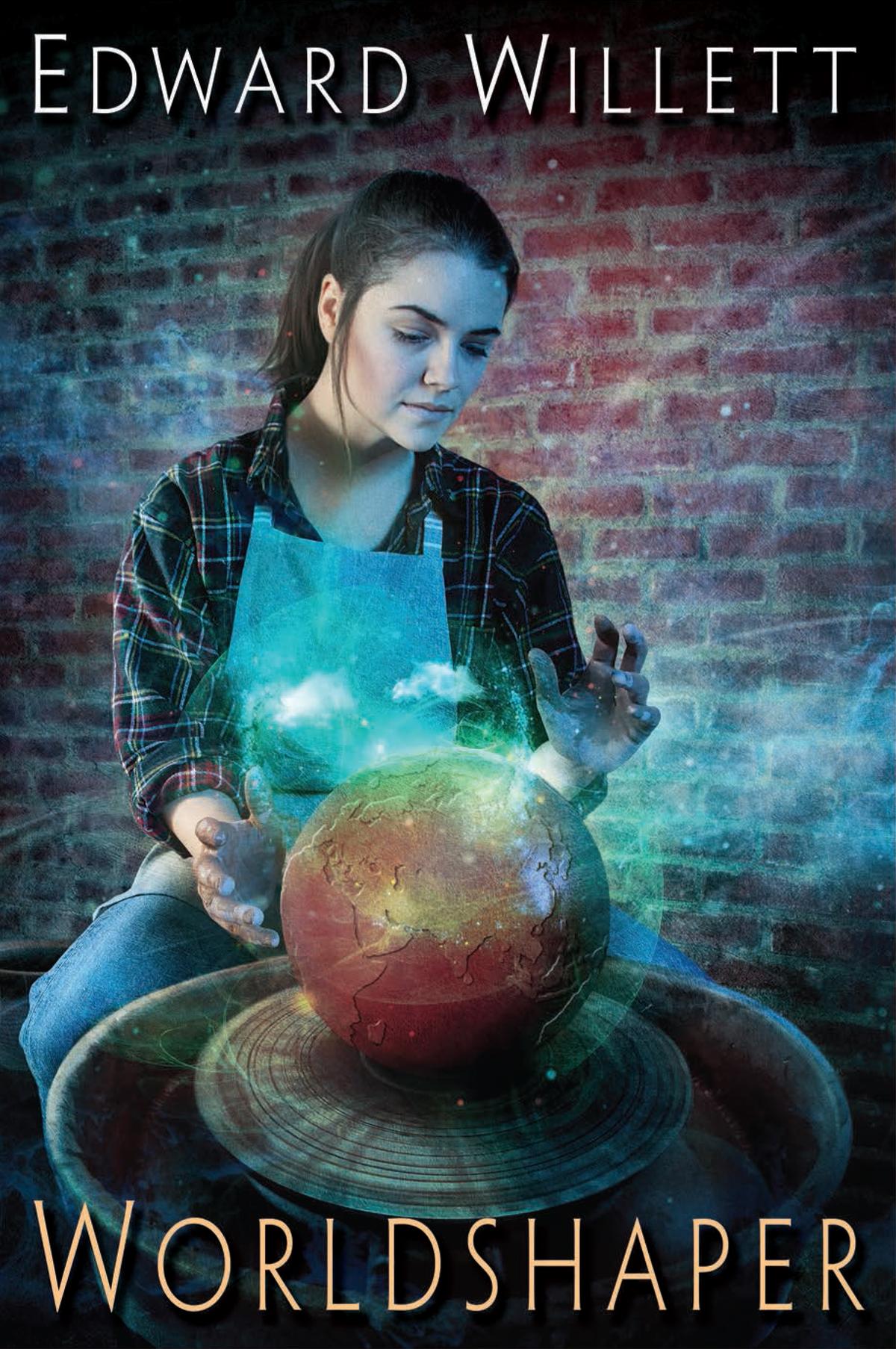
So, I always get asked this because I have a couple of pseudonyms…in fact, there’s an episode of The Worldshapers where my pseudonym, E.C. Blake interviews me, Edward Willett, which was fun.

That’s fun.

He sounds a lot like me, only he has a southern accent and I don’t.

Oh, wicked, wicked.

Anyway, people always ask me, you know, why do you write under a pseudonym? And I have my answer but I’ve already done that in my interview, so, how did your pseudonym come about and why did you use it?

The Kim Harrison pseudonym came out because I switched publishers, and the easiest way to switch publishers is to take on a pen name. At the time, the Dawn Cook books were doing okay, but a publisher is kind of leery of starting up…a new publisher taking on an established author is carrying the weight of the numbers of the last book, unless they take a pen name. And sometimes they’ll take a pen name because book buyers will buy more books from an unknown author than they will one that already has an established track record. Like, if you’ve only sold 10,000 books under your old name, they’ll only buy 10,000 books if you keep that name. But if you change your name, they might take a chance on it and buy 20. So, there’s a numbers game, there’s a legality game because, you know, my original publisher only had the first-look rights to anything written under Dawn, so I was able to make a clean break and go forward as Kim with my second one.

Also, there was the issue that it was a new genre and my new publisher wanted to create a new persona to push these books. And so, I got a wig and I wore leather a couple of times and had a really good time stretching in my skin and becoming Kim, so to speak. Now it’s funny, because I’ll run into people who know me as both, and sometimes I’ll get called Kim and sometimes I’ll get called Dawn, and it might seem confusing, but people have different names–you know, there’s mom or sister or wife. It’s all the same to me, although I know some people are really fussy about their pen names and it’s like, “No, no, use this name,” but I go by anything.

Was it a secret for a while?

It was a really tight secret for a long time. I don’t know how it stayed…we’re talking years. It’s really hard to keep a secret in New York because most of the publishers know and it’s easy to let things slip, and how we managed to keep the Dawn name and the Kim name separate for so long is beyond me. But it’s out now, and it came out when I decided it should come out and the Kim Harrison career was doing well, and my publisher said that it wouldn’t be hurt by having it associated with the original Dawn books. So, it was just easier to come out at that point and not try to keep it a secret anymore. And I recently lost the wig. So, I’ll run into people again who have known me as Kim and they stare at me like, “That’s not Kim.” And we’ll go to conferences and, it’s funny, for the first couple of years when I had lost the wig, I could walk around and not get recognized unless somebody recognized my husband, who is always with me at conferences, and then it’s like, “That can’t be Kim. It’s gotta be Kim. Oh, yeah, it’s Kim!”

Did you ever do any acting when you were growing up?

Oh, I am terribly shy. I…well, yeah. I’m really, really shy and so acting was not ever on my horizon. So, no acting, no. But, you know, I daydreamed a lot, and obviously you use those same muscles when you write.

Yes. One reason I ask that question is because, you know, the pseudonym thing is a little bit like acting, but whenever I talk to–and I act, I’m an actor as well–whenever I talk to authors who’ve done acting, we all find that we are using basically the same mental muscles, because you’re pretending to be somebody else, basically.

Right, right. And, actually, it did help out quite a bit when Kim Harrison name, titles, and books got more popular and I had to do more presenting and I had to do more public appearances. It was nice to have that persona to fall into where I could be more confident and be more comfortable being confident. Now, I don’t need all the trappings that go along with it, which is really nice.

Now, you’ve got books published by more than one publisher, do you not?

Yes. Yeah. I have a couple of graphic novels out through Del Rey. I’ve got my fantasies, which are under Ace. I have the Hollows, which is under HarperCollins, and Perfection, which is under Subterranean Press.

We’re going to talk a little bit about the editing process later, so maybe I’ll save the next logical question for when we get to there. Well, we are going to focus on your brand-new book, um…Perfunctory Affection.

Yes. I call it just Perfection because it’s a mouthful, but yes.

Well, and of course the typography they use for the title highlights the Per and Fection so that you get that Perfection when you look at it. And that ties into the story, of course. I’m going to get you to do a synopsis of it, so I don’t give away something you don’t want to give away.

Oh, no.

How would you describe the book?

Oh, well, that would depend on what kind of day I’m having. At its basis, it’s about Meg, who’s dealing with post-traumatic stress disorder from a couple of accidents in her life. And she is an artist and she’s poised to take the art world by storm if she can get over her debilitating anxiety. She teaches art at one of the local universities and she’s working with a psychiatrist, too, to get through this. And she’s getting better, but she meets a couple of people who seem, you know, perfect. And her psychiatrist puts her on a new medication that makes it easier to deal with the stresses in her life, and her life seems to be turning around, and then her boyfriend starts to appear to be controlling, and not in a good way. I mean, he’s kind and he’s nice, but he’s making it easier for her to not become the person that she wants to be. And the doctor herself, she starts to look a little gray, and the waters get muddier and muddier until you’re really not sure what happened when the book is finally over.

And that was my goal, to have the reader finish the book and close it and say, “Did that just happen, or did she just imagine it?” And so, I hope that’s the way people feel when they finish the book because that’s something new for me, and I am really glad I had the opportunity to try to write that.

Yeah, I did find that interesting, you know, I would decide that something was real and then I’d think, “Wait a minute, maybe it wasn’t,” all the way to the end, so, yes, I think you accomplished exactly what you set out to accomplish.

Oh, good, good.

What was…well, specifically, what was the genesis of this book, but more generally, where do book ideas come to you from?
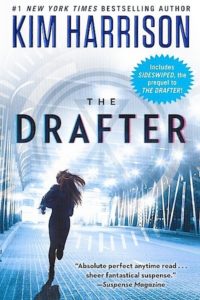
This one…this one I think came from–a tiny little nugget came from my husband, who drives me around and makes my life very easy. He’s…I want to say he’s the perfect house-husband without him feeling bad about that, because he does make my life easier and so I’m able to avoid the things that I don’t like to do. So, there’s a tiny nugget of that in there, but most of my book ideas come from what I’m dealing with on a daily basis, where, you know, I’m not dealing with vampires and werewolves, you know, and I’m not trying to solve crimes, issues that she deals with on an emotional level and there’s a couple of other books…oh, my Drafter series! I forgot all about my accelerated-science thrillers, the Drafter books, where the main character, her ability when she uses it in her job, her magic ability, it takes chunks of her memory so it can be debilitating. And, you know, I’m dealing with a parent who’s losing chunks of their memory, so that impacted me and I wanted to write about and try to find a way to deal with it by working with it on a daily basis in my books.

And you know, I have another series, that’s not published, about a woman who is at the top of her game, and then a medical issue comes and takes everything that she’s, you know, sacrificed for away, and she has to find a way to get the job done without that ability and find a new meaning for life. And, you know, everybody loses things. And so, that comes into my work and I put it in there.

So, the kernels of the story, besides the saving the world, what’s going on with the character, that comes from things that are, they’re hitting my life and making my life challenging, and ways for me to overcome my own obstacles. So, it’s very much…maybe I’m a method writer, I guess maybe you’d call it, by taking in what what’s around me and internalizing it before I can, excuse me, word-vomit it all over the place. But that’s where my ideas come from. The saving the world is secondary, it’s always the character development and the characters that pull me to my desk every day.

So, once you had this initial germ of an idea, how did you go about developing it? What kind of an outline or planner are you?

Oh, I have a really good balance of plotting and pantser. I used to think that I was strictly a plotter because I do outlines, and I love my outlines, and I don’t like starting a book until I have it all sketched out. And it’ll take me a couple of weeks, and I’ll start with a real quick synopsis, which grows into a three-page, and then I break it down, and I have a page per chapter–but I never hold to it. Usually about page 100 I’ve made enough changes that I have to rewrite my outline, and right about page 300 I throw my outline out and I just pants it to the end, knowing I have the goals. The goals are still there, but how I’m getting there shifts. But it’s always…the actual, when I sit down and write, it’s always dialogue first, and I’ll spend the day writing out the dialogue for a chapter, and it kind of looks like what I imagine a script might, with a little minor directions of character movement and whatnot, but it’s mostly dialogue, and if I don’t have that dialogue I start wandering off track. So that keeps me on point and I get to where I’m going that way.

It does actually sound like you should try writing plays.

My dialogue chapters look a lot like a play, yeah.

Now, you’d said that it’s the characters for you that drive the story forward and bring you back to it. How do you find the characters that you are going to put into your story?
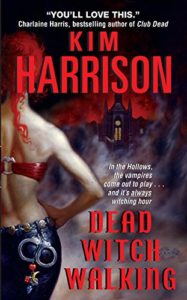
They…the main character usually grows out of the issue that I’m dealing with. The supplemental characters come from the story itself, to fill a need, whether it be a romantic interest or a platonic relationship or of something that just brings out the issue that the character is dealing with. I find that my antagonists are often more interesting and fun to watch than my protagonist. I really enjoy my antagonists. I have very few that are fully bad. I think I have a vampire who’s totally irredeemable but most of them are redeemable. Most of them don’t get redeemed. If you’re familiar at all with the Hollows series, Trent Kalamack was supposed to be my big, bad ugly through the whole series but about Book 6 Rachel began to understand where he was coming from and that his purpose was noble and at that point she either had to kill him or start to really understand him, and by the end of the series…well, it’s not ended, actually there’s another one in the works…but by the original ending he was a love interest, and it worked. I mean,, it took a long time to get there because I like my relationships to be believable, but I did make him go from an antagonist to a protagonist.

Did you know that was going to happen when you started the series or did that happen along the way?

No, I did not. I wanted my hero to be the poor, downtrodden, wickedly smart man and my villain to be the really wealthy, rich kind of snobby boy, which…and it turned out all wrong. The readers…I do not write romance but because I pay so much attention to relationships I have a really wide following in the romance area, and my romance readers, they told me first, they said, “She should be with Trent,” so I explored it my mind a little bit and I said, “Yeah, you know what? You might be right.” And it took several books to believably turn that around—but I’m glad I did!

Now, when you are initially designing characters, do you do detailed character sheets or is it more you have an idea and it comes out on the page as you write?

It’s a little of both. I do have character sheets. They’re very messy, they’re handwritten, and they’re only there so I don’t make a mistake and have somebody with eyes blue in book and brown in the other.

The perennial problem!

But it was a real problem when I went to do my world book that I didn’t have more details on my characters. But most of them develop like you get to know a person, you know, surface stuff and then a little deeper and when you see them at their worst point, you know, the really core of a person comes out, and that’s, I think, my favourite part.

This particular book, Perfunctory Affection, has a very tight point of view. You’re in Meg’s head for the entire time, which, of course, I think the kind of book it is that pretty much was the only way you could tell it. Is that typical or do you do different points of view over different books?

Well, my first book was third, and I wrote in third person for quite a while and I enjoyed it, but it was a fantasy and you kind of need that to manage the scope. The Hollows books were written in first person, which is what most urban fantasy is because the readers like the intimacy of it, and I found I had to almost re-learn how to tell a story from a first-person point of view because, like I said, I like my villains, and I wanted to see them and get to know them, and it’s harder when you’re in only one person’s point of view. However, it does give you a more intimate feel, which I really like. And the Hollows books were, they’re kind of detective, so it fits. You can do it, it works. I’m writing in third person right now, on the work I’m working on currently, but I think first person is my favorite just because of that intimacy.

Did you consider it for Perfunctory Affection?

You know, I did but, like you noticed, it really has to be from one person’s point of view in order to…it is, isn’t it? It’s been a while since I’ve worked on it…

Yes, it’s entirely very tightly in Meg’s point of view.

I didn’t think I had anything in there from third.

It’s as tight in as if it was first person, but it’s written in third.

Yeah.

And, yeah, what I found interesting, because of the and…as I said I think it almost…okay, if I had been writing it I wouldn’t have done it in first person, either. Therefore, I think you made the correct decision.

Okay. Seriously, it’s been so long I don’t remember actually what…but now that I think about it, it was third, wasn’t it?

Yeah.

But it was all her point of view pretty much.

And I think because of the not being sure what’s real and what’s not, I thought that that also…

Yeah, it really had to be like that.

Yeah. What’s your actual…well, one question before we get to that.

Sure.

Meg, in this story, is an artist and you’ve mentioned you’ve done some art, and there’s some other…you know, what kind of research do you do going into a book?

Um…that’s tricky. I don’t do a whole lot of research. I don’t like falling into that research trap. If a place setting is important, I will do a lot of research on a  place. The Hollows books take place in Cincinnati ,and I know Cincinnati better than my hometown, you know, I’ve been in the tunnels, I’ve been on Carew Tower, I’ve been on the streets, and I’ll spend a week there if I need to, but before anything else I prefer to spend, like, maybe an hour or two online to get an idea of how I need to tackle this or move forward in it, and then I just go.

And maybe research as you encounter things along the way?

Yeah. Most of my research, if you can call it that, is just done by living. You know, I’m constantly taking things in. I’m constantly weighing them in my mind. I’m constantly trying to figure out why this is that way. And I’ll come out to my husband and say the weirdest things, like, “I think she turned around and went the other way because of blah blah blah blah blah.” And that’s how I live my life. I’m always trying to figure out why people are doing things the way they are. And that’s pretty much most of my research. Like, I didn’t do a whole lot of research on anxiety…well, I looked it up to find out what the symptoms were, you know, that kind of thing, but no, not a whole lot, to tell you the honest truth.

The question went out of my head that I was about to ask…oh, yes. So, you were talking about the researching, you know, basically by living, and you have done, as you said, a lot of different and interesting kinds of jobs, and you have that science degree which which you say you apply. How does all that feed into your work?

Oh, a lot. I look very analytically at most problems that appear on the page. I use science quite a bit. I tap into DNA as being a reason for the way things are. When I’m designing creatures like vampires and witches and pixies and and stuff I will pull on my biology background and say, “Well, it’s a pixie, it’s small, that means it needs a high-energy source, so it’s probably feeding on nectar, which means it’s going to hibernate or migrate during the winter. It’s going to have a, you know, low cold tolerance.” So, you know, it just builds on itself like that. So, that’s how I use my biology degree mostly, but I do like the beauty behind genetics and, you know, I’ve recently looked back at my body of work and I’ve got genetics in that first fantasy series that I did and I touch on it in the Hollows books and it just keeps popping up here and there. You know, it must be on my mind.

What’s your actual writing process look like? Do you sit in an office and type, do you work in a coffee shop, do you hand write, how does it work for you?

Yeah, I do, I sit in the office. I am lucky enough now to have a office that is six steps away from my back door. It’s a stand-alone octagon. I’ve got windows on all eight sides of me, and I’m basically sitting in a glass box in the middle of my garden. And, it’s been a, you know, when I’m out of my office I’m landscaping the area that I’m looking at and when I’m inside my office I’m head down over the keyboard. When I’m working on plotting there’s a section that’s handwritten, but then I graduate to typing, fairly rapidly now, and then it’s all on the keyboard. I like to work at my office and then…so that when I leave my office I can separate the book world from my real world, and if I have a physical, you know, shut-the-door sensation I think it makes it easier. I think most writers are working all the time whether they know it or not. But being able to shut the door and walk away has helped me divorce myself from whatever issues my characters are working on–because it can spill over into your everyday life if you’re not careful.

I have tried working other places. I recently was in Tucson for two months and I developed the ability to sit outside in the sunshine and work on a laptop instead of in my office off a keyboard, so, you know, I can be flexible, but–I don’t want to say it’s a nine-to-five job now, but I do work almost every day and I try to keep to a schedule. And I think that’s about the only way that I can get anything done. I’m not a splurgeist, I am a a scheduled-time-to-write person.

You mentioned that you start with dialogues, so then you flesh it out from there in your first draft?

Yes. And my first draft is really ugly. I will be the first to admit it. I don’t show my first draft to anybody but my husband and…he’s my sounding board, actually, which is really nice, to have somebody who knows your work as much as you do, and the characters, so that you can talk things over. But I don’t show that to my my editor until I’m at least on my second or third draft because they are so ugly. My first drafts have holes in them and some logic issues. The whole point of a first draft for me is to find out where you’re going and what you end up at. And then you go back and you make it work.

It’s kind of like, going back to the art, it’s sort of like having the clay, you roughly shape it out the first time and then you go in and you put in the details.

Yeah, exactly, exactly.

You mentioned your husband being a sounding board. Do you, at some point, do you use beta readers or anything like that like some writers do?

No, I do not. And I don’t know if that’s…you know, a lot of people do. But I have just never been comfortable with it.

I don’t either, so I’m glad that somebody else doesn’t.

Yeah, my editor is usually the first professional who sees it and I’m…I don’t want to say I’m particular about my editors but I have to trust them implicitly, and so, if it’s a bad fit, it goes sour really fast because if I don’t trust their judgment, you know, it’s like, “Why should I make this change?” You know, I have a little bit of a stubborn streak. But if I trust their judgment it’s like, “I will do it even if I don’t understand why because I trust your judgment.” And if it’s a good fit and they know where I’m going and we’re coming from the same place, it works. You know, I really enjoy working with an editor that I trust.

And, since you have worked with a number of different publishers, you must have worked with a number of different editors over the years.

I have. Probably fewer than most, though. I find somebody I like and I don’t want to go anywhere. I enjoy working…I enjoy feeling like I’m a part of a team even though I’m not involved a lot in in many of the decisions abut how a book is marketed and published and placed. But I enjoy feeling like I’m a part of a team, and my job is to present a product that can be tailored to an editor’s…what an editor sees can be marketable. And, you know, sometimes it works and sometimes it doesn’t. But, yeah, I do enjoy working with my editors.

What kind of feedback do you get from editors, as in, is there a recurring theme in the sorts of things that you find yourself working on in the editorial pass? I know, for me there’s certain things that…well, of course, have basically only worked with, on the big publisher side, DAW Books, it’s been Sheila Gilbert the entire time. And I already…and everybody that’s edited by Sheila says the same thing, it’s that you get to the point where you’re saying, “Sheila is going to say something about that.” And sure enough, Sheila says something about that.

I’ve never run into that before!

Do you find that there’s certain things that you’re always getting asked to work on in the editorial revision?

I get asked a lot to put in more physical characteristics, and I think that’s just because I see people by how they act rather than what they look like. So, I have really had to work hard at describing people more. You know, I can describe them well but then I don’t…if I don’t remind myself I don’t remind the reader of what they look like throughout the book. And I hear that a lot. Other than that, it’s mostly…mostly I get a lot of questions on, “Can you clarify how this magic system works?” or “Can you flesh out the world a little bit more?” or it might be, “This reaction doesn’t wash with me. You either need to fix it or change the reaction or go back and add some more stuff so I understand why it happened.” Stuff like that.

I think that’s…I think the thing that editors, and new writers will often…they’ll say, “Well, I don’t know if I want to be edited or not. The editor’s going to change things or tell me to change things.”

Yeah…

But good editors have seen a lot of stories and they know what works and they know what doesn’t and they know where you need to kick things up a bit.

Yes. I have run in…most of my editors have been really good but occasionally you might run into one who doesn’t read your work thoroughly enough, and they’ll…I had one editor wipe out the first three pages of almost every chapter and then say, “I need more detail on this this and this.” And it was…and that’s what was in the first three pages! But I had wedged it in so carefully that she skimmed right over it. But that’s rare. I think most of the time editors really care about what they’re doing and they buy your work because they like it and they want…and they see a way to make it better. And they see a place where it can be sold. So if…my advice is, if an editor tells you to change something, unless it’s something that, you know, clearly they missed, change it. Do it. See if…it might work better. You can always change it back.

I like what you said about being part of a team because although as writers we work very independently and on our own for much of the time, once it gets up to the publication level you are part of a team and it’s becomes more of a collaborative thing. That final book has gone through, you know, copyeditors and…the editors and the copyeditors and there’s cover art and there’s blurb writing and there’s all these things that come together to actually make the book when it actually hits the shelf.

And I think if an author feels like they’re part of the process, not just giving them a manuscript and doing a copyedit and page proofs but really part of the process of helping to design the cover, and…the worst covers I’ve ever done are the ones that I’ve tried to design. So, you know, the author is not the person to design the cover but input, a little input, makes you feel involved and the more involved the author is in those later stages of the book, I think the more they’re willing to help push it through their own…like Facebook and Twitter and their…their outreaches to the readers.

And speaking of readers, you’ve already mentioned that some of the feedback from readers had you take another look at the relationship in the Hollows books and you are a, you know, very widely read author, do you get a lot of feedback from your readers, and how does that impact what you do going forward?

I listen to them because sometimes they see things before I do. Sometimes they see things that…a more interesting path than I normally would. I’m in touch with my readers a lot. I’m pretty active on my Facebook and my Twitter, Instagram not so much but I’ve got an account, and it works for me. They often come to me with questions. Rarely do they come to me with suggestions but their questions lead me to think about, “Well, maybe what if?” And that’s that’s what an author always wants to be doing, is saying, “Well, what if?” And to me, the editing, the changing, you know, once you get that first draft done, that’s the hard part. The fun part is tweaking it and tailoring it and seeing what would happen if they go through this door instead of that or they pick up the stray dog, you know, that kind of thing.

And I…going back to the idea of teamwork, ultimately a book is collaborative not just with the people who produce it, but also also with the people who read it. It doesn’t exist, in a way, until somebody reads it and what they get out of it may be quite different from what you thought you were putting in there but clearly because they got it out of there it’s in there somewhere.

Yeah, it’s in there whether you meant it to be or not.

There’s a story about Isaac Asimov, whom you mentioned, I think it was in one of his biographical books, Opus 100 or Opus 200 or Opus 300, I think he went that far, where he mentioned to being in a classroom in a university where they were teaching his classic story “Nightfall,” and he listened to the professor talk about it and then afterwards he went up to him, and he said, “that was very interesting but I’m Isaac Asimov and I wrote that story and I didn’t put any of that stuff in there.” And the professor said, “Well, I’m very glad to meet you but what makes you think that, just because you wrote it, you know what’s in there?” I’ve kept that in the back of my head for thirty, forty years now.

Yeah, that works, that really…that’s right.

Well, let’s talk a bit about the big philosophical questions here. Why do you write, do you think, after all these years, and why do you keep doing it, and specifically why do you write this kind of stuff?

I write to keep from going insane.

I get that a lot from authors.

Yeah, yeah. I think we’re all different but we’re all of a type. It’s…writing is a way for me to get a grip on reality, of what’s going on around me. I don’t want to say that I have a bad life, because I have a wonderful life, but life is full of ups and downs and minor, you know, personal tragedies. And writing helps me work through it and find a way to deal with it. I like puzzles and exploring how things fit together, and that’s what writing is to me. A lot of it is seeing, you know, you start with all these pieces and this is what you want. Well, how do you put them together to get there? And it’s just…it’s a way for me to relax, if I may say so. This is…I’m an introvert, so I need a lot of personal time, and this is the way I can do that and pay the bills. Lucky me, lucky, lucky me! And it’s an escape. You know, people read to escape. Well, I write to escape, and it’s a healthy escape. And there’s nothing wrong with that.

And why science fiction and fantasy?

Why science fiction and fantasy. Yeah, I forgot that part, didn’t I? Probably because that’s what I read growing up, and it’s tied to emotions and good feelings and there’s probably some endorphins going on in there, too–the mind’s a wonderful thing. But that’s probably why. It’s what I like to read so it’s what I like to write. I think it’s that simple.

In the case of Perfunctory Affection, if you read it in one way, it’s not just science fiction or fantasy at all.

No, no it isn’t. It is not. And that is why I really enjoyed writing it. I had just finished…well, I thought I had just finished the Hollows series and I needed something to cleanse my palate, and Perfunctory Affection was an idea that I wanted to work on for a long time and hadn’t been able to. So, I just dived right into it. And it came out to be a weird length, it’s like 68,000 words, which is about half of what I usually write…well, actually, it’s maybe a third of what I usually write for a book. But I couldn’t bear the thought of padding it to make it a full novel because it needed to be slim and trim and the way it is. I don’t really want to think about what was going on in my head or my life at the time that I wrote it because this kind of scary, but, no, it is not fantasy. It is not science fiction. I think I’d call it a psychological thriller, maybe?

Yeah, I think that would fit. I mean, it has a science element to it.

Yeah.

So, in a way it’s science fiction because it has science in it and it’s fiction. But still, I don’t think I would call it that.

And then with Haley and Rory, I don’t know, that might be fantasy.

It is if you read it one way, yeah.

Yes, it is. Yeah. Yeah. So, if it can be read multiple ways I think I’ve done my job.

Sixty-eight thousand is kind of a young adult length. That’s the length of some young adult books that I wrote, and you have written young adult, haven’t you?

I have. Oh, I forgot about those. Yes. I wrote those under Kim Harrison. Again, I think they’re urban fantasy although they don’t deal with vampires. They deal with the grim reaper and angels and that might be urban fantasy-ish.

I think I’d still call it that.

Yeah.

What do you find different writing for young adults and adults?
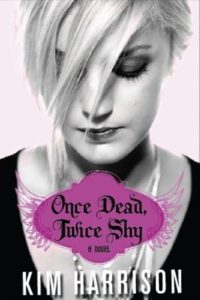
Not a whole lot. My young adults tend to be, like, 16 to 20, maybe. And the biggest thing that I keep in mind when I sit down is that, aside from including a parent figure in there, that the odds are higher. I think most young adults feel like they don’t have any resources compared to an adult. And…when the truth of the matter is that they’ve got tons of resources, they’ve got friends, they’ve got, you know, they’ve got their own internal power, their strength, their courage, you know, they’ve got tons and tons of of resources, they just don’t realize it. And the fun part about young adult is being able to show a character who feels like they don’t have these resources in order to surmount whatever they need to, and then showing how, yes, you do, and how they grow into it, so to speak. But young adult is where I first started reading,and I love writing young adult, it’s just…I don’t know. The adult issues I guess come up more often, or more easier perhaps, in the adult stuff, and I think for me it’s harder for me to write a young adult and put those adult issues in it, like a lot of authors do. I kind of like to keep my young adult something that I wouldn’t mind my grandma reading, so to speak.

So, we’ve talked about readers and so I guess the other…this whole podcast is called The Worldshapers. Do you hope through your writing that you are shaping…I know, shaping the real world might be a bit grand…but ate least shaping readers in some way, reaching into them and changing them a little bit?

Yes. And I have. I have gotten the feeling that I have changed…I don’t want to say I’ve changed people’s lives…people have read my work and changed their lives in certain instances. I’ve toured for a while, and one of the fun things is, I had a couple come up to me at one of my events and they told me that they met in line two years ago or last year and now they’re a couple. I mean, that’s cool in itself! My favorite story is, a reader came up to me and told me a story that he was in a coffee shop and he saw somebody reading one of my books across the way. And he looked at the woman and he made a bunny-eared kiss-kiss, which is basically a peace sign where you crook your fingers twice in quick succession, and his friend said, “Do you know that woman?” And the woman, you know, across the way, crooked her fingers and did the same thing back, and the guy said, “No, it’s a book thing, it’s a Hollows thing.” And to be able to know that you have impacted the world enough that two people who don’t know each other and share a moment across the coffee shop, you know, that’s heady stuff.

We’re just about out of time here. So, tell me what you’re working on now. What comes next?

I am actually working on American Demon. It is the next Hollows book, with Rachel and Trent. It picks up after the last book but before the epilogue in the last book. So I’ve wedged it in. I hope the readers will be pleased with it. I’m also working on a something completely out of my wheelhouse. It’s more of a hero’s journey. And I don’t really want to say much more than that but it’s not in the Hollows, it’s something else. But I’ve been enjoying being able to write on a multitude of subjects, which is something that, once you get kind of name brand into a genre, that you don’t often get a chance to do, so I’ve just been enjoying writing whatever I feel like. But American Demon is the thing that’s on my plate right now.

And Perfunctory Affection just came out.

It will be out on the March 31.

Which will probably be before this airs, I think I can say… 

Ok, yes, so it just came out.

And it’s from Subterranean Press, right?

Yes, it is. And this one is a little special. They are all signed and numbered, which is something new for me. Usually I have a small print run that’s signed and numbered. It is a small print run, but this is it. There is an audio version that will come out and I believe the e-book will come out at some point. But if you want to get a hold of this, it’s…you can get it through Amazon, but Subterranean Press is the publisher and they’re all signed and numbered.

Oh, I feel I feel fortunate to have had an advance reader copy.

There weren’t very many of them, no!

And where can people find you online?

They can find me at my Web site, kimharrison.net. I’m also on Facebook and Twitter @BurningBuddies.

Okay! Well, thank you so much for being on The Worldshapers!

Well, thank you! This has been a fabulous interview.

Thank you very much.

Episode 21: Larry Correia

An hour-long conversation with Larry Correia, the New York Times-bestselling, award-winning author of the Monster Hunter International series, the Grimnoir Chronicles trilogy, the Saga of the Forgotten Warrior epic fantasy series, and the Dead Six thrillers, all from Baen Books. He also writes novels set in the Warmachine game universe.

Website:
www.monsterhunternation.com

Facebook:
Larry Correia

Larry Correia’s Amazon Page

The Introduction

Larry Correia

LarryCorreia is the New York Times-bestselling, award-winning author of the Monster Hunter International series, the Grimnoir Chroniclestrilogy, the Saga of the Forgotten Warrior epic fantasy series, and the Dead Six thrillers, all from Baen Books. He also writes novels set in the Warmachine game universe.

A former accountant, military contractor, firearms instructor, and machine-gun dealer, Larry has been a full-time author for several years. His first novel, Monster Hunter International,was originally self-published. He’s now published in seven countries.

Larry lives in northern Utah with his very patient wife and four children.

The (Lightly Edited) Transcript

So, Larry, welcome to The Worldshapers.

Thanks for having me on.

Now we met very, very, very briefly, at DragonCon this year…last year, I guess, which was my very first DragonCon. I found it a bit overwhelming. There’s a lot of people there.

Oh, yeah. It’s a giant nerd Mardi Gras.

I was at your panel on–I made a point of sitting in the front row, actually, at the panel on monsters that you were on, which was a very good panel, and then introduced myself and asked if you’d be interested being on the podcast and you said yes, and we’ve finally gotten around to it. So, very glad to have you. I’ve enjoyed your books and am looking forward to talking to you about them. We’re gonna talk specifically about The Saga of the Forgotten Warrior, your fantasy…I guess it’s going to be a trilogy? Or longer?

Well, I originally pitched it as a trilogy to Toni Weisskopf, my publisher, and she’s…you know, Toni knows this stuff very well, and I give her a kind of a plot outline for the trilogy. And she came back and she gave me a book deal for three books, and then she said, “You know, there’s no way in the world you’re going to fit this into three books, right?” Yeah. So, originally it was a trilogy but there’s probably going to be more than that. I’m working on the fourth one right now.

We’ll call it a series, then. The first book of that was Son of the Black Sword, and so we’ll talk about how that all came about a little later. But to start with, I like to talk with my guests about how they got started doing this crazy thing that they did. So, I guess, take us back into the mists of time. First of all, where did you grow up, and how did you first get interested in in science fiction and fantasy as a reader, and then as a writer. How did that all come about? You have a rather unusual path to publication.

Oh, yeah. Well I’m originally from El Nido, California, which is a little tiny town in Merced County, which is the San Joaquin Valley. It’s the part of California that’s more cows than people. That’s where I’m from. I grew up on a farm in the middle of nowhere, and we were really poor, but there was a little, tiny library, a little, tiny county library. And I was a nerdy kid. I loved reading books and I read every single thing they had there–and then I discovered interlibrary loans. I was always that awkward kid that read books on the bus and read books during recess and I just always loved to read.

I know that kid. I was that kid.

I think that’s most of us. I grew up…it was a pretty rough place, we were, you know, poor dairy farmers, a lot of hard manual labor. It was a lot of of fun, but I read to escape, and I discovered science fiction and fantasy pretty early on. I mean, I started out with Westerns, because…you have to understand, my dad didn’t read. He didn’t appreciate books, he didn’t like books, he thought books were kind of a sissy activity, that was kind of how I was raised. But I got a pass on Westerns, and so I actually started out with Louis L’Amour. My dad thought Westerns were manly and cool and tough, so Westerns were okay. But then, actually, I think one of the first fantasy books I ever came across was Sword of Shannara by Terry Brooks, an old classic, and discovered that first. That was my gateway drug to fantasy.

That’s interesting, starting with Sword of Shannara. Of course, it was very much in the mold of Tolkien. But you came to it first instead of Tolkien.

Yeah. Well, actually, I came to Tolkien later. I went backwards on that. I mean, I got to meet Terry Brooks in person for the first time five or six years ago, and I think I really nerded out pretty hard. No, I kind of got into that and…I read a lot of different things, various genres. I love reading different genres. I pretty much wound up as a fantasy guy just because that was what I was good at and that’s what I enjoyed writing the most, but I’m kind of a multi-genre kind of guy myself, I write in a bunch of different genres, too. But fantasy is my primary thing and I love it.

So, when did you actually start putting your own words on paper and telling your own stories?

Oh, I was really young, actually. I would get like books with paper and I would illustrate the stories, too. And my mom actually saved some of these, so after I die my wife will probably be able to sell these on eBay to my fans for a lot of money. You know, there’s like, really goofy little adventure stories with cartoons and stuff.

My first attempt at seriously writing, I was in college, and at the time I was on a Tom Clancy kick. I had been reading a ton of techno-thrillers, and I decided…the very first book I ever tried to write was actually a thriller. And it was terrible. It just wasn’t very good. You know, the first thing you try to write has training wheels, and it was terrible. I didn’t know what I was doing. And that got shelved.

And then I graduated college and for about ten years I went off and had a career and a family and worked hard and didn’t really have time for it. And then I decided to give it a shot again in the mid 2000s. I started…at the time, the kick I was on was horror movies, and I’m also a gun nut, I was a firearms instructor, and so I took two things I knew a lot about, horror movies and gun nuttery, and I stuck them together, and that’s where my Monster Hunter series came from. And that book actually did really super well. It’s still going well. So, that’s kind of how I started writing, so I guess I’ve always kind of been a writer, but I took, like, a decade off to be a grown-up.

Did you do anything in the way of, you know, writers’ groups or classes or anything in all that time? I know you certainly didn’t study it at university, you became an accountant, eventually.

Yeah, I got my degree in accounting and did a bunch of things like that. I was an auditor and then I was in the gun business for a long time, then I was a military-contractor accountant, and I did that for many years. But the thing is, I never did any writing-related stuff other than business writing. I wrote nonfiction, because I actually wrote technical articles and review articles for gun magazines, and I wrote articles about, you know, I guess the best way to put this for a non-gun-nut audience is tactical stuff, because I was an instructor. And so, I wrote things like that, but I never wrote any fiction during that time. I never had any training. I took the minimal number of English classes required to graduate. I was never in any writers’ groups or anything of that nature. I just read a lot. So, I kind of learned by doing, I guess.

That, in your words, “very bad thriller” that you wrote, did you share it with anybody, you know, at least get a hint that perhaps you could you could tell a story that people were interested in?

A handful of people, a handful of friends. And actually, people liked it and they really enjoyed it and they were kind of surprised that I was literate, you know, being a big dumb knuckle-dragging farm kid, they were like, “Wow, this is actually really good.” But it just wasn’t up to snuff. It’s funny, though, because there’s no such thing as wasted writing. You know, we always save…even our worst stuff has little nuggets in it…so later on, when I was doing the Dead Six series with Mike Kupari, I stole pretty much every line of dialogue, every cool character, everything that was neat or good from that first book I stole and later on, it wound up in other books. But, you know, it was good practice. But, no, I never had a sort of organized group or anything, just, I would hand it out to friends and said, “Hey! Check this out.” But that’s about it.

I wrote novels in high school that I showed to my friends, and they, you know, they said, “This is really good,” and of course, like you, I look back at those now and I think, “No, actually they weren’t.” But at least I learned that, you know, people were interested in reading what I wrote, and that kind of was what drove me into into doing it.

You were talking about writing nonfiction. I was a journalist myself, so I wrote, you know, thousands and thousands and thousands of words of nonfiction. I would say probably–and let’s see if you would agree with me–that even though you’re not writing fiction, the mere act of putting that many words together, even if it’s for gun magazines or whatever it is, still contributes to your writing improving. Would you say that’s fair?

Oh, I would say that’s totally fair. Like I said, there’s no such thing as wasted writing. Honestly, I think that anything that you’re doing that you’re having to put together a coherent narrative is good training. It’s just good practice, just stringing words together, wordsmithing, it’s all useful. Well, I mean, maybe not Twitter.

The great Twitter novel has yet to be written.

Yeah, I don’t know if I want to read it.

Now, Monster Hunter International…it wasn’t published by a traditional publisher to begin with. was it?

No, it was not. I’m with Baen now, and I’ve been with them for about ten years…yeah, ten years this year. But originally, it was self-published, because what happened is, I wrote this book, and best way to describe is, think, you know, X Files meets The Expendables, okay? So, it’s all the tropes of the various horror movies, and, you know, the Lovecraft mythos, because I love Lovecraft, all that’s in there, only, the people…it’s not a horror story, it’s an adventure story, because the characters are not, you know, typical horror-movie characters who scream and run and get eaten. They’re my people. And so, there are a bunch of gun nuts, and military contractors, and combat vets, and all those people, and they dealt with all these monster problems like my people would. (You know, the running joke as if you made a horror movie about the average gun nut it’d be a really short horror movie.)

So, I did this, and I tried to sell it in the traditional manner. Back in those days.. this predates the e-book revolution and Kindle and all that, so I tried to sell it the traditional way, by getting it to agents and then sending it to slush piles, and I collected…it was just over a hundred rejections. I had a shoebox full of rejections, and basically I had a lot of people, you know, agents, well-known agents, come back and say, “Hey, this is really good, this is really fun, but I don’t think it’s sellable. I don’t see a market for this.” And, well, I was a business man, I was a fairly successful businessman at this point, I understood marketing, I understood market, I understood audiences. And I’m looking at this, and I’m thinking, “Well, I think there is a market for this. It might not be a market that, you know, regular Manhattan publishing understands, but I think there’s sufficient number of people out here that I can sell this book.” And so…at that point, self-publishing was kind of more of a vanity thing. You know, you didn’t have e-books, you had $25 print-on-demand paperbacks, which…that’s a pretty hard sell. But I had an audience already from some of my other work, and I was a moderator on a couple of big Internet gun forums. And so, I actually did some online fiction for free, with another guy, named Mike Kupari, who I later on wrote novels with, a great guy, a very good writer, and we put out, you know, free online fiction, and people read it and were like, “Wow, this guy can actually write fiction, this is pretty good.” And so then I launched my $25 print-on-demand paperback, and it actually did really, extremely well, which in those days of self-publishing was like, if you sold 3,000 to 5,000 copies of a print-on-demand paperback, that was huge. It was nothing like it is today, very different. But it was actually a very big success and…Uncle Hugo’s is this big independent bookstore in Minneapolis, Minnesota, great bookstore, great guys. And one of their employees read this, one of their former employees read this, and then passed it on to Uncle Hugo, or Don Blyly of Uncle Hugo’s, who wound up printing out the Word document file on his printer and read the whole thing that night, and then he called Toni Weisskopf, who was the publisher at Baen, and said, “You guys need to buy this book ’cause I could sell the heck out of it.” And that got Toni Weisskopf to take a look at it, and she thought it was great, and she…at that point my self-published book was doing pretty good…so she contacted me and made me an offer to buy it.

And this is where it really is cool. I had to discontinue the self-published version. I signed my contract, but, you know, the way publishing schedules work, it wasn’t going to come out for almost a year and a half. So what happened is, for a year and a half, everybody talked about this great self-published book that they really, really liked to their friends, and their friends couldn’t buy it, because there were no more. And nothing makes somebody want something more than not being able to have it. So, for a year and a half everybody wanted to get their hands on this book, and no one could. So then when the actual Baen version came out, it was just mass-market paperback, that was before I was in hardcover, our little print run sold out in like the first twenty-four hours, it just exploded. And so she did another print run, and it went nuts and it was just instantaneously sold out. And so she did a third print run, and it went nuts, too.

At that point it kind of slowed off, but, you know, she’d given me a contract for a few more books at that point. So, yeah, so that’s how my career got started, and I’ve been doing this for about ten years now. That was back in 2009, is when the Baen version came out, and I’m at twenty-one novels now, I think, and a couple of collections of short stories, and a bunch of novellas and miscellaneous projects. So, it’s been really busy.

It’s safe to say this is what you do full time now?

Oh, yeah, yeah, I quit my accounting job about…I want to say five or six years ago…and I’ve been a full-time writer ever since.

Well, I have to say…I had run across mentions of Monster Hunter international…I think I was actually in the hospital for some reason and I needed stuff to read, and I may have gotten it through…was it in the Baen Free Library? That may have been where I got the first book.

Yeah, once we, I think, three or four books in the series, they added the first one to the Free Library. So, yes, for your listeners, you can get my first book for free, it’s available on baen.com, or you can download a free version for your Kindle on Amazon.

But be warned that that was like a, you know, one hit and then you’re hooked, at least in my case, because then I tore through all the others and I’ve been keeping up with it ever since. Good job, Baen.

That’s why we do it. Yeah, it’s the…we follow the crack-dealer method of product distribution where the first hit is free. The rest of the books cost you.

It’s interesting. One of the things that I often get asked and, you know, I’ve asked…you’re my, what, eighteenth or twentieth interview or something in this podcast?… people always ask, well, “How do you break in, or how did you get your first book published?”, and the thing is, it’s different for absolutely everybody. So, you know, your story is fascinating, but it’s probably not going to help anybody else, because it can’t, it’s not going to happen that way to anybody else.

Well, and technology changes so rapidly now. So even though this was only ten years ago for me, the entire method of how I got into it doesn’t even exist anymore really.

Yeah.

And now self publishing has become so easy the challenge there is, I mean, yeah, anybody can self-publish and it’s a snap, but you have to compete with the hundred thousand other people that also self-published that month. It’s super-competitive, very different than when I did it.

I did want to ask–and the reason is that my first book with DAW had been rejected by them and then through a roundabout way got accepted by them as a paperback–had Baen–you said you had a hundred rejections. Had Baen rejected it once before it came back to them?

This is kind of funny. So actually what happened with them–’cause most of my rejections were agents, and I also submitted directly to every publisher that would let you–Baen does a slush pile. So back in those days you would just mail the manuscript to Baen, and they would have, like, a big pile in their office of typed manuscripts, and they would go through and read them, they would have their slush readers. So, I did actually mail one, I did submit one to the slush pile. However, it disappeared or never arrived, because what happened was years later they were going through their own slush pile trying to find the original Monster Hunter I mailed them, just so they could just have it. You know, it’s an international bestseller for them now, we’ve got millions of books in print, and so they were trying to find this original photocopied manuscript that I had mailed them and they could never find it. And so I don’t know. It got lost at the post office? So, no, I didn’t ever actually get rejected by Baen.

Someday it’ll turn up.

Yeah, I figure it’ll show up on eBay when some postal employee finds it in, you know, the floor boards of his car. So that was just, that was a weird one right there, but, no, I got rejected a lot. But, you know, I always tell aspiring writers, you know, “You’re going to get rejected. There’s nothing wrong with that. Just keep going.” You know, a hundred sounds like a lot, but I’m not even near the top. I want to say Laurell K. Hamilton got rejected, like, two hundred and fifty times, and that was for her Anita Blake stuff, which has gone on to sell, like, 30 million copies. But back then, that was before paranormal romance was really a thing. She’s kind of like the godmother of that genre. And so publishers just didn’t know what to do with it. People were going, “I really don’t know how I’d sell this, I don’t know what genre is this.” Urban fantasy was a weird oddball thing back then and paranormal romance didn’t even exist, so they didn’t know. And now she is super, super successful. You never know. You just gotta keep throwing stuff out there to see what’s next.

Everybody hopes that that kind of a story will be theirs and for most people it isn’t. But the possibility is always there. So that’s what keeps a lot of writers going, I think.

There’s a lot of people, we show up and it’s like, “Wow, it’s like you’re an overnight success!” Yeah, it only took five years.

Well, in my case it was, before I had anything published fiction-wise, I’d been trying to sell for fifteen years, I think, or something like that. My first book was Using Microsoft Publisher for Windows 95, and my second book was Using Microsoft Publisher for Windows 97. So it was like a series, you know, but not quite what I was interested in.

Yeah. I mean, we all come at this from different ways. There’s no one right answer. And it’s funny, because I go to these panels, and people always ask me, like, “What is the trick? What is the secret?” And I’m like, “Dude, I wish I knew, because I would totally like, you know, sell that.”

Yeah, if I’d known, I wouldn’t have taken so long to get to where I am. Well, we’re going to talk about the Saga of the Forgotten Warrior series (not trilogy!). So, we’ll start with talking…obviously, we’ll talk about the first book, because it’s hard to talk about the second book if you haven’t read the first book, which I have, by the way. The first book is called Son of the Black Sword, and maybe I’ll let you give a synopsis, because otherwise I’m liable to spoil something that shouldn’t be spoiled.

No problem. Okay, so Son of the Black Sword is an epic fantasy. It’s set in a world that’s kind of loosely based on India. I won’t say too much about the setting. It’s a world with really brutal caste systems, but it’s not a religious society: in fact, religion has been banned for a very long time. Instead, they have an all-encompassing Law, and everybody in this society has a place. The story’s about…the main character is a fellow named Ashok Vadal, who is a magical super-warrior figure. Think of this guy as kind of a roving, magical Judge Dredd, okay? This guy is the ultimate law enforcer in a land where the law is basically God. But the story is about him and what happens to him, because it turns out he is not who he thinks he is. And that’s…

The problem with epic fantasies is you can’t over-describe them without giving away the plot, but it’s really awesome. It came out super good. I love it. It’s done really well, been very popular. The story is…basically, I describe this guy as, he’s kind of a cross between The Punisher and George Washington. And it’s the story of how he basically turns from this unflinching role enforcer to…the saga’s him becoming a human being. But these are people that have not had religion for a long time, it’s been banned, and the old gods are kind of meddling in the affairs of man once again. This is a world where the seas, where the oceans, are basically hell. And so the culture is developed up around that. No, you don’t want to be by the ocean. The ocean is bad news in this setting.

It’s a fun series. The first one is Son of the Black Sword, which came out a couple of years ago and did really well. It’s my first foray into epic fantasy, based kind of…I’m a huge Robert E. Howard fan, so I kind of think of it as sword and sorcery, but it’s epic fantasy. The sequel is called House of Assassins, and that actually comes out right now. I think by the time this airs I’ll be on book tour for it. So that’s number two. And then number three is called Destroyer of Worlds, and I’m working on that right now. That’s actually what I was typing on when you called, or when you e-mailed me. So, yeah, the series is a lot of fun. I’ve really enjoyed it. (It’s a very dark setting, so when I say fun, to put this in perspective, I’m a writer. We have…our ideas of fun are a little different.

Yeah. You know, I destroy planets for fun.

Yeah, exactly. No, this is…I get to tackle a bunch of issues and have a lot of fun with it, but I don’t…I’m not a heavy-handed message-fiction kind of guy. I’m an action-adventure guy. If a theme sneaks in there it’s usually an accident, and don’t worry, I always put the action scenes first.

So what was the genesis of this? The seed from which this is grew?

You know, this is really interesting, because this is the funny thing about how how ideas works. Many years ago, I was a panelist, when I was a new writer, I was a brand-new writer, I was on a panel at a convention called LTUE, which is Life, the Universe, and Everything, in Provo, Utah. Back then it was held on the BYU college campus. And I was the newbie writer, and I was on a panel with Lee Modesitt Jr., Brandon Sanderson, and Dave Wolverton, who, as you know, are three big-deal, big-time, very successful fantasy writers.

So, I’m on this panel and somebody, some college student in the audience, had a question about…something. I can’t remember what the question was, and I had a really good answer for it. And so, I started to answer the question, and this college student cuts me off. He goes, “No, no, no, no, you’re just an urban-fantasy writer. I want to hear from the epic-fantasy writers.” And I was like, “You little bastard.” And I sat there and I was kind of like torqued, right. Like I said, I’d only been a writer for a couple of years. And so, as soon as the panel was over I snagged Brandon Sanderson, and I was like, “Hey, Brandon, what makes something an epic fantasy?” And so, he’s like, “Well, you know, it’s gotta have a lot of characters and a big giant plot and usually world-spanning events and a lot of history and worldbuilding and that kind of stuff.”

I went, “Okay, okay, cool, cool.” And so then I hooked up with Mike Kupari, whom I’ve mentioned before, ’cause Mike’s one of my best friends, and my co-author on my thriller series, and we’re driving home, and we start brainstorming, and actually the epic fantasy that I came up with turned out to be Hard Magic, the Grimnoir Chronicles, which is my Hard Magic series. So, my first attempt epic fantasy turned into 1930s alternate-history superheroes.

And I’d actually call one science fiction. It really has a science-fiction undercurrent.

Exactly. But that was the genesis of my foray into epic fantasy. But some of the ideas I came up with during this process, brainstorming, a lot of this turned into a series, which is actually a very successful one, and critically acclaimed, and it’s won the Audie for best audio book two out of the three novels. It was like number sixteen on Audible’s top 100 audio books of all time, so it’s been really good. But the thing is, this was my first foray into epic fantasy and it turned out not epic fantasy at all.

Then the next year, actually when I was working on Monster Hunter Alpha, I still at this point really wanted to tackle an epic fantasy, just ’cause I read ’em, I enjoyed ’em, and I hadn’t written one–because, like I said, my attempt turned out to be alternate-history superheroes. So, I was like, “I’m going to write an epic fantasy.” So, while I was working on Monster Hunter Alpha…I always listen to music as I write, and I usually listen to movie soundtracks, because they’re instrumental, there’s no words to mess with me, just music. And so, I hadn’t even seen the movie yet, but I had downloaded the soundtrack for Inception, because I love Hans Zimmer, right? Hans Zimmer’s awesome. So while I was listening to Inception, there’s a song called “Waiting for a Train,” and it’s like this eight-minute-long or nine-minute-long song, that starts really, really slow, and then builds up to this just massive crescendo. And before the crescendo begins, there’s actually this woman, there are some lyrics, and this woman comes on and sings one line in French, and having not seen the movie, I had no context at all, right? But I was so struck by this song that I stopped writing the novel that I was working on, and I actually wound up writing this little two-thousand-word short scene that was just a fantasy setting set specifically to that song. Once again, I hadn’t seen the movie, so I had no context of what it actually looked like, right? Or what it was actually for. (Boy, I was off! I was nowhere near what the movie Inception was like. )

So, I wrote that one little scene, and if you’ve read Son of the Black Sword, it’s actually the scene where Ashok is returning home, after he’s learned the truth of his existence, to confront his aunt. Basically, it turned into the dinner-party scene, the dinner-party knife-fight scene. That was actually the genesis of Son of the Black Sword, I was just inspired to write this one scene to correspond with this song. And then when I finished up this, I started brainstorming it out and really came up with a big plot.

The Indian setting was actually kind of interesting, because…I’m not a crusader by any means, in fact that stuff annoys the heck out of me, and this was before the whole big push for non-Western settings because you’re supposed to, or any of that stuff–I just thought it sounded interesting. I thought it sounded fun. Plus, I watch a lot of Bollywood movies, and so I was just looking at this like, you know, that would actually be really kind of a cool setting. And plus, I’d already been thinking through with that initial scene I did, where I’d already, just off that, was using a setting with caste systems. So, at that point it made perfect sense to just kind of borrow heavily from Indian history and mythology for the setting. And so it just kind of expanded out from there, and I actually wound up expanding it out and borrowing from…well, I won’t get into it, but, like, some other elements from Southeast Asia and even East Africa. So I got to throw in a bunch of stuff in there from that for inspiration. But then it kind of morphed into its own thing. So that’s where that came from.

You know, it would be cool to have a Bollywood movie version of Son of the Black Sword. Don’t you think you could have one?

Oh, my gosh. Well, in my head canon as I’m writing this, I always like to have, like, actors or people I actually know playing various characters. That way as I write them it helps me keep them consistent. So, actually, Kumar, in my head, is Ashok. Ashok looks like the actor Kumar. He’s been in a lot of movies. You’ve probably seen him. So, if they would like to make a movie that’d be great. They’d have to add some musical numbers.

I was going to say the musical numbers would be interesting.

My daughter, my oldest daughter, who’s a writer also, she’s watched a lot of these movies with me, and she’s like, at one point, I was saying that would be funny, if they made a Bollywood version of Son of the Black Sword, and my daughter goes, “Nah, Ashok don’t dance.” This is not a man who would dance, he’s not a man given to frivoloity.

She definitely has a point. So, you’ve talked a little bit about bringing all that, all those various things, together–was there a lot of research involved at this point, then, or did that come along as you develop the plot?

Oh, I kind of–that goes in spurts because, you know, there’s always the ever-widening Wiki spiral that all authors, we tend to do as we’re researching. No, I did the basic plot outline first. I’m an outliner.

That was my next question.

Oh, yeah, yeah, I’m definitely an outliner, so…plus I learned my lesson on my earlier books: I would outline, but I didn’t necessarily keep a series bible. Which, when you’re only one or two or three books into a series, that’s not a big deal. But on Monster Hunter I’m, you know, seven books in, with three spinoffs and a short-story collection. So, all of a sudden, this universe has gotten so big. I didn’t originally have a universe guide for it, and so I’m trying to remember, like, “Whoa, did I say where this person is from? Is this guy left-handed? Did I ever say what color this person’s eyes are?” All that little stuff…

It starts to pile up.

Yeah, it does, it piles up. So, what I did from the beginning of this series is, I had my outline, but then, I also have a separate world guide. Especially when you’re writing urban fantasy, a lot of stuff you don’t need a world guide, because it’s just, you’re just taking our existing world and inserting stuff into it. So, I don’t need to, like, have a description of the city of Chicago. It’s just Chicago, right? But for this, when you make up every single city, every single place, every single family, every single culture, cultural thing, you have to have some constant reference, down to like, you know, the calendar: how you know what are the names of the days of the week and the days of the month and what are the names of the month, of the year, and how does the calendar work, and all this stuff. And so, I try not to worry too much about all that stuff up front because it messes with you and it slows you down. So, I usually outline the story first. When I say outline, I’m talking maybe four or five pages, maybe eight or ten pages tops for a book. I’m not a super-religious outliner, it’s a very loose outline, and then I’ll jump in, I’ll start writing, and then when I come to something that I need to stop and research, if I’m on a roll I’ll just mark it–for me, my mark is always XXX, because then I go back and I control-F and search for XXX, every instance of XXX, that tells me this is something I need to figure out or research.

I use that, too, because it never shows up by accident.

Exactly. Yeah. You’re never gonna find that on the middle of a word by accident…well, I guess if you’re writing porn, I mean, that could happen. Luckily that’s not an issue.

So, if I’m not on a roll and I come up with something then I’ll stop and I’ll go and I’ll do research on it and figure out how I’m going to do it. Then I’ll add that to my world guide and I’ll just go ahead and write. But if I’m on a roll and I don’t want to stop to go figure out how calendars work or how does, you know, agriculture in the northern provinces work, I’m going to put XXX and I’m going to keep plowing ahead, and then later on, when I’m stuck or bored or whatever where I’m at, I’ll flip back and that’s when I’ll do my research. I guess I do a minimal amount of research upfront for the outlining and for the opening, and then I just go.

And, of course, research has become much more easy than it was pre-Internet and pre-Google and all these wonderful tools we have now.

Oh my gosh, yeah. Even in the ten years that I’ve been doing this it’s gotten way easier. And, you know, ten years ago we did have the internet. I mean, it wasn’t that long I’ve been doing this. But, yeah, it’s funny. It’s interesting, too. I find that research, especially for fantasy novels, is super-helpful, because it just opens up so many other corridors in your brain that you otherwise hadn’t thought of.

My example of that was, I have a book under a pseudonym, E.C. Blake, I wrote a trilogy called The Masks of Aygrima, and part of it is set in a mine, and I needed some way for them to get up and down in the mine, and I thought, “Well, ladders are boring,” and then I did some research and found this thing called a “man-engine,” which is driven by water and reciprocating beams and two sets of platforms go up and down and as they go up and down they meet momentarily and you can step from one platform to the next and get carried down. And so that made its way in, and it made the whole scene more interesting and gave me all sorts of things that I could do. So, yeah, that sort of thing happens all the time.

Yeah, I love that stuff.

Now, what does your actual writing process look like. Do you write in longhand. for example?

Oh, gosh, no. My handwriting is awful.

I have met, I have talked to authors who do, which blows my mind. But some people still do it.

Yeah, Marko Kloos writes everything originally with just a nice ink pen and a Moleskine notebook. I’m like, “I don’t know how he does that.” No, I type. I was actually mentioning to you earlier I didn’t know if this program we’re using right now would work because I have an eight-year-old laptop that I’ve just never bothered to replace.

As long as the hamsters run fast enough it’ll be fine.

Well, I mean, all I really use my computer for it is Wikipedia, Facebook, and typing. So, no, I work in a pretty much normal…ever since I quit my day job I work in a normal workday, so…I’m not a morning person, I don’t try to force myself to work early in the morning, because my brain doesn’t work that way. So, about eight-thirty or nine o’clock, I will usually drift into my office. I work from home, I have a nice office. I’ll go in here and I’ll usually write until about lunchtime, and then I’ll take a break for a little while to eat lunch, unless I’m on a roll, then I eat while I type. Then I work until, usually, about three-thirty or four o’clock in the afternoon–by then my imagination is starting to peter off. Unless, again, I’m on a roll, because, you know, if you’re having one of those days where you’re on a roll, you just keep working. Then I’ll work until nine o’clock, ten o’clock at night.

If I have a deadline I work however long I need to work. I did a sixteen-hour day last week, or about two weeks ago. I had to do the short story “The Testimony of the Traitor Ratul,” and I had forgotten about that. And so I was up on my deadline and I had to do a 5,000-word short story that day. And so I did, and I was working until like, I want to say eight o’clock at night, and the story was almost done, it was pretty good. Then I went to bed and I lay there and it was about eleven-thirty or midnight, I was still awake ’cause I was so in the zone, and so I had to get back up and finish the story, writing till about two-thirty in the morning, which is always scary, ’cause I have a rule of thumb, you don’t write after midnight, because what happens is then you check it the next day and it’s crap. But this time I checked it and it was like, it was actually really good. I was like, “Okay, perfect!”

But normally, the vast majority of the time, I’m a nine-to-five kind of writer. I actually take weekends off now, which is amazing, because for the first half of my writing career I had a day job, and it wasn’t just a wimpy day job, it was a high-level management and finance-management kind of job with a, I was the finance guy for a military-contracting company. It was a high-pressure job with a lot of hours, a lot of brain, a lot of hard work, a lot of math, and so I would do that all day and I’d come home and I would write for a couple of hours at night and then I would usually do most of my writing on the weekends. So all day Saturday and Sunday would just be these marathon writing days.

It’s kind of funny, because back then I had this goal that I would try to write 10,000 words a week which, you know, that’s a good goal. I didn’t always get it, but I would try. Which is funny because my goal still today, now that I do this full-time, is still 10,000 words a week. The difference is, life is much nicer now. And also, the big thing is, that old stuff that I would cram in, 10,000 words a week here and there, writing on my lunch hour, writing late at night, writing all day Saturday, that stuff, it was funny because I would write all that and then I would have to edit it way more. I’d spend a lot more hours editing it because it was just wasn’t as good. Now I’ll try to write 10,000 words in a week and I just do my nine to five, but then when I go to edit, my editing passes are actually way cleaner, and I don’t spend nearly as many hours editing as I used to. That’s good, because writing is fun, editing is work.

That’s actually the next question. What does your revision process look like, once you have that draft. You’ve mentioned that you might mark things with XXX that you have to go back and flesh out later. So, what does your revising process look like?

Usually what I do is…so, I’ll finish the first draft, and I’m one of those guys that if I’m stuck on a scene I’ll just mark it and move to the next scene. I don’t like killing momentum because I’ve gotten to a hard part. A lot of people, you know, they’ll freeze up and they’ll get stuck on a scene forever, and I think that’s just the kiss of death. I mean skip that, go to the next one you want to do. So, when I get to the end of the book I have to go back and fill in those scenes that I skipped, or parts I skipped, or sometimes it’s just like, I skipped a paragraph because I didn’t feel like explaining how something works. So, I go back and I fill all this stuff in and usually it’s a lot easier when you do that, because by then you’ve written past that scene, so you know absolutely what must happen. That’s why these guys who write longhand on paper, I’m like, “I stand in awe,” because that is not how my brain works.

And then I go through, I’ll clean all that stuff up. I’ll usually do a clean pass, where I’ll read it from beginning to end, I’ll usually do that once or twice. And then–this is very important–I have a group of alpha readers now. These are people that I trust, these are various authors and friends of mine that I’ve gotten over the years, and also a lot of times technical experts, like…so, in this case, I’m writing a book with a lot of sword fighting. I’m not a sword-fighting expert. I’m a gun expert, but I’m not a sword guy. And so I have a couple of people that are, modern or Western martial artists or Eastern martial artists or professional sword people, and I send it to them.

Then, I give it about a month. During that month, I will not look at this manuscript at all. I will walk away from it. Because what happens is, I need to be, I need to get some distance between me and the manuscript. Because if I keep reading a book, I’m too close to it. There’s stuff that’s in my head that’s not necessarily on the page, but it’s in my head, so I don’t catch it. So during that month I’ll go work on another book. I will go outline other projects. That’s usually…I’ve written, like, fifty short stories now, and I think most of my short stories have been written between novels like this. So during that month, I will go to all sorts other stuff.

Then I will go back, I will read everything the alpha readers had to say about it, and then I will start again, and I will read it from beginning to end. And now I have some distance between me and the book. I will catch errors, I will catch mistakes, I’m, like, little things, I’ll improve them, just because a lot of that stuff, when you’re too close to a manuscript, you can’t see this stuff. You’ve got to get some distance, then you have a clean eye. And then after that it goes to my real editors. I’ve had several different editors with Baen, it just depends on which book in which series, and they’ve all been awesome. And I just take their feedback and incorporate it.

Who’s the editor on the these books? The Saga of the Forgotten Warrior books.

This is interesting, because actually, these have been popular, so I’ve had multiple…multiple people have joined in on this. So Toni is our overall publisher, but Jim Minz and also Tony Daniel have been my editors on the series.

What kind of notes do you get back from them?

Actually, apparently I’m one of their favorites because I’m easy to edit. I’m not one of those sensitive artist types, so I’m pretty much open to anything, and usually they’ll tag stuff and they’ll be like, “Hey, Larry look at this.” A lot of times they’ll just let me solve it. They know I’m pretty good at solving a problem, so if, like, a scene doesn’t work, they’ll just put a note that, “Hey, I don’t understand what’s going on here,” and they’ll just kick it back to me and I’ll go over it. Very seldom have I ever had to make any major changes in edits. But just give you an idea, in House of Assassins, the one that’s coming out right now, the sequel to Son of the Black Sword, the biggest edit in there was actually the chapter that I open with was originally Chapter Three. I opened with…Chapter 2 was originally the opening of the thing. And Jim read this, and he loved the book, but he was just like, “You know, I just think this other chapter that you have later on, I think is just a stronger opening. I think if you opened with this chapter instead of this one it would be stronger.” Now, I’d have to change stuff around in the chronology to do that, but I looked at it. The key to being edited is, you’ve got to be humble and don’t be a prideful jerk about, because, you know, your editors are smart people, too. And I looked at this and Jim was right. It was spot on. He was very correct, that that other chapter made for a much cooler, more interesting opening. You know, so stuff like that.

My favorite edit that I ever got was actually one of my Monster Hunter books, and it’s from Toni Weisskopf. Toni is a hilarious edtior. So this scene, for whatever reason, just didn’t work. And so the note on the scene says, the note at the top of the page literally says, “This scene sucks. Make it not suck.” And I looked at it, and she was right. And so I did. You know, she didn’t need to tell me how to fix it. She just said this doesn’t work. Make it work. And I did. So, I’ve had really good editors. I’ve been really lucky there. They’ve been pretty awesome.

I like to point out to writers who are worried about being edited, that, especially if you’re at a big house like Baen, or my publisher, DAW…you know, my editor, Sheila Gilbert, who’s been in the business for 30-some years now, editing…

She’s awesome, yeah.

They have seen more stuff than you have in the field and know, you know, they know when things aren’t working, and they have a pretty good feel for what does work. So, yeah, I’m very humble when it comes to being edited.

One of my favorite editing stories is…just to put this in perspective for most authors, you know, a good editor is mostly there for suggestions. It’s your story. A bad editor takes over and makes you rewrite it according to their every whim, and that’s just bad editing. That’s not a good fit. My favorite editing story, just to illustrate how a good editor works, is in one of my books, I have this scene, where it’s about…it’s from the bad guy’s perspective, and she’s… it’s this kind of this lonely scene, and she’s doing evil things, and it’s just to show that she’s an evil messed-up person, and then at the end, she gets this cupcake out of her backpack and puts a candle in it, because it turns out that today, this day she’s doing all this evil stuff, is her birthday. My editor read this scene, and he said, “No, no, no. This is what you do. How about open with the cupcake and the candle and her singing ‘Happy Birthday’ to herself? And then you back up to how you got there. And it just…all I did was move, like, two paragraphs, but all of a sudden it made the scene like a thousand times cooler. So that’s what a good editor does, you know? They just kind of help you massage stuff to make it better.

Well, we are getting close to the end here, so we will move on to the big philosophical questions I like to ask.

Sweet.

Yeah. This podcast is called The Worldshapers. And yes, that’s partly because my latest novel is called Worldshaper…

Nice.

Notice how I eased that in there. But I guess the question I like to ask authors is, obviously we all shape, we shape our fictional worlds. Do you ever have…you’ve said you’re not, you know, you’re not focused on pushing a message by any stretch, but do you still hope that in some way you you shape, if not the world, per se, that might be a little grand but, at least have an impact on your readers in some fashion?

I do, yeah. Actually, this is a really interesting one as a writer. You know, I think how…we hear from people all the time, and I don’t like to…I get a little…I don’t like to share these stories, but I’ll just speak in general here…but we hear from readers all the time how somehow, something we wrote touched them, where they’re going through a hard time and we cheered them up or, you know, they lost a loved one, and they were sad for a while, but the first time they laughed in a month was, they read one of our books, and it made them smile. It made them forget the suckiness of what was going on in their life right then. And so, there’s little moments like that and, you know…I was on a panel one time with Jim Butcher and another author (who I will not name), and somebody asked this question, and Jim was very classy and said, “You know what, I’ve got a lot of my readers tell me I’ve improved their life or I’ve helped them out of a tough spot or, you know, I cheered them up, but those aren’t my stories to tell. Those are theirs.” And I was like, “You know, that was so classy.” And I really respected that. But then the next author went onto this really long-winded story about how he saved the day and how he was so super-important, and I just remember sitting there thinking, “Yeah, Jim’s answer was way classier.”

But as far as message, I tend to write about, I like writing about, heroic people. I like writing about brave, rugged individuals who don’t fit in, who try to do the right thing. I’m old-fashioned, I do believe in good and evil, and I like when the good guys succeed. I like when the good guys fight. They don’t always succeed, because, you know, the bad guy’s got to win sometimes, too, or there’s no tension. But, you know, I like good versus evil, I like these big epic struggles. One thing I really enjoy, and this was kind of like my point in the Grimnoir Chronicles, was, I was writing about these people that were facing all these hard odds, and they were fighting against kind of this, like, totalitarian government. And part of my, part of that was, the big question in that series was, “Do the people own the government or does the government own the people?” Because these were…you know, it was a very American 1930s book, but that was the big philosophical question. In Son of the Black Sword, I’m writing about these people with these really brutal caste systems and this Law where everybody has…what some of the people keep saying is, “Every man has a place,” because in this society everybody has what’s expected of them, and if you go outside of what’s expected of you, that’s trouble. And so, I’m writing about the people that are the oddballs, the people who don’t fit in, the people who, you know, they’re bringing crazy, crazy ideas like liberty or freedom, and how just insane that is. I love touching on that stuff. I love entertaining people. So, if I can accomplish anything, it’s just to give people a good time, you know, make them happy, cheer ’em up, give ’em some cool, fun ,action-adventure. If I brighten somebody’s day, then I did my job. I guess that’s how I look at it.

I had this conversation with Toni Weisskopf, and I was saying basically what I just said, and she kind of shot me down, because she takes a very different outlook on that, because she’s primarily a science-fiction person. She says the job of science fiction authors is to teach people to dream big so they can ry to achieve these great things, and then the job of the fantasy authors is to make people heroic enough to do it. And I thought that was kind of cool.

Well, bringing it back from effect on readers to you, why do you do it? What do you think drives any of us to write and to make up stories?

Well, on the on the very first, most base level, I love getting paid. One of the writing jokes on my blog, when I’m writing about it is, “I’m like the prophet of capitalism, man, I’m all about, ‘Hey, we tell good stories, readers like it, they buy our books.'” But, honestly, a big part of it is, I just like telling stories. I’ve always been a storyteller. I was always that kid with the big dramatic story. I was always the guy that was, you know, just telling everybody else what’s going on, telling jokes, telling tall tales, campfire stories, whatever…oh, speaking of which, when you wind up, when you get drafted to be a scoutmaster and you go on a camping trip, and, you know, you do the thing where you tell the scary stories to scare the teenagers? Nobody is better at that than a professional fantasy author. I’ve written a lot of horror, too, so, man, I can scare the crap out of some teenagers around a campfire. I am legend for that. But, no, I just like telling stories. I enjoy it.

And the fact that I get to do this for a living and get to do this all day for fun is kind of amazing. It’s like the coolest job in the world. I get to just…as my mom says. I love the way my mom, my mom phrased this one time as, “I make crap up and tell lies for a living.”

That’s about it.

Thanks, Mom! Great way to put it. But yeah, no, it’s awesome, it’s the best job ever. I absolutely love what I do and I’m very, I’m super thankful that I’ve got fans that let me do this for a living. I love my fans.

There’s a famous…I live in Saskatchewan there’s a famous author from, actually, the same town that I used to be the newspaper editor, Weyburn, W.O. Mitchell, and way back when I was young, which has been a while, there was a television program that had some of his stories have been dramatized, and he sort of did the Alfred Hitchcock thing and introduced it, but the title of the anthology series was The Magic Lie, which I think is a pretty good description of what fiction is.

Pretty much, yeah.

Now, what are you working on now?

I’m working on a couple of things simultaneously, because that’s how my brain works, but I’m working on Destroyer of Worlds, which is Book 3 in the Saga of the Forgotten Warrior, and I’m also working on another novella, which is gonna be an exclusive for Audible back home. My series is called Tom Stranger: Interdimensional Insurance Agent, which is my comedy series. It’s narrated by Adam Baldwin, the actor from Firefly and The Last Ship. He’s awesome. He’s a great guy, great sense of humor, he does wonderful comedy, and so I’m doing that right now, too. So, one really super-serious project, and one super-silly project at the same time. We’ll see how that works out.

And looking further down the road, what’s what’s still to come that you know about?

Oh, gosh. Well, so after those two I have, later on this year I have a anthology called Noir Fatale, which was edited by me and a great writer named Kacey Ezell, and Noir Fatale is a collection of science fiction and fantasy noir-themed stories, you know, hardboiled detective, femme fatales, murder mysteries. We got some great writers in there. I got David Weber, who did a new Honor Harrington story for us. I got Laurell Hamilton, who did a new Anita Blake story for us. We’ve got a bunch of really super-talented authors in there. I’ll plug my daughter, my daughter actually sold me a story that’s in there, it’s a Japanese ghost-hunting detective story, and she, you know, she had to actually…nepotism is a hell of a thing, but she had to sell it to me and it’s really good.

So I have that coming out later this year and then I also have another collection, the second volume of my collected short stories, called Target Rich Environment, Target Rich Environment Volume 2 comes out at the end of the year. Oh, yeah, Monster Hunter Guardian, the next Monster Hunter novel, this one is a collaboration with Sarah Hoyt, it comes out in August. So this is the sixth book in the regular Monster Hunter series. It’s about a character named Julie Shackleford, who is one of the main, main characters in the series, and it’s awesome. This book is really cool. The best way to describe it is…you know the movie Taken? This is the Monster Hunter version of Taken. Its intense. It’s really good.

So lots to look forward to, then.

Yeah, it’s kind of funny, there’s like a Larry Correia release every quarter this year. They keep me busy, but I like to work, so it works out well.

And if people would like to find you online, where would they look for you?

Monsterhunternation.com is my blog, but I’m also on Facebook. I am no longer on Twitter. I got banned off of there. (Laughs.) No, I’m still on Twitter, too. I gave up on it. I’m on Facebook, just under Larry Correia, but the best place to find me is my blog, monsterhunternation.com.

Ok. Well, that brings us, I think, to the end of the time, so thank you so much for being a guest on The Worldshapers.

Well, cool, thank you so much for having me on. I appreciate it.

It’s been great fun.

All right. And that will be close.