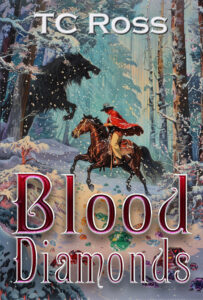
Every year, hunters ride into the cursed woods of Magnolia Manor chasing fortune.
Most never ride out.
September Zamfir isn’t after treasure. He’s running from a past that hunts him harder than any monster, and walking straight into the one legend no blade has ever ended.
But the beast is no mindless killer. Behind silver fur and porcupine spines is Verity: a young woman chained to an ancient curse, guarding the only family she has left.
When Sept offers the one thing no hunter ever has—help—she has to decide whether to trust the young man who sees through her claws . . . or condemn them both to the darkness that made her.
About TC Ross
TC Ross
TC Ross is an illustrator and urban fantasy author who also dabbles in related historical fantasy, romantic comedy, gaslamp, horror, and short stories.
She resides in Texas with her family, feeding the Fae and watching out for shifters. Hopefully, they never find her.
A chat with New York Times bestselling YA author Kristen Cicarelli about Heartless Hunter, The Crimson Moth Book 1, a “dangerously romantic Scarlet Pimpernel-inspired fantasy.”
Enemies-to-lovers doesn’t get more high stakes than a witch and a witch hunter falling in love in bestselling author Kristen Ciccarelli’s latest romantic fantasy.
On the night Rune’s life changed forever, blood ran in the streets. Now, in the aftermath of a devastating revolution, witches have been diminished from powerful rulers to outcasts ruthlessly hunted due to their waning magic, and Rune must hide what she is.
Spending her days pretending to be nothing more than a vapid young socialite, Rune spends her nights as the Crimson Moth, a witch vigilante who rescues her kind from being purged. When a rescue goes wrong, she decides to throw the witch hunters off her scent and gain the intel she desperately needs by courting the handsome Gideon Sharpe – a notorious and unforgiving witch hunter loyal to the revolution – who she can’t help but find herself falling for.
Gideon loathes the decadence and superficiality Rune represents, but when he learns the Crimson Moth has been using Rune’s merchant ships to smuggle renegade witches out of the republic, he inserts himself into her social circles by pretending to court her right back. He soon realizes that beneath her beauty and shallow façade, is someone fiercely intelligent and tender who feels like his perfect match. Except, what if she’s the very villain he’s been hunting?
Kristen Ciccarelli’s Heartless Hunter is the thrilling start to The Crimson Moth duology, a romantic fantasy series where the only thing more treacherous than being a witch…is falling in love.
About Kristen Ciccarelli
Kristen Ciccarelli
Kristen Ciccarelli is a New York Times-bestselling author whose books have been translated into over a dozen languages. She is the author of Heartless Hunter (Book 1 in The Crimson Moth duology), Edgewood, and the internationally bestselling Iskari series.
Before writing books for a living, she dropped out of college and worked as a baker, a potter, a bookseller, and an NGO worker. She currently resides in the NIagara region of Ontario with her husband and toddler.
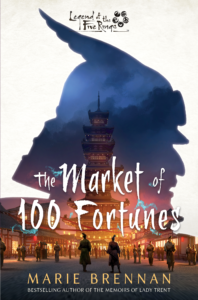
Enthralling fantasy mystery from the world of Legend of the Five Rings as two samurai risk everything to rescue an old friend from the clutches of a shadowy trickster
Having vanquished demons and halted invasions of devious creatures from the Spirit Realms, Asako Sekken and Agasha no Isao Ryotora are finally going to be married. But when a note from their old ally Sayashi arrives unexpectedly, the samurai find themselves dragged into another supernatural mystery.
Their investigation leads them to Crane lands and an ancient market ruled by a mysterious being. Now Sekken and Ryotora must use all their wit and charm to save Sayashi from a hundred year bargain before they find themselves embroiled in a conflict with a forgotten deity of unimaginable power.
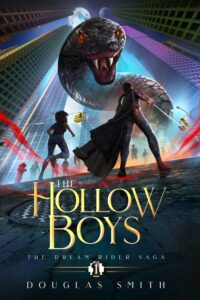
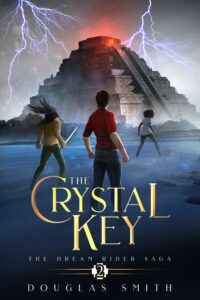
Indiana Jones meets Teen Titans in The Dream Rider Saga, a fast-paced urban fantasy trilogy from “one of Canada’s most original writers of speculative fiction” (Library Journal).
Praise for Marie Brennan’s Legend of the Five Rings trilogy
“Both protagonists are pining idiots, though for fascinatingly different reasons. Five out of Five.” — Lauren’s Bookshelf, on The Night Parade of 100 Demons
“It transcends its tie-in roots to deliver a powerful, emotional tale of loyalty, honour, duty and love.” — Track of Words, on The Night Parade of 100 Demons
“An absolute ‘must read’ choice for fans of Samurai novels and Heroic Fantasy Fiction” — Midwest Book Review, on The Game of 100 Candles
About Marie Brennan
Marie Brennan is a former anthropologist and folklorist who shamelessly leans on her academic fields for inspiration. She recently misapplied her professors’ hard work to The Market of 100 Fortunes and the short novel Driftwood.
She is the author of the Hugo Award-nominated Victorian adventure series The Memoirs of Lady Trent along with several other series, over eighty short stories, several poems, and the New Worlds series of worldbuilding guides; as half of M.A. Carrick, she has written the epic Rook and Rose trilogy, beginning with The Mask of Mirrors.
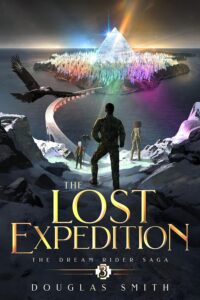
A chat with Canadian author Douglas Smith about his young adult fantasy trilogy The Dream Rider Saga, which has just culminated in Book 3, The Lost Expedition.
The Thrilling Conclusion to the Multi-Award-Winning Trilogy
Will is the Dream Rider, the superhero who walks in our dreams but never in the streets of his own city. Case is his girlfriend, a survivor of those streets who hears voices warning her of danger. Fader, her brother, is very good at disappearing.
In The Hollow Boys, they defeated a body swapper and a witch to save the world. In The Crystal Key, they battled warring cults to protect an ancient artifact tied to Will’s affliction.
The Chakana. The Crystal Key. But the key to what? To finding answers, they hope, to the questions that rule their lives. What caused their strange powers? And Will’s crippling agoraphobia? Can he be cured? Why did their parents travel to the jungles of Peru eight years ago? Are they still alive?
Behind every question is the Chakana. What is the mysterious relic? Why will people kill to possess it? What hold does it have on Will?
As creatures from Inca myths haunt the three friends, another attack on the Chakana threatens Will’s life. To save him and solve the mystery of the lost expedition, only one choice remains. Return to Peru. With the Chakana.
There, they find friends and foes, both old and new. And behind it all, an unseen enemy moving them like pieces on a chessboard. To win this deadly game, Will, Case, and Fader must master new powers to defeat the most dangerous adversary they’ve ever faced—a god.
At stake this time? Every life, every world, every universe. Everything.
Indiana Jones meets Teen Titans in The Dream Rider Saga, a fast-paced urban fantasy trilogy from “one of Canada’s most original writers of speculative fiction” (Library Journal).
Praise for The Dream Rider Saga
The Lost Expedition (Book 3)
“Smith powers to an explosive conclusion in the finale of his Dream Rider series, a lavishly concocted ride brimming with magic, mystery, and mayhem… [and] bursting with dark magic, beastly protectors, and a slew of extraordinary fantasy characters … Smith skillfully probes deeper messages behind all the fun, as the main players face the consequences of humankind’s disregard for the Earth—and each other. … Takeaway: Explosive conclusion to this spectacular fantasy joyride.” — BookLife (Editor’s Pick)
The Hollow Boys (Book 1) Winner of the Aurora Award for Best Young Adult Novel Winner of the juried IAP Award for Best Young Adult Novel
“This arresting series kickoff grips from the start as it introduces its inventive milieu, its flawed but fantastically powered hero, its playful worldbuilding, and a host of tantalizing mysteries. … Takeaway: Thrilling YA fantasy”—BookLife (Editor’s Pick)
“An assured, confident novel… A must-read story for YA fantasy fans.”—Blueink Review (Starred review)
“Inventive, engaging, and boundless fun.”—The Ottawa Review of Books
“A fun supernatural tale with well-developed characters and a touch of romance.”—Kirkus Reviews
The Crystal Key (Book 2)
“This thrilling superpowered urban fantasy series continues to grip.”—BookLife (Editor’s Pick)
“This fast-paced story delivers in a big way—and Smith has all his ducks lined up for an explosive conclusion that readers won’t want to miss.”—Blueink Review (Starred review)
“The Crystal Key has everything that made The Hollow Boys work and turns it up a few notches. I can’t wait for the conclusion in The Lost Expedition.”—Ottawa Review of Books
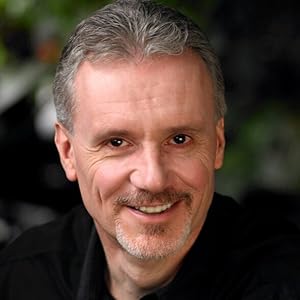
About Douglas Smith
Douglas Smith is a multi-award-winning author described by Library Journal as “one of Canada’s most original writers of speculative fiction.”
His latest work is the multi-award-winning YA urban fantasy trilogy, The Dream Rider Saga (The Hollow Boys, The Crystal Key, and The Lost Expedition). Other books include the urban fantasy novel, The Wolf at the End of the World; the collections, Chimerascope, Impossibilia, and La Danse des Esprits (translated); and the writer’s guide Playing the Short Game: How to Market & Sell Short Fiction.
His short fiction has appeared in the top markets in the field, including The Magazine of Fantasy & Science Fiction, Amazing Stories, InterZone, Weird Tales, Baen’s Universe, Escape Pod, On Spec, and Cicada.
Published in twenty-seven languages, Doug is a four-time winner of Canada’s Aurora Award, most recently in 2023 for The Hollow Boys, as well as the juried IAP Award for the same book. He’s been a finalist for the Astounding Award, CBC’s Bookies Award, Canada’s juried Sunburst Award, the juried Alberta Magazine Award for Fiction, and France’s juried Prix Masterton and Prix Bob Morane.
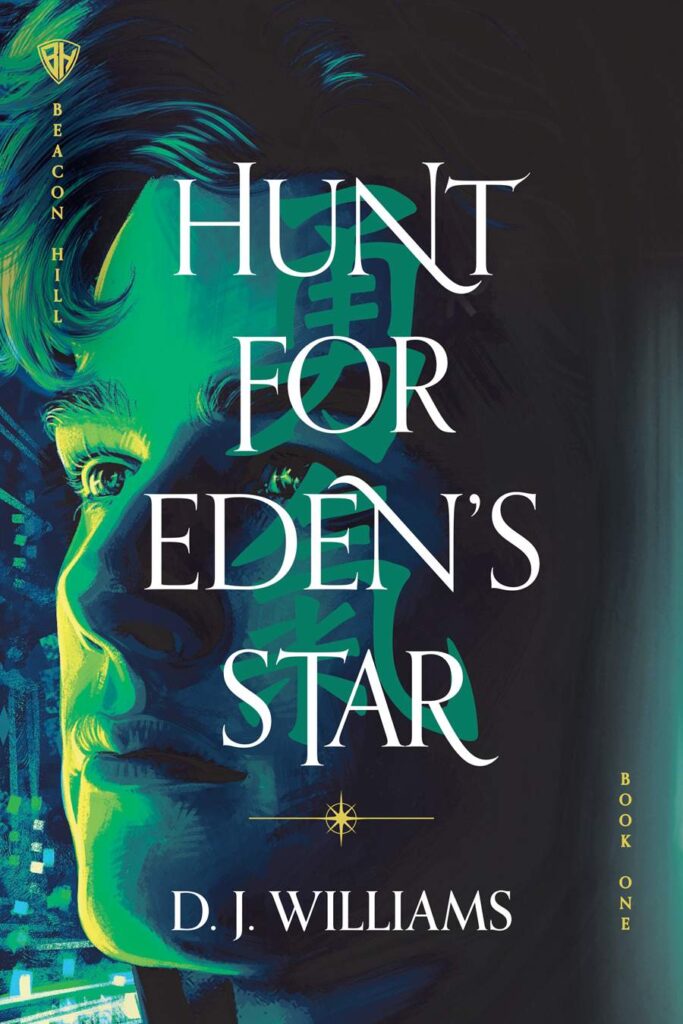
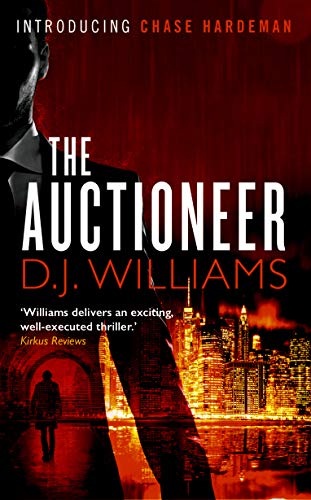
With the DNA of a world traveller, D.J. Williams was born and raised in Hong Kong, igniting an adventurous spirit as he ventured into the jungles of the Amazon, the bush of Africa, and the slums of the Far East. His global travels submerged him in a myriad of cultures, providing a unique perspective that fuels his creativity.
As a fresh voice in mystery, suspense, and YA fantasy, his novels have garnered stellar reviews from Kirkus Reviews and climbed the charts on Amazon Hot New Releases, ranking as high as #1. Leading up to the launch of his latest YA series, Beacon Hill, and an eighteen-city book tour, the trailers and web series teasing the first book, Hunt For Eden’s Star, have reached more than one million views. Hunt For Eden’s Star is also currently under consideration for film & television optioning by the producers, production companies, and studios who created the most successful YA franchises of all time.
Residing in Los Angeles, Williams continues to develop new projects for television, film, and print.
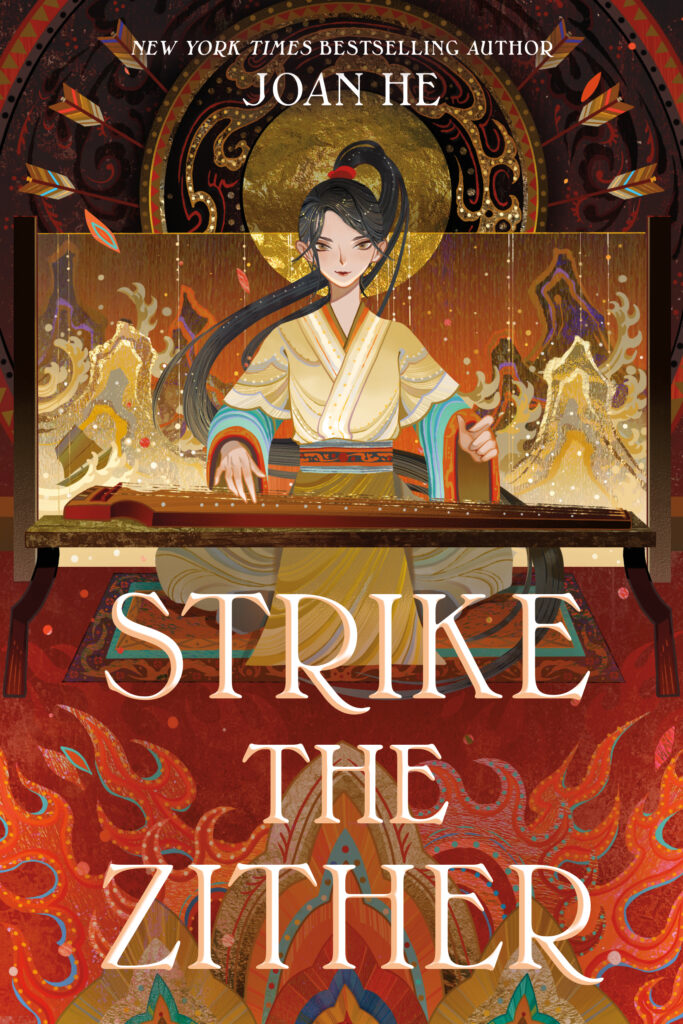
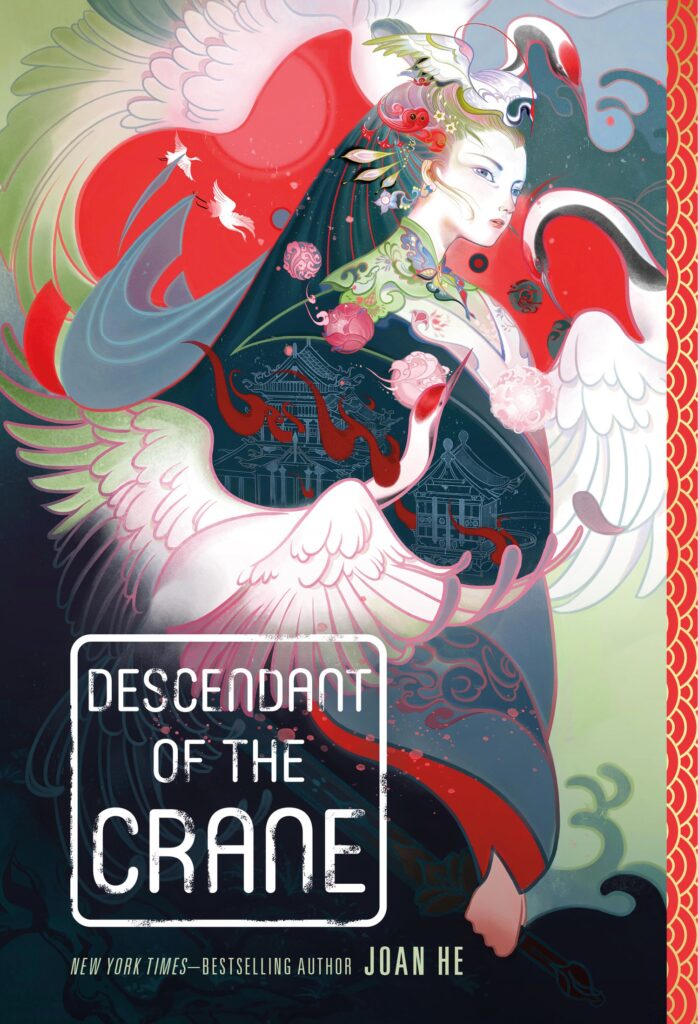
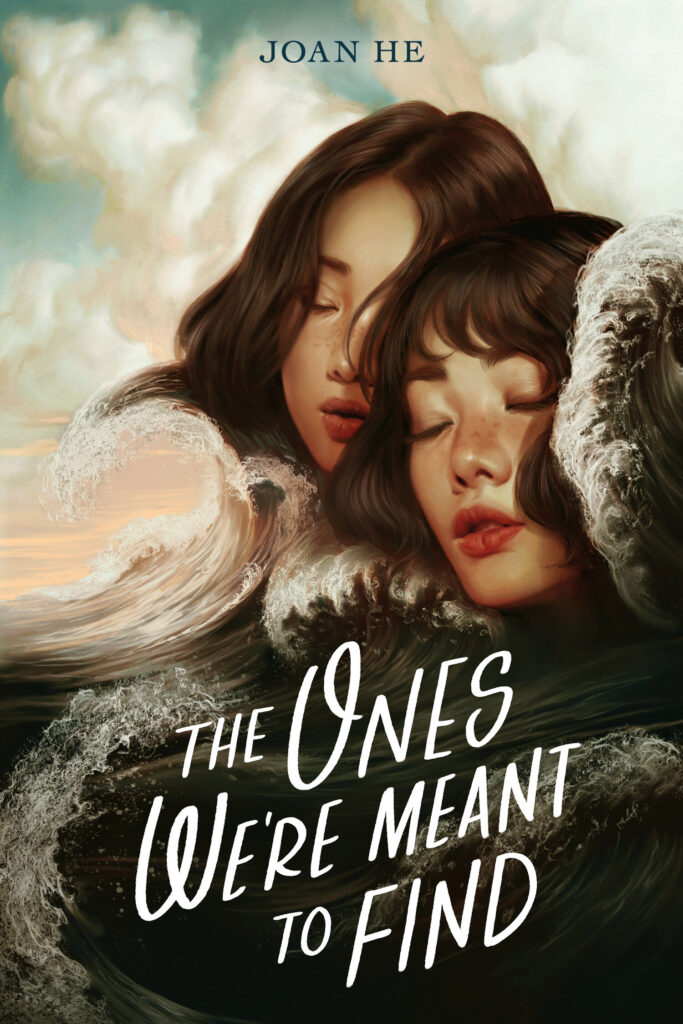
An hour-long chat with Joan He, bestselling author of The Ones We’re Meant to Find, Descendant of the Crane, and Strike the Zither, the first in a duology, recently released by McMillan.
Joan He was born and raised in Philadelphia but still will, on occasion, lose her way. At a young age, she received classical instruction in oil painting before discovering that storytelling was her favourite form of expression. She studied Psychology and East Asian Languages and Cultures at the University of Pennsylvania and currently splits her time between Philly and Chicago.
She is the bestselling author of The Ones We’re Meant to Find, Descendant of the Crane, and Strike the Zither, the first in a duology, recently released by McMillan.
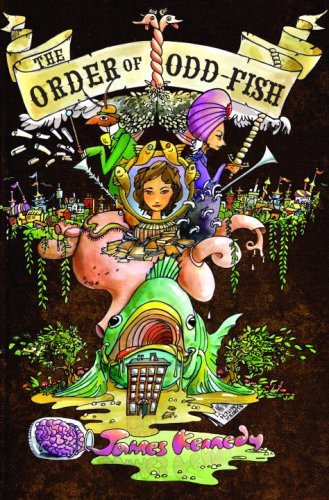
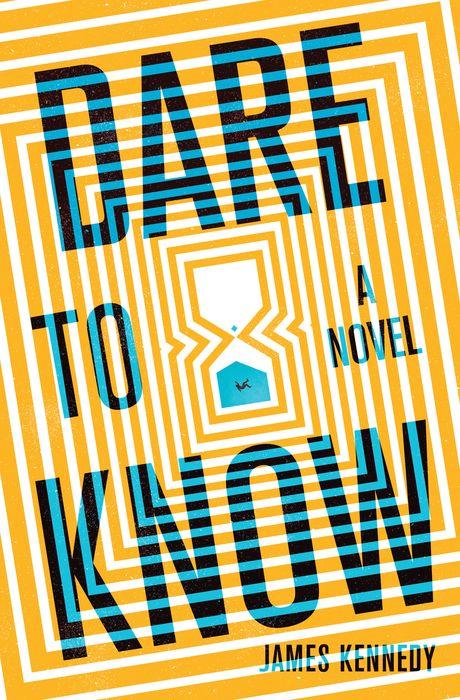
An hour-plus chat with James Kennedy, author of the speculative thriller Dare to Know and the YA fantasy The Order of Odd-Fish, and founder of the 90-Second Newbery Film Festival.
James Kennedy is the author of the speculative thriller Dare to Know, which the Guardian praised as “a fascinating, compulsively readable thriller” and SFX Magazine called a “superb piece of storytelling: vivid, thought-provoking and unsettling.”
James is also the author of the young-adult fantasy The Order of Odd-Fish and the founder of the 90-Second Newbery Film Festival, in which kid filmmakers create short movies that tell the entire stories of Newbery-winning books in about 90 seconds, which screens annually in a dozen cities nationwide. He also co-hosts the Secrets of Story podcast with Matt Bird. James lives in Chicago with his wife and two daughters.
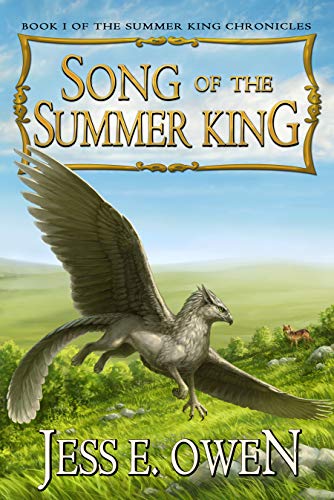
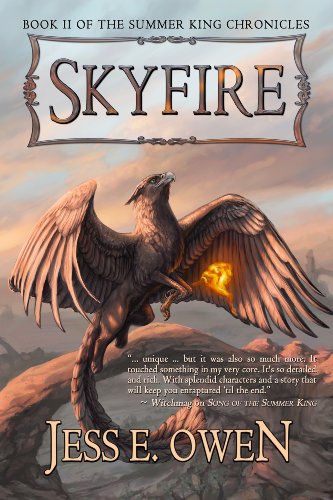
An hour-long chat with Jess E. Owen, award-winning author of the Summer King Chronicles, short stories that have appeared in Cricket and various “furry” genre anthologies, and an upcoming contemporary young adult novel.
Jess Owen is the author of the Summer King Chronicles, a young adult fantasy adventure that she describes as Lion King meets Lord of the Rings. The first book in this debut series won a gold medal in the Global e-book awards, and an Honorable Mention in the Writer’s Digest Self Published Book Awards. The second book, Skyfire, won an Ursa Major from the Anthropomorphic Literature & Arts Association for best novel in 2013.
Her short fiction has appeared in Cricket Magazine and various “furry” genre anthologies. She continues to write in the world of the Summer King, and has also penned a contemporary young adult novel, due out in spring 2022, by Page Street Books.
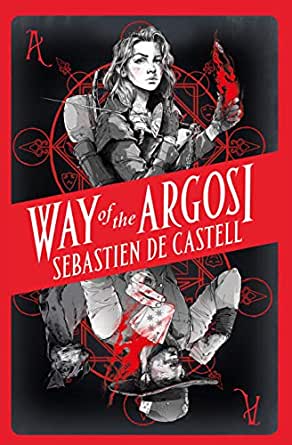
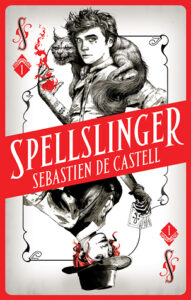
An hour-long conversation with Sebastien de Castell, award-nominated author of the swashbuckling fantasy series The Greatcoats and YA fantasy series Spellslinger, whose latest book is Way of the Argosi.
Sebastien de Castell had just finished a degree in Archaeology when he started work on his first dig. Four hours later he realized how much he actually hated archaeology and left to pursue a very focused career as a musician, ombudsman, interaction designer, fight choreographer, teacher, project manager, actor, and product strategist. His only defence against the charge of unbridled dilettantism is that he genuinely likes doing these things and that, in one way or another, each of these fields plays a role in his writing. He sternly resists the accusation of being a Renaissance Man in the hopes that more people will label him that way.
Sebastien’s acclaimed swashbuckling fantasy series, The Greatcoats, was shortlisted for both the 2014 Goodreads Choice Award for Best Fantasy, the Gemmell Morningstar Award for Best Debut, the Prix Imaginales for Best Foreign Work, and the John W. Campbell Award for Best New Writer. His YA fantasy series, Spellslinger, was nominated for the Carnegie Medal and is published in more than a dozen languages.
Sebastien lives in Vancouver, Canada with his lovely wife and two belligerent cats.
The (Lightly Edited) Transcript
So, Sebastien, welcome to The Worldshapers.
Thanks so much for having me.
I should have practiced “dilettantism” before I tried to read that bio.
Yeah, that’s that’s one of those tricky words, isn’t it, where there’s just one too many syllables for what we kind of expect when our eyes go over the word
And all those Ts. It’s very confusing. But yeah. So, we are both in Canada, we haven’t met anywhere, but we do share a publicist in Mickey Mickkelsen from Creative Edge, and that’s kind of how I made connections with you. Also, you were mentioned by Chris Humphreys, whom I interviewed not that long ago, as somebody who was kind of a beta reader for his stuff. And I thought, hey, I should talk to Sebastien. So here we are.
Well, you know, I’ve only recently met Mickey and he seems lovely, but I think it’s important to get on the record that Chris Humphreys is a dastardly rogue. He’s too talented. He’s too good looking. And above all else, he’s far too British for anyone to trust.
Well, I enjoyed talking to him anyway, and I’m sure I’ll enjoy talking to you, too, as well. So, I’m going to start as I always start, which is to take my guests back into the mists of time—I’m going to put reverb on that any day now—and find out . . . well, you started in archaeology, you didn’t start in writing, but you must have been interested in reading and writing before that. So how did that all come together for you? How did you get interested in in the world of telling stories, and where did you grow up, that kind of thing?
Oh, all the all the good stuff. I grew up as a young man in a troubled small town far to the east where . . . no, I was never one of those what I think of, and perhaps inappropriately, as natural writers. I’m not sure there is such a thing as a natural writer now. But I often meet other writers who will talk about the fact that they were always writing, and I was not always writing. My first serious foray into writing was when I was 27. I was in a a beleaguered and failing rock and roll band making, you know, two hundred and fifty bucks a weekend playing cover tunes, being sued by the bass player for control of the band. And when you’re being sued over control of a of a group who fundamentally makes their living playing “Brown-Eyed Girl” in bars in the interior of British Columbia, you know, you’ve hit a creative low point in your life.
And so I did what I did, what I think I’ve always sort of done in my life when I felt like I was, you know, missing purpose and a plan, which is I went to the library. And, you know, like most writers, I’m a huge . . . not so much an advocate of libraries, but a huge user of libraries, someone whose entire existence to some degree relies on the fact that libraries are there and that at any point in your life, no matter what’s going on, no matter how confused or depressed you might be, you can walk into a library and all of a sudden there’s, you know, a million different possibilities to sort of explore.
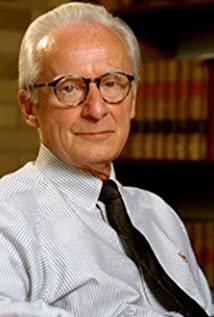
Ralph McInerny
And when I was there, I found a box of book tapes, which was a course by a guy named Ralph McInerny, and it was called Let’s Write a Mystery. And this was such a strange thing. It was a set of 24 tapes. Twelve tapes, 24 sides, cassette tapes, and an accompanying book, and the accompanying book was the draft of a novel that he writes as he’s dictating these tapes to you. And he talked in a sort of a 1960s professorial sort of voice, the kind you would have heard in science class in high school, where you would sort of say, you know, “And today we’re going to make our protagonist and he should be a guy you’d like to have a beer with.” And oddly, that kind of strange, soothing tone allowed me to do something I don’t think I’d ever been able to do before, ever would be able to do before, which is to write my way through a novel for the first time. And as it should be, as the universe demands, that novel was terrible. It’s called Skeletons in the Cloister. It’s an archaeological mystery that deeply reflects my love of archaeology, or lack thereof. But it taught me everything, you know, it suddenly changed the entire way that my mind worked, such that I was able to conceive of how to write a novel, like, nothing felt too big anymore.
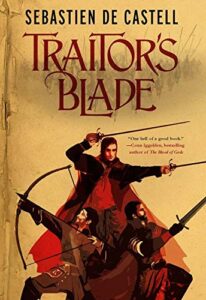
And so, a few years after that. . . and I felt so good, like, it just changed my life in the sense that even having written this one terrible novel, I was just so much more confident and so much more interested in people and in the world around me. And a few years later, I decided to do what’s called the Three-Day Novel-Writing contest, which is an annual contest that’s been around forever, where you try and write, you know, something in three days. And I ended up writing 44,000 words of a novel in three days. All the while, I think I still went for runs. I slept more hours than I usually sleep. And I had a music gig where I had to learn to sing “The Lady in Red,” which is a rather painful song for me to sing for purely musical reasons. And so, somehow I ended up with this draft, which I was super happy with. And years later I decided, What the hell, I’ll give a shot at this. And I revised that novel and nearly tripled the length in the process. And that became Traitor’s Blade, which was the first book in the Greatcoats series, which launched my career. And, you know, it has gotten me to the lofty heights to which I ascend to this day.
Well, if we go back, way back, you must have been a reader. Nobody suddenly decides to write if they haven’t been a reader. What sorts of things did you read growing up?
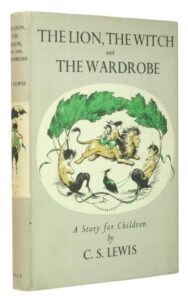
Well, when I was . . .I came to reading actually through my sister, who when . . .I was a comic- book reader as a little kid. In fact, the first time I realized I could read in English was reading a comic, because I used to just look at the pictures. And then I went to French school, even though I only spoke English. Getting dumped into French school at six years of age when you only speak English is quite a trauma, I can tell you. And so, my first sort of actual exposure to learning to write any language was in French. And then one day, I suddenly noticed I could . . . I was looking at the same old comic books and realized I could read the words, which was a very strange experience to have. But from there, I sort of, you know . . . when I was about nine years old, my father was dying of cancer. And my mother asked my sister, who is about 15 years older than me, to take my brother and I on a trip to England and France to kind of get us out of the house, I guess. And I mean, we didn’t have much money. So, you know, how my mother and sister made that work is still baffling to this day. And she started reading to my brother and I from The Lion, the Witch and the Wardrobe. And so, I became completely enthralled with Narnia and in that world for a while.
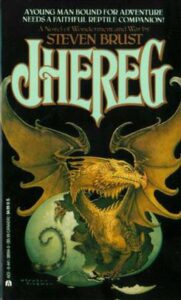
But it wasn’t until in my teens where I really started reading in English for myself. I read when I was in French school, I wasn’t always . . . I had a period of time where—I think lots of us do—where you get kind of disconnected from other people. And again, the library, the school library, was a sort of a place of refuge. And I read a little bit there, but it was when I was around 15, 16, where a friend of mine in an English high school by the name of Edward Swatchek (sp?) was kind enough to give me a copy of a book called Jhereg by Steven Brust. And I was just blown away by this book. I mean, I still think in many ways he’s not recognized—even though he’s widely admired. I don’t know if he’s recognized to the degree to which I think he helped inform some of the stylistic options available to fantasy writers, that we didn’t have to write everything in “thees” and “thous” and things like that.
I certainly remember my encounter with him when I was probably university age, when I ran into Steven Brust and I read everything I could get my hands on.
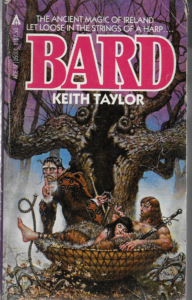
Yeah, me too. You know, To Reign in Hell is, like, such a deeply troubling book, actually, that I . . . I adored it but could never read it other than the one time, because there’s just so much for me. There was just so much emotional trauma tied to how well that story is told. But I so I kind of fell in love with that. And that kind of led me to other books, some of which are sort of forgotten sometimes, including Keith Taylor the wonderful Australian author’s Bard books about Felimid mac Fal He wrote a series of books about an Irish bard that were just so full of sort of verve and zest that they made me want to become a bard, which to one degree or another, for the rest of my life, I’ve been sort of trying to do that, which is partly how I got stuck being sued by the bass player . . .
I was going to say . . .
The bass player is a perfectly nice guy, by the way. We’re still friends. And, you know, and into some books that I think are now being sort of reconsidered to some degree, like Stephen R. Donaldson’s Thomas Covenant books and things like that. So, my sort of, you know . . . which is, sorry, a very long-winded way of saying, like my sort of sense of fantasy, which is the domain in which I largely write—I also write sort of mysteries on the side, but not that I think anyone would really want to read—but my sort of sense of fantasy was really drawn from the ‘80s, which is a strange place to derive it from because it’s both too late to be the classics and sort of too out of date to entirely sit within the, kind of the present taste for fantasy.
Well, what actually then drew you into archaeology that you then found out you hated when you actually had to go on a dig?
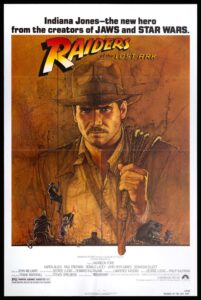
At the time, I would have had a better answer. Positioned as I am sufficiently far away from it. I think it’s I can admit that it was Indiana Jones.
Mm hmm.
And the thought of adventure. You know, adventure is a very difficult thing to get these days. Right. You know, society isn’t really structured around adventure. The kinds of adventure that are largely available to us as human beings now involve either extreme sports, which, you know, doesn’t sort of have that kind of quest feeling to it unless you really like hiking up dangerous mountains, which is great, but not totally my thing. Or if people, you know, sort of want to join the military, which requires, you know, a sort of an ideology that not everyone necessarily shares. But there’s not all the sort of opportunities for adventure and archaeology. When I was in university, you know, I think, as many people did, I conflated it with the sort of adventurous side that’s presented in an Indiana Jones movie—which in my defense, because I realize this sounds pretty pathetic, but in my defense, the archaeology department at Simon Fraser University did once confirm to me that every time a new Indiana Jones movie came out, their enrollment shot up through the roof.
I’m pretty sure Indiana Jones’s approach to research and working in the field would not work in the real world.
But what’s absolutely fascinating about that to me now is, because I remember by the time the second or third movie was coming out, people were sort of saying, “Well, you know, that’s not proper archaeology.” And, you know, we now know that it’s not. But if you listen to or read the transcripts of the original conversations between George Lucas, Steven Spielberg, and I think Larry Kasdan, who actually wrote the script, they were very intentional about the fact that this was not a good-guy archeologist. He wasn’t doing archaeology. He was a kind of antiquarian thief. And that his sort of justification was, someone’s going to raid these temples anyway, someone’s going to steal this stuff. At least if I steal it, I’ll sell it to a museum rather than a collector. And so, there was a . . . there’s a stronger element of the anti-hero in Indiana Jones than there is in Han Solo, who is regrettably often quoted or listed as being an anti-hero, when, in fact, he’s nothing of the sort.
The archaeology thing and being on a dig and realizing you didn’t like it . . . I went through the phase like many kids do, thinking I might want to be a paleontologist because, you know, dinosaurs are cool. And then I’ve had the opportunity since then to be really into paleontology digs and all that bending over in the hot sun with a toothbrush, brushing away dirt, I realized . . . much as when I went out with a veterinarian, a farm-animal veterinarian, and had to see what they did with farm animals when I was in high school and I realized that veterinary medicine was not for me either.
Yeah. My goodness. You know, paleontology is archaeology magnified in the sense that . . . I often tell people that archaeology is an excellent—like, field archaeology specifically because obviously there’s many, many different kinds of many different branches of archaeology—is actually, by the way, a good career. People do earn good livings as archaeologists, strangely enough. But field archaeology is an excellent endeavor if you really like camping, because basically that’s what you’re doing. You’re camping and then you’re out in the hot sun and then you’re pulling out the toothbrush. And, you know, at night there’s the campfire and drinking and not tons of showers. And, you know, if that’s your thing, it’s fantastic. I’m really . . . probably no one’s going to quote me when they’re putting together posters to promote archaeology programs. But it is it is a wonderful field. I’m super glad that it exists. And I’m almost equally glad that I’m not in it anymore.
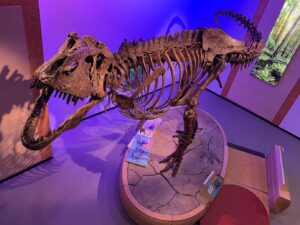
Well, the drinking and camps . . .we’re not far from here is the Royal Saskatchewan Museum, and it has a cast of Scotty, who’s the largest T-Rex found in North America. And I was at the dig when they were pulling him out of the ground out in the Frenchman River Valley. But the reason he’s called Scotty is because when they found him and realized what they had, they went back to camp and drank a bottle of scotch. That’s why he’s Scotty. And the paleontologist, Tim Tokaryk, who was working on it, said that it’s like when you have a find like that, it’s, “Yeah, this is exciting.” And then, “Well, now I know what I’m working on for the next multiple years of my career.” I also wanted to ask you about being a fight choreographer. You actually are somebody who knows how to use a sword, is that right?
I am, in as much as anyone sort of knows how to use a sword without ever having to actually risk their lives with one, because obviously that changes everything. But yeah, I used to fence quite a bit. Years and years ago. And then for a while I was doing sword choreography for the theater and that, you know, informed my writing in all the ways you can imagine. But so, there are other . . . there are many other writers in fantasy who have far better credentials on that particular front than I do. I think specifically of someone like Miles Cameron, who is genuinely a historian, both more broadly and specifically of arms and armor and things like that. But, you know, I have some game
And you’ve done some acting as well. And I always ask about that because I’m a stage actor and I have found that being an actor influences my writing as well in a beneficial way. So ,I’m just curious, all these things, the archaeology, the fight choreography, the the acting, the music, does that all fit into your stories, do you think?
Oh, absolutely. I think one of the beautiful things about writing, and something I’m very passionate about, just as a human being, is everyone writing a novel. I think everyone who wants to write a novel should write a novel. I think we all have a good book in us. It’s just varying levels of effort to get it out. And often, I meet people who are nervous about . . . they’re having trouble writing their novel and they get very stressed out and they’re worried that because they’re having trouble, they won’t do it. And I always say that one of the wonderful things about writing, and I think especially fiction, is that it feeds on everything you’ve experienced. And so, there’s always time to write your novel in the sense that, you know, if this isn’t the year, it might be next year or the year after. It might be that it’s the experience of going to a place or doing a particular job that’s going to unlock it for you. And all of it feeds into it.
For me, music is probably the element that influences my writing more than anything else, because music introduces that notion of the contrast between rhythm and melody and rhythm can very loosely be attached to pacing, for example, inside of a scene or inside of dialogue, and melody can kind of loosely be attached to the sort of emotional intensity and tonality of the writing. So ,everything influences it. But I’m often more conscious, I would say, of music as driving the feeling of a scene for me as I’m writing it. And, you know, very frequently when I go . . . I run quite a bit. I’m an absolutely terrible runner, but running has this weirdly perfect combination for me that . . . it’s hard on me because I’m not good at it, and so it makes me emotionally kind of vulnerable. And so, I’ll listen to music, which also tends to make me emotionally vulnerable, and I will have to conjure up scenes, and then I’ll have these profound emotional reactions to an idea for a scene. And so, people will be wondering why this pathetically slow runner going up a hill is crying.
I would cry running up a hill, but . . .
It’s just that thing that allows you to kind of, you know, put things together at that right moment. That’s so much . . . I think what the act of creation is from the standpoint of a novelist is, it’s this combination of you have to put your body and your brain into a particular state. For some people, that’s, you know, they burn incense and light a . . . and drink the right tea and sit at the right place at the right time of day. For me, it’s actually being somewhere. It’s doing something. It’s having an experience that’s outside of my normal day that that kind of drives it. So then, it’s that putting yourself in that state and then allowing those kind of emotions to run a little bit rampant and all your dark little secrets to kind of creep up from your subconscious. So, yeah, so all those sort of activities help, but they all help in different ways. You know, the fight choreography taught me a lot about the role of a character inside of a scene because, you know, you were mentioning . . .. you’ve been a theater actor, have you done any stage fighting?
Not with weapons. There’s been a couple of fistfight things, but that’s all.
Well, you know that typically . . . you know, there’s a famous sort of Shakespeare line, “They fight,” which is . . . you’ll have this massive script full of the world’s most amazing dialogue. And then it’ll be, you know, somewhere it’ll say Romeo and Paris confront each other in the fourth act or third act of Romeo and Juliet. And they have these lines, wonderful lines of dialogue. And then it just says, “They fight.” And so, what a fight choreographer has to do is somehow put in a piece o choreography in which that conversation continues, but without words. And so, the way a character fights . . .and then, this, I think, can be expanded to the way a character moves and can be expanded to the way a character does anything is a constant reflection of the sort of the narrative that they’re telling about themselves, right? I am the hero in this fight. And, you know, I’m much more devious than you think I am. You know, all of these sorts of things can play out inside of a swordfight, which is what makes those fun for me to write
I’m not someone who typically watches or aims to watch, you know, boatloads of action movies because often those are spectacle devoid of narrative. Not always. You know, if you watch . . . I think Jackie Chan is particularly wonderful at this putting kind of a story into his fight scenes. But a lot of fight scenes now tend to be spectacle without the need for narrative. But so, that’s what I learned from fight choreography. So, to round it out, all of that kind of informs the writing and sometimes in ways that you’re conscious of and sometimes in ways that you’re not.
Well, I think for me, it’s not the fight choreography so much, but just the acting and the fact that when you’re acting . . . I’ve also directed plays, and you’re always extremely conscious of where everybody is in relationship to each other within the space. And I think that that carries over when it comes to writing scenes and having that mental image of where everybody is in relation to each other. And when I mentor younger writers or do instruction, I will sometimes find scenes that seem to happen in just kind of this amorphous grey space and there’s no sense of place and they lose track of where characters are. And I just think that the acting and directing side is kind of helps with that and obviously fight choreography even more so when it comes to writing those fight scenes.
I just wanted to say, I think I always view the actor role slightly differently in this regard, that . . . the thing I didn’t understand about acting, even probably in the time when I was an actor properly, is that an actor’s job isn’t to perform a particular set, deliver a particular set, of words while making a particular set of actions, but that it’s a much more sophisticated process in that they’re creating all of these interpretations and layers that aren’t available in the script itself. And for me, that’s what the reader does, right, that when the reader picks up the book, they’re reading the script and they’re having to direct all of the action and produce all of those, a lot of those layers of subtext themselves, which is what’s so amazing about it. It’s also one of the reasons why I absolutely adore getting, hearing, the audio books of some of my books, because there you have an actor and often an extremely skilled actor who is suddenly taking your text and adding all of these layers to it that are, that just for me, just bring the story alive in a completely different way than I expected.
Yeah. I often say that although writing is a solitary act, it’s actually a collaborative art form and that you’re collaborating with the reader and you don’t actually know what the final art form is because it happens individually in each reader’s head. Each reader is constructing their own version of your story based on their own background and understanding of the words that you were using. And it’s really, really fascinating to think about that. When you write a book, you’re actually writing a whole bunch of books, because every reader is getting a different book out of it.
Absolutely, and yeah, and I’m philosophically I’m a believer in reader response theory, which argues that the only, that the true narrative act is, is when the reader reads the text, that s the author, our, you know, our intent becomes irrelevant the moment the words are fixed to the page because it doesn’t matter what I intended or what I was thinking. That’s not available to the reader. There’s only the text and they will, from that text, conjure up whatever they want to conjure.
It’s one of the reasons I also don’t take it too personally if sometimes someone will say, you know, “Oh, this this represents this, this scene represents something horrible or this character is vile,” or, you know, this book is about something that it’s not about for me because I always recognize well, it is about those things for that reader. And it’s why I think, you know, literary criticism is such a tricky area. You know, it’s expanded so much because, you know, everyone has a YouTube channel now or lots of book bloggers are out there. And there’s sometimes a sort of an attempt to kind of consolidate a sort of a definitive interpretation of a book, which to me is a pretty problematic effort at best. Whereas, you know, sometimes when people are just trying to share what they love or even what they hate about a book, that sort of to me always feels like a more personal expression. And therefore, it always aligns better with my own sense of, as I say, a reader response theory, that every reader is the one constructing the story from the text.
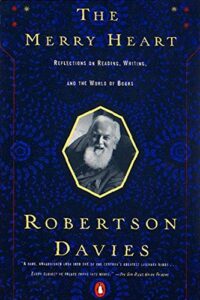
That’s interesting. I’m currently reading a collection of Robertson Davies essays published just after he died in the mid 90s, and he had a line in there to the effect that he hated it when a reader would say to him, “So what you’re trying to say in this is,” and he would always say, “No. I said what I’m saying to the, you know, to the best of my ability, your job is to figure out what I’m saying.” And I thought, I don’t quite buy that.
You know, that always feels like a very Canadian thing to me. I don’t know why, but I always feel like, when I hear kind of the Canadian literati talk about books, that there’s such a strong adherence to a very old-fashioned notion of literature as this thing created by great minds that the rest of us should struggle to interpret. And if you don’t enjoy a great book, it’s because you didn’t interpret it correctly. And if you didn’t get out of it what the author later informs you through their memoirs they intended, then it’s because, you know, you didn’t interpret it correctly. So, I’m not a big fan of that perspective, I would say, which is nice, because this is my first time explicitly contradicting Robertson Davis. I’m sure that will go down in the annals of literary history.
I mean, I loved his essays. I love reading good stuff, but I did kind of push back against that. Well, now let’s move on to your process for creating great literature. But you have a book that’s just coming out, Way of the Argosi. When does that come out?
That comes out on April 19th. It’s oming out in various languages in various parts of the world, but I’m not actually sure what it’s publish date for North America is going to be. So, it’ll be available in pretty much everywhere except Canada and the United States on April 19th. It may end up being available in Canada and the United States on that date. But it’s a little wishy-washy right now.
Well, this this, as it happens, unusually for these podcasts, we’re doing this just a few days before it comes out. We’re doing this interview on a Monday, or is it Tuesday? And it will be coming out this coming weekend. So, it’ll be out very, very promptly, so, before that comes out. So, let’s start by a synopsis of it, and then we’ll talk about how you created it as an example of your creative process.
Sure. So, Way of the Argosi is a young adult fantasy novel about a young refugee who is pursued and tormented by the mages who massacred her clan. And as she sort of struggles to survive in this world, she finds herself trying to adopt the kind of archetypes of different ways that people navigate the world ,of trying to behave like a knight and, you know, trying to, you know, value honor. And when that sort of fails for her, trying to be a thief and surviving that way, but then finding the limits of that, and ultimately coming to meet one of these rather strange and enigmatic kind of what I would call a cowboy gambler, monks who are called the Argosi, who sort of offer her a somewhat different path through the world. But it’s one that comes at great cost. And so, that’s what Way of the Argosi is about. It’s the . . . the main character is Ferius Parfax, who is a character who appears prominently in the Spellslinger series. But this is her story, told for the first time.
Well, I haven’t had a chance to read the entire thing, but it immediately gripped me with the opening scene with the 11-year-old girl hiding among the corpses, you know, going on from there. Very gripping reading and opening, I think. Greatcoats, your first one that made your career, as you said, that wasn’t YA, was it?
No, no. The Greatcoats is definitely adult fantasy. Although, you know, the dividing line between adult fantasy and young adult fantasy is blurry at best. It’s very much a sort of a marketing distinction at times. If you think to the classic fantasy that we probably read as kids at various points, it very often featured younger characters who might start, you know, Way of the Argosi only briefly has Ferius as sort of 11, and then it progresses into her teenage years. But lots and lots of, you know, the Belgariad by David Eddings, for example, I think the main character starts out very young and stays very young throughout pretty much the whole series. So, it’s an odd distinction. But The Greatcoats definitely sort of fits into that classification of adult fantasy, if only because it sort of features a trio of middl-eaged men.
So why did you start focusing on YA? Because your next series was YA, was it not?
That’s right. Spellslinger sort of fit into that Y.A. category. I think . . . my wife is a librarian and she, I think, gave me the best definition of her notion of YA at one point, which was that young adult stories are about first experiences. And so, what happened was . . . Spellslinger was kind of interesting. Originally ,I was going to write it with one of my best friends and I sometimes write with a guy by the name of Eric Torin (sp?), who’s a well-regarded video game person, but also a terrific writer. And we wanted to write something together and we were spit-balling various ideas. And then. his life got very busy and he said, “No, you go off and do it.” And so, I’d written this story about an exiled former mage, you know, wandering the desert like Kwai Chang Caine from Kung Fu, which is a reference not everyone will get.
I do!
Yeah. And, you know, a more modern parallel is probably Jack Reacher in the sense that Jack Reacher is sort of like, you know, David Carradine in Kung Fu, but without the philosophy quite as much. And so, I had written this book and I I loved it and my agent loved it. And then it went through this sort of odd cycle of things where, all of a sudden, I was being asked by various publishers who are sort of saying,”Look, we would love to see a YA trilogy of prequels to this and would you be interested in doing that? And could you write a rough outline of what that would look like?” And I said, “OK,” which is always the first mistake I make when I’m asked to write a book proposal because they’re nightmarish, not so much in the process of making them, but in in the consequences where now you’ve basically given somebody nothing they can fall in love with, but something that they can critique.
And so, it kind of went through various cycles of that, where they say, “Well, now we need some chapters. Well, now we need some more chapters. Oh, this is looking really good. Can you write even more?” And I was like, I said, “You know, I’ve written almost half the novel now. I think you’re just asking me to write the novel.” But eventually, it sort of went back and forth between a couple of publishers. And I ended up with this very strange eight-book deal from Bonnier in the U.K. for world rights. And it was a really great deal. It basically meant for four years of my life, I had, you know, a ful-time, excellent income just writing those books. And so, we originally said we would do four books, would be Kellen as a young man, and four books would be Kellen as an adult. But then then an editor came on board who said, “Well, actually, I think we’d like six books, all telling the story of his youth,” which is what we did.
And then, that left two books on this contract. And I said at one point, “You know, what is it you want me to do with these other two books?” And they sort of said, “Well, you know, write whatever you want.” And I thought, Well, that’s like a really strange thing to do. And I didn’t have high hopes that doing so would result in a massive marketing push. But I was really delighted working with Bonnier and their imprint, HotKey Books. And so, as we were coming around the bend of wrapping up the six-book series about Kellie, I said, ”Look, you know, I’m if you want two more spells on your books, I’ll write two more Spellslinger books. If you want something different, I will, like, let’s talk about something that you could be passionate about.” And they were kind of interested in something that was set in that world but wasn’t just a continuation. And in the meantime, I was getting these letters. I get quite a bit of fan mail, or more than I sort of expected to get as a writer. And often the fanmail I get is from people who will say, “I read Spellslinger, I want to become an Argosi, tell me how to become at heart Argosi. And of course, you know, it’s a strange thing to try to sort of helpfully answer those letters because I am not an Argosi and there is no, you know, there’s no school of the Argosi.
But what I think people were sort of falling in love with was this notion of this system . . . the Argosi are a little bit like the Jedi, except rather than having basically magic, they kind of don’t revere magic, but they sort of mock magic. You know, in fantasy novels, magic is always this sort of moral superiority in a sense. You know, we all want to have it. And the Agosta are sort of like, “You know, that stuff’s all kind of children’s games. The real thing you need to learn how to do is dancing, you know, or singing, or learning languages.” And so, what the Argosi do is, they take very human phenomenon and, like, very human things, and they kind of elevate them almost to the level of magic. And the best example I can give is sort of martial arts, right? When you think of it, martial arts are pretty amazing, right? Like, the human body is a pretty crappy instrument for most forms of violence. We don’t have very good, you know, biting teeth. We don’t have very good claws. We’re sort of gangly-limbed. And somehow, humanity over the millennia has sort of created martial arts where all of a sudden these otherwise gangly bodies can become kind of amazing inwhat they can do. And so, I was sort of extending that with language and wit and even with something like swagger, like charisma and confidence.
And so, that’s what the Argosi kind of do. And so I . . . and because the Argosi are also an expression of my own philosophical bent towards existentialism, which, you know, of course, as with everything else, I’m not an expert on. But for anyone who’s completely confounded by what existentialism is supposed to mean, in its simplest form, it’s the idea that there’s no inherent meaning in the universe. There’s no natural purpose to anything. But humans, for whatever reason, can’t seem to live without a sense of meaning. And so, you know, existentialism is a philosophy that says, therefore, what you have to do is decide what is meaningful to you and live authentically to that. And so, the Argosi, rather than being a kind of an order of knights, as we’ve seen in the past, that have, you know, you must be this, this and this, or unlike the Jedi, let’s say, from Star Wars, the Argosi believe that every person has to find their own path and sort of take that on and embrace that and follow it where it leads. And so that seems to be, I think, very appealing for a lot of people these days who don’t feel like a lot of the traditional avenues that that, you know, our parents had or their parents had fit them very well. And so I, when it was time to deal with these last two books, I said, “You know, maybe I’ll write something that’s . . .” My original idea was was I’m going to write my own version of Paulo Coelho’s The Alchemist, which really nobody should do. I’m not entirely sure Coelho should have done it, because The Alchemist is basically sort of a fantasy story that is him expounding on his personal philosophy and spirituality.
And so, that’s why this got called Way of the Argosi, because I thought, Oh, I’ll just expound on all of that. But, of course, you know, it became just a very personal story of of this character, various power facts. And along the way, we sort of, you know, pick up some of those things. But it’s not a sort of a guide to how to become an Argosi in that sense. It’s a tale in which in which some of those ideas are explored. And so, yeah, I’ve been absolutely delighted with it.
I, funnily enough, I received the audiobook. They sent me the audiobook to get to listen to and the performer, Kristin Atherton, is so amazing. And, you know, going back to what we were saying about acting, she just brings that whole story to life in this whole new way. And it’s absolutely captivating for me because even though I wrote the words, you know, she takes them and she’s made them her words. And, you know, it’s like I’m getting to hear various effects for the first time.
Well, I think in all of that, we’ve kind of covered some of my usual questions about where the idea came from and the development of it. What’s your actual writing process look like? Are you an everyday writer, do you do it in long stretches or snatches around other things? Do you write with parchment and the quill pen under a tree? How does it work for you?
I write exclusively in blood. Not mine, you understand, other people’s, because I would get tired if it was my blood. I’d run out of energy. So, my process is a giant mess. And to kind of give you a sense of how big a mess it is, I’ll put it this way. In January of 2020, so, January of last year, I called my editor at HotKey Books and they were just transitioning from Felicity Johnston, who was wonderful, to go to a new fellow, Maurice Lyon, who is also wonderful. And I had this chat with her and I said, “Listen, I’ve been trying to write Way of the Argosi. It’s not working. It’s really not working. I need to push back publication by a year,” which is not a nice thing to do to your publishers. She, of course, was wonderful and said, “No problem. You know, I understand. Do you want me to read some of what you’ve written?” And I said, “OK, but it’s a disaster.” And then she took it and she shared it with Maurice. And a few weeks later, we had this conversation and they said, well, no, the stuff . . . they loved what was there, but it wasn’t quite hanging together. And in the course of a sort of a 20-minute phone call or 30-minute phone call, you know, a couple of ideas were bounced around. And Maurice said something like, “You know, I feel like you’re rushing from the moment of her trauma in that opening chapter to later events,” and that it would be OK to explore some of the stuff in between.
And that doesn’t sound like a particularly profound insight. But 60 days later, two months later, I was turning in the manuscript of Way of the Argosi, and virtually nothing changed from that manuscript to the one that is dropping in reader’s hands in the book on April 19. You know, it was copyedited by the fabulous Talia Baker, who transforms my occasionally clumsy sentences into something closer to sublime narrative. But the story was all there.
And so, my process is so messed up that I can get to a point of literally thinking there’s no hope for a book. And then, someone will say something that will seem very, very basic to anybody else. And yet, all of a sudden, that unlocks things in more sort of tactical terms or pragmatic terms, which was probably where you were headed with the question. But I’m fabulous for derailing questions. But on a tactical level, look, there’s things that I’m always very cautious when I’m asked this question. And the reason I’m cautious is because I know that a lot of listeners are either writers themselves or thinking about writing. And I’m always terrified of imparting something that will sound like the rules for a field that you and I both know really has no rules.
It’s kind of the point of this podcast, is that everybody does it different.
No, absolutely. And so, it’s one of those things where I always feel like I have to keep saying, “But of course, this may work differently.” And in my own life, in fact, I have probably done every different kind of writing, every different approach, all within the bounds of the 11 books I have published so far. So, with something like Way of the Argosi, the way that it finally came out was in part by saying, “All right, I am going to write this draft, knowing that the story may not go where I want it to go may not be anything of any value. And I’m just going to write every single day.” And that’s what I did. So, for 30 days straight, all I did was write this book and I didn’t worry about whether it was going somewhere logical or not. And then, somehow, it did. But I’ve done that again recently with a different book, and it’s gone straight to hell. I mean, it’s gone into a book that makes no sense, that has, you know, no artistic merits or values whatsoever. And so, it’s always all over the map. You know, with Knight’s Shadow, the second Greatcoats book, I think I wrote a 45-page outline, and to some extent, I followed that outline. So, I sort of use everything. And that’s the big challenge for me when I’m writing a book, you know, and I’m actually kind of glad that you’re making me talk about it here, because it sort of forces me to remind myself of this.
The biggest challenge when I set out to write a book is to figure out what is the process by which this particular book is going to come to life, because I don’t know what process that’s going to be. So, it might be, sit down and write a big outline. It might be, have no outline and just explore. And even beyond those very tactical concerns, there’s often a mental game involved, which I don’t know if you encounter this because, you know, in your writings, maybe . . . I’d be interested in hearing how you deal with this. But it seems sometimes as if we have to program our own brains or deceive our own brains or tell ourselves something . . . like, I’ll have to trick myself by saying, “All right, I’ve decided that this book isn’t going to be published and I’m just going to write, I’m going to write a book that’s going to, that’s basically intended to irritate fans of fantasy, you know, that all these people that talk about what fantasy is and what it should be and what tropes are allowed and not allowed, I’m just going to, you know . . .”, and somehow that’ll get me to a book that doesn’t offend people necessarily, but it seems to work, whereas other times I have to tell myself some other thing. And so that whole internal process, I think that’s why I’m so sensitive to not wanting to ever make any writer feel like they’re doing something wrong, because I just never know what the process is going to be.
I think my usual trick is just telling myself that I’ll get this mess out and once I get to the end, I go back and fix it. The first person I interviewed here, Robert Sawyer, and he got the term from Edo van Belkom, I think he said, he calls his first draft the vomit draft, because you just vomit it out and, you know, it makes a huge mess that you have to clean up, but you feel better so you could get on with the cleaning it up. My next book for DAW Books, The Tangled Stars, is this big, sprawling space opera that turned out to be humorous, which I didn’t really know going in, necessarily. And I’m struggling with it a bit. But that’s really what I’m telling myself, is, I’ve just got to get the words out there and then I’m going to I’ve got to fix all this stuff I know it’s horribly wrong with it right now, but not until I get to the end. That’s kind of the way I tell myself.
It’s interesting, because I sometimes correspond with Dean Wesley Smith, who, you know, is the writer of any number of Star Trek and Men in Black novels and Marvel comics, superhero novels and things like that, as well as all of his own series, the Poker Game Series and things like that. And he has a very specific philosophy about writing, which is, you write one draft, you turn off the internal critic entirely. You allow your brain to take the story wherever it’s going to go. You can cycle back while you’re writing as many times as you need to clean things up. But once you hit the end, that’s it. It’s over. It may get a sort of a typo-cleaning pass, but that’s it. And he’s very firm about this notion that you have to trust what you write and if you keep second-guessing what you write that that you’re basically training your creative brain not to trust itself, so it’s . . . and I’ve had a couple of books recently where following that is sort of process really worked for me. I’ve had others where it didn’t. But it is interesting that that even that notion of the first draft, is that the first draft, this getting stuff out of yourself so that you’re more analytical brain can fix it, or is that first draft the true and genuine expression of the story your artistic self wants to tell you, therefore you have an obligation to it? That’s the question.
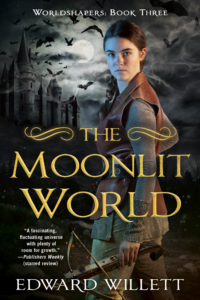
I would say with my . . . OK, we’ll talk about me for a minute. I would say with my writing, with my first draft that it is, I don’t change huge, huge things in these. You know, I have things to fix. But the overall story, I don’t, like, switch scenes around or move chapters here and there or anything like that. Once I have that something to the end, that is the shape of the story for sure. So, I guess I’m following a little bit into his way of thinking about it. So, it does get worked out in my head as I’m going. It’s just that I know at times that I’ve got I’ve got to do some foreshadowing back there because I didn’t really set this up and that sort of technical stuff. But the overall shape of the story, if I do run into trouble, which I did on my last one, The Moonlit World, I got to the middle of the book, realized that I could no longer get to where I thought I was going because my brain had changed things, and I had to go back and sort of take a fresh run at it from the beginning and read through it all and change a couple of things. And then, when I hit that stop spot in the middle, I was able to power through it and carry on to the end. So, it’s not . . . as you said and as this whole podcast is about, there’s no one way to do it.
And I think, yeah, it’s interesting, because I think the middle is the true book in a way, the true book that has to be followed in the strange sense that, you know, I will very frequently write an opening to a book that I think is terrific. And n fact, I almost never struggle to write a strong opening to a novel. But once you get into that second act, you know, however, one defines the second act, that’s where things get really, really fuzzy. And that’s where one of two things will happen, either for me, either I get lucky and I’m on the right track and that middle will carry me through that, you know, will carry me all the way through to the story itself, or I won’t be. And sometimes, I’ll do sort of what you described, which is I’ll cycle back to the beginning of the book, you know, right back, and all I’ll be doing is just changing a word here or there. It’s more just me reimmersing myself in where I started from and see if I can get to a better launching point in that second act.
The thing that appeals to me, I have to say, about Dean Wesley Smith’s model is the notion is it allows for the notion of a novel from the standpoint of a writer being a journey that you begin with the first word on the page and end with the last word at the end of the book. And that’s just, psychologically, for me is so appealing, right? The notion that today I will sit down and begin a book and then, you know, X number of days from now, I will end that book and it will be finished, I will have completed that journey, I will have climbed the mountain as opposed to what very frequently happens to me. And by the way, part of what informs this is, I am not kidding, I’ve turned in the tenth draft of Play of Shadows, which is the first book in the new Greatcoats series, the tenth draft. I’ve never done 10 drafts a book and that starts to feel like you go and you climb this mountain and you get to the top and discover that you took the wrong route. You get kicked off the mountain, you roll down to the bottom, dust yourself off and start climbing again.
That doesn’t sound like fun.
It’s so, you know, I think my wildest fantasy of writing is something along the lines of this. As I travel to an exotic location, or, not even that exotic, let’s say you got to go to Paris for a month and you write a fantasy novel that’s set in a fantasy sort of version of Paris. And you start it when you get there and your afternoons are spent in a cafe, you know, somewhere on the left bank of the center. And then when you get on the plane to fly back to Canada, you’re also hitting send on the manuscript to the editor who will then fall in love with it. You know, that’s the vision of being a writer that I think I’m always desperately trying to get towards. And so that’s why I write so much now. You know, I write so many books in a given year, a couple of which are meant for publication and a couple of which will literally just be me just trying to get better as a writer so that I can one day hit that point where I can be like, “Yes, I will fly off to Cambodia and I will write a wonderful novel while going on an adventure.”
Well, I think we’re kind of down to the end of the time here. And I think although this did not follow my usual formula of questions, I think you covered pretty much everything I normally ask as we as we chatted back and forth. So, thanks for that.
I apologize for the long answers. I’m a novelist, not a short-story writer.
No, it’s fine. It was great. What are you working on now?
Yeah. So right now, I’m waiting . . . so, soon I’ll be getting notes back on Play of Shadows. I’m going to be starting up the second novel in that series, which is called Our Lady of Blades, which I which is one of those books where I’ve done a lot of climbing up the mountain and then gone, “Wait a second. There’s a there’s a more interesting story to explore here.” I just finished up another mystery novel. I’ve never published a mystery novel, but I’ve written, like, four of them, which is kind of a weird thing to do. But I suppose it allows me to kind of, you know, stretch my writing muscles a little bit. And I’m about to start copyediting on Fall of the Argosi, which is the sequel to Way of the Argosi, which is the one that’s coming out on April 19th and which I hope everyone will enjoy as much as I do.
And where can people find you online?
They can find me at . . . the best way, generally, to find me is at my website, which is decastelle.com. I will see stuff on Twitter and try to respond to it. Facebook is notoriously bad for me. Someone will sent me an incredibly heartfelt message and I don’t see it until six months later. So, my website is usually the best. But, anyway, people try to reach out to me, I will try to respond.
OK well, thanks so much for the conversation. I really enjoyed that. I hope you did too.
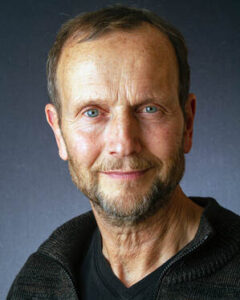
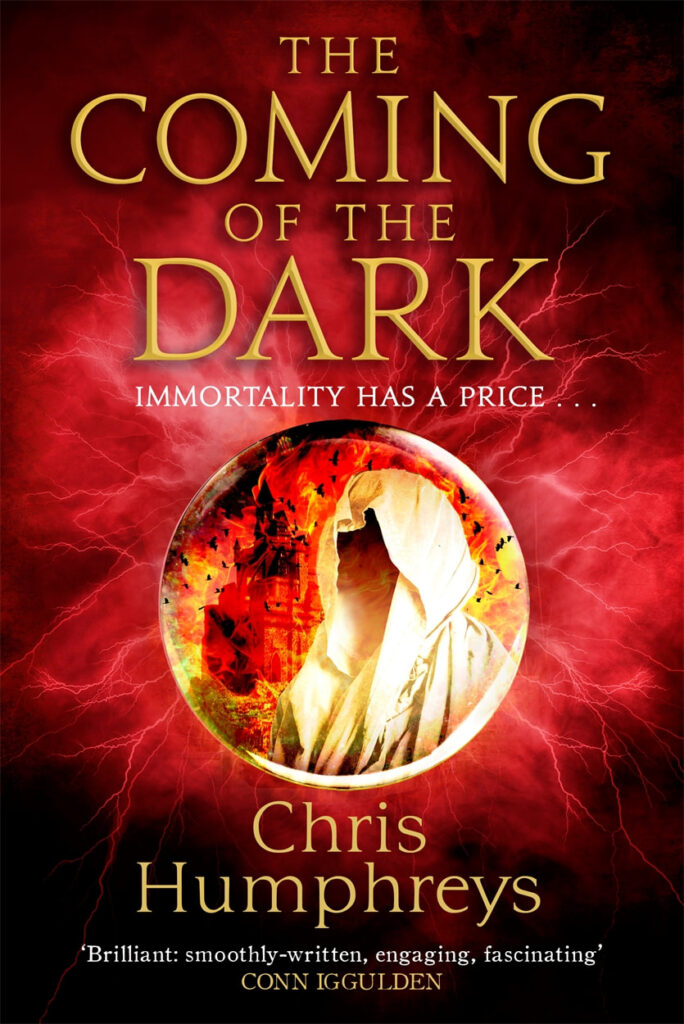
Chris (C.C.) Humphreys has played Hamlet in Calgary, a gladiator in Tunisia, and a dead immortal in Highlander; he’s waltzed in London’s West End, conned the landlord of the Rovers Return in Coronation Street, commanded a star fleet in Andromeda, and voiced Salem the cat in the original Sabrina.
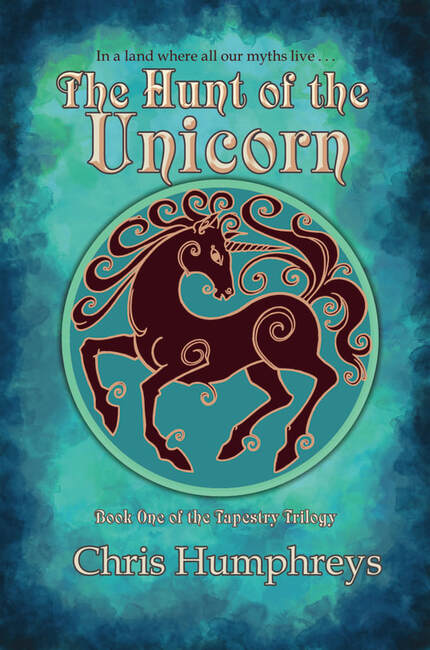
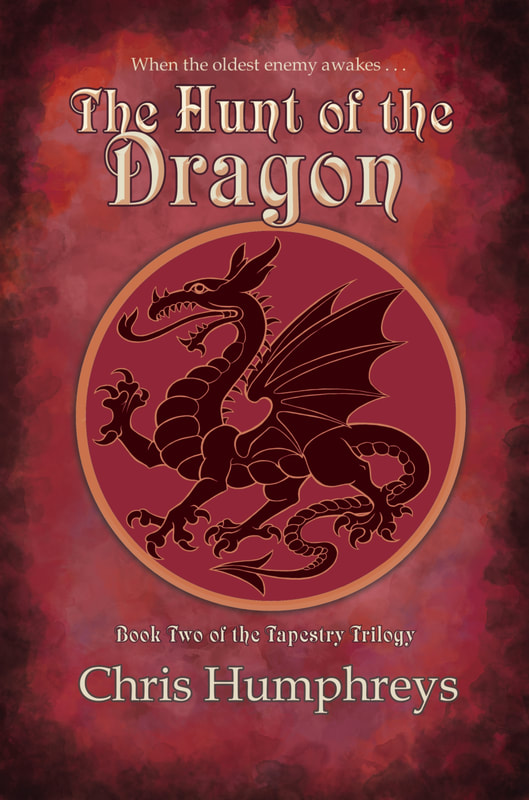
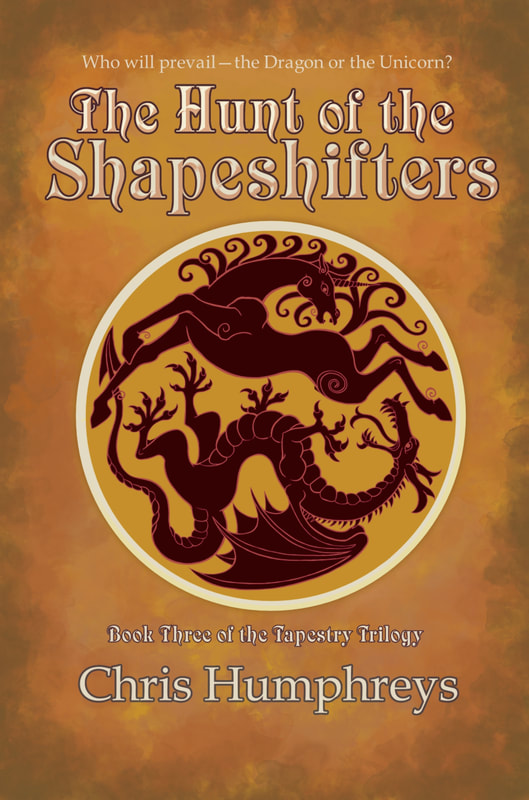
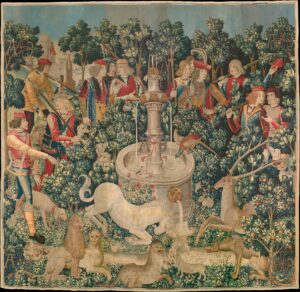
He has just published The Tapestry Trilogy, set around—and through—the fabulous medieval Unicorn Tapestries in New York’s Cloisters Museum.
He has an MFA in Creative Writing from the University of British Columbia.
The (Lightly Edited) Transcript
Chris, welcome to The Worldshapers!
Thank you very much for having me.
We were just talking—we know we’ve been at the same place at the same time, but we didn’t actually talk to each other at the time, because we were both at When Worlds Collide, the great literary conference that’s held in Calgary every year, a few years ago.
That’s right. Well, we might have, though we might have been drunk, and that’s why we don’t.
Entirely possible. So, we’re going to talk about specifically the Tapestry trilogy as an example of your creative process. But first, I will take you back into the mists of time, which is getting further and further back for some of us, and ask you about—well, your biography, you have an interesting upbringing—and how you got into both the acting side, which really interests me because I’ve done, nothing on your level, but I’ve done some professional stage work over the years, and then how the writing came along. So, just take me through your life and how you got interested in writing and especially on the fantastical side of things.
Right. Well, so I always really defined myself as a storyteller because I do I tell stories in all these different ways. You know, I began telling other people’s stories as an actor. I was blessed, or cursed, depending on how you look at it, because my dad was an actor and all four grandparents were actors. They also wrote, some of them. Both grandfathers wrote. My Norwegian grandfather particularly wrote. He was quite a well-known writer in Norway. And I was avoiding all the acting thing. My mother, who was not an actor but obviously grown up with one, married to one, daughter of one, did not want her dewy lamb to be an actor with all the hassles that a career in an industry like that can bring. So, I was being steered away from that. I didn’t really have any idea what I wanted to do. And then, you know, when I was about seventeen, I got cast in the lead in the school play, and suddenly all those genes kicked in. And I thought, That’s it. And I went to drama school in London, the Guildhall School, and then embarked on a pretty healthy acting career.
Over the years, I’ve done a lot of very . . . well, you listed some of them. You know, I’ve done a huge amount of screen and stage work. But the writing side began because I’d always wanted to write. I mean, you know, like a lot of people, I had a way of thinking, Oh, that’s what I really, really want to do. And I’d always had such a wild imagination. I was the kid telling stories. I was the five-year-old organizing all his friends into knights and Vikings and pirates and, you know, playing out these elaborate games, which everyone does on screen now, of course, but we didn’t have screens in my day. And so, that was me. And I always wanted to tell stories. And I particularly loved historical fiction. That’s where I lived. You know, I loved swordplay, especially. And I indeed ended up as a fencer at school, it was my main sport, and a fight choreographer later on, and essentially became an actor so I could jump around with bladed weaponry, which I managed to do an awful lot of, which was great.
But the writing side, you know, I knew that . . . you know, acting, I love acting as a pure essence of a craft, I absolutely love it. I still need to do it periodically. But the business of acting is a pain, you know, always submitting yourself for approval, you know, things so out of your own control. You can give the best performance but be an inch too tall or have the wrong colour hair, and you just don’t get the role. So, even though I did well and, you know, ended up in Hollywood at one stage and on the West End stage and played, as you said, played Hamlet, I was frustrated by the gaps, particularly the gaps between creativity. And I wanted to write, and I got into it the normal way, tried a few short stories. I didn’t understand something which I now teach, because I do quite a lot of teaching of writing now, and what I really teach is process. I thought things had to be good straight away and didn’t realize that it was a process of . . . you know, good and bad actually aren’t in my vocabulary, really, in any of the drafts I write. It’s just about what works and what doesn’t. So, a bit of craft there. I didn’t understand, but I gradually got into it, and then, I started—I actually won a twenty-four-hour playwriting competition in Vancouver, and they produced my play and gave me 500 bucks. And it was like, “Oh, I’m a professional writer now.” And so, I carried on writing plays because they felt, you know, like a small enough chunk. A novel, which is truly what I wanted to write, seemed like a mountain, whereas a play seemed like a hill to climb.
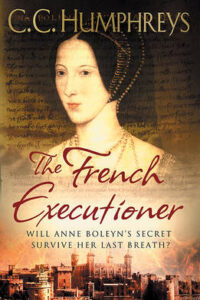
But then I had this idea for my first novel, The French Executioner, about the man who killed Anne Boleyn. And even though it’s historical fiction, it’s really got huge, fantastical elements, not least the ghost of Anne Boleyn wandering around without her head tucked under her arm, actually, which is as the old song goes. But I didn’t have the courage really to jump in, knowing I most wanted to do that. I found ways to avoid doing it, researched the absolute backside off the thing for six years, only then discovering that research is a form of procrastination, and finally jumped in and started writing it.
When I did, it just took off, and I wrote it in ten months, showed it to an agent. She took me on, she had it sold within a month, and suddenly I had a two-book deal. And then I was being published professionally by Orion in the UK. The fantastical side came a bit, actually came fairly early on, in that another agent who had taken me on my first agent lunch . . . of course, there’s no such thing as a free lunch, as they say. And she came up, she said to me, “Have you ever thought of writing young adult fiction?”
And I went, “No,” because I’d written three adult historical novels by that time. And anyway, she said, “This type of stuff, you write action-driven, character-driven family stuff. You know, it would work really well, if you’ve got any ideas.”
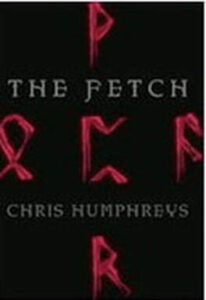
And I went away and thought about it and I thought, I only write what I love anyway. And I was very interested in the sort of Norwegian side of my family, which is, to put it mildly, a little spooky. It has a sort of ghostly/psychic element to it that I always found interesting. And so, I delved into that and I came up with this idea for a book called The Fetch, which is a term for, like, the doppelganger or that that sort of thing. You know, the other you that we all have inside and that can go out. Certain cultures have it. Corsicans have it. Italians have it. Indonesians have it, surprisingly, because they bought the books in the end. And I came up with this idea, dashed off a chapter and a very skimpy treatment. My agent took it to New York. They went, “Yep,” and had it sold in ten days. And suddenly I’m writing a trilogy for Knopf in New York called The Runestone Saga. So that began my fantastical journey. It’s more earth magic, I would say, than fantasy. It’s all about Runic magic and the fetch and time travel and all the stuff I love.
Before we get too far into what you’re writing now, I just want to go back a little bit back into your bio, because I did want to establish that . . .you’re thought of as British, I think. But of course, you’re actually from Canada originally, aren’t you?
I was born in Toronto, yeah. Born in Toronto. Left when I was two. Grew up in Los Angeles till I was seven because my dad was an actor having his shot in Hollywood. And then I moved to England when I was about seven. And hence the accent you’re hearing, which was laboriously crafted from years of English private school, followed by the Guildhall School of Music and Drama, getting rid of my lazy Rs, my Canadian, my American, Rs that I still had. So, then I became quite the Brit actor. But I’m not—I mean, I am. And I played that. But I’m—but it’s funny. I’ve played so many different things and I play American and Canadian. I’m making quite a career at the moment, actually, my sort of pivot in these turbulent times is to be an audiobook narrator and I’m doing a lot of that and I’m doing that American, Canadian, whatever it’s called for, you know. So yeah. So, that’s the background on the accent.
And I wanted to talk a little bit more about the acting and how it ties into the writing. Now, you said you started writing, writing plays, and you actually—you know, I think people who are naturally novelists or short story writers would think a play is the daunting task as opposed to the novel. The novel would come easy; the play would be hard because you have to tell everything strictly through dialogue and action on the stage. But how did the two things tie together for you? I mean, I often try talking to people who are involved on the acting or directing or playwriting side, that one thing they bring to their fiction writing is a very solid sense of what’s happening in the scene in a physical sense, like where characters are in relationship to each other, and you don’t have the sort of amorphous space where people suddenly seem to teleport from one place to another, which I’ve run into in some people’s writing. How do you find that the two things tie together, the play side and the prose side, the novel side?
Well, yeah, I mean, it’s interesting, my books, people always say, “Oh, I can see the film,” you know, and I go, “Well, I wish you would because obviously, I’d be much wealthier if they did.” And a number of my books have been optioned for TV or movies, but none made so far. In answer to a question, the playwriting, it was a natural progression for me, having done so much theatre. I love dialogue. I love the use of dialogue. My books tend to have a lot of dialogue because I always find dialogue is very active, and I like to keep scenes active. Obviously, the opposite is passive, and who wants to read that? So, I like to move action. And I think dialogue is particularly useful for revealing character, concealing character in some ways, because people usually don’t say what they really mean or often don’t. And yes, that sense of dramatic action, I always say that what I write really is character in action. And obviously, that’s three words rather than two, because character inaction would be really boring, but character in action. So, you know, I don’t do a lot of interior monologue. I like my characters to reveal themselves by what they do and how they react to circumstances, which actually helps me in my writing because I, you know, I very rarely get stuck because something is able to happen. I can just take my character into some situation, and things will evolve.
And that’s kind of how I write things. I, I don’t know necessarily that much about the whole book. I don’t plot, really, I have an idea where I’m going. And then I let the characters take me there by doing stuff they need to do so. So, I think that’s the acting side. It’s almost, you know, Acting 101. You’ve done some of yourself, Ed, you know that when you as an actor, what you’re always taught and what you learn is that rather than dwell on, “Oh, do I remember my lines,” or whatever, you trust that they’re there and that you’re going to react spontaneously to what happens. “What do I want?” is the key question for me. “What does this character want?” And then take that character into a scene and run into an obstacle that prevents you getting what you want. So, how do you deal with that? So, I do that a lot. And that’s a definite, that’s the most direct correlation between my acting/playwriting side and my prose side.
Yeah. And that’s something else, when I’ve talked to other actors who are also writers, as an actor, you’re trying to inhabit a character and make that character come alive. And that’s exactly what you’re doing as a writer. The only difference is that as a writer, you have to make up the dialogue. It’s not given to you by somebody else.
This is true. This is true. And that can be both good and bad. You know, if you’re doing Shakespeare, you’re relishing the fact that you’ve been given this amazing dialogue. If you’re doing some terrible television show, you’re thinking, “How do I make this work? I can’t even begin—this makes no sense at all.” So, I’ve done both, obviously.
Well, now, let’s go back to the books you were going through, the ones that you have had written. You have this . . . I can’t remember where you left off when you were talking about that, but you have the fantasy novels from Gollancz that were coming along there somewhere, I think.
Yes. Well, I’m currently I’m in the midst of those right now. I’m doing something that’s quite interesting, and I think a lot of your listeners might relate to. I’ve become what they call the hybrid author because I’m both being published by the big houses still, but I’m also doing some self-publishing, getting my—
Me, too!
Yeah, of course, getting the backlist back, reissuing those because, as you know, often a writer will feel that they’ve laboured for a year over this, or a year or more over a book, and then it barely registers before the publisher has moved on to another book. You know, you’re hot for about three days, and then they’ve moved on, and you think, “Well, they didn’t really. . .” You know, they expect some magic to happen, you know, so you always get frustrated because, let’s face it, we write to be read. And if people aren’t aware of your books being out there, how the hell are they going to be read? So, I’m quite interested in the whole . . . I’m not the world’s greatest. I have to tell you, I’m not a great marketer or a publicist, but I’m doing OK. And my plan is just to get all the books out there again. And so, that with the . . . Gollancz, of course, you know, they’re doing whatever they do. I don’t think they’re making them as known as they could, but, you know, there’s very few writers that aren’t going to complain about their publishers pushing their books. However, it’s . . . to write epic fantasy like that is quite interesting to me, because my other fantasy, even though I don’t really believe in marking between YA and adult, I just write a good book. And a lot of adults have read my so-called YA fantasy and vice versa. But my epic fantasy is, you know, it was an agent who actually said, you know, “Epic fantasy is kind of big right now, have you got something?” And I just thought, No, but I did what I do, which is, I sat down with a notepad, I wrote a word in the middle of the first page, and the word was “immortality.” And then I just started riffing off that and within two hours had a five-page treatment
So, I’m sure that’s going to offend a lot of your listeners, I’m sorry. It sounds too pat, but it’s that feeling of which I was talking about before, about process, and that initial process of just letting your mind go and riff and relate and word association, and all that stuff helped me come up with the idea for the Immortals Blood series, which Gollancz then, after a few hoops I had to jump through, bought, and the two books, as you said, were already out. I think it’s very different. I mean, of course, I would say that. But it’s not . . . I mean, there are battles. There are swords. There are, you know, there’s all this. But there’s nary an elf maiden with a lost king in sight. You know, it’s about immortality, and it’s about the corruption of basically the one percent, what the elites can do to a world. And three very different worlds, one kind of Viking, one kind of Greco Roman, and one kind of Mesoamerican. And what has immortality done in those three respective cultures. So that’s . . . I’ve loved writing those. I’m just about to receive book three, which is called The Wars of Gods and Men, which is the concluding book of the trilogy, back from my editor. And then that’ll be out probably until early next year.
And then that brings us to the Tapestry trilogy, which, yes, we’re going to focus on a little bit more as an example of your process. We’ve talked quite a bit about your process already, but we’ll go through it anyway. So, tell me, first of all, before we start talking about it, tell me about it.
The Tapestry trilogy. So, this is a good example of how the hybrid world works. So, I wrote—when I’d written the Runestone saga, my editor asked me to write another book. I hadn’t thought of writing so-called YA fantasy fiction at all. So, I was a little bereft of ideas. And then, as you mentioned in the bio in the intro you gave, I suddenly looked at the ring on my finger, the rampant unicorn that I’ve worn since I was 18 years old. The family crest, no less, though, my horse-auctioneer great-grandfather was the one who came up with it. So, it’s . . . I’m not hidden nobility or anything like that. Anyway, and I thought, “What does a unicorn mean?” And I started delving, and various things happened. Unicorns could only be tamed by maidens. Unicorns are indomitable, unconquerable, apart from the maiden in the mirror, actually. And they could also cure illness and poisons and, dare I say, viruses, and heal and cure pollution as well. They calm a stream to make it drinkable, that sort of thing. I was fascinated by that.
And then I discovered the Unicorn Tapestries, these amazing medieval tapestries, which are in the Cloisters museum in New York. And the great thing about—-one of the great things about them, apart from their sheer stunning beauty and, you know, no one knows exactly who made them or when they were made, like, late fifteenth century is the best guest and Flanders is the best geographical get. But no one really knows anything about them, who they were made for, who made them—someone very rich because they’re very, very expensive to make, gold, red, and silver thread, but they are stunning, absolutely stunning, you know, this whole journey of a unicorn, the hunt of the unicorn in five tapestries.
And so, I immediately glommed onto that and came up with the idea that maybe a New York young lady called Elayne or, full name, Alice Elayne, is told by her father, who’s dying, actually, he’s got leukemia, that there’s a family history. And there’s this book he reads to her that tells of the original tapestry weaver, who was their ancestor, and who had woven a gateway for a unicorn to travel back to his world because unicorns, magical beasts, were in our world, but then basically it got too hot, man got too good at killing them, so they all went back to the place they were from, which is Goloth, the land of the fabulous beast.
And so, the tapestries became a portal, you know, kind of like the wardrobe in Narnia between our world and this medieval world, Goloth, where all our myths live. And she is summoned by a five-hundred-year-old unicorn called Moonspill through the tapestries because he needs her there, he needs her help. And it’s her adventures in Goloth and how they have a complete misunderstanding because she thinks, What do I know? Because he wants her to tame him because he needs to not go mad. He needs to rescue his mate, who’s held by the tyrant king. And she goes, you know, “I barely passed calculus. What do I know about unicorn-taming anyway?” I won’t tell you the story, but there’s a rapprochement and an adventure.
And then, I was asked to write this . . .I didn’t think of writing a sequel. I thought it was a pure one-off. But as you know, unless you actually kill the characters off, they’re there. And I started wondering, you know, after all the extraordinary and terrifying adventures, what would happen to someone like that? I mean, how do you go back to your normal life in New York? How do you go back to—two years later, she’s actually at Columbia—but how do you go back to a normal life when you’ve done all these incredible things? You know, there’s probably a touch of PTSD, you know. And so, I revisited. . . and then, of course, the other thing was, I really thought, Well, I’ve had a unicorn, I’ve got to do a dragon. So, I came up with this idea, The Hunt of the Dragon, and wrote that. And then, you know, that was only published in Canada. So, I thought, now I want to take this further. But then I thought, I know what I’ll do. I’ll write a third book, because, of course, there was more. And I discovered this thing about dragons. I decided not to stick to one sort of medieval European wyvern or something like that. I incorporated all various aspects of Eastern dragons as well. And Chinese dragons particularly are able to be shapeshifters. And I thought, Wow, that’s cool. A dragon that can actually turn into a human being for a couple of hours and then wreak unspeakable havoc when it does. Because my dragons are not cozy dragons, my dragons are killers. And so, I wrote The Hunt of the Shapeshifters, which is what happens when some dragons manage to get their way back to Earth and start killing. So, serial killer dragons, I thought, that’s going to be good. So, I wrote that as the conclusion of the trilogy, a completely new book for that whole saga, and then brought them out myself and called it all the Tapestry Trilogy.
Well, you talked a little bit about the Gollancz trilogy, starting with a single word and then building out around from that. In this case, it seems like you started with a ring, but did you use a similar process? And how much planning and outlining did you do? It sounds like you don’t do a lot.
I don’t do a lot. No, I. You know, with The Hunt of the Unicorn, I mean, I suppose . . . it’s a while ago since I wrote it, actually the first iteration of it, but it would be my normal process. I tend to . . . I mean, it depends how much research I needed.
There’s, you know, there’s a misconception that that fantasy doesn’t require research. You know, they say, “Oh, it must be so much easier for you now. You’re not writing historical fiction.” And I go, “You have no idea. I mean, you know, researching weaving for a start and tapestries and then and fabulous beasts, because, of course, it’s not just the unicorn and even the dragon. There’s griffins and manticores, and each has their own mythology around it and therefore their own way of behaving.
So, there was all that. But what I tend to do is, I take . . . you know, it’s, again, another misconception that I don’t plan anything. I just don’t write out a chart or a plan. I’ll have a rough idea where I’m going. What I do is . . . what I often say is I liken it to an alphabet. The book is an alphabet, A being the beginning and the Z being the end. And, you know, I’ll have an idea of both those things. You know, what will be the, “Well, what’s the start of this journey?” The summons basically, but the set up of her life and her ancestry, which she doesn’t believe in, and her father being ill and all that stuff in New York.
And then, I know she’s going to get summoned through, and I know the unicorn is going to be facing this. So, back to the alphabet. I’ll know A, and I’ll probably know D, the summons, and I’ll know G because that’s when she meets the unicorn, and I’ll know M and then T and then, you know, W or whatever. But I don’t know how I’m going to get between them necessarily and that’s what I then write you know how and then because, I really, I believe in the process of writing, that it actually happens while you’re writing and so that the ideas I come up with in my logical mind are probably not going to be as good as the ideas that I come up with when I’m actually writing the story, you know, physically sitting there writing it.
So, all sorts of things happen. You open yourself to serendipity. You open yourself to inspiration. You literally, I mean, without being too sort of, you know, you solicit the muse. You know, I don’t make it all sound super-mystical, but it’s you know, it’s that’s part of the process for me. And so, when I get to the end of the first draft, that’s when I do a plot. That’s when I become a little nerdy and get my pencil and ruler out and literally write out this chart on butcher’s paper, which I pin to a chalkboard, which has the chapters, the rough action, and then notes about, well, you know, if this happened in Chapter 24, I’ve got to plant that in Chapter 15, that sort of thing.
On the character side, because you described your fiction as characters in action . . .
Yes, yes. Well done.
. . . how do they develop for you? Like, do you have them clearly in your mind when you start? Do they also develop through the process of writing?
Oh, no. They very much develop through the process. Yes. You know, I always say that they’re, you know, I need them to tell me who they are. I will start out with an idea of who they are. But then by putting them through the action, I will then discover, you know, who they are, how they react to circumstance and what they say to people, and that way, when I go back into the second draft—because I’m very big on separating out the different needs of each draft, you know—by the time I got to the end of the first draft, I know them so much better. So then, I go back and start writing the second draft and some of the early stuff. I think, “Oh, no, because she’s proved to me that she is this. Therefore, she wouldn’t do this in the beginning.” And that’s when my rewriting comes in.
It’s a bit like the rehearsal process on stage. You start off with a rough idea of the character, but it develops as you as you play it and bounce off the other characters in the piece.
Yeah, that’s an interesting analogy, actually. Yes. I hadn’t thought of it quite that way. But you’re right. That’s exactly right.
Because the character you end up with in performance is not the way you started when you were sitting around the table for the first time reading the script.
Yes. Well, I know. . . you hope. You hope. I mean, that’s the point of rehearsal. And often there are, you know, there are instinctive choices you make that are very good and will appear in the final performance. And there are others that you’ve gone, “Oh, that’s that,” and something one of the other actors gives you or director, you know, sometimes gives you, you know, gives you a different way of approaching and you rethink it. You rethink how you can do it, or you try something different, and you think, “Ah, that works.” So yes. So, it is similar. It’s a good analogy for the writing process as well.
What does your actual writing look like? Do you write, you know, longhand? Do you just tap on a laptop? Do you like to work in an office or out somewhere?
Yeah, no, quill and inkpot, you know, on old vellum . . . no. I’m not a very good typist, and I’ve often thought I should correct that and become a speed typist, but then I actually don’t mind because it sort of slows me down a bit, which I quite like. You know, I’m quick enough, but I do a lot of writing what I call off-piste. I have notebooks, I have these brown notebooks that I favor made by a French company called Clairefontaine. And I’m always writing stuff in there. Often, it’s research stuff. And then it’ll be, you know, I’ll say, oh, yeah, I’ll discover some interesting fact, and then I’ll put N.B. underneath it. The unicorn Moonspill could do this now because of that aspect of unicorn lore or whatever. And sometimes, though less often these days, sometimes I go off-piste entirely if it’s a particularly tricky passage and just write it longhand. I only ever wrote one book longhand, and that was Vlad – The Last Confession because the material was so dense and tough, and I tried to do what I do, which is essentially write thrillers, historical thrillers, fantastical thrillers, in a subject that was so layered and so complicated by politics and religion and myth. Actually, I thought now I need to connect the head in the heart and the hand here. So, I wrote longhand. Never do that again because it’s so bloody labour-intensive to then put it into the computer. And also, my writing is scribble. So, I go, “What’s that word? I can’t even read that anymore.”
I wrote longhand in high school, and I haven’t done it since. I still have . . . actually the first book I wrote is right here on my desk.
Oh, fun.
Yeah. I would never do that again. My writing is also really bad.
I love the feeling. I’ve got a great pen, but I keep that for sort of a bit of journaling or a bit of riffing, you know, but yeah, it’s not ideal. So, no, it goes in the computer, and then it gets revised.
OK, and that brings us to revision. What does that look like for you? Do you do start to finish? Do you do a rolling revision as you go along? It doesn’t sound like it. It sounds like you’re going start to finish
Absolutely. Yeah, I . . .one of the classes I teach is called “The Mountain.” I came up with this concept of the mountain, the novel as a series of accents. And so, you know, it’s three different climbs up the mountain. I mean, there’s more probably than that. You do some bits, you do more, you work hard and do more drafts on than others perhaps, which come more naturally. But so, the first ascent up the mountain for me is that free climb. It’s like climbing a mountain. You forget the summit. You need to reach that handhold there, that foothold there. And that . . .if you free climb up the first time, that’s the exploration for me. That’s finding the best way up the mountain. And so, you know, one of the rules of mountain climbing, apparently, I’m not really a climber, but is, “Don’t look down,” right, and so I don’t look back, very rarely will I go back. Sometimes I go back to check eye colour or something, but even then, I don’t because I know I’ll pick it up next time. And often, if I’m . . . especially with the historical fiction, if I hit a point where I go, yeah, well, you know, I’m writing World War Two at the moment, “How did the Heinkel bomber . . .” you know, I put a question mark in rather than actually go back and look it up at the time, because I don’t want to stop the flow of the inspiration.
So, yeah, no, I don’t revise as I go. I get to the end, and then I go back to the beginning, and then I read it and . . . well I do my chalk first, actually. And then I just start again. As I’ve done it more and more, I find that my first drafts have become cleaner and cleaner. There’s not a huge change now as there was before, probably. You know, when I started out, I overwrote, I think, and now I don’t do that nearly so much. I find that the first draft is pretty clean, some passages will need reworking, obviously, something I discovered will have to go in, but there’s not a huge amount of revision on the second climb up the mountain. And the second climb is much more, “Right. I’m going to fix a route that someone could follow me up.” And then the third draft is, you actually take the editor up with you, and they go, “Yeah, look at that. That really worked. But why did you go over there? Why didn’t . . .?” And that metaphorically and then literally becomes the third draft.
Do you use beta readers of any sort, or you just going straight to the editor once you’ve got it finished to your own satisfaction?
You know, I don’t normally use beta readers. I did for Shapeshifters because I was writing it entirely for myself. And so, I got five fantasy writers, no, three fantasy writers, to have a read of it and give me some notes, which was great. Sebastien de Castell, Kristi charish, another, more screenwriter, Beth Stewart, who’s a friend of mine. They all read it and gave me notes, and then I use their stuff. So, I didn’t, actually, apart from the copy edit, I didn’t run that by an editor. So, that’s the only time. But normally, no, I don’t. It goes straight to the editor because that’s the advantage, of course, of working with a big house.
Yeah., I’ve never used beta readers either, partly because when I started writing, there just wasn’t anybody else around who read the stuff that I was writing
Right. Right.
And once I got to being published by DAW, well, I have one of the best editors in the business, so I’ll let her tell me what needs to be worked on.
Exactly. Exactly. You’ve got to trust your editor. Yeah.
So, what kind of notes do you typically get from your editors? Are there certain things that you always find yourself having to do?
No, not really. There’s nothing that springs to mind. You know, I mean, I always say . . . again, when I’m teaching this stuff about the different ascents up the mountain, you know, the editor’s job is not to write your novel for you—as they say in England, you don’t buy a dog and bark yourself, right? Their job is not to say to you, “Yeah, you should do this, you should do that.” Their job is, I think . . .it boils down to clarity. What is the writer’s vision? And is this passage of writing helping in making that vision clear? So, for me, it’s about clarity. You know, the best question an editor can ask really is—which applies to theatre as well, actually, you know, you can say to a director, if you’re assisting a director or whatever, “OK, so we’ve just watched that scene. This is what I see. Is that what you want?” And if an editor says that to me, I’ll go. “Ah, “because it might be clear to you as an author, but you might not have made it clear for a reader.
So, it’s getting you, know, those are the sort of notes I like from an editor, you know, and then being able to say, “Yeah, you’re absolutely right. That is unclear.” Or, “You know what, you’re not right because it’s ambiguous. “And I’m big on ambiguity. I like ambiguity in character. I don’t like lack of clarity. And there’s obviously a big difference between those two things.
But it’s interesting, and I often make the point, that writing and, for that matter acting, is actually a collaborative art form, but I mean between you and the audience, because what you . . . especially in writing, you’re putting something into their head. What they see in their head is not necessarily what you see in your head.
Definitely not.
It doesn’t mean it’s not working. It just means they’re bringing themselves to it and getting something different out of it than perhaps you thought you were putting in there.
Totally. Totally. I mean, two people make a book. The writer and the reader. I mean, leaving aside the editors and all that. But, you know, you . . . and I was saying this just this morning to my girlfriend because a young lady in Russia has written to me. She loved the Runestone saga, which only the first two books of were translated into Russian. She now speaks very good English—and this is ten years ago—suddenly writing to me and saying, “My grandmother and I really want to know how that story ended. We can’t get that book.” And I said, “I’ll send you one.” So, I literally just sent off a copy of Possession, which is the third book of the Runestone saga, to her in Moscow today. And I said to my girlfriend, I said to her as well as in the inscription I wrote in the book, you know, this is, all books are a journey and a journey between, you know, we take it together. And that’s why I annoy people who are reading my books by saying, “Oh, where are you up to? Where are you up to?” You know, because I like to remember that journey then and I’m part of it and get their feelings of the journey, which, as you say, can be quite different from what you might have intended or whatever. But I think that’s an important thing to remember as an author. You know, you’ve got to leave space for the reader to be in your story. I think explaining everything is not necessarily the way to go.
You’ve talked about teaching writing, so I wanted to ask you about that. But first I wanted to ask you, because I often do with authors, did you have any formal training yourself on the writing side?
No. I mean, I know people will go, “Well, wait a second, you got an MFA. “But I got that after I’d already written nine novels, I decided I needed to get a . . . I’d never gone to university. I’d gone to drama school. And I kind of felt cheated of that experience. Plus, I thought, you know, anyone who’s trying to teach in Canada today needs a master’s degree. So, I thought maybe, you know, if I want to teach at university, which really, I did, but I thought maybe that’s an idea now. So that’s why I went and got my MFA, which would be another podcast to tell you what I actually think about creative writing training, and it’s not necessarily all good. But anyway.
I get that a lot from writers.
But I took, you know, I remember taking a short story class long before I was, you know, I was just a wannabe. And this is probably ten, twelve years before I even before I turn my hand to writing. But no, and I’m not a great manual reader either, though I’m actually considering writing one right now because of all the stuff I picked up along the way, the experiential stuff I like. But what got me writing was reading a book called Writing the Natural Way, and it was very much about left brain, right brain. And it was . . .I mean, it was maybe a little over-heavy on that side, but it really did emphasize the separation of the process. And I read that book, and that’s when I started. That’s when I wrote my first play.
Well, have you found now that you are teaching other people to write, do you find that that comes back to help you in your own writing? I certainly do. I’ve taught writing, and I’ve been a writer in residence at the public libraries in Regina in Saskatoon, working with a lot of writers, starting up writers. And I find that focusing on other people’s writing often makes me see my old work clearly. Is that your experience?
Yes, I would say that’s true. When I teach, I tend to teach in a fairly, you know, I’m not very rigid. I like to see, you know, I’ll have a series of bullet points that I’d like to work through. It’s kind of like my alphabet for writing the novel. I know I want to get from A to D, but I’m not sure where B and C are going to be or what. They’re good. So, you know, I’ll riff on stuff. Other things will come up, and I’ll come up with a phrase, something I’ll go, and I’ll stop, I’ll say, “Excuse me a second,” I’ll stop and write it down because it does apply to my writing, but, oh no, absolutely you do. You know, especially when you can clearly see someone who’s got talent but maybe doesn’t know, doesn’t have the craft and how to channel that talent. So yeah, that does definitely help.
Do you find it rewarding when people advance as a result of your teaching?
Yeah, absolutely, and I love it. I do love it. I mean, I’m you know, I never seek teaching work. I’m often asked. I’ve been doing quite a bit online this year, actually, of course. And I’m actually teaching—I don’t know if this podcast is going to go out by then, but you might want to share this.
It will!
Oh, right. OK, well, I’m teaching a fantasy writing workshop for a literary festival that’s starting on Salt Spring Island. And, of course, you know, terrible timing for the poor woman who’s tried to start this. So, it’s all online at the moment. But I’m going to be teaching a fantasy writing workshop a week on Saturday, March 6. And if people want to go to Paper Covers Rock, which is the website, they might even be able to join in if they want.
Well, unusually, we’re recording this like three days before it will go live. So that will work out. That’s a week in the future or thereabouts when this goes, so . . .
Fantastic. Well, Paper Covers Rock, which is clever because Salt Spring is known as the Rock. And so this and this woman deserves the support because she’s trying to do what had never been done before establisher a literary festival in Salt Spring, which is crazy, and then tried to do it during a pandemic. So, I’m going to be teaching that class and hopefully get a few people out. And I’ll talk very specifically about writing fantasy.
One of the things I found teaching and being a writer in residence, in particular, is telling somebody very strongly, you know, I think this is very important, and you should do this and thinking to myself, “Just don’t look in that book that I wrote where I didn’t actually do that.”
That’s what we’re getting into the last few minutes here. So, I want to . . .you thought it was a little early for big philosophical questions, but I’m going to ask you. OK, there are three, really. Why do you write? Why do you think anybody writes, in the big picture of human experience? And then, why write fantastical stories in particular? You don’t just write that, but you have recently written quite a bit of that. So, those are the three questions. But the first one is, why do you personally write? You’ve been doing it for a long time.
Why, why, why? Why, why this madness? You know, yeah, I . . . there’s a wonderful . . . I don’t know if you’ve ever seen a book called The Unstrung Harp. It’s an Edward Gorey book. Mr. Earbrass writes the novel, and there’s one . . .it’s a fantastic book for writers because it’s all about the process. And at one point, there’s this gorgeous Edward Gorey picture of this man, his hand across his eyes holding a manuscript. He’s rashly decided to revisit an early draft, and he goes and he sees it for what it is, dreadful, dreadful, dreadful. Why does he go on writing when it all turns out rubbish? You know, why endure “the unexquisite agony?” Why didn’t he become a spy? “How does one become one?” he says, it’s just wonderful, you know, and sometimes you do feel that. Of course, I write because I need to tell stories. You know, I’ve done it since I was a child.
I’ve told stories, you know, just getting my mates playing games. I love stories. I think stories are important. I think that what makes us human. If you’ve read the book Sapiens by Uri Yuval Harari, he posits the theory that what allowed sapiens to become the dominant, in fact, the only hominid, was our ability to gossip, i.e., tell stories. And that’s what draws us together as humans. So, I suppose that that furthers into your other questions of why does anyone write. I think we’re trying to make sense of the world, we’re trying to share our little viewpoint. And I’ve often likened us to, we’re all little mushrooms, and we’re popping up and giving our little view of the world there. You know, there’s a wonderful Wim Wenders film called Wings of Desire. I don’t know if you have ever seen it, but it’s set in Berlin, and it’s about these two angels. And their job is to go down and listen to people. They literally just sort of fold into them. They can’t be seen. And they hear what the people are going through. Very mundane stuff often, but they kind of testify. And I like that image, the idea that one’s testifying to the world and to, you know.
Fantastical stories. Yeah, I don’t know why particularly. I know I always enjoyed fantasy without reading it exclusively. I think it can be in the right hands so imaginative. I think it can shed light on our current situation, I mean, you know, I don’t write message fiction per se, but I do, you know, I’m always aware, even with my historical novels, people say, “Oh, you are an historical novelist.” I go, “No, I’m a modern novelist. I just happened to write historical fiction. You know, the books are relevant to today, are being read today. My fantasy fiction, I mentioned before, particularly the Immortals Blood trilogy, does deal with the world as it is now. It does deal with climate change. It does deal with the elites, the one percent, without trying to spell out a big message. You know, I’m more a depicter than coming up with answers, but I love the fantasy fiction that really looks at the world in a very different way. I just recently read for the first time, shame on me, The Left Hand of Darkness by Ursula K. Le Guin. Have you read that, Ed?
Yes, I did a long time ago now, when it first came out.
Oh, my goodness. Reread it. But just that worldview, that ability to take something so different and yet make it also accessible to humans, I think it allows us to explore, yeah. Explore ourselves even when we think we’re reading something that’s so different from ourselves. So it’s, you know, a human wrote it. So, therefore . . . I started my book, Vlad, which I realized . . . I was writing about Vlad the Impaler, right? And I was worrying about, was I going to whitewash this guy? Was I going to excuse him? And I didn’t want to do either. And then I realized, no, that’s not my job at all. My job is to depict him. And I literally wrote a prologue that said, “I’s not up to me to decide. You decide. You’re the reader. You decide what you think of this guy.” And I came . . . I found this quote by a Latin writer called Terence, who said, “I am a man. Nothing human is alien to me. “And I think that’s a good sort of motto for the for us in the world. And perhaps particularly as fantasy writers, you know, let’s explore, and everyone is probably, if you do it well and with integrity, going to be able to find something that they can relate to or something that’s going to make them think about their world slightly differently.
And what are you working on now?
Well, switching hats entirely, I’m back into historical fiction, though, not my more medieval stuff, which is where I’m probably better known. I’m writing a World War Two saga. Fascinated by World War Two. It is loosely based on my parents’ story because, I mean, you wonder why I grew up a storyteller, my dad was a Battle of Britain fighter pilot. My mum was a spy. So . . . she was a spy in the Norwegian resistance. So, I’m writing a story about, it’s loosely based on them, about a pilot and a spy meeting and various times they meet during the war and what their different wars look like. You know, I’m not . . . given my you know, that I don’t set out knowing the huge amount, I’m not quite sure what it is yet. I’m just writing and having a hell of a time, actually, I’m really enjoying it. It’s very close to my heart in lots of ways. I feel I’m shaped by the people who shaped me, who were shaped by World War Two.
Did your parents tell stories of those times or write them down?
My dad was a storyteller, you know, being an actor and a writer himself, and, to a certain extent. My mum . . . my dad was very gregarious and, you know, one of the lesser-told stories of the war is that for many people, it was their best time, no matter how terrible it was. You know, how do you beat being a glory boy? You know, a fighter pilot? How do you beat . . . does the world ever come close to that again? My mum not so much. You know, Norwegian, you know, saw the Germans marching down her high street on April the 9th, 1940, lost a lot of friends to it all, just escaped with her life when they bust her cell. She didn’t talk about it much at all. But I’m finding out a lot more now.
With my little publishing company I started for my own publishing purposes, Shadowpaw Press, one of the first things I put out was the First World War memoirs of my grandfather-in-law, my wife’s grandfather. And he set out to write his memoirs very late in life, and he wrote very complete memoirs of the First World War. And then it kind of petered out. It’s like he intended to go on through his life, but the rest of his life just obviously wasn’t as vivid to him as that time he spent as a truck driver at Vimy Ridge and then as a navigator on a Handley Page bomber and prisoner of war and all that stuff. It was quite a little set of war memoirs. And I was very happy to be able to bring it into the world.
Yeah. Fantastic. Well done you.
So that brings us, I think, pretty close to the end here. Just let people know where they can find you on mine.
Well, my website is AuthorChrisHumphreys.com. Chris Humphreys. People often misspell Humphreys. You can follow me on Twitter @HumphreysCC. I’m on Instagram @CCHumphreys. I have a Facebook, professional Facebook page, Chris Humphreys. But the best place to start is my website for sure.
OK, well, thanks so much for doing this and for being on The Worldshapers. And yeah, unusually, this one’s going to go out almost right away, so it’ll be very fresh.
Great! Well, fantastic. I mean, obviously, send me all the links, and I’ll publicize.