Episode 57: Edward Savio

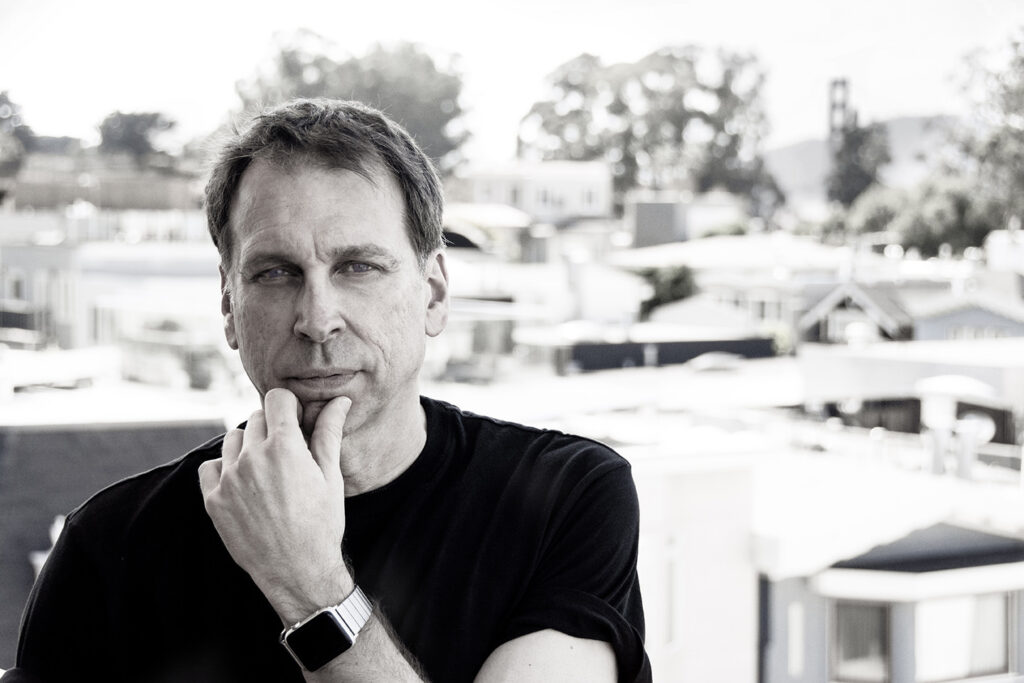
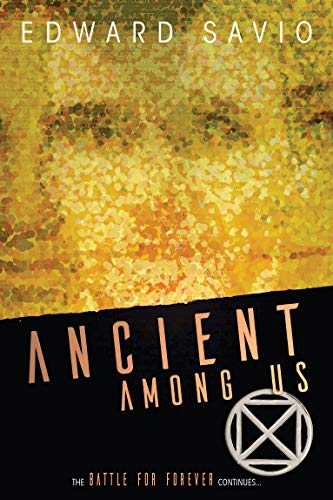
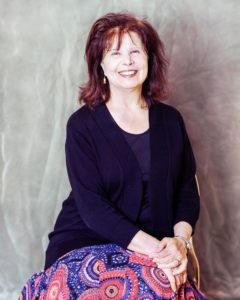
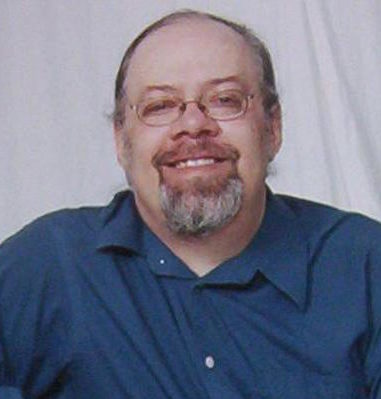
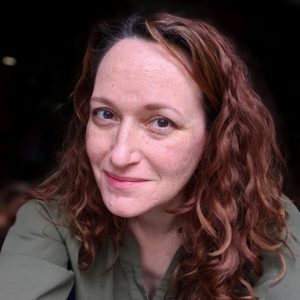
An hour-long conversation with successful screenwriter and novelist Edward Savio, author of Alexander X, Book 1 in the Battle for Forever series, the audiobook version of which, narrated by Wil Wheaton, was a number-one overall bestseller on Audible.

Website
edwardsavio.com

Twitter
@EdwardSavio

Instagram
@EdwardSavio

Edward Savio’s Amazon page

The Introduction

Edward Savio grew up in the bucolic bedroom community of Berlin, Connecticut. After Howard University, he moved to Los Angeles to pursue screenwriting, where he became a ten-year overnight success, selling the first of a half-dozen scripts a decade after arriving in Hollywood.

Savio’s first long-form novel, Idiots in the Machine, was his anti-screenplay, giving him the freedom to explore and develop deeper characters, multiple narratives, and play with language. He wrote Idiots with the certain belief that no one could make it into a movie, not even him, and then Sony Pictures optioned Idiots for the Academy Award-winning producers of Forrest Gump for seven figures.

After three more six-figure deals with Sony and Disney, Savio moved to San Francisco to start a family. And after years of commuting between homes in SF and LA, he chose to shift the focus of his writing towards novels so he could spend more time with his children. He lives and writes in the home where Danielle Steel wrote her first two breakout novels.

The (Lightly Edited) Transcript

So, Edward, welcome to The Worldshapers.

Hey, how are you? Good to have this time with you today.

I like your first name. You’re the first Edward. I’ve done it on the podcast.

So are you…see, I’m an Edward. Are you an Ed or an Edward?

I write under Edward. That’s my byline. But people that know me call me Ed. Unless they knew me in high school. Then I’m Eddie. So it’s one easy way to tell when somebody knew me, is by what they call me.

See, I used to be Ed in high school, but then when I got to college, people, you know, across the campus would be yelling, “Ehh!”, like, any noise, and I just kept turning around. So finally, I was like, “Okay, can we just be Edward?” And it just worked out that way. But yeah, I mean, I know. And of course, my mother, when she’s upset with me, would call me Eddie. So I have those three personalities as well.

Yeah, I was always Eddie right up until I started working for a newspaper. And then I decided my byline as Eddie Willett…I was only twenty when I graduated from university and started working as a newspaper reporter, and I decided I needed to seem older than I was. So I went from Eddie to Edward at that point. And it’s been my proper byline ever since.

Smart.

So, we’re gonna talk about your series, which started with Alexander X, but before we get to that–and, of course, the real focus of this podcast is on your creative process. We’ll use that as an example of your creative process–but before we do that, there’s a…it’s kind of a cliché on The Worldshapers, and someday I’m going to put reverb on it…I’m going to take you back into the mists of time and find out how you got started at all this. I know you grew up in Connecticut. Were you a big reader? When did you get interested in words?

You know, it’s funny. I am a student of words. I love words. I didn’t start out that way. You know, I think, like, how did I get interested in writing or writing sci-fi or writing worldbuilding? Like, there are so many different questions there. Which one do you want to start with?

Which came first?

Writing. You know, I think with writing, I have to say that I was a…most writers start out as readers. Right? I was not a reader first. I really wanted to become a director when I was a kid. I loved movies.

All you really wanted to do was direct.

All I really wanted to do was direct. And I knew that from the time I was in seventh grade. And I knew that the two most common ways to become a director were through the visual side, cinematography, cameraperson. And the other was writing. Actors, of course, have become directors, but most directors come from either cinematography or writing. And since I didn’t have a camera and I couldn’t develop my own film, you know? I wrote–a lot. I wrote dialogue-heavy plays and then screenplays, and I wrote a musical in order to graduate high school, because in between my sophomore and junior year in high school, I went to France and French girls just kind of got in my head and I needed one more credit to graduate, and so I had to do an independent study at the end of, or during, my senior year, when everyone else was loafing. And a lot of it was comedy and action, but when I wrote prose, it was always short stories, and almost exclusively science fiction. The screenplays I wrote, they might have a magic element to them, but almost all of them were mainstream comedies and actions.

So, after selling screenplays to the studios and making a good living and writing mainstream novels, I wanted to go back to my roots, and I think writing sci-fi and building a world is a way to do that. And, you know, there are so many ways into science fiction. As a kid, I–because I was this visual person because I wanted to do movies. You know, I loved watching Lost in Space before school or, you know, of course, the Star Trek reruns. That’s how I got into sci-fi. And I didn’t begin reading the classic science fiction until I was in my 20s. And I have this inverted life, right? Like I said, most writers, a lot of writers are big readers.

I think you’re the first one I’ve talked who said they didn’t start as a reader.

So, yeah, I mean, most people do that. And I was always a big writer. I wrote my way out of everything, feelings, and all of that. And so, I made a lot of mistakes that probably would have been fixed if I had read more. But I made my own mistakes. But that’s how I got into the idea of writing and specifically sci-fi.

When you were writing whatever you were writing as a kid, were you sharing it with other people and letting them see what you were doing and getting feedback that way?

Yes. So, you know, I wrote a lot. I wrote poetry. I would read it. It would be, you know, like I would read it in front of a class or do it in front of an assembly. I did stand-up comedy in front of assemblies when I was a kid. I did this musical that needed to be performed in order for me to, you know, get the grade. So, yeah, I was not shy about showing my work, but it was funny, when I went and talked to my English teachers, my English teachers looked at my work and went, “You’re writing in present tense all the time. And you should be writing…this sounds like a script.” And I was like, “Yeah.” So, even my prose, in the beginning, was in present tense, which helped me a lot. You know, I go through and use a lot of different tenses, even in the same book, because, you know, with Alexander X, there’s the past, but sometimes in the past, I’ll use the present tense. But I use tense to either make the action more visceral or to show a difference between when someone is talking and when someone is talking about the past, even if it’s reversing the present tense versus the past tense. But yeah, I didn’t have a problem with showing my work to other people. And I know that’s a big problem for a lot of writers. They just never show anyone that first work. And I’m so glad I did it early on because, you know, I’m proud of everything I’ve written. But the stuff I’ve written when I was younger, it’s still pretty good, but it wouldn’t have gotten better if I didn’t have some feedback.

And that’s why I always ask. Because it does vary from writer to writer. But…I was someone who wrote my first short story when I was 11, and it was called “Kastra Glass: Hypership Test Pilot,” so you could see where my mind was right away.

Exactly.

But I was always sharing it. And it was…if I hadn’t shared that story with a teacher who gave me some critiquing on it, I might have not had that little spark that made go, “I want to keep doing this because readers actually enjoy what I’m doing for them.”

Yeah, I mean, I always made people laugh in school, you know, or I was the person that, whenever we had a big assembly, I would be, like, the M.C. or the person that would gather…you know, would be up at the mike. I was not shy about that.

You know, you mentioned something about the musical. Did you perform in that? Did you do some acting as well?

I did. I’m an average-to-poor actor, you know. I was just watching Hamilton this weekend…

So were we!
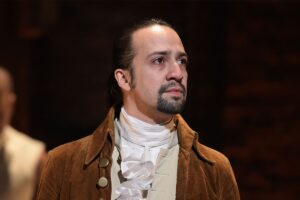
…and, you know, I’d seen the play earlier this year in person in San Francisco, and it was amazing. And I think they did a great job in what they showed in the film. But it was interesting because, you know, as much as it is…I wanted to see Lin-Manuel do this because he is amazing at it, but he’s the writer and the creator. And in many ways, most of those other people are better, quote-unquote, actors than he is better singers than he is. He brought something no one else could bring to that part. But that’s how I would feel if I was doing something. I don’t even know if I’d be that good at all, but I’m saying that when I did my own stuff, when I was acting in my own stuff, I was the weakest link of it. But the writing is what gets you. And then also, understanding playing things is important.

One of the things that people have talked to me about is, in the Alexander X series, Wil Wheaton is the narrator. And people have said, “You know, is it weird when he does something different?” I said, “Well, a lot of novelists get weird about when someone makes a choice about their words. That’s all I started out with. I was never going to be the one that was in your head. When I wrote a screenplay, it was never going to be me telling you this story. It was going to be someone else. It was through someone else’s filter.” So, for me, it was actually a lot easier. I think it’s a lot harder for some writers to make that jump from book to audiobook. When they hear it, they go, “Oh, God, I didn’t mean that.” And it’s like, “Well, yeah, you didn’t, but a performance was built and was born out of your words.”

Well, I’m a stage actor, and I’ve talked to other authors who have some sort of theatrical experience. And I do find that it gives people a different idea on their regular writing. One thing that I often say is that, you know, you’re talking about, “Does it sound weird when somebody makes a different choice with the words than you did?” But that’s exactly what happens in every reader’s head. You don’t know how they’re hearing those words in their head. They’re essentially acting them out in their head the way that they would interpret them if they were an actor on stage. So really, everything that we write is being interpreted differently than we perhaps have it in our heads as soon as it crosses over into somebody else’s head.

I agree. I mean, I remember driving home from this girl’s house at like 2:00 in the morning. I was, like, seventeen years old or something. And I remember we had just, like, been, we were making out, it was like this my whole mind is like, “Oh, my God, this is amazing.” And I’m driving home, and it’s late, and this…I don’t know who it was, it was a late-night deejay or something…and he gets on, and he says this sentence and I will never forget it. And it’s absolutely influenced my writing ever since. And he said, “I can say the words ‘I never said he stole my coat.’ And if I inflect each word differently, it changes the meaning. I never said he stole my coat. I never said he stole my coat. I never said he stole my coat. I never said he stole my coat. I never said he stole my coat. I never said he stole my coat. I never said he stole my coat.”

I’m going to remember that now.

Yeah. Each one of those means something different. And I will never forget that I’m gonna write this sentence and someone can read it, as many different words as are in there, they can put an inflection on there differently. And so, in writing, you know, I do use italics at points where I really feel like something is necessary and has to be there. I let the reader have their own mind for a lot of it. But I learned because of writing screenplays that I needed to be very specific in how I wanted something to be said. An actor and a director are gonna do what they’re going to do. But at least you have to give them your intent, so they can go, “I don’t want to do that.” Or, “Oh, I get what you’re saying here and I’m going to bring something different to it.” But you at least have to give them the intent. And it’s a wonderful thing.

One of the things that I find most interesting about writing is when you get criticism. People, you know, people tend to be only either lovers or haters when they write a critique. There aren’t a lot of “meh” in-between critiques. And what’s funny is when someone is negative, when someone doesn’t like something, it is usually not liking the very thing that either I as the author or the majority of people who love the piece enjoy. It, you know, someone’s like, “Oh, you write too much about history,” or “You do this or X or that.” And it’s like, and then other people are like, “I love when you go into the deep dives into history.” And so, you know, he can’t make everyone happy. But, you know, you’re at least trying to find your audience so that…it’s interesting, like, the first book, Alexander X, has a very good rating. But the second book has a much better rating. Now, is it because I wrote so much better? I think it is a better…I mean, I’ve developed the story, it grows…but I think it’s because I’m starting to find the audience and the people that aren’t going to like that first book aren’t going to go to the second book.

I think it’s Robert J. Sawyer, whom I interviewed, that said that you’re not trying to be…it’s impossible to be the favourite author of everybody, but you want to be the favourite author of a nice, solid chunk of people, is how most people find success. It’s not by being the most popular author of everybody, because you can’t please everybody.

No, you can’t. You really can’t. And you can’t even try. And, you know, you can’t even try. It’s just something that that doesn’t work. So, you know, I think one of the most interesting things about building a world, and that’s what you love to talk to people about, and I think in your own work, you love to build worlds, is that, you know, we get to create something. I’m not a believer in simplistic worldbuilding because, you know, when you have everyone, you know…there’s movies, television, there’s books, where you have a conceit, and you break people into five different groups, or you have certain different factions and those factions are very, very cut and dried. Well, if it’s a metaphor, I get it. But in the world, most things would never happen like that. But it is interesting to be able to create a world that is both familiar and shines a light on who we are, yet brings us into something completely different. Alexander X is very realistic science fiction, and so the worldbuilding is about the people themselves. I’m coming out with something, it’ll probably be next year, called Flux Capacity, and it is a very different concept, very much where I can go and play in this playground.

You spoke about, you know, Idiots in the Machine being the anti-screenplay, my first novel. I didn’t start writing sci-fi in terms of long-form until my kids were a little bit older, and I wanted to write something that they might be interested in. And that’s how, you know, I came about to write Alexander X. But with Idiots in the Machine, you know, I had this idea that I was going to just do the opposite of a screenplay. I was going to…I was tired of, you know, before I sold my first screenplay to a studio, I had written fifteen, maybe eighteen screenplays? I had made money, a little bit of money, from about the eighth or ninth? I was a starving writer living at about eight to ten thousand dollars a year, you know, living with roommates, living my life, not working other than writing. And then I started to write this novel, and nobody cared at all. No one gave me any money. And so, I had to start working. And so, I worked at this talent agency, and I got to see how the product was handled. And I learned a lot of things about the business. Those people never helped me at all. But I did meet someone who was an assistant, who became my agent, who helped change my life. She introduced me to the woman who became my wife and the mother of my children, and also, I learned about lit agents, and she was a talent agent, and I worked with her and developed how we could talk to people about the scripts. But, building a world is something that starts…it starts with a kernel of an idea.

Well, just before you get there, because that’s the main focus of what we’re gonna get you in a minute, I did just want to back you up to the university level. Did you study writing formally at some point?

So, again, I was very much a film person, you know, and I went for screenwriting and for film making. And I ended up just writing and writing and writing and writing and writing while I was doing that and it became the thing that I realized…again, learning how to get behind the camera was okay, but if I was going to do anything I had to be writing, I couldn’t be…it couldn’t be someone else’s…I couldn’t take someone else’s vision. I had to take my own vision if I wanted to be out there. That was the risk I took. And so, there were plenty of people that made more money in the beginning because they went and worked in the industry and moved their way up through things. But what I did was I took a gamble and, you know, I paid a lot of…you know, cheap food when I was in my twenties, but I put…I invested in what I felt was my best chance, which was to create my own things.

So now we’ll go back to the kernel idea. Because I want to go through your creative process. And the very first thing is, of course, that kernel of an idea. So, where do those kernels come from for you and specifically for the Alexander X books?

So, Battle for Forever

Oh, one more thing before we say that. We should have a synopsis, so people know what we’re talking about who haven’t read the book. 
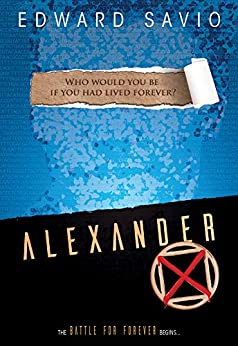
So, yeah. So, okay. So, Alexander X. So, here’s the kernel, the start, right? So, the idea is…I had this idea as a screenplay idea, that there was this guy who was very good at everything. Mid-thirties. And what we find out is he’s a couple of hundred years old. And so he’s able to be really good at everything he does. And I put that idea away in a drawer. And then later on, when I was thinking about writing for my kids, I wrote this book called, you know, it was called The Stuperheroes vs. Dr. Earwax. And I did the illustrations that were just horrible, but they loved it. And my kids read up. They read above their weight class. And so, I started thinking about teenagers and young adults. And what if this character wasn’t 200 years old? What if he was a hundred times that, or a hundred times as old as a normal person? And what if it wasn’t one character, but maybe a few hundred? And they’ve been kings and queens and generals and some of the most famous people in history. But they’re not immortal, right? They step in front of a train. They die. Except, they have this genetic defect–what we now know is a genetic defect–that kills most people born with it. But the ones who survive have lived many lives, pretended to die, disappeared, started again as someone else. But for the last hundred years or so, they’ve been mostly living in the shadows because fingerprints, surveillance, DNA, biometrics, make it too risky. If they become great or even well-known, people are going to figure it out, and even if they pretend to age and die, their secret is going to be revealed the next time they show up, the next time they want to be great again. And they want to be great again. And the older ones, they’ve never gone this long without that kind of power and adulation. So, what would they do?

Mm-hmm.

So, that’s the world. That’s before we even start the idea. That’s the backdrop for meeting our hero, Alexander X, who is a junior at a small high school in the Berkshires. And he’s known as Alexander Grant at the moment. And he’s never been famous or great, but he’s lived a lot, and he’s seen a lot, fifteen hundred years of it. But his mind, his body, and his emotions are that of a fifteen-to-seventeen-year-old. With all the good and bad that comes with that, right? So, everything’s going along fine and maybe a little boring, but fine, until someone tries to kidnap him and use him to get to his father, who is one of the most powerful of their kind. So that’s the jumping-off point. And Alexander is basically trying to figure out what the hell is going on. And so, that’s both the synopsis and the kernel of where the idea came from.

Spreading it out a little wider, how do how do story ideas typically come to you? Not just this one, but of all the things that you’ve written?

You know, I mean, so for me, you know, I have a lot of different ways. I have three different ways of putting information down. And I have hundreds of snippets of stories and thoughts and ideas. Things have come in many different ways. You know, one of my original…originally, screenplays, sometimes we would take an idea that was a classic. And so, the first thing sold to Disney was Swiss Family Rubinstein, which was, you know, it’s Swiss Family Robinson, but written for if Bette Midler and her family are rich in New York and they get lost on an island because of all of this reason, what would that be? So, it’s like taking a kernel of something old and making it new again.
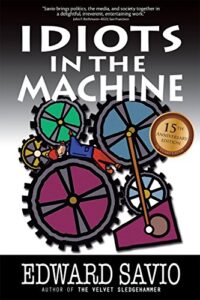
Or, it’s a snippet of something. I read–for Idiots in the Machine. I read the front or the back cover and saw the cover, the book cover’ and read the first few paragraphs of a book called The Confederacy of Dunces. It was just a brilliant book that won the Pulitzer Prize. And I thought it was gonna be a certain book. It ended up being this other book. But a couple of years later, I was thinking about my first thoughts, about the ideas I’d put down when I first picked up that book in the bookstore before I ever read it. I had driven home thinking about what this book was gonna be. And I wrote that book. I wrote the book that I was thinking about, you know? So there’s…so, I am still…I am…like, about half of what I write is something I thought of 15 years ago, and the other half is something…like Flux Capacity is a new idea. Alexander X, I had that idea ten years before I wrote the book. So, they come from different places. And that’s why you just have to…honestly, the greatest advice I can ever give to anybody is–and I’m only about seventy percent of the way there–is have the best, most searchable database of ideas that you can so that you can go find them and look things up when you need them.

Once you have the idea, I’m looking at the novels here, what does your planning process look like? Do you do a detailed outline? Or do you just start writing?

So, when I was writing screenplays, I was, oh my God, I was completely so very anal. I’m not an anal person at all. But in writing, I have to pretend to be one. And I would go through and use index cards and later use programs that mimicked index cards and write out everything, you know, everything, including indirect dialogue, including the major type of scenes. And then, by the time I went to go write the screenplay, I was going boom, boom, boom, boom, boom, and I’m there. When I wrote Idiots in the Machine, again, because it was this anti-screenplay, I did exactly the opposite. I had an idea–that, because, it was this thought in my head, through this idea that I had with the book–and I might have had an ending in mind. I had this vision, this one shot. It’s one image. Like I was filming a movie. I had one image. And then from everything else, I went and just went off. And so it’s all of these…imagine you take your fingers, your ten fingers, and they’re all spread out, and they’re just completely separate, and then all of a sudden they start interlocking like a zipper till the end. And that’s how it went and how it came together like that. My anal side kind of came in about halfway through the process, but it started out freeform.

Now, my writing process is a little bit more of both. I have three different ways that I write. I have tablets and digitized paper where I make some longhand notes. Obviously, I do most of my writing on a computer, typing. But I also make notes using voice-recognition software. I have a large space where I work, with screens on either side of this room, and I have a headset like those that the pop stars or the performers in Hamilton use. And I will walk around and act out action scenes. So, I may peek my head around the corner, pretending that I have a gun in my hand or I might block out how I’m going to do a fight scene. Now, I have large windows in my place, and it may be possible for my neighbours to see me from some angles and I can only imagine what they think of me when I’m doing this. I must look like a complete crazy person because I am literally fighting with myself and acting all of this out. And so, I put those things down on…you know, the biggest problem as a writer, my most time-consuming thing is to then reorganize those stream of consciousness ideas, which are well-formed in their little packets, I can write a whole scene or a section of a scene, but it’s reorganizing them in a coherent way to make them into a book because that…you know, they’re just ideas until you put them together.

Once you start doing that, do you work sequentially, then?

I tend to work sequentially, mostly. I will write big scenes. I may write a rough draft of an ending, you know, somewhere around halfway through the process. I already know something of the ending, usually. As a screenwriter, I’ve always started with two things. I know the first shot. I know what’s going to, what I’m gonna see, and so I know the first words or the first image in a book, and I’m going to know the last image I want people to know. And…but I tend to work sequentially. I tend to write and rewrite a lot of the first part of a book, you know, getting through till I’m comfortable, at least with usually about a third of it, about maybe 40 percent. And then I start moving onward.

And one of the reasons why I really develop the beginning is because spending time there at the beginning really makes the last part go a little bit faster, where I have a voice, I have a style, I have a thing that I know what I’m doing here, and I can go through and move further. I tend to do a lot of rewriting. Rewriting is, you know, I think…I mean, I think many people talk about this, right? But rewriting is the most important thing. And I do this one process where I write on a piece of paper or a digital version of it–usually, I use a PDF and an iPod–and it’s non-destructive editing, and I can make all the changes that I want, put funny lines in or ideas that I have, and nothing has changed in the original document. Because going into a computer is destructive editing, and a lot of writers have…they clench up, they get constipated, they literally clench up, and they can’t move forward because they’re like, “Ugh, I don’t know where I’m going.” But when you do it in a non-destructive way, you can do anything you want. And then later on, when you come back and put it into the computer and put it together, “Yeah, I guess it’s not that great of an idea,” or, “That other idea that I had later is completely contrary to this idea.” So, let me work those two out before I’ve done all this work.

I think you’re the first one who has told me of a process quite like that. People revise as they go, but most of us tend to just do it on the computer and not have a separate, non-destructive way to make those suggestions to ourselves and then come back to it.

It’s really the most freeing thing. It really is. I mean, it is the most freeing thing. And when I figured out how to do this–because I used to do it on paper and have these thick, just reams of things that I would always lose or, like, I couldn’t find them when I needed them. And on a PDF, I can at least search for the words near where I’m looking for or something, and I can just put it right there, and it’s on my iPad and then, “Oh, it’s on my computer right next to my what I’m working on.” It is the most freeing thing I’ve ever found.

I know it’s happened to me once or twice where I have rewritten something and then think, “You know, the original maybe was better,” but I don’t have the original anymore.

Right.

So, yeah, I can certainly see to see the benefit of that. Do you…it sounds like, with the process you’re working, I’ll bet you work almost entirely in your dedicated writing space, and you’re not somebody that goes out and works in a coffee shop or something like that.

I don’t work in a coffee shop, but I don’t work necessarily in a dedicated space. I actually have a few spaces where I write. So, I’m…right now, I’m in the booth where I do audio work. So, this is a creative space. But in terms of writing, I have three other creative spaces for the actual writing. I have a stand-up desk where I do a lot of this walking back and forth with this monitor on the other side of the room. I will go out on my balcony, and I will take my computer out and write looking out at the bay. You know, this house, this place has a lot of Chi, writing Chi, you know, Danielle Steele wrote two of her books here, so it really does have a good feel. And I use her bookcase. She built this one bookcase in here, this big, giant bookcase, which is my quote, hallway library. But I also can go and walk and talk, and I may go out and ride or walk and make notes to myself out in different places, because sometimes that is the most amazing…like, you get stimulated by whatever you’re seeing.

You know, I was, I got to go to Rome last October and some of the scenes in the third book in the Battle for Forever series, take place in Rome. And I already had an idea of what I was going to do. I already knew–I didn’t know if I was gonna go there. I was going there for… A friend was having a birthday party and I got invited, and it was this eye-opening experience. I’d never…my family is five generations on one side and four generations on the other of Italians. But we’re not, like…because we’ve so been here so long, we’re not like the new Italians coming over. So, you know, we have this, a little bit of our culture, but I had never gone to Italy. And I’ve been to Paris, I’ve been to Europe, I had all of these things, and I put them in my writing. But when I went to Rome, I was like, man, I could not have imagined what I’m looking at. The pictures don’t do it justice. The feelings that I’m feeling don’t do it justice. And I just started to walk around and mostly…like, the first couple days I just experienced. I didn’t try to intrude on my experience. But there were moments, you know, where I would pull out my phone and make notes to myself, audio notes, or think about what I was doing or where I would put this, and almost kind of do a live version of that thing I do in my house where I’m blocking out something. I might be in a place and go, “How would I run up these stairs if I was going to do something illegal here? How am I gonna get to that roof if I’m gonna use that great piece of architecture, you know?”

And so,. I think it’s important…a lot of writers create…you know, when I was younger, I had a small little room, nine by ten, and I used to sit in it, and I loved writing like that. And a lot of people love that little cozy writing space. But I also think it’s important for writers to get out and create in an open space. Take your computer, take your iPod, take your…whatever you’re doing, and go completely off-grid or in the middle of a city and start writing something. And maybe later on, it is going to turn out to be nothing, but it might be the kernel that you need for a scene or a whole story.

Yeah, I think the most productive I ever was, was getting out of my office and going to the Banff Centre for a week, for a self-directed residency, and I wrote 50,000 words in a week. You had this magnificent mountain scenery all around you. And it…although the odd thing was, the book I was writing was set on the prairies, but it was still…it was, you know, just the change of scenery alone stimulates, I think. So, once you get the first draft…well, first of all, are you a fast writer, would you say, or how does this process work?

I’m a bit…I’m about…I would say that I’m a fast writer, with a ponderous amount of pondering. So, when I’m writing, writing, I can do a lot of work, but when I’m thinking, it’s a long time, and when I’m editing, I can go through and agonize over a sentence or, you know, a group of phrasings here and there. So, it’s a little bit of a mix. I would say that overall, I’m not a fast writer. I’m not a slow writer. But I’m very fast and prolific at certain times.

When you get to the end, with all the revision that you do as you go along, is there then still a complete revision process for you where you go back to the beginning and work your way through? What does that look like?

I am, you know. Yeah. I mean, I am literally just…I am constantly rewriting. You know, I have…it’s very funny. So, I wrote the Idiots in the Machine years ago. And finally, you know, now that sort of had this second boost through Alexander X and everything…you know, I had a successful career as a screenwriter, and then, you know, I had this book that did something and then, you know, I raised kids and didn’t do much because I wanted to raise my kids, and I changed my life. I would fly back and forth, but it became too much if I wanted to be…and have a life. And so, it was a difficult choice, but I didn’t…you know, I kind of got rid of my apartment in Los Angeles, even though I kept it for years, and I just started writing.

But so, with that said, this book came back into the realm after Alexander X hit number one on Audible, and the opportunity to do an audiobook version of Idiots in the Machine became real, and I could get the type of people that I wanted to get. I rewrote some of it. I rewrote some of it because I looked back at it as I was going through and I was like, well, you know, I mean, most of it was just things that didn’t play well to me or just didn’t, you know, didn’t seem to age well? A joke here and there where you’re just like, “Okay, that doesn’t work.” And I’m always reminded of this thing that Tennessee Williams said, you know, someone was interviewing him, he was in his 80s, and they came into his office, and he had Cat on a Hot Tin Roof on his desk with pencilled notes on it. And they’re like, “What are you doing?” He’s like, “It’s not finished yet.” It’s been a movie. It’s been a play on Broadway. No one’s going to redo his thing. But to him, it wasn’t finished yet.

So, yeah, I go through, and I rewrite a lot and, you know, I use that, like I say, that non-destructive editing. I go in and I write. I have people read and give me some notes. I don’t very much listen to notes directly. And I learned this in screenwriting where I almost got fired off of a job because I actually listened to the studio executives. I came back with this version based on every single one of their notes. I had gone down, point by point by point, and done everything they wanted, and they’re like, “This is horrible.” And I’m like, “This is all, these are all your ideas.” I mean, that’s what I wanted to say. So, two things happened after that. From then on, I walked into meetings and I would put a recording device in the middle of our meeting, and the red light would stare at them, and they became seventy-five-percent smarter, knowing that their voices and their ideas would be saved for all eternity. And the second thing I learned was, don’t do what they say, do what they mean. And if someone or a few someones tell you something’s wrong, their answer is not right. But they do, they are coming up against a speed bump or a pothole in your story. And you need to figure out how to fix that.

How do you find the people who do this reading for you? Are they just friends, or…?

It could be. Yeah. I mean, so, I have a group of maybe about a couple of hundred people who have grown to love this so much that they’ve kind of, you know, the first two books, I’m giving them pieces of things. In general, you know, my kids were really important in reading this. They are really tough critics. They do not pull any punches. I have a few adult friends who have read things. My manager or agent will look at stuff, you know, but it’s mostly been people that are that I know or that love something already.

You know, here’s the thing. It’s always tough because when you give something to people that are fans of your work, they tend to, you know, either they’re really helpful, but they want to love it, and they also feel like, well, you know, you’re the writer, and they’re going to say nice things to you. So, I usually have people that I say to them, “Hey, I know it’s really good. You don’t need to tell me it’s really good. You need to tell me what you have a problem with. Again, I may not listen to anything you say, and I’m probably not going to listen to any of the ideas that you have. But I’m going to listen to what you mean and why you’re saying that. And I may ask you some questions about that. But don’t be afraid to be critical.”

Now, it’s published by Babelfish Press...

Yes.

Do you bring in editors or an editor that works on it at some point?

You know, so yeah, I mean, we did this…Babelfish is a very small thing that I started with a couple of writers and literally, the people…we are now getting interest from bigger publishers, which is one of the reasons why I’m sorry, readers, that things are taking a little bit longer because the process is a bit…is a bit more lengthy, but we’re working through that. So, you know, I’ve had editors work with me, but really, the most important thing is that you have people that know how to write. You have people that know how to read. And they tell you what’s wrong. And, you know, my job is to try to figure out a way to fix it. And one of the things…if I’ve gotten any good compliments in my life, there’s one thing I’ve heard, over and over, which is, “I will take your criticism. I will not get mad at you, I will not do that, and I will try to find a solution that not only makes, you know, not only answers your problem but also tries to take it to the next level because you’re challenging me to do something better. And if I’m going to waste…not waste, but if I’m gonna take time to address something better, I better well address it, you know, as best I can.

Now, we mentioned the audiobook, obviously, with Wil Wheaton. How did that come about? That’s a pretty top of the line, narrator you got there?
Yeah, so. So, well, a couple of things. You’ve interviewed John Scalzi, and I’m a big fan of Scalzi’s, and I’m also a fan of Ernie Clines’s Ready Player One. And so…you know, when I was writing this, I didn’t have a voice in my head. I had my own voice. But I was…I had been reading…so my kids, again, read above their weight class and to keep ahead of them when they were younger, I would read and also listen to audiobooks because I’m out walking around or doing something or working out, and I would listen, because my kids could just read much faster than I could. And they had more time to deal with that. And so, I started listening…one of my sons got Ready  Player One as a gift. The book. And I got the audiobook and the book, and I was reading the book, and I also was listening to the audiobook, and I was like, “Wil Wheaton. I like Wil Wheaton. This is great.”

And then, I also had read John Scalzi’s earlier work, Old Man’s War, which was not done by Wil Wheaton. But then I started getting into his later work, and I was again, I’m an adult, I don’t have as much time to read, I listened to some of them, and a lot of his later work, most of it now, is done by Will. And so, when we were sitting down to come up with narrators, I had a first, a second, and a third choice. And every single one of them was Wil. And I just…I just fought for the ability to do this. And luckily, the people…Wil goes through and will read what he’s…obviously takes a look at what he’s going to look at, and he has, he’s very picky and only chooses certain things. But before you can even get to Wil, you have to get through sort of a gauntlet of a few people that know what he likes and know his wheelhouse. And Wil started out as…I mean, you know, this child actor…

We just watched Stand By Me with my daughter not too long ago.
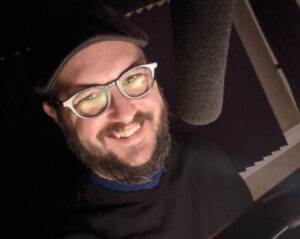
Wil Wheaton

It’s great. Right? Amazing. And he’s this child actor who then grew up. And so, in some ways, he’s really perfect for this because this is a teenager, this character, who is really an old soul. Right? So, a lot of people have, you know, until he went on to other things, you know, his voice work and Big Bang Theory appearances and things like that, they always thought of him as this teenager. And he was kind of locked into that and battled with that personally, about how that affected him in his business. And if you read his blog or his writings, he talks about that, and he’s come to terms with it. And it was so…and he brings that to every sentence in this book. He brings that lifetime struggle that he dealt with to this struggle that this lead character deals with. You know, he is a fifteen-to-seventeen-year-old biologically. He has all of the hormones, the brain, the brain development, everything of that. But he’s lived so long, and he’s got so much information, but he doesn’t have the maturity. And he struggles with what that means and how other people see him because he’s smarter, knows a lot more than someone who is going to look at him and go, “Oh, you’re just a teenager.” So, it was a really great thing. And when I heard him, when I heard the first version, I was blown away. And what’s funny is, I’ve done voice work, and I recorded a new book that’s coming out of mine that’s an adult, you know, mainstream fiction. And it’s called Velvet Sledgehammer and very personal, so I really had to be the one that did it. And the amount of time and effort and strength and, you know, exhaustion that you feel working to get this done. You know, he did a 10-hour, 45-minute recording in, I don’t know, you know, four days or something. Five, four, you know, four and a half days. And it’s insane how someone could do that.

Yeah, I’ve done some myself. And it is…it’s the time commitment and everything else that goes into it. It was way more work than I anticipated when I thought, “I should do some audiobook recording.”

Yeah. Everyone’s like, “Hey, how hard can it be.” Yeah. And you know, it really…and what I love also, Wil opened up a whole different audience for me. And also, he…you know, everybody’s like, “Do you think about what he’s going to say, how he’s gonna sound?” And I’m like, “I don’t think about how he’s gonna sound.” But I was really thankful that…before I ever did this, I always had a problem with the he-said-she-said nightmare that happens in books, you know, where…when we read he said, and she said, we don’t see them.

Yeah. They’re pretty much transparent.

They’re transparent. They’re like names on a script, you know, the character names, or in a play. We don’t read them, we just know who’s speaking. But when you hear them, they become very annoying. And so, I was glad that I had figured out a lot of ways to avoid a lot of that repetition before, because if…because, I just felt that way about even reading them. And I was grateful when he read, and it didn’t sound like some books.

Well, we’re getting close to the end of our time. So I have to ask you–this is where I need more reverb again, the big philosophical questions, which are basically why? Why? Why do you write? Why do you think any of us write? And specifically, why write science fiction? You’ve sort of talked about this earlier on, but now you get to sum it all up.

So, yeah, the big question. Why do we write? Why do I write? Why does anyone write? For me, the answer’s pretty simple. I have to write. There’s no choice for me. You know, like, it’s like asking like, whether I want to breathe or not. You know, we have to eat well, we have to exercise our bodies, but we also have to exercise our minds and whatever that means, right? Not everybody can do this or wants to do this, but human beings are human beings because we think. One of the things I talk about in the Battle for Forever series, one of the themes, is that you can do anything you want. You can become great at anything if you focus on it. Now, we don’t have hundreds of years to learn how to play the piano or study martial arts, but it’s a metaphor. And writing for me is something that I’m constantly striving to be better at. And in some ways, it’s this interesting balance of the, almost the opposite of what our English teachers taught us in high school, because as kids, we write very simple ideas, very simple sentence structures. And in school, we start to learn how to complicate our ideas, you know, with flowery language and big dictionary words. Right? And storytelling needs words. But we have to find the balance between how we tell a story and how we phrase it. You know, I’m a firm believer in the em dash and long, complicated sentences.

Me, too.

And I feel that in creative writing, the semicolon is like an intersection where everyone has a yield sign, and no one knows what to do with it. Right? In fiction, I think we should get rid of semicolons. But, you know, there are also these moments when you need to just write like you’re Hemingway, where it’s he did this, dun-dun-dun dun-dun-dun dun-dun. Right? It’s changing the different cadences. So, I have to write, right? It’s what keeps me sane.

You know, when I was writing comedy more exclusively, I didn’t think I was crazy enough to be a comedy writer. And in my thirties, I found out I was crazy enough. But I also found out that writing is like a daily meditation and therapy. And I think most writers, whether they are famous, not yet famous, or maybe never will be famous, that’s why they write, because they have to write. And I tell people I work with, people who have either interned with me or, you know, come to me for advice, that if I say anything to you, any criticism that I give you, because I’m going to give you tough, tough criticism, if any of it can stop you from writing, discourage you from writing, then you probably aren’t in the right business. Because there is nothing anyone can say to me about writing, no criticism, no negative comment, nothing that would stop me from what I’m doing. You know, because I have to do it. You know, and I just have to say one last thing about this, which is, I’m so grateful that others want to hear or read what I have written, what I have to say. It gives me pleasure, and it drives me farther, and it makes me try harder. But it is only the turbocharging. It’s the nitrous oxide booster, right? It makes it easier. It makes it faster. But it’s not the main fuel.

Yes, because most of us wrote an awful lot before anybody read any of it. And yet we still did it.

I would write if no one saw it.

Yeah, me, too. So what are you working on now? Obviously, there’s the next book in the…Battle for Forever, I guess, is the name of the entire series.

Yeah, Battle for Forever is interesting because there’s going to be four books and I’m writing the third, and the last book is going to be called Battle for Forever, which will really screw everybody up when they come to the series and they sit down and try to read the first book with the title of the series and they go, “Wait, hold on. This is…I’m in the middle of something here.”
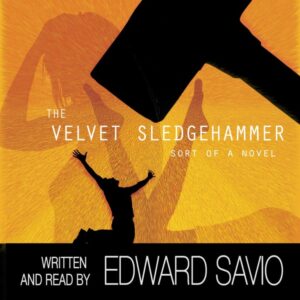
So, I’m writing League of Auld right now, I’m about 90,000 words into what will be 110,000 words, but I’ll probably write another thirty or forty thousand before I start cutting back down. I’ve already…you know, I’ve probably already written about a hundred, a hundred and twenty thousand, and gotten down to my ninety, so… And I’m working on Flux Capacity, which is this cool, fun story that I’m working on as well. And I have this very inappropriate, totally not safe for work Velvet Sledgehammer story that is about basically the coming…a person who is reaching adulthood…well, their mid-30s, real adulthood…and is starting to face the fact that children are coming. And in the middle of creating what turns out to be the World Trade Organization, because he’s the trade representative for the United States, and it takes place in 1993, that he…his girlfriend decides that they should get married and have children, and he thinks he’s the last person in the world that should have kids. And so it’s this coming-of-age story for an adult and how we have to deal with all of the things in our past and our present and find those things in us to pass them on to the next generation and screw them up just right.

And do you have any dates for when these things will be appearing?

So, most of the things are in a little bit of a nebulous space because of dealing with the larger publishers. And…like, Velvet Sledgehammer is ready to go. And if anybody contacts me and they want to read an advance copy or they want to give me some feedback on both the audiobook and the book themselves, they can look at that. But they want to hold it back because it’s so different than my sci-fi stuff that they don’t know where to put it yet. But League of Auld by the end of 2020. And I will take a break and not finish the fourth book for maybe a year, year and a half. And in the meantime, I will finish Flux Capacity for next year.

And if anyone wants to find you online, where can they do so?

They can basically find me, Edward Savio, @EdwardSavio, Twitter, Instagram, dot com. Those are the best ways to get me. I will respond on Twitter and Instagram as well. I’m not on there as much because words a little bit more than visual are my thing. But that’s where they can reach me. And if they want to check out Battle for Forever, but don’t necessarily want to yet get into that, they can go to battleforforever.com, and they can get a free novella that is told from a different character, a female character who I just love, she’s great, who’s about 2,000 years old, and it will give you an idea both of the story and some things that might be coming in the future, but it will not ruin anything in the books themselves. You can read it before you read them or in the middle or after. It will just give you a greater understanding of what’s going on.

Okay. And when I do the transcript and everything, I’ll put links on the website, The Worldshapers website for the stuff.

Thank you.

So, thank you so much for being on The Worldshapers. That was that was a fun conversation. At least, I thought it was fun. I hope you did.

Yeah, that was good.

All right. Well, thank you so much.

Thanks!
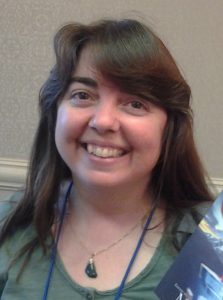
Episode 55: Adria Laycraft

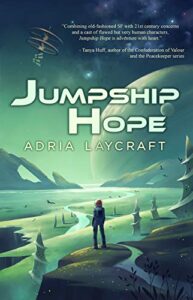
An hour-long conversation with Adria Laycraft, author of Jumpship Hope (Tyche Books), freelance editor, and wood artisan, an Odyssey Writers Workshop alumna whose short stories have appeared in various magazines and anthologies, both online and in print.

Website
adrialaycraft.com

Facebook
@adria.laycraft

YouTube
Carving the Cottonwood
Girl Gone to Ground

The Introduction

Adria Laycraft is an author, freelance editor of fiction, and wood artisan who earned honours in journalism in 1992 and has always worked with words and visual arts. She coedited The Urban Green Man Anthology in 2013, which was nominated for an Aurora Award, and launched her debut novel, Jumpship Hope,, in 2019. Her short stories have appeared in various magazines and anthologies, both online and in print. Adria is a grateful member of Calgary’s Imaginative Fiction Writers Association, and a proud survivor of the Odyssey Writers Workshop. She also has two YouTube channels, Carving the Cottonwood and Girl Gone to Ground.

The (Lightly Edited) Transcript

Adria, welcome to The Worldshapers.

Thank you, Ed. It’s wonderful to be here.

Now, I say I feel like I’m kind of an honorary member of the IFWA, because we’ve known each other for a long time through conventions in Calgary, and so, although I’ve never, you know, really been a member of the organization, I’ve been part of the Writers at the Improv that that group does every year, for many, many years now.

That is so much fun, Writers at the Improv.

I’ve done it a couple of times as a program. In fact, I did it when I was writer-in-residence at the Regina Public Library, and I did it again this year at the Saskatoon Public Library. Except I didn’t really have anybody show…it was just before everything closed down and I think people were a little iffy. All I had was an English As a Second Language class, and none of them wanted to compete. So what I did was, I just took words from them…because for those…I guess I should explain…Writers at the Improv is like any improv, you get words in the audience and you write a story using those words. I wrote a story on the words that they gave me. So that was kind of fun for me. It wasn’t quite the usual kind of a process, though. But anyway, enough about me. You’re actually here to talk about you. So, we have known each other a long time and you’ve been a writer all that time that I’ve known you. So, let’s take you back into the mists of time, as I like to say. How did you get interested…well, first of all, in science fiction and fantasy…and in writing? Which came first, or how did those two things come together for you?

Well, I can…of course, that’s why my phone rings…I have definitely been a reader and a fan of science fiction and fantasy since before I could even read. According to my mom, I demanded to be taught how to read before kindergarten because I was tired of waiting for people to have time to read to me. So, I’ve always been a reader. I read The Lord of the Rings at age eight for the first time. And I reread it several times, and launched me into reading Heinlein and stuff that I just hadn’t even thought I was old enough for yet. But always, always been a very avid reader. And then, somewhere along the way, when I realized I had to have a job in the big wide world, I realized that that writing the books that I loved so much could be a thing.

Well, you studied…well, first of all, you grew up in Calgary, I presume, or is that correct?

Northern Alberta.

Northern Alberta. So when you went to…when you were in school, did you start writing stories and sharing them with your friends and that sort of thing?

Yeah, and I was attempting to write novels at that point. I was still uncertain about short fiction, but I was always a book lover and I was attempting to write at that time. But being a sensible girl raised by sensible parents, I thought that I should go to journalism school and get a job that I could write for a living and maybe get a paycheque.

Yes, and that’s exactly what I did, because in high school I wrote novels and short stories and I knew I wanted to be a writer. And then I looked at it and I said, “Well, you can’t make a living as a writer,” and I went into journalism for that very reason, so I’d be doing something where I would be I would be writing. And, you know, it wasn’t what I wanted to write necessarily, but I thought it’d be useful. So, did you find that useful, your journalism training, and then the work you did there? Did that help with the fiction writing later on?

I got told several times, both in photojournalism and in the writing classes, that I was on the wrong side of the tracks. So, anyone from Calgary knows that SATE is on one side of the C-train tracks and the art school, ACAD, is on the other side of the tracks. And so, I actually had a couple of instructors tell me, “You’re on the wrong side of the tracks. You should be in art school.” And, of course, I fought that and graduated with honors and worked as a freelancer. I’ve been published in several magazines and newspapers, especially around Alberta. But it didn’t take me very many years before I realized that there might possibly be more truth in the fiction I wrote than in the journalism, and I decided that it was time to step away from that and focus more on the fiction, which is where my heart was.

I still find…and, yeah, I was kind of there, I mean, I, I did journalism and I, you know, for eight years I worked for a newspaper as a reporter and then as editor of the newspaper, and then I was a communications officer for the Saskatchewan Science Centre. All that time I was writing fiction, but I did find that the mere act of having to put words on paper is helpful, no matter what kind of writing you’re doing, that the discipline of writing helps you write. Did you find that, as well, that there was some benefit in all that nonfiction when you got around to focusing on fiction?

Sure. Definitely. And just even, as you say, words on the paper, but even the act of it, the physical act of putting words on the paper, the more you do it, the easier it gets to get started. And that seems to always be the hang-up for everyone, is getting started.

Well, I often say that as a newspaper reporter, you don’t have the luxury of not writing because the newspaper is going to come out and there have to be words in it to go around the advertising. So, you have to provide those words. So, I did find it a very useful side of writing. But all that time I was writing fiction. Were you writing fiction even while you were working mostly as a non-fiction freelancer?

I was, sporadically. I also spent several years chasing wildlife photography and sold a bunch of pictures to magazines and postcards and calendar companies and all kinds of neat things, back in the day where you still had to mail the slides physically to the company. And so, I was writing and always reading, but it was a little sporadic. I chased a lot of other interesting things. And I think that just lends itself to good fiction, too.

Well, you have to have something in the tank that you turn into words about other things, I think. And that’s another thing that I found writing nonfiction is that, you know, it broadens your horizons a little bit from focusing just on the stuff that you make up. It exposes you to other things. So when did…

Kind of like reading outside your genre will sometimes open your mind up to things you wouldn’t have thought of otherwise.

Yeah. Well, you did mention the imaginative Fiction Writers Association. When did you become involved with that excellent writing group?

Oh, I became a member…I believe it was ’96, or ’97. And my very first ever short story critique was performed by Randy and someone else who I don’t remember anymore.

That would be Randy McCharles.

Randy McCharles, our intrepid leader with When Words Collide.

How was that for you, the critique process?

That very first one? I mean, I was just in my mid-20s, it was the first time I attempted short fiction, I hadn’t even really read anything. The story was atrocious, and Randy did his best to tell me so in the kindest way. But it was quite an experience. And it was…it brought me back actually to the journalism-school days when, you know, you would have to write and write and write your assignments and then have them trashed. But it was very eye-opening and I learned a lot. And IFWA has, through the years, brought me so much, just…it’s hard to even express my gratitude because it’s so big.

Well, it’s good to hear because, you know, I’ve talked to a lot of authors and I always ask about their formal training, and that was, in your case, the journalism, but also if you can find a good writers group. And some of us have never had a handy writers’ group. And then there’s people who’ve been in writer’s groups, but they were not helpful. So it’s nice to know that there’s one out there that really works.

And IFWA has had its ups and downs, I mean, we became so big that the only way to be helpful and manage the numbers was to have splinter groups. And I was involved in one of those–well, a few of those splinter groups–but one in particular that went on for several years. And that kind of small focus can…that’s where you really get your value, is if you can find just a…usually between six or 10 people seems to be ideal…and you share work amongst you and you focus on one person’s work at a time. And, oh, my goodness, you can make leaps and bounds of progress that you just simply wouldn’t have been able to without them.

So when did you start selling short fiction?

That would be after attending the Odyssey Writing Workshop out in New Hampshire. Odyssey, we used to jokingly say, is a lot like Survivor because it is six weeks long. But we used to joke that it’s like Survivor, but you can’t vote anyone out. And it’s 16 students that critique each other and take courses and classes and workshops and do assignments for six weeks. It’s an MFA-equivalent course that’s crammed into a very short amount of time and it’s very intense. Because of that, the requirements for that course, I had to really get into short fiction a lot more than I ever had before. Even though I was a member of IFWA coming up to that time, Odyssey was what really got me looking at short fiction, reading it, writing it, really exploring it. And it was just shortly after that. So, my roommate got her first short story sale while we’re there. And then I got my first one shortly after, and it was written while I was at Odyssey.

When was that first one and what was it?

So let’s see. That was 2006. Oh, my goodness, I can remember the story, ‘course the title runs right out of my head. And it was published in a little online journal. It was a Christian journal, I believe. Just a small thing. But, of course, being the first one, I was really excited.

Yes, it’s…I was in…where was I? I was in Zurich, of all places, on a choir tour with my university choir, which I had gone back to as an alumnus just a few years after I graduated and I got a, you know, a mailgram, because we didn’t have email in those days, an aerogram from my mother telling me that I had sold a short story. So I still remember that very clearly. It wasn’t science fiction, either, that first one. But it was my first short story. So, yeah, you always remember the first one, that’s for sure.

Yeah.

Now though, you have…your first novel has come out. When did you start focusing or thinking about novels, or were there some unpublished ones in there before you published one? How did that work out for you?

There are several unpublished novels in my history. I, like I said earlier, love, love book-length fiction. I love the ability to just really immerse yourself in that world and those characters. And personally, short stories just aren’t long enough to really have the same impact on you. So, yeah, there’re a few novels sitting there that still need to find a home. The interesting thing is, Jumpship Hope began, as well, at Odyssey. We had an assignment to write up a flash piece, which I’d never heard of before. So here I was, already struggling with writing short stories because I wasn’t used to being so brief, and now I had an assignment to write flash fiction, a thousand words or less. And it was to be read out loud in public at a bookstore. It had to be five minutes or less. So that scene was actually inspired by my roommate, she said, “Just take one impactful moment and turn it into a story.” Just one. She said if you try and put too many moments in, then you won’t have flash fiction. So I took an impactful moment and turned it into, you know, threw it onto a spaceship. And, of course, immediately saw everything that led up to that moment and everything that came after it, and I had to write a book.

Well, this seems like a good place to give a synopsis of said book. So…without giving away anything you don’t want to give away...

Jumpship Hope is about first contact. And, of course, you know, that wonderful space-opera thing of being able to jump or fold space. And it’s an adventure about, you know, learning what we stand for. And it deals with humanity in a time where Earth has become pretty unlivable, and they’re trying to survive in orbit, on the moon, and on Mars. And things aren’t going so great, of course, because that makes good fiction.

And, you talked a little bit about how it came about, coming out of this this flash fiction. What was the impactful scene that you wrote that then triggered the rest of it? Or will that give something away?

Well, the impactful scene is very much that mirror moment in the middle where our hero, Janlin Kavanaugh, stops being chased and starts chasing. It’s where she puts her foot down and she says, “I’ve had enough and I’m going to make some changes.”

Well, how did you go about planning out the novel? Are you a detailed outliner…are you a pantser or a plotter, is the usual way to say that…?

Right. I’m a bit of a pantser, but I’m a bit of an organized pantser. I like to sail in the first 20, 30 thousand words, just feeling my way around. And then I will start plotting more and making sure that the pieces that I want are in place and in order. And then that gives me more confidence to move forward without running, you know, too many detours. Yeah. That would be it.

So what do you end up with in actual pre-writing, like a 400-page synopsis or a paragraph scribbled on the back of an envelope? What did it look like?

I usually end up with, when I’m still getting that first thirty thousand, then I usually end up with a lot of random scenes from all over the place in a scribbled notebook. And then, that’s when, at that point, I need to step back and say, “What’s important? Where am I going with this?” And that’s when I’ll start planning and I’ll start doing a proper outline. Having learned so much about story structure and fiction elements and plotting, I understand the importance of backing up in that moment and taking a look and making sure that I’m focusing on what I really want to say and not just one thing after another.

Well, other than that impactful scene, what was the impetus for telling this particular story? Where did the, you know, where do you get your ideas? That’s the other cliché we ask. And how does that, you know, this is for Jumpship Hope, but, you know, you’ve written short stories as well. What is your general sort of idea-generating process?

Mm hmm. Usually, there is an endpoint. That’s pretty clear. And it’s all about finding out what happened to end up at that point. Without an endpoint…and I actually read an interesting article not long ago about a triangle setup where, if you understand the inciting incident and you understand your mirror moment in the middle, and you understand the transformation at the end, once you have those three pieces, you can just go ahead and fill in what’s needed to get there to those points. So…I’m sorry, I lost track of the question.

Well, when you’re coming up with the story, how does it start for you? Does it start with like an image or a character or a plot idea or what’s typical for you?

It’s often a scene with the people and the dialogues coming to me. I can hear the characters, I can see the scene, I understand the tone and the emotion that’s taking place. And those scenes are what become this notebook full of scribbled bits and pieces that I then have to string together and bridge with more prose to make it a readable novel.

What’s your actual writing process? Do you write, you know, in long bursts or short bursts or in your office or off in a coffee shop or on a piece of parchment under a tree with a quill pen? How do you write?

Do you know, I really miss coffee shops. I used to write in coffee shops all the time when my kid was little. It was my way of being able to step away from the house, being an at-home mom and a freelancer working from home, right? But these days, I’m usually on the couch with the laptop or the notebook on my knees. I tend to write in spurts, so I’ll do an hour, take a break, another hour, take a break…but I also tend to take a whole day and just focus on the novel and not try to look at other jobs, like the editing jobs that I may be on that day, or that at that time. So I try to just let the book fill my head for that day and then I can maybe set it aside and take a few days to do all the other life-stuff. So it’s kind of…I work in spurts and then I take breaks.

Are you a fast writer or a slow writer?

I’m pretty darn fast. While I was in between the journalism years and getting the novel published and becoming a freelance editor, I ran my own freelance copywriting business. So you learn, just like with the journalism, you learn to write fast. You learn to get words down on the page and you learn to meet deadlines, which, I’m very sad to say, I missed the deadline with the sequel to Jumpship Hope.

Well, deadlines. I always remember, I think it was Douglas Adams who said that, “I love deadlines. I love the whooshing sound they make as they go by.”

Yes, that’s an awesome quote!

So, once you have a first draft, what’s your revision process look like? Or do you do, like, a rolling revision and it’s all polished when you get to the end of that draft? Or do you go back to the beginning and do it all from the beginning? How does that work for you and what sorts of things do you find yourself working on in the revision passes?

Well, with that messy, rough first draft, I tried to just keep plowing forward, though sometimes it is important to step back and look at what you’re doing. But I try to keep pushing forward until I get to the end. But especially since I’ve become an editor over the past five years, I find it very difficult to take the editor hat off and just write. So it’s…some of the biggest discipline I’ve ever had to have is now to be able to just say, “Stop worrying about the editing, stop trying to make it perfect right now, it’s just a first draft. Get to the end.” And then, once that first draft is done, as you come back to the beginning, then I get to put my editor hat on, and I feel much more confident and equipped, better equipped, to do a good job.

Well, I was going to ask you about the editing. Have you found that editing…t sounds like you’ve found that editing other people’s work helps you to look at your own critically. I certainly find that.

It definitely does. And I really enjoy it. It can be incredibly monotonous, and of course, anyone can edit for themselves to a certain degree, but I know for myself, even as an editor, I need other people’s eyes on the work. When it’s your muddle and your head’s just too far in it, you often can’t see it from the same perspective as someone else can for you.

So, what to do when you get to that point? Do you have beta readers or do you bring in an external editor or how do you like to do that? Or critiquers?

Yeah, yeah. I’ve got a couple of wonderful beta readers and some author friends who are always happy to exchange manuscripts. So then, I can help them without them feeling like they should be paying me because that’s my job as well. And they get to help me and we just get to do it as friends, which is wonderful, and very talented people that I call friends. I’m incredibly blessed in that way. And then, of course, with the particular work in progress, my publisher is waiting for that, and they will do a wonderful editing job for me there.

What sorts of things do you find yourself having to work on, both in revision, and then when somebody else looks at it, are there sort of consistent things that you find you have to spruce up?

Mm hmm. Consistent, yeah…on all levels of editing, there are things that every author has, like tics, I guess? Bad habits. One of mine is the word “very.” So, I will actually go and do a seek-and-destroy that one. There’s a few others on my list that are pretty bad, but that one is always number.

I actually thought for a minute you said the word-fairy, like the word-fairy, like this fairy that flies around and gives you words or something, not the word “very.”

Oh, a word-fairy!

A word-fairy would be a very good thing. Put your manuscript under your pillow and the word fairy comes and fixes it all up.

Ed, that’s a great idea.

I’m going to have to write that story!

Yeah. We need some word-fairies! Yeah, no, it’s a word “very.”
Yes.

V-E-R-Y. That one gets me. Apparently it’s my way of trying to…often I mark them and I’ll go through. A lot of times you can just take them right out and it’s fine. But sometimes it’s because I simply have not taken the time to do good word-choice thinking, right? To really think it through and get the right word instead of ones that need the word bury in front of it.

Yeah. And that’s something as writer-in-residence, that’s actually–which I just finished at the Saskatoon Public Library–I found myself pointing out to other people, You know, don’t use a weak verb with a modifier if you can find a strong verb, that sort of thing.

Yes.

Or a weak noun with a modifier.

The other one that I’m often catching and other people’s work, which I now catch as I’m writing, is instead of saying what something is not, say what it is. So instead of saying, “That’s not bad,” say, “It’s good.” And if those words don’t seem to cut it, then you’re not choosing the right words.

And the other one that I catch myself and I do this–it’s not a search to replace, but I often do a search for passive voice like was and had and things like that, and see if there’s some way to turn that one around as well. And that’s another one I often point out to people.

It just makes the writing so much more powerful. We don’t realize…I guess it’s kind of like that quote that good, easy reading is really hard writing?

So, when you got to your editor, your publisher, which is Tyche Books, what was the editing process like at that side of things for you? How do they approach editing?

I was pleased to see that they approach their editing very much the same way I do. Lots of comments and suggestions and track changes, so that I could go through and approve, accept, or reject, because like I tell my clients, it’s your story and you should always have the final say. So, I was really happy to see that I got a chance to look through the suggested changes and give my own feedback on that and make the changes I wanted or, you know, deny the changes that I didn’t think were appropriate. So, that pretty important. I know there’s been other Canadian authors that have had to fight things like Canadian spelling and things like that.

Yeah, that’s always a tough one for me, because my publisher’s in the U.S., but I have my own little publishing company where I adhere to Canadian spelling, and I’m constantly having to do a check on spelling to make sure I’ve either not used it for the American publisher or I’m using it in the stuff I’m doing myself or the Canadian publishers I work for. So, half the time, I’m not sure. And then I was just editing somebody else’s manuscript and they wanted UK spelling, which is not quite the same again. But there’s some software tools to help you with stuff like that. And I did want to ask you about editing, since we’re talking about it. How did you get into freelance editing?

Being a journalist and a freelance journalist for many years and then a freelance copywriter for many years, I was always really interested into getting into editing as well for fiction, because that’s my first love. And for a long time, I simply didn’t feel qualified. I wanted to make sure that I really did know my stuff. I actually took some courses and brushed up on my editing and grammar and a whole bunch of other things before I hung my shingle out. I really wanted to be sure that if I was asking people to pay me for my time, that they were going to get a good return on investment. So when I did go ahead and start doing that, my first couple of jobs were with IFWA members, actually, and that really helped me gain in my confidence and get started. It sounds like a really easy job, and I love to say, “Pinch me, I get paid to read for a living.” But like I said earlier, it can be incredibly tedious and monotonous and almost meditative at times. And it’s certainly not easy.

No, it’s not. And I do it, too.

It’s hard work.

Yeah, it is. And it does…well, and of course, basically, as the writer in residence I was editing, I was taking up to 3,000 words at a time, and I would go over that with a fine-tooth comb and then I would meet with people for an hour. And I met with some 70 individuals over the course of my time there. And there’s a song from My Fair Lady that kept running through my head, which is, “Words, words, words, I’m so sick of words. I get words all day through, first from him, then from you. Is that all you blighters can do?” It’s just the perfect editing…not ht it means in the context of the musical, but it’s the perfect editor’s song!

It’s the perfect editor’s song. It really is. And unfortunately, in these past years that I’ve been working as an editor, I actually stepped away from writing for a little while. And I don’t read as much as I like to. My to-be-read pile has gone completely nuts because I keep buying books. And when you read all day at the end of the day, you want to do almost anything else.

Yeah. It’s an occupational hazard, I think.

I think so.

The other thing about editor–you may have heard this, having worked in journalism, but my publisher at the Wayburn Review once put it one of his columns as a joke: “Editor is actually an acronym, it stands for Expensive Dummy in the Other Room.”

Yeah.

I think he meant it as a joke.

Oh, here’s hoping.

He didn’t fire me, so it could have been too bad. So, how has the reception been to Jumpship Hope? Have you…you know, are people enjoying it?

Yeah, it’s been really great. And I’ve had some surprising feedback. In fact, just last night I got the message from my auntie and she said, “Adrià, I don’t usually read science fiction, but you had me right till the end and I can’t wait for the next one.” So, it’s lovely to hear things like that, especially when you’re, you know, neck-deep in the sequel and you’re doubting everything.

Yeah, well, that’s sort of the middle part of the book when you’re just, you’re not sure. I had something like that from my father once. One of my first…I guess my first novel. And he actually, he did read this kind of stuff some, and he read it and he actually said to me, “When did you learn so much about human nature?”

Oh, well, that’s nice. That’s actually a really good compliment.

Yeah. I thought it was, too.

Yeah!

So you mentioned that you are working on the sequel…?

Jumpship Dissonance. And the final book, which is also getting little bits of scribbles, just as I try to sort everything, is Jumpship Freedom, and that will create the trilogy.

Is there a set release date for these, or is it a little amorphous yet?

Jumpship Dissonance was initially set to launch at When Words Collide in 2020, but 2020 isn’t going so well, and I missed my deadline anyway, so we’re shooting for 2021.

I was hoping to launch a book at When Words Collide, as well. So, yeah.

Yeah, it it’s going to be a fun one. Online.

I wanted to ask you as well about the woodworking because it’s interesting that creative people are often creative in more than one way. You mentioned the photography, which you focused on–ha ha!–focused on it for a while. So where did the woodworking side of things come in?

Now, that’s a fun one because, yes, creative people do often have a lot of things that they want to try, at least. And a lot of creatives will have many talents. But I struggled for a long time wanting to learn how to carve and just feeling like I should just get my butt in the chair and keep writing because that was the focus, that was my hobby. You know, I had work and parenting and yada-yada. But a few years ago, actually, when I backed off from the writing and the reading and I was doing more and more editing, I needed something else that took me away from the screen and the words and allowed me to work with my hands. So, I took a class at Lee Valley and then another one a few years later at Black Forest Wood Company. And I just absolutely fell in love. Woodcarving has a certain soul to it, like nothing else I’ve ever met. And I’ve always been a big nature girl, I love being in the trees. So it doesn’t surprise me that I like to carve wood. And I just kind of gave myself permission to go ahead and play and have some fun. And it’s really taken off for me. To me, it’s part of my soul-survival kit, if that makes any sense.

What sorts of things do you carve?

I’ve tried all kinds of neat things. I carve a lot of what’s known as cottonwood bark, which is the thick bark that grows on balsam poplar trees. And it’s very soft and forgiving. It’s really easy for beginners to play with and it has a beautiful grain. It’s known for those little fairy houses, you know, carved out of the bark? That is usually cottonwood bark. And it’s carved, you know, the faces, like the old man with fear and the mustache, wood spirits. One of my favorites is a whale tale that I carved, that I wear as a pendant. And one of my favorite, favorite subjects to carve is Celtic knots and weaves.

So it’s all a form of creating something from…not exactly nothing, but shaping materials into something else, which I think is a, as you might guess from the fact this podcast is called The Worldshapers, is actually a metaphor that I like, that we don’t really create things from nothing, but we take the material that we have inside us and we we shape it into stories and into new creations. So, woodcarving is very much a good metaphor for that.

It’s funny that you would put it that way, Ed, because I actually noticed one day that as an editor and a woodcarver, it’s all about taking things away.

That’s true. I guess that’s true.

I actually am a little jealous of sculptors because they add the clay until it’s right. Whereas a woodcarver, or a stone carver, has to remove material until it’s right.

Well, that’s Michelangelo’s famous thing, it’s attributed to him, that, “How do you carve David? Well, you get a piece of marble and you cut away everything that’s not David.”

Not David. It’s that simple. Very simple. Just like writing. You just put some words on the page. It’s that simple.

You could say that we’re starting with the entire English language and we just take away the parts of it that we don’t need for the specific book. So, it’s all in how you look at it.

Right. Exactly.

Well, then, on the big philosophical side, why do you do this? Why do you tell stories? Or why do you think any of us tell stories? And why, in particular science fiction and fantasy stories?

Oh, we desperately need them. Science fiction and fantasy has given an outlet to talk about things, in all of our history, has given us an outlet to talk about things that weren’t supposed to be talked about. And we could hide underneath the the the wizards and the spaceships, but we could still tell a story about people. And for me, life’s not worth living if there’s no story. So how philosophical is that for you, Ed?

Where do you think that impulse comes from, for human beings to tell stories? Because we’ve been doing it our whole existence.

Well, it’s so important for us to work out what happened and to help us to think it through and decide how we really feel about it after initial reaction, which is, you know, usually either fear or celebration. But I think stories also help us to share information with those that maybe weren’t able to be on the scene for that moment. Right now, in our world as it is, which is a pretty scary one, we’re seeing a huge uprising like, possibly like none before, and I’m really hoping it is, it will be like none before. And that, of course, is around the Black Lives Matter. And, it’s… I’ve spent a lot of time on Facebook and other media sites reading and reading and reading people’s accounts and their firsthand stories of being black and living in America and what it looks like every day and what it feels like every day. And without those stories, how can someone like me in privilege and safety understand why they need to get so upset right now? So we need story. Without story, there’s no understanding.

Well, and I mentioned that this is called The Worldshapers. It’s probably too grand to save that any one story shapes the world in any significant fashion. But do you hope you’re at least shaping your readers in some fashion through your stories?

Oh, that’d be great. Do you know what would be great? Star Trek. A lot of the great ideas that they came up with have now come to pass. Like, the little communication devices seem an awful lot like flip-phones. It would be really great if someday we really can get in a jumpship and fold space and visit other solar systems. And if I inspire the little brain that’s capable of figuring that out, then that would be really something. But I’m not sure that I have that kind of power, I just like to tell a good story.

So you mentioned what you’re working on. Do you have any short fiction in the works or anything on that side of things?

No, I don’t. I haven’t spent a lot of time with short fiction recently, although I am reading Rhonda Parrish’s Earth anthology, the one with the golems and giants? It’s really god.

I think most of are either novelists or short story writers, and although we might do both, there’s one we tend to gravitate to. And certainly, in my case, it’s always been the longer stuff. I don’t write…I finally put out a collection of my short stories and I had to go from my first short story sale in the ’80s up until last year in order to have enough to make a collection. Not a huge short story writer for sure.

Well, how many stories did it come to that?

Twenty-two, I think. But there were at least three of them that hadn’t been published before. So they were one that I included that way. So actually published short stories? I wouldn’t think I’m more than about 20 in my entire career.

Well, I know that book exists and it’s on my wish list but I don’t own it yet.

Yes, please, please do buy it. Everybody listening now, please. Paths to the Stars. Shadowpaw Press. Twenty-two short stories by Edward Willett

It looks amazing and I can’t wait to read it.

So, where can people who would like to know more about you find you online?

AdriaLaycraft.com Is a quick way to find me. And I do have a Facebook account that I’m pretty regular on. Other than that, I try not to spend too much time online. Oh, but you can definitely go to the Tyche Books website. Not only do they have amazing authors and amazing books, you can get your favorite Tyche Book on a travel mug and they’re really nice travel mugs, a sweater, a hoodie, a sticker, a poster, a wall hanging. They’ve got it all.

And the YouTube channels you mentioned in the bio?

Oh, yes. You know, it would be really great to have a YouTube channel about writing, but it’s kind of a boring thing to film.

That’s why no, you know, writing competition TV shows. This week, the contestants will type!

Exactly. But Carving the Cottonwood is the first YouTube channel I started, and it was my way of giving back…so many YouTube channels about carving are just people learning and showing what they’re doing. And I was able to learn from them as I was, you know, figuring out how to do this, so filming myself is now my way of giving back to those people and to inspire those who would just like to give it a try. Now, the Girl Gone Vagabond channel, it did get renamed. It’s called Girl Gone to Ground. And it’s going to be now a focus on me finding a little piece of land out here on the West Coast and building a little cabin and a garden and a woodshop. And it should be a lot of fun to see how it works out.

People can find those just with a search on YouTube, I presume.

Yes. You bet.

All right. Well, thanks so much for being on The Worldshapers, Adria. I enjoyed that. I hope you did?

Oh, I did. Thank you so much for inviting me, Ed. It’s such an honor.

And hopefully we’ll see each other in Calgary again one of these days, if nowhere else.

Maybe not this summer, but I’ve really got my hopes set on next summer.

Yeah, me too. Well, thank you very much.

Great. Thanks, Ed!

Episode 53: Bryan Thomas Schmidt

An hour-long conversation with Bryan Thomas Schmidt, national bestselling author and Hugo-nominated editor of adult and children’s speculative fiction whose debut novel, The Worker Prince, received Honorable Mention on Barnes & Noble Book Club’s Year’s Best Science Fiction Releases and whose short stories have appeared in magazines and anthologies and online.

Website/Blog
www.bryanthomasschmidt.net

Twitter
@BryanThomasS

Facebook
@bryanthomass

Goodreads

Bryan Thomas Schmidt’s Amazon page

The Introduction

Bryan Thomas Schmidt is a national bestselling author and Hugo-nominated editor of adult and children’s speculative fiction whose debut novel, The Worker Prince, received Honorable Mention on Barnes & Noble Book Club’s Year’s Best Science Fiction Releases, and whose short stories have appeared in magazines and anthologies and online and include canon entries in The X-Files, Predator, Joe Ledger, Monster Hunter International, and Decipher’s WARS, amongst others.

As a book editor, he was the first editor on Andy Weir’s bestseller The Martian and has edited books by such luminaries as Alan Dean Foster, Tracy Hickman, Frank Herbert, Mike Resnick, Todd McCaffrey, Jean Rabe, and more. His anthologies as editor include Infinite Stars and Predator: If It Bleeds for Titan Books, Shattered Shields with co-editor Jennifer Brozek, Mission: Tomorrow, Galactic Games, Little Green Men–Attack! with Robin Wayne Bailey, and The Monster Hunter Tales with Larry Correia, all for Baen; Space Battles: Full Throttle Space Tales #6, Beyond The Sun, and Raygun Chronicles: Space Opera For a New Age for various small presses, and Joe Ledger: Unstoppable with Jonathan Maberry for St. Martin’s Press. He lives in Kansas City.

The (Lightly Edited) Transcript

So, Brian, welcome to The Worldshapers.

Thanks for having me. Good to be here.

We’ve met a couple of times at conventions here and there, I think. And of course, you live not too far from Kansas City. So, I was down there for the Kansas City Worldcon, and I think I probably said hi to you sometime during that weekend.

You did. I think…weren’t your daughter or your wife with you, or both?

Yeah, they were both…I was just telling you before we started that I have family not too far from there. My mom was born in Butler, Missouri, about, I don’t know, 50 miles from Kansas City, a small town, and Adrian, Missouri, is right down there, too. And that’s where she grew up and went to school. And that’s the birthplace of Robert A. Heinlein. So, while I was there, I actually went down to Butler, and they have a library there, Virginia Heinlein’s name is on it, and they have a collection of Heinlein books. And so, I actually donated some of my books to them and signed them while I was down there. So, that’s kind of cool.

But anyway, enough about me. So, we’re going to start with, as I always say to the guests, taking you back in time. How did you first get interested in…well, first of all, in science fiction, and then in writing it? It’s not necessarily the same thing at the same time.

Well, my interest in writing came first, because…my mom likes to say I never played with a toy the same way twice, because I could always imagine new scenarios for the toys. And so I was creating storytelling even as I played. And so I kind of had a natural inclination towards storytelling. So, I started writing basically fanfic of some of my favorite children’s books, you know, when I was in kindergarten and, you know, doodling around before that, but by third grade, I was writing with a partner doing like little books in some of my favorite series.

What were those favorite series?

First Scholastic edition of
The Littles, 1967

Well, like, for example–I’m trying to remember, I forget the author these days, but—it’s The Littles. They were books about little people that lived in the walls. They had tails and they had, you know, they would fly paper airplanes, and little, you know, contraptions they made out of things, and they lived in the walls. And there was a whole popular series of Littles books. That’s the one I remember that we were writing stuff for. There were other things, but I don’t remember off the top of my head what they were. But that was kind of my first thing. And then, when I got into sci-fi was when I saw Star Wars, and that’s what really…Star Wars: A New Hope really made me look at things differently. I was always into space. All of the NASA launches and the different missions. In fact, my grandma kept a scrapbook, which I now have, of all the news clippings from all the history of NASA until she died. And so, we have, up through the middle of the space shuttles, we have clippings from all that period, all the way back to the very first, you know, Mercury astronaut program and everything. It’s really cool stuff. And so, I’ve always been a fan of all of that, but Star Wars took it to a whole new level and made me think about it in a whole different way. And then I got into Star Trek, the original series, which was rerunning every night and was in competition with dinner, much to my mother’s chagrin, and Space: 1999 and so on and so forth. And that’s what really started it. But, of course, naturally, I combined my desire to tell stories with my science fiction, and it kind of went from there.

So, when did…when you were writing all this stuff, were you sharing it with other people? I always ask that question because I found for myself that when I started sharing my stories when I was writing them in high school and so forth, and I found out from that that people actually liked my stories, and that was one thing that eventually pointed me toward the, you know, doing writing professionally. Did you share?

Well, yeah. I don’t remember who all besides my family I shared them with, but I know I shared ‘em. Some of them, eventually, I entered into a writing contest, creative writing, in school. And I won some awards. And so, that was an encouragement because, like, I can really do this, you know, they’re judging me the best in the contest. I may have something here. So, yeah, I did share. Back then, I was also doing music a lot, and I shared my music a lot more publicly than I think I did my writing, though occasionally, different things would happen with writing. But the music I definitely performed in public, so…

You’re a singer or instrumentalist or both?

Singer, piano player, songwriter. I played banjo, I played guitar a little bit, and eventually took up hand percussion, but I mainly was known for piano and vocals and songwriting.

I always ask that question, because I’m a singer and did that kind of stuff, too.

Yeah. Yeah. I have several albums out.

Well, I can’t say that.

I toured, I had stuff on the radio, and I toured and did all that stuff, too. So, it was a whole other life before I settled down to writing books.

Now, when you got to university, you didn’t actually study creative writing, did you?

No, I studied…at first, I was a music major, because music had been the area where I’d had the greatest success up to that point. And they wanted me to learn classical and they wanted me to write classical, and I got really frustrated, so I ended up switching to the English department and pursuing writing. And I still have mixed emotions about that. I mean, they didn’t really…you know, “you’re not a composer because you don’t write classical music.” Well, lady, people are asking me to sing my songs everywhere I go, and you told me your own husband doesn’t like your compositions, so I think you call him me “not a composer” is kind of a little ironic. That was kind of my response, which didn’t go over well. But anyway, I went into the English department and then ended up deciding I wanted to pursue screenwriting and transferred and finished my college in California doing screenwriting and then went into TV and film. And so, writing kind of took over. But at the time, of course, it was scriptwriting, which is a different animal than prose writing.

I’m always interested in that, as well. So, the scriptwriting that you did…when you did start writing more prose, did you find benefit from having been a scriptwriter?

Well, my dialogue was really strong. I’ve always been really good with dialogue because scripts rely so much on dialogue. When it came to writing all the visceral stuff and the descriptions, that’s where I had to struggle, because I really had to figure out how to describe stuff in the amount of detail I’d never had to deal with before. And  that was part of the struggle. But I was writing scripts in high school, really. I created my own TV show when I was, like, in eighth grade and wrote, like, fourteen episodes. And I was writing scripts for my favorite shows and all that kind of stuff. So, you know, I was always doing scriptwriting alongside whatever prose I did.

I want to go back to the studying writing at university, I’ve asked many writers about that, some who have done it, some who haven’t done it. And I get a very mixed bag as to how helpful it was. What was your reaction to the actual creative writing part that you studied at university?

Well, I didn’t have any particularly bad experiences, but I think that what I was trying to do definitely was pushing the envelope as far as creativity with what they were expecting me to do. I always put a twist on everything. There was always some kind of weird…it didn’t have to be science fiction necessarily, but it definitely was a twist. I had to…even with screenwriting, I had to write a newscast for a class. And so, I wrote humorous news stories, but delivered, like, straight. You know, at the time, this will totally date you, but I remember one of the reports was about, you know, heavy winds at the Wichita airport, and you see pictures, video of the planes flipping over and all. You know, so underemphasizing things, you know. “The entire session of Congress had to be cleared today because Vice President Quayle passed gas in session.” You know, that kind of thing was the kind of stories that I would come up with, and they were delivered deadpan, you know? And so, I think some of my teachers were like, “I’m not sure you’re taking this seriously or not.” I was like, “I am, it’s just like, I like to have fun with it while I’m doing it.” So, you know, the humor that people now see in things like Simon Says, I’ve always been doing that. I mean, that’s just kind of where I came out. You know, shows like Hill Street Blues that mixed humor with drama were always my favorite types of shows, anyway, so those were kind of the things that I modeled myself after.

So, you were writing scripts, but you did several things along in there before you really started focusing on the prose side, didn’t you?

Yeah. I mean, I did the…I was doing the music thing, and then I ended up going back and getting a master’s degree in seminary and doing…starting a nonprofit that taught leadership development in the arts, and went over to Africa and Brazil and Mexico and various places, and helped train leaders. In fact, in one denomination in Ghana, West Africa, I would say seventy percent of their music leaders today are people I trained. So…I mean, Ghana is the size of Oregon, so, you know, take it for what it is, but…you know, it’s one denomination out of, you know, hundreds. But still, you know, it’s kind of an accomplishment to have had that kind of impact on a particular group of people. You know, we’re talking about forty, fifty people who are kind of my progeny over there, they’re doing their thing, that I was able to train and have gone on to success. And so, a lot of those experiences that I got out of that have, of course, informed my writing.

One of the reasons I went and did all that is, when I was doing screenwriting at first in Hollywood, you know, I kept getting, “Your stories just a little too plain, a little too cliché, a little too, ‘we’ve seen them before.’ You need to get more life experience to write from.” So, I ended up going up and doing a concert tour, when I did my first album and left Hollywood behind. Quit my job—I was working for a company that did documentaries for History Channel and A&E and a bunch of different stuff, doing all these different shows, Biography was one of them. And I left and went on tour as a musician, moved back to live in Kansas City with my sister, and ended up doing the music thing, going to seminary and then going off and doing ministry for a while and doing these leadership-development training things, and then found my way back to prose, you know, after a decade of that. So, it was kind of a roundabout way that I came back and started writing novels as opposed to, you know, screenplays and songs and other things. But I started my first novel in about 2007, 2008.

And is that the one that was The Worker Prince which was published in 2011?

No. That was 2009. The first novel’s unpublished. And may never be published.

I have a few like that.

Yeah, it’s…yeah, I mean, I like the story and the concept, but, man, I was not up to pulling it off. Worker Prince is interesting because Worker Prince went through more rewrites than any book I’ve ever done to get where it was, and then, of course, we did a second version of it when it was picked up by a new publisher after the first publisher kind of went belly-up in the middle of releasing the books. So, I got a chance a few years later to put them out again and release the third book in the series. And I rewrote the first two and fixed a lot of things because my prose had advanced back far enough I felt like, you know, this was a chance to really write some wrongs, so to speak, and put it out there. So, there’s two versions of the story out there, too. So, yeah, Worker Prince was my first published novel. And that trilogy, actually, the Saga Of Davi Rhii, is actually gonna be re-released this summer, God willing, from my Boralis Books imprint and be out in hardback for the first time.

So, that’s your own imprint, Boralis?

Yeah, I’ve got my own imprint now that I do a lot of these novels and stuff with. I’ve also sold a novel to another publishing company, as well, and I still do anthologies with some of the other publishers and, you know, my novels are out there, but it’s just, you know, there’s so many advantages to doing it yourself these days, but I’m kind of becoming more hybrid.

Yeah, me too. I’m published by DAW, but I have my own little press, too, Shadowpaw Press, which I’m putting stuff out through for sort of the same reason, one of which was a story that came out and I went back and rewrote it. It was kind of nice to go back and fix some things in that old book.

Yeah, I mean, sometimes you realize…I mean, there’s a point where I say, you know, people ask me, “Oh, you’re going to put out Worker Prince again? Are you going to do yet another version of that?” No, I’ve done that. And I can look at it and probably nitpick it to death right now, based on where I am as a writer right now, because I feel like the John Simon books, which is my current series, is way advanced ahead of where I was with the Worker Prince series, but at a certain point, you’ve got to let your writing stand. And I think, you know, I got a chance to do the books I wanted to do, and that was the only reason that I did the rewrite the first time on that series, because I’d had a publisher pressured me to go one direction with it and various things, and it was new, and the next publisher was just like, you know, “Give me the best books you can,” and I was able to just go back and make it what I wanted it to be rather than what somebody else was telling me it needed to be. And so, that’s why I did it. And, you know, I think there are…it is certainly fun to go back and explore your writing. Sometimes it’s painful to go back and explore your writing.

I’m actually…I have a copy of the first novel I wrote in high school, The Golden Sword, which was later rewritten as The Silver Sword when teenage me realized you probably could even pick up a sword that was made out of gold. And I’m going through it because it’s interesting. And I’m tempted to throw it up under a pseudonym on Amazon just to see what happens. The scary thing is, what if it sold better than my current stuff? That would be so horrifying.

Well, you know, the one thing…there’s good and bad about the whole self-publishing movement. The bad is that people can throw up any crap they want. And I don’t say that as an indictment of what you’re talking about here with yourself, but I’m just saying, unfortunately, there’s a lot of crap out there being published, and some of it is actually successful. And so you never know. Your book might come out and it might, you know, be a hit. You can’t look at it as an indictment of quality anymore. I mean, you want to put out the book that you’re proud of that best represents you under your name, and you absolutely can be proud of that. But, you can’t look at anybody else’s success as a measure of your own because there’s just, you know, they might be a marketing genius who writes like crap, you know?

Yeah, I think there’s definitely some of those out there.

Yeah.

You’ve done quite a bit of editing. How did that get started?

Well, the editing came about because I found that I had a really good ability to communicate with writers. I’ve always been a communicator. I like teaching, and I like helping people. And I got an opportunity to do one of those gratis anthologies called Space Battles, where everybody basically was donating a story, and that was my first chance to see what it was like. And at the time, I was being mentored by Mike Resnick, who was a big anthologist. And Mike was encouraging me with anthologies, and I was really starting to say, this could be a fun way to get to work with some of my writing heroes, and give new writers a chance to work with their heroes, and it’d be kind of a big collaborative thing. So, I started doing that, and then in the process started doing some freelance editing and ended up doing novels and other things, as well. And eventually, you know, my fourth anthology or something like that was Shattered Shields, which I did with Jennifer Brozak. Well, Jennifer grew up with Andy Weir, and Andy Weir wrote The Martian. And I was sent The Martian because Jennifer didn’t want to edit her childhood buddy. She felt it wasn’t wise to work together.

Probably true.

First edition of The Martian
by Andy Weir

So, I got Andy Weir’s The Martian, and I was the first editor on it, before it ever went out, and worked with him on it. And later he did…you know, I’m always proud of this, and I always remind him of this, and he freely admits it, but the stuff that he refused to do for me when he was paying me, Crown made me do. So, you know, I edited it, and I told him he needed to, you know, “You need to describe NASA. You have all these scenes with NASA. You need to describe the sets.” “Well, everybody knows what NASA looks like. I don’t need to describe mission control.” “Like, yes, you do.” “No, I don’t.” So, he didn’t describe mission control. You go back and read the final book, and yes, he did, because Crown told him to do it. So, there were a lot of things like that, that…but when, you know, when you’re a freelance editor, you work for the client. If the client’s the author, they can basically overrule you. And, you know, that’s why I started…I have a rule where it’s in my editing contract that, you know, you can only put my name on your book as editor if you really want to put my name on it, if you have my permission, because there are certain books that I’m just like, “Yeah, I edited that. But they didn’t listen to me, and I don’t want my name on it.”

That sounds like a good plan. I’m doing some freelance editing, although it’s anonymously at the moment, but yeah, that’s a good idea. I’ll remember that.

Well, I mean, it’s…the thing is that, especially as I became more and more known as an editor rather than as an author, which is ironic because I always think of myself as an author, but because of the success I had as an editor between Andy’s book and then a bunch of anthologies and different things, and I reached, you know, national bestseller status and a lot of things before…with, you know, editing than I did as an author, you know, I started to really worry more about my reputation as an editor and the value of that. And people started to come to me, want me, because they wanted the editor of The Martian to work on their book. So, it started to become the kind of thing, well, I need to protect this and make sure the integrity is there, integrity has always been important to me, and make sure that it actually has maintained some value. And so, that’s when I started thinking about the fact that, you know, I had people trying to slap my name on the book and then when they put their book out, and they got bad reviews on Amazon, they would comment on the reviews and say, “Oh, that’s the editor’s fault.” And I would have to go in and send them a cease-and-desist letter or risk having to come in on Amazon and say, “No, we told you to do it. And I can print…I’ll put a blog post up and show everybody where we told you to do that.” And I didn’t want to get in those kinds of battles, so it ended up just being easier to just, you know, make it a policy and just let people know in advance than to try to have to deal with that.

Do you find editing…I’m currently writer-in-residence at the Saskatoon Public Library, working with a lot of writers…and I do find that working on other people’s manuscripts helps me see flaws in my own. Do you find that to be the case as an editor?

Yeah, I mean, I think it’s…I always am finding stuff that people do that I think, “Oh, that’s a great description. I need to memorize that turn of phrase, because I could use that. I’ve never seen that before. That’s something that I can incorporate into my own dialogue, internal monologue, that would be something I could use.” Or, you know, some way that they’re doing things that is unique. And, yeah, I’m always finding things. You know, I always tell people the reason that I did so many drafts on The Worker Prince is, I was learning craft.

And I literally did a sartorial draft. People said to me, “None of these people are wearing any clothes. You never mention clothes, the entire book. Where the hell…what, are they naked? What’s the deal?” So I did a whole draft where I did nothing but address what people were wearing. Because I literally hadn’t…because I don’t think about clothes, because I’m not fashion-conscious. Anybody who’s ever seen me in public knows that. I don’t…so, I didn’t even think about it, you know? So, I had to go back and actually write what I call my sartorial draft, where I did nothing but put people in clothes throughout the entire book, you know? And I would do drafts on, you know, a particular character’s dialogue or a particular subplot or, you know, “You didn’t do enough description. So you need to do a descriptive draft,” you know? Now, a lot of that stuff, I can do it two or three drafts, and it’s all part of the process. But at the time, I had to focus on specific aspects of craft and go back and do a draft because I was learning it.

And I think that’s where… people talk about the writer’s journey. People get, you know, some people get annoyed by that. You know, it sounds cliché, but the reality of it is, you’re building your toolbox, and eventually, you can use more than one tool at a time. But when you start out, you can’t use a saw and a hammer at the same time. Well, most of the time you can’t really use a saw and a hammer at the same time that I can think of, anyway, but you get my point. My point is, you know, you’re gonna have to…you learn how to use the tools one at a time, and then you can put them all together. And you get to that point where you can…I’m sure you’ve experienced something similar, where you can eventually, you know, you’re thinking about all the different things at the same time, theme and, you know, all those kind of things. But at first, I literally had to think, stop and think about them individually in some cases.

Well, you’ve mentioned process, and that’s what we’re going to talk about now. So, talking about your creative process, but first, we’re going to use these Simon…John Simon thrillers, right?

Yep.

We’re gonna use those as the example. So, maybe we should start with a synopsis of at least the first book, or both, whatever you can do without giving away too much.

Well, the John Simon thrillers are a near-future, 2029 Kansas City noir detective series. They’re about a top Kansas City Police Department veteran detective, an eighteen-year veteran, who, when his partner is kidnapped, has to team with the only witness. The problem is, that witness is a humanoid android, and he hates technology. So, this is the only guy that can maybe help him find his partner, and so he reluctantly teams with him. And thus a beautiful friendship and partnership is born. And basically, that’s the whole premise of the series. Now, what happens in Simon Says is, they’re investigating some people who are using art to transport secret documents, and I won’t say how, but it’s very, you know, there’s a whole technical aspect to it. It’s very, very sci-fi, and so on and so forth, and all that’s going on.

So, that’s book one. Book two, they’re dealing with terrorists who want to blow up some major tourist site in Kansas City. Book three, which I’m finishing right now, there’s an outbreak, somebody sabotaged a bunch of androids, and they’re behaving against programming. And so, that threatens the status of Lucas George, which is John Simons’s partner, the android, you know, threatens his status on KCPD, and so it becomes this whole personal crisis for him. So there’s…that’s kind of…I don’t know if you wanted more in-depth of a synopsis, but that’s kind of the gist.

Well, hopefully that piques people’s interest. So, what was the seed that…you know, I hate the cliché, “Where do you get your ideas?”, but it’s still a legitimate question. What was the seed from which these stories grew? How’s that?

Well, it’s funny because, actually, Simon Says started out as a screenplay, and it’s something I wrote in the ‘90s. And it’s interesting, because I wrote it and it wasn’t…it really wasn’t strong enough, but it was my buddy cop story, and it was written and set in Miami because I was a big Miami Vice fan. So, for whatever reason, I decided to set it in Miami. I also had just made a trip to Miami, and I could do research to write it off of. And it was about this tough, macho LA cop who has to team with an HIV-positive snitch to solve his partner’s kidnapping. Well, he, of course, is a little bit homophobic, a little bit weirded out by the HIV thing, which was very common back in the ’90s when HIV was new. And so, I wrote the storyline, and there was an art-dealer storyline, but it was very, you know, everything ended up being about drugs, and it was very…what I got from people was, “We’ve seen it before. It’s too cliche.” So, I liked it because I had come up with all these really cool scenes and action and the humor and the banter I really liked, but, you know, nothing ever happened with the screenplay.

So, when I decided I wanted to do something different after the Worker Prince series, the Davi Rhii series, I was looking at things, and I said, “You know, I really love cop stories.” I started pulling out Simon Says out of a box, and re-read it, and I said, “You know, I bet you I could do something with this, but I really need to rework it.” And so, I took it, and I said, “Well, you can’t do the HIV storyline now because people would hate this guy because they’d think of him as homophobic,” and it’s a whole different environment for it, so what could I do? I could make him technophobic and put him with a robot and turn it into sci-fi. Perfect. So that’s the genesis of it, really.

Okay, then. So, on a more general term, where do ideas for stories generally come to you from? That was pretty specific on that one.

Well, it kind of was, yeah. I’m sorry if you were looking for general, but generally speaking, I just, I don’t know, a news story? You know? I got one the other day that…there was a news story on, and I got this idea for this thing, and I wrote it down, said, “This is something I could do something with.” And, you know, I mean, that kind of thing happens all the time. Or I’ll…even a line in the song, or somebody’ll make some comment, or something will happen, I’ll get all these things. I mean, with this John Simon series, the plots for the future books come from the police blotter or from stories that I hear from the cops when I’m doing my research, a lot of times, where I’ll take it and put some kind of a sci-fi twist on it or some kind of a different twist on it. I’m always trying to do something. I mean, these guys are not homicide cops, they’re property detectives, which ironically, they end up investigating homicides and other things in the process of investigating property crimes, which kind of stretches the reality a little bit, but that’s what they end up doing. And that’s because I wanted to show other areas of policing besides just the usual homicide cop, you know, the murder detectives. So, I actually get to show them doing other kinds of investigating besides just murder. So it’s kind of, you know, the rebel in me wanted to do something different?

Well, you mentioned research. How much research do you do on these, do you have to do on these?

Well, I mean, I all-night ride-alongs with the Kansas City PD, you know, two or three times a year, where I literally go out all night long in the roughest neighborhoods of Kansas City and do ride-along. ’Course, none of that’s going on right now because of the fact that we’ve got the Covid crisis going on. I normally would be doing one right about now, because I’m getting ready to start book four and I always do ride-along in between books. So, I do both. I also have several friends now on the department.

I go to actual locations because I’m writing in Kansas City. I actually go and take pictures of locations. I listen and make notes, “What do I hear? What do I smell? What do I see?” so I could describe them well. And I will talk to people about the history of Kansas City and do various things. I did a whole tour of Kansas City and recorded it one time for three hours with this guy who was an expert on the history of Kansas City, so I could get a whole sense of the city. I am constantly talking to police about various, you know, things that are going on. “What’s the latest?” You know, my nephew’s a cop, too, but in a different department, so I hear from him. And, you know, “What kind of cases have you had? What kind of interesting things? What’s going on with your department”, those kinds of things.

So, I mean, you know, I’m doing that kind of research, and I’m also doing research on tech, you know, to keep up with my android storyline and whatever tech I can come up with for police tech. What’s the future of policing going to look like, and what kind of tech can I come up with that I can build stories around.

When it comes to building the stories, what does your planning/outlining process look like? Do you do a detailed outline? Do we wing it a bit? How does it work for you?

You know, I’m traditionally a panther. The first book, I wrote 110,000 words in six weeks, which was incredibly fast for me, but I cheated because I had a screenplay. I had 50,000 words already written. And I basically, I didn’t use all of them, but I had a hell of a lot that I could use and rewrite. And so, I kept a lot of sections of dialogue, but I reworked a lot of things. So I was able to, you know, cheat and write that book faster because I already had a basic structure, an idea. I just was, you know, building around it and making it better and stronger. The second book, you know, took me a lot longer. So, generally, what I do is, especially if I’m building a sequel is, I’ll map out what I call the TV Guide pitch line for each plot, the main plot and the subplots. And then I do a synopsis, which is just a short one-page thing, four or five paragraphs max, where I lay out, “This is what the gist of the story is.” And that’s what I work from.

And as I go…I work in Scrivener, I have a template for these books that’s already broken down into a chapter with three scenes per chapter. There’s chapters that have more than that, but I just have a base template with three scenes already laid out, empty scenes that I can do. So, I will make notes in there or in a research document inside Scrivener, I’ll make notes about ideas I have for later scenes or characters or whatever and where I think they’re going to go and where they’re going to fit in the story, and I’ll start putting things in that as I write, as they occur to me, but I basically kind of work that way. I don’t really do a lot of detailed outlining.

What does your actual writing process look like to you? I mean, right now everybody’s stuck at home. Do you normally write at home? Do you go out somewhere? Where do you like to work?

You know, I’m one of those lucky guys that can work anywhere, but I generally work at home. But, I have an office in my home, I’ve got, literally, I’ve got a copy machine and printers and file cabinets. And it’s, like, if you walk in there, it looks a lot like an office in some office building. And it’s, you know, right across from my bedroom. So literally, I could walk over there in my underwear. But it’s going to work. And I usually try to keep set hours when I write and set hours when I edit. And I fit my social media marketing around all that. And then, you know, I sit down, and I write, and I try to, I have to get, you know, 2,500, 3,000 words a day, depending on what day, what project I’m doing. You know, sometimes I only do 1,800 words a day, sometimes I do twice that. It varies, but I have to at least get significant progress done. And that’s pretty much my process. I work, like I said, I work in Scrivener and my first draft with, you know, various other support documents where I need them. I always have the Internet open so that I can do research because I’m always doing Wikipedia stuff or Googling or, you know, checking the department charts for the KCPD, or, you know, checking my photos from my locations.

I’ve done, you know, I literally do location scouts. I use the Kansas City film…what is it called?…the Kansas City Film Office has their own online database of locations in Kansas City. I use that all the time to find locations that I haven’t thought of that would be perfect for my stories. Because I’m really…I mean, the thing about Kansas City is, you know, I really want to capture unique features of Kansas City when I’m writing. And also, I want the most interesting and appropriate setting for each particular scene. You know how, as a writer, know how important it is to pick the right setting, to get the mood and the, you know, the level of tension and whatever you want and give your characters the right busyness around them to create the right ambiance for a particular scene to work most effectively. And so, I’m always looking at that while I’m writing. So, all of those kind of things.

And then, I just write. I also keep a bunch of screens of movie quotes and TV quotes open because Lucas George, one of his things is him trying to become more human. You know, John Simon’s precocious fourteen-year-old daughter convinced him that he needed to start quoting cop movies. So, he quotes cop movies, and he quotes them comically because he doesn’t quite understand the context yet. So he’s misquoting…well, he’s quoting them correctly, but in the wrong place at the wrong time. And so, I always have to have those open so that I can find new quotes to throw in for them. And he’s getting a little bit better at it as he goes, of course, as he figures out better comic timing and what’s appropriate, but I milk a lot of comedy out of the series because, you know, it’s very gritty, it’s very noir, it’s very gritty. It’s, you know, there’s a lot of cursing, it’s very realistic. It’s very much written and modeled after my experience riding along with cops, what I heard, what I saw. So, you know, there’s violence, there’s shootouts. There’s all…

I mean, the first night I did a ride-along I saw, I went back to the same location twice for two different shootings. I rode to the hospital with a gunshot victim. We stayed in the ER with him. We watched a woman chasing her brother down the street with a knife. I mean, I saw all this violence and stuff in front of me. So it’s not like…I mean, I’ve seen it. You know, I’ve seen meth addicts recovering in the ER, you know, and see what they’re like. And I mean, it’s just. I try to capture that in it because I’m trying to pay tribute to the difficulty of what it is to be a cop and the challenges they face at the same time as I’m telling my stories. So, I have all of that mixed in with the humor because, you know, humor breaks it up, and just when it gets so tense and so dark that you just, like, it’s unbearable, you can break it up with humor and give people a chance to breathe.

Once you have your completed first draft, what does your revision process look like? Do you do multiple drafts, or how do you work?

Generally, my revision process at this point is that I send it to an editor and a proofer. My first proofer. And the editor gives me extensive notes, the proofer just goes through and does prepare. That way, they both catch different stuff. And then, when I get that back, I do a rewrite and I will…which is what I’m doing right now on book three. He’s like, “Oh, this didn’t quite work. You mentioned this, you described this earlier, you don’t need this description here, but you need description here, here and here. You need to go figure this…this logic flow doesn’t work,” that kind of stuff. So I’m working through all that stuff, and I’m doing a rewrite and polish.

And I remember stuff that I didn’t do. For example, in book one, there’s a lot of song references throughout the book of futuristic songs that they’re listening to. Well, I forgot about that for much of book two, so in book three, I’ve tried to put those back in. So, I’m doing a pass where I literally go through and make sure I’ve done that. You know, different worldbuilding things that maybe I forgot about because they weren’t caught in the story, I have to go in and build them in because they’re part of the world and I have to make sure I touch on those kind of things.

And then it goes to another set of proofers and then the formatting guy, and he does the widows and orphans and the formatting, slides it on the template, and then we publish it. So that’s pretty much the process. All of that together takes about three months from the time I finish the first draft.

You don’t use, you don’t have any beta readers like some people like to send their work to ahead of time?

I don’t really use beta readers. The main reason is because I never really found good ones that I could trade with. And I spend so much time running my story…if I have story problems, I’m on Facebook Messenger talking to one of my writing friends about it. Like, I have…like, I mean, with this third book, Martin Shoemaker has been a great help to me. And he’s taken…we broke down the whole story and talked through different aspects of it, and he’s suggested stuff. And just by him suggesting stuff, it’s triggered me, and I’ve made my decisions and gone off and written my story. And he’s reminded me of stuff that I needed to cover that I ended up, you know, making it…so, I kind of beta it that way instead of beta-ing it by sending it out, you know, to beta readers and waiting months and months. But that’s just kind of my process.

I was just gonna say I’ve never used beta readers, mainly because I’ve never lived anywhere where there is anybody but me who is writing. So, yeah, like, my editor is the first person that sees it.

Yeah.

I was also going to ask, since you have talked about doing the ride along with the police and everything, I want to know what the overall reaction to the books has been generally, but I’m particularly interested in if the cops like them.

Well, I mean, they’re still friends with me. And they’re very supportive and cheering me on. To be honest with you, the response I’ve gotten from the cops has been really supportive. They’re really, they’re kind of proud of the books because they really feel like I represented the department well. I mean, I put them…I don’t make all cops out to be bad guys, and I don’t…I mean, it’s a real different environment nowadays for…everybody jumps on the cops all the time on the Internet and all over the place. Whenever there’s anything, any incident, you know, cop-involved, there’s people out there going, “Oh, the cops are abusing their power again, and they don’t even know all the facts.” And that’s why I always say, “Well, let’s wait and get the whole story before we decide whether the cop behaved badly,” because there are cops that do cross the line, and there are cops that behave badly. But there are also boundaries the department sets that don’t always look like they’re legit to the public, but they’re going to hold up in any court of law, whether you like how it looks or not. So, all of these things are kind of…it’s…and I know. A lot of people will hate that, but that’s the way it is.

And the reality is, you know, the cops have been happy with the fact that I have not…I dealt with the fact that they have to deal with those perceptions at the same time. I also, I mean, I’ve had corrupt cop characters in my stories, it’s just that I show all sides of it. So, they’ve been happy with it is basically the answer to your question. And I’ve been, I’m proud of that, because I’ve had a lot of people who know about policing read it and say that I got, you know, I obviously did my research and got it mostly right. So…I mean, I push the boundaries so that there’s things that I for storytelling, I just take a leap. Plus, I’m setting it in the future, so I can kind of, you know, play with some things when I want to.

Yeah, we don’t actually have android cops yet. So there is that.

Well, yeah, it’s not just the android cop thing. I have my cop living outside the jurisdiction, which totally is not allowed right now, but I know a tricky way I came up for him to do it, and they’re like, “Oh, that would never fly.” And I’m like, well…and then literally, literally recently they’ve been talking about changing that rule. So here I came up with it now, now it’s like it could actually be a possibility.

There’s another example. I came up with the idea of…it was a joke that one of the cops told me where he said, you know, he would sometimes take a fingerprint, take a suspect, and put his finger on a cellphone and say, “I’ve taken your fingerprint, and I’m running it through a database,” to scare a particularly dumb criminal that he was dealing with right? And I put that technology in my books, and now they actually have it. It is the latest tech. They literally have fingerprint scanners they can use in the field and instantly run your fingerprints. So, it’s, you know, there’s a lot of tech like that.

I also have a thing with media drones where, you know, there aren’t reporters on the scene near as often as there are drones, you know, that are literally media drones with cameras that are like, flying past the police tape and getting in the face of the cops, asking questions, you know, and the cops are annoyed by them. I think that’s where we’re going with the media, I really do. I think we’re going to see that, you know, in the next ten years. So, it’s…there’s lots of things like that that you do have to stretch the boundaries, but some of them end up coming true, which is kind of fun.

I’m also interested that it’s set in Kansas City. It’s not a place that I have read a lot of near-future science fiction set. It’s usually going to be New York or Los Angeles or somewhere like that. Did you just want to show off your hometown more or less?

Well, you know, like I said, the original story was set in Miami, and then there was this LAPD thing. And I, you know, what I originally decided was I needed to do it somewhere where I could actually do the field research. If I was going to write near-future, I had to make it real, which means I had to be able to go to places and, you know, actually, you know, I mean, I use Google Maps when I’m writing them, and then I literally go drive the route And I literally go…say, I set a scene here, and I did this, I want to go drive that route. And I’m going to see what I see, and I’m going to go back and fix it, so that somebody reading this book who actually drives that route will say, “Yeah, he got the landmarks right.” I mean, that’s the kind of detail I care about. So, I try to do that as much as I can. I don’t do it all the time, and there’ll be some people who catch me on it, and I know they will, now that I’ve said that. But, you know, I try to do it as much as I can because…and so, that’s why I did Kansas City, because that’s where I am. If I’d been in St. Louis, I’d probably have set it there.

And also, you know, LA and New York, that’s where everything’s set. Everything’s set there, and there’s reasons for that, and so on and so forth. LA, New York, and Chicago are the main ones. But I kind of just felt like Kansas City was a unique area where I could explore things. And it actually has a pretty interesting backdrop. I mean, there’s ties…I don’t know if people know that, you know, the mobsters in Godfather and the mobsters in Casino all had…you know, those kind of people, the real-Life models for them all had ties to the Kansas City mob, for example.

Apparently, my great uncles on my father’s side were mobsters in Kansas City or had some connection to it, because he had memories of them and their female hangers-on coming out and hiding out at the farm where he was growing up in their big black cars. He had memories of that.

There you go. Well, you see. So I mean, yeah, there’s actually really interesting history, and there’s some really cool stuff that, you know, besides crime that went on in Kansas City, too. I mean, we have the World War One museum, which is fantastic, we have, you know, some really world-class art museums. And there’s lots of different…steamboat museum and lots of different areas and things that have…and there’s also a whole series of caverns underground from where they were doing sandstone mining and limestone mining. And so, like book two, one of the major settings is this underground cavern that goes under Worlds of Fun and Oceans of Fun, which is a big amusement park here. And those are real. And I actually went to them. I went inside them. You know, I mean, they’re actually, it’s real. There’s one that’s, like, five miles long that’s real, that is so big that semi-trucks can drive inside it anyway.

Well, it’s …I have to say, I use Kansas City and one of my books, but only as a place with, I believe, the actual city had been wiped out, and this one had been built on top of the ruins, if I remember how it worked. Anyway…that was the book where I killed the population, most of the population of the world in a plague. So, I’m hoping that one doesn’t come true.

Well, yeah. Thanks for that little deja vu there, Ed.

So, we’re getting close to the end here. So, I want to move on to the big philosophical question, which is basically, why do you do this? Why do you write? Why do you think any of us write? And why do you like to write this kind of stuff in particular?

You know, I like to write stories that would make me entertained, first of all. My mind is always coming up with crazy stuff, from the silly song-lyric twist that I sing to my dogs, to just the craziest wisecrack ideas that come out of my mouth or my head when I’m walking around town. And so, I need an outlet for that, number one. Number two, I’m a good storyteller, and people respond well to my stories. So, that’s been going on since I was a kid. So, I enjoy the response of others to my work.

On another level, I also, you know, am a deep thinker in a lot of ways and there are a lot of things that I care about, and I find ways to talk about the human condition and some of the issues we’re dealing with in the context of a story without doing it in a preachy way. I think one of my biggest beefs with a lot of sci-fi these days is so much of it is so in your face with its politics and its philosophy, to a point where I lose the enjoyment of the story. I try not to write that way, and hopefully, I don’t. I kind of let the characters…I try to represent multiple views and let people just decide for themselves where they’re going to go with it, because that’s what I enjoy reading more. So, there’s…to the degree that there’s any message, it gets worked out..

For example, in The Sideman, book two of John Simon, I dealt with his ex-wife having bipolar. Well, that’s a real-life experience, right? I had…my ex-wife had bipolar, and I basically was writing verbatim scenes out of my experience with her, with him and his ex-wife. And that was a way to show people mental illness in its reality. How does it affect people? What’s it look like? And make people more aware of it without preaching to them about good or bad, but just educating them.

On a larger scale, where do you think the impulse for human beings to tell stories comes from? Why do any of us tell stories? I’m sorry, one second.

Why do any of us tell stories? I think there is…well, I don’t want to get religious on you, but I do believe there’s something larger than ourselves, and I think that we see that in the way that the universe is, because there are things that we can’t explain, which is the whole process of scientific discovery, trying to understand and explain them. And I think that our desire to understand that and sometimes to control it is not filling in all the gaps as fast as we’d like, so sometimes there’s room to tell stories around it. I think part of the reason we tell stories is because we have something to say. I think also because there is something entertaining and fun about vicariously living through other people.

You know, one of the things you asked about, what the cops think about my stories, one of the things they say is, “Thank God none of my shifts are that action-packed and wild.” You know, what these guys go through is an extreme of what most cops go through. But if I wrote what it’s like to have a real shift, you know, too closely., people would be bored stiff, because literally, I think we…for example, there was one night, and I’m talking like, you know, twelve hours in the police car doing a ride-along, or ten hours or something, anyway. We’re riding along, and we didn’t have any calls from eight, nine p.m. up until one in the morning or two in the morning. And then we had two, three hours of nonstop calls, and then we were off-shift. And it literally was racing, lights and siren, across town from one call to the next call to the next call.

It sounds like the old definition of military life, long periods of boredom punctuated by moments of terror, brief moments of terror.

Yeah, pretty much.

So what are you working on now?

Well, like I said, I’m working on Common Source, which is book three of the John Simon thrillers. I’m about to do rewrites on a book called Shortcut, which is a book that’s sold to Hollywood as a near-future hard science fiction, my first hard science fiction novel. I actually wrote it with the help of two scientists who did real science for me and then extrapolated from that fictional science to make the story work. So there’s actual scientific papers written that I have that are like part of my arsenal of data for the book. And I’m going to be doing a rewrite on that, and then I am putting together an anthology to fundraise stuff for the coronavirus effort, and that will be coming out, that’s a rush effort, going to put that out as soon as possible, and then working on a couple of other anthology projects as well and getting ready to put the Davi Rhii books out in new versions, as well. So, I’ve got a few things on the plate.

It sounds like you will be busy enough.

Yeah.

Now, if somebody wants to keep up with you online, where do they find you?

Well, @BryanThomasS, Facebook.com, @BryanThomasS, twitter.com. And then you can look at BryanThomasSchmidt.net on the Internet as well. Or @BryanThomasSchmidt on Instagram. So, those are all the places where you can find me, generally. And then, you know, whenever we open up the world again, I’ll be at a few conventions. I usually do Comic-Con in San Diego at least every other year. That’s my big one. And then, I’m at various regional conventions around the country whenever I can, as well.

Yes. Well, I hope we all get to go back to those. I had some I was planning to go to  I guess I’m not going to or places I was going to sell books I guess I’m not selling books, and all that kind of fun stuff.

Yeah, we all had that, unfortunately.

Yeah, exactly. So, thanks so much for being on The Worldshapers. I really enjoyed the chat. I hope you did too.

I did. I did. Thank you for having me.

Episode 52: Nancy Kress

An hour-long interview with Nancy Kress, bestselling Nebula, Hugo, Sturgeon, and Campbell Award-winning author of thirty science fiction and fantasy novels and novellas and five short-story collections, including Beggars in SpainProbability Space, and Steal Across the Sky, as well as three non-fiction books for Writer’s Digest on the fundamentals of writing.

Website
www.nancykress.com

Nancy Kress’s Amazon Page

The Introduction

Photo by Richard Man

Nancy Kress is the bestselling author of thirty science fiction and fantasy novels and novellas and five short-story collections. Among her books are Beggars in SpainProbability Space, and Steal Across the Sky. She’s also published three non-fiction books for Writer’s Digest on the fundamentals of writing.Nancy is a six-time Nebula Award winner, including two consecutive awards for her novellas “After the Fall,” “Before the Fall,” “During the Fall,” and “Yesterday’s Kin.” She’s also the recipient of the Sturgeon and Campbell Awards, as well as two Hugo Awards. Her fiction has been translated into nearly two dozen languages, including Klingon. She teaches writing at workshops, including Clarion West and Taos Toolbox, as well as at the University of Leipzig in Germany as a guest professor. She lives in Seattle, Washington, with her husband, the author Jack Skillingstead.

The (Lightly Edited) Transcript

So, welcome to The Worldshapers, Nancy.

Thank you, Ed.

I don’t believe we’ve ever met in person. I’m sure we must have been at the same conventions at the same time, but I don’t think we’ve ever actually spoken in person.

Since I’ve been going to conventions for 40 years, I’m sure we were there some time together.

So, I’m very happy to have you. We’re going to talk about a couple of things, a new novella called “Sea Change” and upcoming novel, The Eleventh Gate. But before we get to that, let’s do the background information. So where did you grow up and how did you get interested in writing? Most of us started as kids, or at least we started reading as kids. And that’s what turned us on to science fiction and fantasy. Was that how it was for you?

Rumpelstiltskin from Andrew Lang’s
The Blue Fairy Book

No, not exactly. I grew up in the 1950s in a small town, and we lived way out in the country. And my mother did not drive and my father had the car away at work, so I didn’t get into town very often. The books that were available to me, other than the ones at home, were in the school library. And remember, this was the ‘50s. When I was a child, the library was divided into a boys’ section and a girls’ section, and all of the science fiction, with little rocketships on the spines, was shelved in the boys’ section, and all of the fantasy in the girls’ section. So I read Andrew Lang’s Red Fairy Book, and Green Fairy Book, and Plaid Fairy Book and Polka-Dot Fairy Book and all the rest of them, and some fantasy, but no science fiction.

I didn’t see any science fiction until I was fourteen. I had my first boyfriend, who lived down the road and was studying to be a concert pianist. And every day after school, I would go over to his house and hang over the piano adoringly while he practiced. And the problem with that is that I’m tone-deaf and I can only hang adoringly for about ten minutes. And after that, I started inching towards the bookshelves in his parents’ house and pulling out books at random. And one of the books that I pulled out was Arthur C. Clarke’s Childhood’s End. And in five minutes, I was in love, and not with the pianist. I’d never seen anything this…wide…with such a large canvas, so grand. And I immediately got very interested in it.

But I didn’t think of myself as a writer. Again, my mother was Italian-American. She raised me in the way she’d been raised, and she sat me down when I was twelve and said, “Do you want to be a teacher, a nurse or a secretary?” Those were all the things she could imagine. And I said, “A teacher, I want to teach kids.” She said, “OK, you’ll have to go to college for that.” And that’s what I did. I taught the fourth grade for four years after I graduated from college, and I didn’t start writing until I was almost 30. It didn’t occur to me that this was even possible. As a child, a young child like eight or nine, I didn’t know that anybody was a writer. I thought all writers were dead. The writers I was reading were like Louisa May Alcott and Zane Grey and the Nancy Drew books, and I assumed it was a finite resource like oil, and we were going to run out of it eventually.

Peak author. So, you did go into writing, but you did start writing fiction, right away. You were writing…you went into the sort of corporate copy and that sort of side of writing to begin with, didn’t you?

That actually was later.

Oh, was it?

That was later. I started writing when I was pregnant with my second child. I was home, again, living out in the country, with a toddler and a difficult pregnancy and alone a lot of the day with the kids. And when they were napping, I started writing to have something to do that didn’t involve Sesame Street and had words of more than two syllables. And I didn’t take it seriously for a long time. I was a mother, and that was what I was doing, and I was taking my graduate work in elementary education because I assumed I’d go back to that, which I actually never did. And I would send stories out and they would come back and I’d send them out and they would come back. And then after a year, one of them sold. And then, after another year, another one sold, and slowly it began to dawn on me that I really like doing that better than teaching the fourth grade.

I see from the bio that you have on your website your first story was what you termed the “eminently forgettable” “The Earth Dwellers,” which appeared in Galaxy in 1976. I remember Galaxy; I had a subscription to Galaxy for a while. I probably read it.

But what I did not know, Ed, was that Galaxy, at the time they brought my story, was trembling on the verge of bankruptcy, and everybody who knew anything, which did not include me, had stopped sending them material. So, I think they bought my story partly out of desperation. And then they promptly went out of business right after that and declared bankruptcy. And it took me three years to get my $105. I kept writing to Saul Cohan over and over again, saying, “This is my first story, and I really, really want the payment.” And finally, they sent me a cheque. Whining has its uses.

Your first novel came out about five years after that, right?

Yes. And it was a fantasy. The first three novels were fantasies. And then I switched to science fiction. And I really don’t know why, because nothing about my career has been planned. I didn’t plan on being a writer. I didn’t plan on writing fantasy novels. I didn’t plan on switching to science fiction novels. I have never done what many people say you’re supposed to do, which is build a brand. And as a result, the whole thing has a certain haphazard luck to it.

Well, I think one of the things I find doing this podcast is that every writer comes to it from a different direction and in a different path. And, you know, people ask, “How do you become a writer?” And it’s, well, there’s a different story for everybody that becomes one, it seems to me.

Yes, that’s absolutely right.

You did get a master’s in English. Did you take any actual creative writing courses at any point? I ask that because I get widely varying opinions from authors as to whether those did them any good or not, the ones who took them.

I took one, and I was fortunate because the instructor liked and understood science fiction. He didn’t write it himself, but he liked it and he understood it. Other people I’ve talked to, writers, have had very bad experiences because their instructors…I know one writer whose instructor told him, “I don’t know why reality isn’t enough for you.” But this was useful to me. I had just started to write, and it was useful because it explained things like what a point of view is and why it’s nice to have one and other basic things that, even though I had always been a reader, ever since I was a little kid, I would read absolutely anything, if there was nothing else available. The back of a cereal box would do, but I’d never thought about the mechanics of it. And so, yes, it was useful. And because it was a critique class, it was also useful to get the feedback from other students in the class who were at least readers, or they wouldn’t have been there.

Yes, I often ask people who started writing as a kid, as some did, like I did. And I would share my…I sort of did the critique thing. I would share my stories with my classmates. And I found out that they actually liked my stories and that at least gave me some income, an indication that, you know, I could tell a story that maybe somebody would be interested in reading. You actually…I got ahead of myself previously, but you did work writing corporate copy and advertising copy and that sort of thing for a while.

Yeah, that came a little later. After I got my master’s degree in English and my kids were old enough to go back to school, to start school, I realized I didn’t want to teach the fourth grade, and I know I probably wouldn’t have been able to even if I had wanted to, because it was the baby bust, and they were laying off elementary teachers, not hiring them. So I took work as an adjunct at the university. And then for a couple of years, I filled in full time, not tenure track, but when somebody was going on sabbatical, I would fill in and take over for them in the English department. So I taught college for a couple of years. And then, because that’s a sort of hit-and-miss thing, I needed a real job because I was getting divorced. And that’s when I went to work for an ad agency and wrote corporate copy, internal copy, mostly for Xerox.

Did you find that type of writing has helped you in any way in your fiction writing? I always say writing is writing, and you can get some benefit out of just about any kind of writing you do.

I found it interesting and useful, not so much from a writing standpoint, but from the viewpoint…because I already published a couple of novels by then and a whole bunch of short stories…I found it useful in understanding how the world works and especially how power works. I had been in academe my whole life as a student, as a fourth-grade teacher, as a college teacher. The corporate world is much different. And it was an education for me to see how…because I was writing for executives, mostly. I would be writing scripted slideshows, speeches, things like that, starting with newsletters and then working my way up. And it was very interesting to see that the corporate world runs on entirely different principles. And it was useful in that respect. As far as the actual writing, less so, because corporations want things phrased in ways that are almost antithetical to good English. I had spent a lot of years learning to write clear sentences, but clear sentences tend not to disguise responsibility so much as the use of passive verbs. You don’t say “so-and-so decided,” you say, “it was decided that.” And large words…a Lot of terrible words were coming into use at that time. “Incentivize,” “negative profits,” things like that, that they wanted included in the copy. So, the writing was not…it didn’t help the writing in that sense, but it did help my education, which had been pretty sheltered, about how the world works.

And then, when did you start writing about writing? You said you’d already been teaching writing some. And you wrote a column for many years for Writer’s Digest. When did that all come along?

Yes. The column came first. The college where I was teaching, State University in New York at Brockport, on a hit-and-miss basis, ran a bunch of summer workshops called the Writer’s Forum, and they had a section for…where they brought in, paired one faculty member with one visiting writer. They had a section for poetry, a section for fiction, a section for journalism, all kinds of them. And somebody decided that a section for science fiction would be good. And this was very useful to me because I got to bring in, every summer for a week, another science fiction writer, who stayed at my house and we talked together. And this forged a lot of alliances and friendships that were very valuable to me. My first year, I taught with Frederick Pohl, the second with Gene Wolfe, the third with Connie Willis, and it went on and on like that. And I really, really enjoyed those.

But one of the other sections was magazine writing, which was being taught by a visiting person who was one of the editors on Writers Digest. And he said to me, “You know, you should you should write a column for us.” First, he said, “You should write some articles for us.” So, I wrote three articles, which they published, and then their regular fiction columnist, Lawrence Block, was ready to leave. He was getting tired of the whole thing. So, he left, and they hired me to do that, and I wrote the Writer’s Digest column for sixteen years. It really was just an extension of my teaching, because by that time I was teaching a lot of writing. And then out of that grew the three books on writing.

I’m currently writer-in-residence at the Saskatoon Public Library, my nine-month term is just wrapping up, and I’ve done that on another occasion, and I’ve taught short courses here and there along the way, and I’ve always found that trying to tell other people how to write is very beneficial to me in figuring out how I can do what I do better. Do you find that you learn from being a teacher?

Yes, very much. Every summer, Walter Jon Williams and I teach a two-week intensive workshop called Taos Toolbox in Taos, New Mexico. And our guest visiting writer is George R.R. Martin every year. And we…in fact, I’m reading manuscripts right now to choose our 18 students. And I find that going over these manuscripts…because it’s really, we work them very hard. In addition to being in class to do critiquing of each other’s work, we also assign exercises, and we do analysis of fiction, successful fiction, all kinds of things. And I get an awful lot out of that every year. The students bring different manuscripts every year, of course, and a wide variety of them. Some fantasy, some science fiction, some space opera, some military fiction. And I find it useful to me to try to figure out why a story isn’t working. It’s easy with the manuscripts that need a lot of attention, but very often at this level, you get manuscripts where they’re not quite working, but you’re not quite sure why. And sitting down, trying to pinpoint exactly why this isn’t working, and what might make it work, has a lot of carryover into my own work.

Well, let’s talk about your own work. Two pieces I wanted to talk about, and maybe we’ll start with “Sea Change,” which is the novella that’s out from Tachyon. First of all, maybe give us a synopsis of it without giving away anything you don’t want to give away.

OK. “Sea Change” concerns three things. It’s a story about the genetic engineering of crops, GMOs are a very controversial subject, obviously, and I wanted to present both sides of this, although it’s clear which side I’m going to be coming down on, I think from the beginning. That’s one strand that went into the story. Another strand that went into the story is ocean blobs that we are increasing the getting off the West Coast. Seattle is my adopted city. I love it. I came here ten years ago to marry my husband, and I just love Seattle. It’s gorgeous. Every once in a while, off the coast, beaches are closed because we get blobs, ocean blobs. And they’re usually not harmful. They’re caused by runoffs from rivers and creeks with a lot of fertilizer in them, which causes the ocean algae to just go crazy and bloom, Everything under them, because the algae bloom is so dense, dies. That wouldn’t be a problem in itself, because they do break up eventually in the fall, except that every once in a while, certain bacteria combine with the blooms and they produce a toxin called domoic acid that poisons fish, that poisons sea lions, that poisons the small fish, then the larger fish eat them, and then the sea lions eat those, and you get a perfect disaster. And then the beaches are closed because it can also poison people. 

The third strand that went into the novella was a love story. In fact, if I had it to do over again, I would probably call it “Sea Change: A Love Story.” But by the time this occurred to me, the novella had already been printed, and I didn’t think that Tachyon was going to want to go changing the title at that point. But it is very much a love story.

Now, one thing I wanted to ask you about was the difference between planning for a novella and planning for a novel. So, maybe we’ll also just flip over and you can give a brief synopsis of the novel as well. And then we’ll sort of talk about everything at once. So, the novel that’s coming out is called The Eleventh Gate, and it’s quite different. It’s a far-future space opera.

Yes, it is. I’ve always wanted to write a space opera because that was the kind of thing I was reading when I first discovered science fiction. I was reading Asimov’s Foundation series, I was reading that sort of thing, and I wanted to write a space opera. But I haven’t ever actually done it.

So, that one takes place in a pretty far future after Earth has been environmentally trashed and hardly anybody lives there anymore. There’s a couple of holdouts, but not very many. Gates have been discovered orbiting the moon. They’re hard to see, but. And we’re not up there very much. But once they get there, they find them and they lead to eight other planets. So, all of these get settled by various different groups from Earth, the eight worlds, and they are connected with these space gates that you can go through. There are ten space gates connecting the various planets because some have two, going from one planet to another. And then, someone discovers an eleventh gate. And what’s behind the eleventh gate changes everything, including the very precarious truce, balance of economic and political power among the eight worlds. And that’s what I wanted to write about, the balance of political and economic power. And I wanted to do it through certain characters, many of them women, but not all, who are very varied in belief, in temperament. None of them is somebody…well, maybe one…but other than that, nobody is someone you can say, “Oh, this is clearly the heroine. This is the good person. This is the one I want to identify with.” I was trying to make them all having the flaws of their particular backgrounds. And a few of them are just batshit crazy.

So, these are two very different stories. This is a cliched question, but it’s still a valid question, which is, I hate to say, “Where do you get your ideas?” But let’s say what inspired you to write each of these…you mentioned a little bit, I think, on “Sea Change”…and is this typical of the way that story ideas come to you?

Well, more and more, I have been writing hard SF, which “Sea Change” is. The science in it is all completely accurate. That wasn’t true when I started writing. I was writing soft science fiction, in which it didn’t really matter if the science hung together. And that transitioned into, I guess, high-viscosity science fiction, if not actually hard. And now, I write hard SF. So, although I can’t usually pinpoint where a specific idea came from, and with “Sea Change” it would also be difficult. It came off the general area of genetic engineering, which I read about a lot, and which I am obsessively interested in. I’m not trained as a scientist. I wish I were, but it’s a little late for that. But I read about it, I learn about it, because this is the future. This is where we’re going. And “Sea Change” is a direct outgrowth of that interest.

The specific idea started, as all of my stories start, with a character. And this time it was the character of an old man, a patriarch, still very powerful, who runs a world and who is brought a business proposition he can’t refuse. And from there, once I had this, I wrote, as I always do, I wrote the first scene sort of in a white-hot heat. And then I sat down and said, “OK, what have I got here? Who is this person? Who is this other person? Where is this going? What are the implications of the situation I’ve set up?” And the same thing is true of (The Eleventh Gate). The first couple of scenes came to me, and then I write them, and then I sit down and I start thinking about first the characters and the situation, and then secondly, the things I’ve learned painfully about structure. Structure came harder to me than characterization, which is one reason why my short stories for a very long time were more successful than my novels.

So it sounds like you….basically it’s a process of self-interrogation, where you have the initial thought, and then you ask yourself a lot of questions. Is that a fair way to describe that?

That’s half of it. That’s the questioning part that is intellectual. Because there are two questions that guide the construction of all fiction, basically. One is, “What do these people want?” If your characters don’t want anything, you really don’t have a piece of fiction. Sometimes maybe all they really want in a short story is to be left alone. But it’s better…and the longer the work, the more things they have to want and the more they have to want them intensely. So you ask, “What do these people want?” And the other question is, “What can go wrong?” Because that’s where the conflict comes from. If your character wants something and then they go out and get it, you really don’t have a story there, either.

So intellectually, those two questions guide me. But on the other side, it’s a little more mystical. It’s like the Stanislavski method of acting, where you become the character. I try to become this person from the inside out. When I write “Sea Change,” I am Renata. And if…when this goes well—and it doesn’t every day, but some days it does—my life disappears. I disappear. The room around me disappears. I am Renata, and I’m in this space, and what Renata would do next comes to me naturally because I’m in her mind, I’m in her heart, or she’s in mine. And that’s the other part of how I proceed. I know this sounds like a mishmash of intellectual combined with mystical. But that’s kind of how it is.

Have you done any theater?

Have I done what?

Theater. Any acting?

No. No. I don’t think…my sister is an actress. She’s a very good actress. But I don’t think I could do it. I’m…like many writers, not all, but many. I’m very much an introvert. And the idea that I have to get out there and interact with people every night for eight shows a week. It wouldn’t work. Also, I’m a morning person.

Well, that really doesn’t work.

No, it really doesn’t work. They wouldn’t let me go home at nine o’clock at night. So, no.

So, I asked that partly because I am an actor and have done, both professional…

Oh! What kind of acting do you do?

Mostly stage acting. I’ve done a lot of musicals.

That’s what my sister does. Well, she doesn’t do musicals too much anymore. She started with it. Because her voice isn’t trained, and as she’s gotten older, it’s gotten a little rusty. But she’s…she had marvelous stage presence. She still does. She does a lot of Shakespeare.

The reason I asked was what you’re describing is, of course, the acting process, you know, however you approach it, you pretend to be somebody else, you try to inhabit that person and bring them to life on stage. And the authors I’ve spoken to who have done stage acting find that it’s, the two processes are very similar. So, yeah. Absolutely. And now, what does your actual planning…

I didn’t come to it that way, though. I came to it as a reader. Even as a girl, what I would read something, the whole world would go away. My mother would get quite irritated because she’d have to say my name three or four times before I’d even hear her. I became those people in those books. And that kind of identification for me grew out of reading, not acting.

Yeah, I had both.

Doubly blessed!

So, what does your actual planning/outlining process look like? Do you do a detailed outline? Do you do just kind of a sketch, or what does your planning look like? And how is it different for the shorter work as opposed to the longer work?

The shorter work doesn’t really have any planning. The shorter work I kind of write, and about halfway through it all comes together in my mind. By shorter, I’m saying something under 10,000 words. And when you grow things organically that way, a certain number of them die. And that has happened. I have a whole file full of unfinished short stories that will never be finished because it just dried up on me.

That doesn’t work for longer work. For novellas or novels, you have to have some sort of structure. And structure has been harder for me to learn than characterization or language. What I do now is…I don’t know everything that’s going to happen, but I have a general idea where I’m going, and what I will do, as I did this morning, is I will sit down and I’ll think, “OK, this is the next scene, and this is the one after that, and the one after that might be this.” And I’ll make notes of those three scenes, and as they get a little clearer in my mind, I’ll sit down—going with the general direction that I know I’m moving—and I’ll write…I’ll begin work on one of those scenes. And by the time I finished it, I’m hoping that a couple more will have become clear to get where I need to go. 

There are certain things I will check for, too, as I’m going along. You need to have the stakes rising throughout the story, as they do in “Sea Change.” You need to have the conflict escalating. You need to move towards some sort of climax. And you need to make sure that there isn’t too much after the climax or it will be…anticlimactic! So, there is a certain structure that I have in my head, and it’s built around, again, those two questions, “What do these people want?” and “What can go wrong?”

And what they want might change. In fact, for the length of an entire novel, it has to. When I’m teaching, I point out to my students…I can’t count that they all have read the same stuff,  although I give them some short stories and we talk about those. But I can usually count on some movies they’ve seen, one of which is Star Wars. So, we talk about that in terms of what Luke wants at the beginning, which is to get the hell off Tatooine, and what he wants after that, which is to find Obi-Wan Kenobi, and on through his changing desire to become a Jedi knight, too, and right up to where his desire is to destroy the Death Star. What he wants changes and builds, and it also raises the stakes each time. So, those things kind of guide me as I fumble my way through the manuscript.

How much of this do you write down ahead of time?

Not a lot. I make a lot of notes on the science because, again, I’m not trained on that. And I will do a lot of research and a lot of notes on the science and how I can use it. Science itself suggests a lot of plot points. The more I found out about domoic acid, the more plot points came through for “Sea Change.” So, the science itself will guide it. What the characters are like will guide it. Other characters’ reactions to my protagonist will guide it. The process…I know it sounds messy, but that’s because it is messy. I can’t…I don’t outline. I’m kind of in awe of writers who do outline in detail because I can’t do that.

I think my…the example I keep giving from the people I’ve talked to on the podcast is Peter V. Brett, author of The Demon Cycle. And he writes 150-page outlines before he starts writing. And that’s the most detailed outliner I’ve encountered yet in the podcast.

That’s amazing. I would feel like I’d written the whole book. I would need to write it, then.

Yeah, I don’t think I would work for me either. What is your actual writing process look like? Do you, you know, get a quill pen and sit under a tree, or…?

No. I write mornings. If it doesn’t get written by noon, it doesn’t get written. In the afternoon, I will do research and publicity and student manuscripts and stuff like that. But in the morning, I get up very early, like five o’clock. And that hasn’t always been the case, but it’s been…well, it’s been the case for much of my adult life. First, I needed to get up and write before my children got up, and then by that time, it was already ingrained. It was too late to change. But I get up, and for the first hour, I drink the first cup of coffee, I putter around the kitchen, I look at the e-mail, but don’t answer it, I check CNN to make sure nothing has blown up overnight, things like that. And then, around six, I settle in and I write…I work for several hours.

And do you do a…getting to the revision process, do you just barrel through to the end and then go back and revise, or do you revise along the way or how does that work for you?

Both. The plotting of scenes and the thinking about them is all done on a clipboard with yellow legal pads. The actual writing of words that will go into the story is done on a computer. And usually, I write the whole thing straight through. But if I feel that I’m in trouble, then I will stop and go back and rethink it, with my little clipboard and my yellow pages, and sometimes dump large sections of what I’ve written and then go back to the computer and write new sections. But I try not to do that too much. I try to have some sense of what I’m doing. The first half is always messier than the second half, because by the second half I really know what I’m doing.

That’s a first draft. The second draft, I will revise major things, characterization problems, scenes that are missing that I think I need now. I keep sort of running list of these as I’m working. And that’s the big stuff. The third draft, I go through and I clean up. I also, on the second draft, will pick up things where…I don’t want to stop writing, so I write in triple parentheses, “Find this out later,” and then keep going. These are details that I just don’t want to stop and research at the time.

And I have to say the computer and the Internet make this so much easier. I remember when I first started to write, this was in the ’80s, and the Internet didn’t exist, and I needed to know for some story long forgotten how high a regulation basketball hoop was from the gym floor. This required a trip over to the university library, trying to find it myself, failing, bothering the reference librarian, and she and I riffled through things till we finally find it, then I had to trudge all the way home. There’s a couple of hours involved for this stupid little detail.

I remember those days, yeah.

Oh, yeah. Now, it’s so easy. It’s so nice to be able to do it on the Internet and find out instantly how high that basketball hoop is supposed to be.

As long as you’re disciplined enough not to then end up finding yourself reading a history of the National Basketball Association or something like that along the way.

Well, with sports, that’s not really a temptation for me. The only sports I’m really interested in are the Seattle Seahawks.

Do you have anybody that reads…like, beta readers that some authors like to use, or is it just you…

My husband.

Oh, well, yeah. I was going to ask you about being married to a writer. So there you go.

Yes. Before Jack, I was married to Charles Sheffield, who died of a brain tumor in 2002. So, it’s been two writers. And in each case, we looked at each other’s manuscripts and made suggestions. And yes, that’s very, very helpful.

I married an engineer, who is not much help to me as a writer, but has been a great help to me on the family income side.

Yes, I can imagine.

Good career move on my part. She hates that joke, but it’s true. So, once you have your final draft, then it goes to the editor, what kind of editorial feedback to you typically get on your work?

Oh, it varies so much by editor. There are editors who do absolutely no editorial work. Obviously, they send it to a copy editor, who will go over it and look for factual errors and inconsistencies, and why does she have blue eyes in Chapter 3 and green eyes in Chapter 18, that kind of thing. But I’ve had editors that have made extremely useful, substantive suggestions, and I’ve had editors that I’m not absolutely positive read the manuscript.

You’ve worked with a lot of different publishers over the years, haven’t you?

Yes, yes. For a while, they kind of kept going…amalgamating or going bankrupt or whatever. I followed David Hartwell around for a while from different posts, and that was kind of nice. And then eventually, I was working with Jim Minz, his assistant, and then Jim left, and I went to a different publisher. And now I’m back with Jim Minz at Baen, that’s publishing The Eleventh Gate, which I’m very pleased to be back working with him. And in the meantime, the novella is a standalone…

Well, the novella is my favorite form. Science fiction, for reasons that defy understanding, defines a novella as between 17,500 and 40,000 words, and my novellas are usually pushing up at the 40,000-word mark. It’s my favorite form because a novella is short enough to need a single plotline to go barreling through, long enough to create an alternate world or a believable future. In a novel, on the other hand, you need not only a main plot but braided plots on top of that, and I find that more challenging. I really like novellas. Almost all of my awards are for novellas.

Is the editing process different for those than for novels?

Not really. Some editors give me useful feedback, things that they think need to be strengthened. That happened with “Sea Change.” I got some very useful information from Jacob (Weisman) about the ending on that. And I rewrote the ending to strengthen it. But some do and some don’t. It depends on both the editor and the work.

I have been with…DAW is my major publisher, and so I’ve worked with Sheila Gilbert. I’ve only had the one editor for my major books. And so, it’s always interesting to me to talk to people about working with a variety of editors. I have worked with other editors of smaller publishers, but Sheila is so good, I don’t know what it’d be like to work with a different editor.

I’ve never had the pleasure of working with Sheila.

Well, we’re getting close-ish to the end, so I want to move on to the big philosophical questions. You’ve done a lot of thinking about writing and a lot of teaching of writing, so this should be easy for you. Why do you write? Why do you think any of us write, first of all, and why science fiction and fantasy specifically?

There are days when I think I have no idea why anybody writes. But, you know, actually, that’s a difficult question, Ed.  I’ve done this for so long, for forty years now, that it’s so deeply ingrained in me to think in terms of stories that I can’t imagine…oh, I can’t say I can’t imagine doing anything else, because I’ve done other things. I’ve taught the fourth grade, I wrote corporate copy. If you go back far enough in my college days, I waitressed in the summers. I mean, I have done other things. And of course, I was a full-time mother for a number of years, so I can imagine doing other things. But I have always told myself stories. Long before I knew I was going to be a writer, I told myself stories as I fell asleep, in which I was always the heroine. Since the 1950s Saturday morning consisted of cartoons and westerns, these were westerns. We weren’t allowed to watch television except on Saturday morning. So, I would invent gangs of my Western heroes, Hopalong Cassidy and Gene Autry and the Lone Ranger and all the rest of it. And I’d be a member of this gang, too, and I’d invent all these stories and tell myself a different chapter every night. Stories were ingrained, and I think that the human brain is built to understand the world in terms of stories.

Og, sitting around the campfire, tells a story about the great hunt he did that day, and then everybody else wants to go where Og went and kill a bison where he killed one. We’re meant to understand the world in terms of stories. And I think that’s why even people who don’t read usually watch television, with its versions of stories, and movies.

And Og embellished his story, too, the more often he told it,

Oh, Og was a terrible liar. Can’t believe a word the man says.

So, why do you think we, those of us who do, why do you think we write within the science fiction and fantasy genres specifically?

So, that’s a little harder to understand. I think, though, that it’s a large enough canvas, it’s especially suited—and this really is a cliché—to exploring ideas: political ideas, scientific ideas. It’s a rehearsal for different ways that we might live, or rather an exploration of different ways that we might live. My favorite SF writer of all time is Ursula LeGuin. And I have read The Dispossessed until my copy fell apart and I had to buy a new one. I’ve also taught it on two continents. She’s taken there the idea of anarchy, and she’s saying, “Would this be a viable way for us to live? And if so, what might it look like?” And I think that’s what science fiction does.

With “Sea Change,” I’m saying, “OK, what if we really were serious about the genetic engineering of crops, what might drive us to do that and what might it look like if we did?” And I think you can do that with most fiction, and with science fiction and fantasy you can especially do it because you can alter whatever you want to alter and put it under a kind of a microscope and say, “OK, if this were different, how would it affect us as humans?” And then you can write about it and look at it.

Well, this podcast is called The Worldshapers, and of course, the idea is of the writers shaping the worlds that they’re writing about, but do you think or hope that your fiction might have shaped the real world in some way, or if that’s too grand, at least shaped readers in some way to think differently?

I have readers who write me and who tell me that Beggars in Spain changed them, yes. That’s my most famous novel. It’s about people genetically engineered to not need to sleep.

I remember it well.

Well, that’s not really what it’s about. It’s about other things, as well. But I don’t know. I think there are very few books in history that have had that kind of impact—I don’t mean the kind of impact of Beggars in Spain, I mean a genuinely large impact—and even fewer that have shaped politics, economics, even science. Rachel Carson’s Silent Spring would be one. Uncle Tom’s Cabin would be one in terms of giving a huge impetus to the abolition movement before the civil war.

Maybe some of Dickens?

Some of Dickens, yes, for child labor. But I don’t think there’s a lot of them. I don’t think that they shape a specific thing, so much a specific event or a specific situation, as they do shape the way that readers of science fiction, good science fiction, at least, have a certain flexibility of mind. They can look and entertain at least the possibility that things could be different than they are now.

And not everybody can do that. I have relatives who never read fiction. They say, “Why would I want to read it if it didn’t happen?” And this is completely alien to me. They also have very practical minds. They look at the world as it is and try to say, “OK, why do I want to do with what’s here?” But they never look at the world the way it is and say, “How could this be different?” And for me, that’s the most interesting part about fiction. How could this be different? How could I be different? How could what I do be different? How could what’s around me be different? And science fiction, I think, is particularly well suited to that.

And of course, there’s the fact that it’s fun.

It is fun.

Both to read and write. I think, anyway. So what are you working on now?

Well, I don’t like to talk about work in progress very much, but I am working on a novel that is about the nature of human consciousness. Nothing like taking on a large subject, is there?

So it’s a short story, then.

It’s already, it’s not done and it’s already longer than it’s supposed to be.

And coming up, we have The Eleventh Gate, I think will be out just before this goes live. So that will be the freshest thing, I think, when the podcast goes live. Where can people find you online, or learn more about you?

I have a website, nancykress.com. I have a Facebook feed, but I’m not on it, I’m afraid, very much, or at all, anymore. So, that’s probably not good. But anybody who wants to contact me can do it through the website. And the publication date for “Sea Change” has been pushed back due to the coronavirus. Jacob pointed out that there are actually no bookstores to ship this book to. So, we’re hoping that by the end of May, when is a new pub date, that there will be.

Is that for “Sea Change” or The Eleventh Gate?

Yes, both of them.

Both of them. Yes, and I was going to say, well, and people can find you at conventions, but not for a while, it looks like.

Not for a bit. And of course, both books will be available on Amazon. Along with everything else in the world.

All right. Well, I think that about wraps it up, so thanks so much for being a guest on The Worldshapers. It’s been a great conversation. I hope you enjoyed it as much as I did.

I really did. Thank you for having me, Ed. I guess I didn’t equal Scott Card’s two hours’ worth of talking, but…

Yes. Well, Scott said that he went on because I would let him talk and didn’t interrupt. And so, his default is, if the interviewer is not saying anything, I should fill the space. And so, I got two hours out of him.

Oh, OK.

Anyway, thanks so much for being on and hope to actually meet you in person sometime in the future.

Well, I’m supposed to be Guest of Honor at WorldCon in D.C. in 2021, if it happens.

Yeah, and I’d like to be there. So hopefully, I’ll see you there if not before.

That would be really nice. Take care, Ed.

You, too. Bye for now.

Bye-bye.

Episode 50: S. M. Stirling

An hour-long conversation with S.M. Stirling, author of numerous science fiction and fantasy novels, including the novels of the Change and the Shadowspawn series, and most recently Shadows of Annihilation, Book 3 of the Tales from the Black Chamber series, about an alternate First World War.

Website
smstirling.com

Facebook
@worldsofwhatif

S.M. Stirling’s Amazon Page

The Introduction

Photo by Anton Brkic

S.M. Stirling was born in France in 1953, to Canadian parents—although his mother was born in England and grew up in Peru.  After that, he lived in Europe, Canada, Africa, and the US and visited several other continents.  He graduated from law school in Canada but “had his dorsal fin surgically removed,” and published his first novel (Snowbrother) in 1984, going full-time as a writer in 1988, the year of his marriage to Janet Moore of Milford, Massachusetts, who he met, wooed and proposed to at successive World Fantasy Conventions. In 1995 he suddenly realized that they could live anywhere and they decamped from Toronto, “that large, cold, gray city on Lake Ontario,” and moved to Santa Fe, New Mexico.  He became an American citizen in 2004. 

His latest books are Shadows of Annihilation, Theater of Spies, and Black Chamber (Roc/Penguin Random House), a trilogy of related alternate-history novels set in the 1910s and involving Teddy Roosevelt, dirigibles, and spies. His hobbies mostly involve reading—history, anthropology, archaeology, and travel, besides fiction—but he also cooks and bakes for fun and food.  For twenty years he also pursued the martial arts, until hyperextension injuries convinced him he was in danger of becoming “the most deadly cripple in human history.”  Currently, he lives with Janet and the compulsory authorial cats.

The Lightly Edited Transcript

Coming soon(ish)…

Episode 49: Ira Nayman

An hour-long chat with Ira Nayman, editor of Amazing Stories magazine, proprietor of the Alternate Reality News Service (11 books so far), and author of six novels in the Multiverse series published by Elsewhen Press.

Website
Les Pages aux Folles

Twitter
@ARNSProprietor

Ira Nayman’s Amazon Page

The Introduction

Iray Nayman is the proprietor of the Alternate Reality News Service, which sends reporters into other universes and has them report on what they find there. There are 11 books in the series, the most recent of which is the omnibus volume Idiotocracy for Dummies. He is also the author of six novels in the Multiverse series published by Elsewhen Press; the latest is Good Intentions: The Multiverse Refugees Trilogy: First Pie in the Face. He won the 2010 Jonathan Swift Satire Writing Contest, and his novel Both Sides: Now! was longlisted for the Guernica Prize.

In his spare time, Ira is the editor of Amazing Stories magazine, and co-host of The Gernsback Machine: An Amazing Podcast. He has also been a writer/performer in radio sketch comedy groups and created several (as yet unproduced) television series. He has a Ph.D. in Communications from McGill University and taught part-time for five years in the New Media program at Ryerson University. 

The (Lightly Edited) Transcript

Coming soon(ish)…

Episode 46: Jeffrey A. Carver

An hour-long conversation with Jeffrey A. Carver, author of eighteen science fiction novels, including The Chaos Chronicles and the Star Rigger stories, which include Dragons in the Stars and Nebula-finalist Eternity’s End, and Battlestar Galactica, a novelization of the critically acclaimed television miniseries.

Website
http://www.starrigger.net

Facebook
@jeffrey.a.carver

Jeffrey A. Carver’s Amazon Page

The Introduction

Jeffrey A. Carver is the author of eighteen science fiction novels, including the recently published two-volume epic, The Reefs of Time and Crucible of Time, the latest chapters in The Chaos Chronicles. Equally popular are his Star Rigger stories, including Dragons in the Stars and Nebula-finalist Eternity’s End. He also wrote Battlestar Galactica, a novelization of the critically acclaimed television miniseries. His work lies somewhere in the borderland between hard SF and space opera. His greatest love remains character, story, and a healthy sense of wonder. 

Carver has taught writing in a variety of settings, from educational television to conferences for young writers to Odyssey to MIT to his own workshops. Visit his free guide for aspiring authors of all ages at writeSF.com. For more about the author, to read his blog, or to sign up for his newsletter, visit starrigger.net. His books and short fiction are widely available in ebook, print, and audiobook. 

He lives with his family in the Boston area.

The (Lightly Edited) Transcript

Still to come…writing deadline and the current active Kickstarter campaign have eaten my time. Look for this in a few weeks.

Episode 45: David D. Levine

An hour-long conversation with David D. Levine, the Hugo- and Nebula-winning author of the Regency interplanetary airship adventure novel Arabella of Mars (Tor 2016), sequels Arabella and the Battle of Venus (Tor 2017) and Arabella the Traitor of Mars (Tor 2018), and more than fifty science fiction and fantasy stories.

Website
www.daviddlevine.com

Twitter
@DavidDLevine

Facebook
@David.D.Levine.sf

Instagram
@DavidDLevine

David D. Levine’s Amazon page

The Introduction

David D. Levine

David D. Levine is the Hugo- and Nebula-winning author of the Regency interplanetary airship adventure novel Arabella of Mars (Tor 2016), sequels Arabella and the Battle of Venus (Tor 2017) and Arabella the Traitor of Mars (Tor 2018), and more than fifty science fiction and fantasy stories.

Arabella of Mars won the 2017 Andre Norton Award for Young Adult Science Fiction and Fantasy, his story “Tk’Tk’Tk” won the 2006 Hugo Award for Best Short Story, his story “Nucleon” won the James White Award, and he has been shortlisted for awards including the Hugo, Nebula, Campbell, Sturgeon, and Locus. His stories have appeared in Asimov’sAnalogF&SFRealms of FantasyTor.com, numerous anthologies and websites, and multiple Year’s Best anthologies, as well as his collection Space Magic from Wheatland Press, which won the Endeavour Award for the best SF or Fantasy book by a Pacific Northwest writer.

David is a contributor to George R. R. Martin’s bestselling shared-world series Wild Cards. He is also a member of Book View Cafe, a writer-owned publishing cooperative, and Oregon Science Fiction Conventions Inc., a non-profit organization that produces OryCon and other SF conventions. He has narrated podcasts for Escape Pod, PodCastle, and StarShipSofa and the audiobook of Space Magic, and his video production “Dr. Talon’s Letter to the Editor” was a finalist for the Parsec Award. In 2010 he spent two weeks at the Mars Desert Research Station, a simulated Mars base in the Utah desert.

David lives in a hundred-year-old bungalow in Portland, Oregon.

The (Lightly Edited) Transcript

Welcome to The Worldshapers, David.

Nice to be here.

Usually, at this point, I talk about how we’ve met each other at conventions or how we know each other through this or that, but I don’t think we’ve ever met anywhere.

No. At this point, I don’t recall how you crossed my bow. I’m always interested in podcasts. I’ve done interviews on a lot of podcasts and I also do podcasts narrations. I narrate my own stories and also sometimes those of other people.

Well, we’ll have to talk about that, too. But first…the other cliché on this podcast is I’m going to take you back into the mists of time, and find out how you got interested in…most of us start as readers, so perhaps that’s how you began—you probably did—how you got interested in science fiction and fantasy and how you got interested in writing: how you got started putting words on paper, which it still was probably when you started writin

It was, yes. So, my father was a science-fiction reader back in the ’30s, in the days of the pulps, so there was a lot of science fiction around the house, as a matter of fact. There are stories that my father told me as bedtime stories when I was a kid which I now recognize as being classics of the field, like Mission of Gravity by Hal Clement. And so, I was surrounded by science fiction. I always loved it, big fan. I counted myself fortunate when Star Trek premiered in 1966 that I lived in the Midwestern time zone because if I’d lived in the Eastern or Pacific Time zones, it would’ve been past my bedtime. So, I was a Star Trek fan from day one. And my early…the books that I remember were, there was Miss Pickerel Goes to MarsHave Space, Will Travel, and Willy Lay’s The Runaway Robot was an early favorite.

So, I’ve been reading it since I was a kid and I know I started writing science fiction stories about as soon as I started writing it all. I actually have a science fiction novel in two volumes, which is to say two spiral-bound notebooks, that I wrote in fourth grade. And, you know, I picked it up and re-read it a while ago, and it’s not bad. It’s, you know, I mean it’s dated, but it’s not embarrassingly badly written. I mean, it’s juvenile. It’s juvenile, but I think the sentences are in the correct order, and, you know, there’s actually plot and character—not so much on the character, but definitely there is plot. Character has always been my weakness and plot my strong point, and that’s been the case since the beginning. So, I wrote a lot of stories in middle school and high school, and in college, I took a science fiction writing class, and people said, “Hey, this stuff is really good, you ought to submit it.” But when I got out of college, I started working as a technical writer, writing software documentation, and writing fiction was just too much like the day job. So, I didn’t write a lick of fiction for 20 years.

And then I changed careers. I moved from technical writing into software engineering because I was tired of cleaning up other people’s design messes and wanted to have a chance to build the software so it was usable from the beginning. So, once I started being a software engineer instead of a technical writer, I found that my fiction-writing energy had come back. And so, that was around ‘98. And so, I had a  sabbatical from my job coming up in 2000, so I had told my wife, to her surprise, that I wanted to go to Clarion for my sabbatical. So, I went to Clarion West in 2000 and I started publishing almost immediately thereafter. I wouldn’t necessarily recommend being a technical writer for 20 years as a path to fiction writing, but what it did for me is, I was able to spend 20 years focusing on the craft of writing, writing nonfiction. with all of the…I mean, simple things like. not just the grammar and the punctuation, but the work habits: outlining, scheduling, my time, ergonomics, all of the things…I mean, writing is a really complicated business, and I was able to focus on everything except for the fiction craft parts of it for 20 years. So then, when I went to Clarion in 2000, Clarion West, I was able to add the fiction disciplines to the general writing disciplines I already had, which explains why I was able to hit the ground running so hard, I think. And certainly…I mean, you know, I went to Clarion West in 2000 and I was on the Campbell ballot in 2003. I don’t think most people can do that. Again, I wouldn’t recommend going to Clarion at age 38, 39, which is what I did, but, you know, everybody has their own path. There’s a…I’m a member of Book View Cafe, which is a writers’ co-operative.

Yeah. I’m familiar with that.

Yeah. And we produced a book called The Usual Path to Publication, which is, you know, the title is a joke. It’s a collection of essays where each of the 20 or so people in the book discusses their path to publication. And, of course, the joke is there is no useful path to publication. And I called mine, “How to Sell a Novel in Only 15 Years,” because everybody’s path to publication is different.

Yeah, I’m currently writer-in-residence at the Saskatoon Public Library here in Saskatchewan, and one of the things that I…one reason for this podcast, and one reason I recommend all the want-to-be writers who come in to see me, and I’ve seen 40 or 50 individuals at this point, is by listening to these podcasts, you discover that there is no one right way to do this stuff, that everybody brings a different style and a different approach and gets into it in a different way. There are some similarities with you and what…I started in journalism and worked as a newspaper reporter for 10 years, and I was in communications for five years, and I was writing fiction at the same time and selling, you know, here and there, minor things. But I do believe that just the very act of sitting down and having to write thousands and thousands of words every week is quite invaluable. It’s like anything else. You have to exercise those muscles.

Yeah. When I was, like, a student, writing research papers, I hated outlining. And then, as a professional technical writer, outlining is absolutely an unavoidable part of the process. You have to do an outline before you can figure out how much time you need to budget to do the work. So, I was a really, really heavy outliner when I started, and I discovered in my personal path, and I think this is true of many other people, that I started out as a plotter and become more and more of a pantser as I become more experienced. And I’ve also noticed that pantsers actually realize the value of outlining and become rather more plotters as they become more experienced. So, I think the more experience you get, the plotter/pantser distinction becomes a lot fuzzier.

Now, this…your first few stories.,..”1992: the WorldCon that Wasn’t.” I’m just curious about the title. What was that about?

So, this was…it started out…so, as you mentioned, I co-edited a fanzine with my wife for 25 years or so. And so, this started out as an essay in the fanzine. So, the 1992 World Science Fiction Convention was held in Orlando. And it just so happened that there was a hurricane that basically just missed slamming into Orlando like a week before the convention. So, we wrote an essay, my wife and I collaborated, we wrote an essay, kind of an alternate-universe con report of what happened when we went to the convention, despite the fact that the convention center had been wiped out by a hurricane the week before, basically riffing on the idea that fans will get together and put on a convention under any circumstances.

And so…I was going to say that fans love stories about fandom.

Yes. Well, but the thing is, is that this was in a fannish publication. It was explicitly…basically it was an alternate-universe con report. So, a couple of years later, Mike Resnick, who has recently passed on, he did a lot of anthologies. He did a lot of alternate-universe anthologies, beginning with Alternate Presidents. And so, he decided that he was going to do a fan project called Alternate WorldCons. So, he opened the floor, and this was explicitly a fannish project, they did not pay professional rates, he was very clear about that up front, but he opened for contributions, and so I said, “Hey, I’ve got this essay. Would you be interested in it?” And he said, “Yeah, yeah, yeah.” So, you know, he paid me some something less than pro rates, like maybe a penny a word. And so, that on appeared in the second volume, Again, Alternate WorldCons. So it’s basically…it was based on something that almost happened, but that makes it an alternate-history thing and therefore was perfect for Again, Alternate WorldCons. So that was my first publication in a science-fiction market, although it was not my first professional publication.

But it was a few years after that when you really started publishing regularly.

Yeah.

And you focused on short stories to start with.

I did.

Why were you drawn to that first? I mean, that also varies some author to authors., Some leap right into novels and some seem to gravitate to the shorter forms.

I was…as…when Humphrey Bogart was asked in Casablanca why he had come to Casablanca, he said, “For the waters.” “Monsieur, we are in the middle of a desert.” And he said, “I was misinformed.” So, that’s why I wrote short stories, because I was misinformed. At the time, I thought that…like I said, my father was a reader during the pulps. So, I had a bunch of anthologies and magazines from the ’30s, ’40s, ’50s, ’60s that I grew up reading. And so, reading the essays in there, I got the impression that the way to make a career as a science-fiction writer is, you begin by making your name with short stories and then you do a fix-up novel and then you begin writing novels. That wasn’t even true then, and is even less true now, but nonetheless, that’s what I believed.

And also, when you go to Clarion West or Odyssey or any of several other workshops for beginning writers, they use short stories because it’s a much better pedagogical technique. When you write a short story, you can write the whole thing in a week, you can do beginning, middle, and plot, characters, setting, all the pieces in an easy-to-critique and easy-to-understand chunk. If you wanted to workshop a novel, you couldn’t possibly do that in six weeks. And the Taos Toolbox workshop that Walter John Williams does is focused on novels and does two weeks, but even in two weeks, all you can do is you can talk about novels and you can read excerpts, but you can’t write and critique a whole novel in two weeks. That’s physically impossible.

So, by going to Clarion West, I discovered that I enjoyed short fiction and I was good at it, so I kept writing short fiction for a long time. I find that most writers are either natural novelists or natural short-story people. And I found myself to be a natural short-story writer. I’d say that most people are natural novelists because most of what people read these days is novels and you are what you eat. You tend to write what you like to read. And so, most science fiction and fantasy these days is published and consumed in the form of novels.

Novels get a lot more attention. Novels get a lot more critical interest. If you just Google on, you know, “best science fiction of 2019,” you’ll probably find nine or 19 pages talking about nothing but novels for every one page you find that even mentions a short story. Novels are where the action is. And so, I did spend a long time in the short-story mines and I learned an awful lot, but I always felt that novels got more attention. It certainly is the case that even a mid-list novel gets more attention than even an award-winning short story. So, I always wanted to be a novelist, and I wrote…Arabella of Mars was the fourth novel I wrote, but the first one to sell.

What did you start with? What was the first one that didn’t sell?

So, the first novel I wrote had the working title of Epixemic, with an X, which was changed to Remembrance Day for submission. It takes place on an Earth where the aliens have come, and…my model was the British in India, that there were not very many of them and they didn’t conquer. They just came in and offered us a really good deal and took over. So, they had…they gave us a worldwide rapid-transportation system and cured disease and stuff like that. And all they wanted was to, you know, to make use of our raw materials and special craft. So, they really were dominating the planet, but only economically, not militarily. And so, this was a world where the aliens were…they were the elite. They were the classy ones. And basically, all of humanity was relegated to a subsidiary role. And most people were reasonably happy with it, but there were a few people who didn’t like it.

So my main character was somebody who fell in with a group of rebels— or terrorists, as they were described by people outside the group—who had managed to seize an alien biocomputer. And he was a computer hacker and he hacked it, and for reasons that he didn’t understand at the time, the hack resulted in a plague, an “epixemic,” an alien plague, and so all the aliens on Earth started coming down with this horrible disease that was spreading like wildfire. And the connection between the two wasn’t even clear at first. And to make things more complicated, he was the ex-lover of the daughter of the alien’s leader. Who was also, not coincidentally, the first person to fall to the virus.

So, I did something incredibly ambitious. I said, “Well, if Iain Banks can write a novel that bops back and backward and forward in time simultaneously, I can, too.” So, I didn’t have…in Iain Banks’s, I believe it’s Use of Weapons, you’ve got alternating points of view, one of them going forward in time, the other one backward, to a mutual conclusion. I didn’t do that, but I did have one of the two point-of-view threads begin, say, in January, and the other one began in September of the same year, and bopping back and forth between them. One of them is catching up to the other and they both finish up in December. So you’ve got, one thread is offering you previews and foreshadowing for what’s happening in the other thread. And the other thread is explaining what’s happening in later one. So, anyway, it was ridiculously complicated. And I believe I pulled it off, but nobody was willing to risk it for a first novel.

Also, there was polyamory and my main character slept with men, women, and aliens, and…and it was a first novel, you know? I think it was really good, but it didn’t sell. You know, I came close. I got an offer from a major publisher, but the editor…I did not get an offer from a major publisher. I got an editor who wanted to buy it, but he couldn’t convince his boss to put up the money. And one of the other publishers were interested. And so, the second novel was a similar thing. Again, I thought it worked. I learned from the first novel that I needed to be a little bit less ambitious. So, instead of having alternating points of view bopping back and forth in time and a complicated polyamorous bisexual alien fucking love story…I’m sorry, did I say that word?…I, in the second novel, I had only two points of view. And it was strictly going one direction in time. But I still had an underage lesbian romance at the heart of it. And that one also did not sell.

OK, OK, so, that one didn’t sell. And the third one was a was young adult, one point of view, strict chronological, and still had a possible lesbian love affair in there, but not inter-generational. And at the time I was finishing up book three, the rejections that I was getting on book two, people were telling me “Science fiction just isn’t selling these days.

I remember that. 

I don’t know if it was actually true at the time, but was certainly the message that I was getting from both editors and agents. So, for my fourth project…so, after I finished that third book, the young-adult one, I did not even submit it. I set it aside because it was science fiction. And I said, “What can I write that’s fantasy enough to meet the needs of the market, but science fiction enough to satisfy my science fiction writer heart?” And so, of the huge pile of ideas that I have—because I don’t know about anybody else, but it certainly is a truism in this field that ideas are the easy part. I mean, you know, that thing about somebody will come up to you at a party and say, “Hey, I’ve got this great idea for a science fiction story. You know, I’ll give you the idea. You write it, we’ll split the profits.” And no, no, ideas or easy. Ideas are a dime a dozen.

So, I had this huge pile of science-fiction story ideas. And there was this one that involved an alternate Regency…or. at least. an alternate Enlightenment period, where the sky was full of air and the European powers had colonized Mars and Venus, which are, of course, inhabited. And so, I had this idea and I thought, “You know, this kind of feels like fantasy, with the flying sailing ships, but I’m going to I’m gonna approach it as science fiction.” And so, I wrote it, and…and this is one of those things where, when you mention, “Well, I’ve got I’ve got these three or four novel ideas,” this was the one that everybody pointed at and said, “Yeah. Yeah, that one sounds fascinating.”

And really, that’s, you know, the basic idea of Arabella, with the flying sailing ships and the girl who dresses as a boy and Martians and pirates and privateers, it’s got a lot of jazz to it. People really like the raw idea. And that helped propel me through the writing of it and it really helped sell it.

One thing that is really important when you are submitting a book to either an agent or an editor is, you’ve got to have your comps, your comparable titles. And for my first couple of novels, I said, “Well, it’s kind of like Larry Niven,” or “It’s kind of like Jack Vance.” You know, I was comparing myself to writers who were already 20 or 30 years out of date. But on this one, I could say it’s Patrick O’Brian in space. You know, that’s my comp title. I could also compare it with Mary Robinette Kowal’s Regency magic series. So, if you can realistically compare your book to things which are highly regarded, critical successes and current bestsellers, it dramatically increases the chances of success, versus saying, “Well, it’s kind of like this obscure thing that you might not have heard of or was 40 years ago.”

So, and that’s something that you’ve got to do…that has to be baked into the core of the book. It’s not something…you can’t come up with comp titles after it’s written. You have to understand as you’re beginning to write it, “I’m going for a C.J. Cherryh feel,” or, “It’s going to be like N.K. Jemisin,” or, “I want something like Captain Nemo.” You have to have your comp titles in mind from the very beginning, and it’s best if those comp titles are things that people will go, “Yeah. Cool. I love that. I want more of it.”

All right. Well, let’s get a synopsis of Arabella of Mars first for those who, for some inexplicable reason, have not read the book.

OK. So, Arabella of Mars takes place in 1813 in an alternate universe in which the sky is full of air and the European powers have colonized Mars and Venus. Arabella is a girl who was raised on a plantation on Mars, but her mother, fearing that she was turning into a wild colonial child, hauled her back to England. She hated it in England. Everything was too heavy, too wet, too warm, and the people were dull. She wanted excitement in her life. She had grown up basically completely on her own. She and her brother would run around in the desert with their Martian nanny and have all kinds of adventures. And in England, it was just balls and cards and horses and incredibly dull. So then, they get a letter discovering that Dad, who had remained back on Mars, had passed away of a fever. And Arabella discovers that her cousin is planning to travel to Mars and do in her brother so that he can inherit the family fortune. She is, for a variety of contrived reasons, the only person who is in a position to do anything about this. So, she disguises herself as a boy and signs on to a fast interplanetary freighter to attempt to beat her cousin to Mars so she can warn her brother and save the family fortune. Naturally, hijinx ensue. She winds up…there’s a mutiny, the ship is attacked by pirates, they land on Mars to discover there’s an alien rebellion in progress. Eventually, there’s a confrontation and Arabella does indeed get the boy, save the fortune, and calm the Martian rebellion.

It’s a heck of a lot of fun. Now, going back to the initial idea, you have a lot of ideas, but do you remember what kind of made you think of this in the first place? And is that typical of the way that your ideas come to you?

I say of ideas that ideas are like neutrinos. They come sleeting down in space by the billions, but you have to be dense enough to stop one. So if you just keep your eyes open, ideas are coming to you constantly. I was talking with somebody at Clarion, one of my fellow students. She said, you know, “Where do you get your ideas?” And there was a bird in the tree nearby, we were outdoors, and I said, “Well, you know, there’s a bird. You know, let’s talk about birds. You know, what if, what if, I don’t know, what if birds were spaceships? What if you could build a spaceship out of a bird brain? And I just sort of sketched out an idea right then. And that idea became “Tail of the Golden Eagle,” which was my first Hugo nominee.

So, in this particular case, I know exactly where the seed of Arabella was. It was 1987. It was Gene Wolfe’s book, Earth of the New SunEarth of the New Sun takes place in a far, far, far future, which is almost medieval. And at one point, our hero boards a ship to take him to another planet, and he’s given a necklace which holds the air around himself. And he discovers that when he goes out on deck, in order to talk to somebody else, you have to move up close to them so that your envelopes of air intersect, because there is no there is no sound in space. And he asks, “Why is this so?” And he is told, “Well, the philosophers believe that if there were sound in space, the roaring of the stars would define the universe.”

And that note about space is full of vacuum, because otherwise the roaring of the stars would deafen the universe, stuck with me for over 20 years. And I had this idea for…first it was gonna be a short story about, it was going to be an alternate 1700s where humanity discovers that the sky is indeed full of air, that the universe is full of air. And this was gonna be, I figured, “When would people discover this? When and how would people discover that the universe was full of air?” And I figured they’d probably do it, it would probably be, you know, Ben Franklin or Isaac Newton or something like that, and they would discover it by actually hearing that vibration, which, you know, people would have evolved to not hear it, but there would be this peculiar low-level hum that’s everywhere.

And so, I started out thinking about it as being the discovery of the phenomenon. But then I started thinking about, “What would people do after they discovered it?” So I had this idea about the flying sailing ships in the 1700s, I think probably because I started out with the idea of the Enlightenment? And then, as the plot evolved, it moved from the 1700s up to the Regency, because I do dearly love Patrick O’Brian, and so the Napoleonic wars in space. But I like having a young-adult main character, I like having a female main character, because life is harder for women, especially in the past of our cultures, and so, putting your main character in a situation that is difficult is a way to make their story more interesting. So, basically, making her female just made her life harder. And so, that’s how I came up with my main character and my setting. And then the rest of it kind of evolved through discussions with other writers and mostly just kind of pulling things out of my tail because, you know, that’s what fiction is, is pulling stuff out of your tail and putting it on the page.

There’s a Canadian writer…who’s been mentioned a few times by Canadian writers who actually studied with him…Candas Jane Dorsey had actually met him and I think worked with him a bit. Not a science fiction writer. His name is W.O. Mitchell, but he used to have a TV show which dramatized some of his fiction, and the name of the TV show was The Magic Lie, which I thought is a great expression to describe fiction. And I was glad you talked about ideas being everywhere, because when I do workshops and things, I did one not too long ago, in fact, and I was talking about this, and I said, “Well, look around the room. There are coat hangers over there. And I looked at the coat hangers and I asked questions and I came up with a story idea based on coat hangers. So, yeah, it’s just…again, it’s kind of that muscle that you exercise, I think.

Yeah, I do a workshop called “Idea to Story in an Hour” and I usually do start off with something like that.

Now, you had your idea. You had a character. Now, what does your planning process look like? How do you take that and turn it into your novel? You said you’re more of a pantser than an outliner now, but you also said you were an outliner, so what does it look like for you?

So, yeah, at the time I wrote Arabella I was a pretty strict outliner. So, my writing process is, I always have two files, or in Scrivener, I have one file outside of the manuscript. And so, I have my notes file and I have my draft file. And so, I start off in the notes file and my notes file, I only ever add onto the end of it. So it’s a combination of writing journal and process notes. So, I start off, every writing session, I sit down and I write the date and where I am. And then I start typing in the notes file about, “OK, so here’s where we are and here’s what I’m gonna do next.” And so, for the first, maybe, you know, for the first hour or two on a short story or for the first weeks or months on a novel, I’ll just type in the notes file and I’ll think, “OK, well, this is what I want to do, and this is some ideas for the story and the setting.” And I may go off and do some research and copy and paste stuff out of Web pages into the notes file I may write a couple of paragraphs about the character and where they’re coming from. The notes file is full of lots of “maybe” and “what if” and “oh, well, then if I, then I could.” And so, I just talk on paper. I just talk it out. And then every once in a while I’ll stop and I’ll write a bullet list of, OK, this is the outline so far. And I will actually, like, copy and paste bullet lists down further into the notes file so that I can refer back to previous versions. So, generally, the notes file is as big or bigger than the actual project.

And eventually, at some point, I actually start drafting in the other file. And so, the notes file will contain my notes about, “What did I write today and where do I think this is going next and what are the problems I need to keep an eye out for in the future and how many words did I write today?” And sometimes my notes file just says, you know, “Writing at so-and-so coffeeshop with so-and-so, did 1,500 words on X.” You know, sometimes it’s just that. And sometimes my entry for a notes file will be pages and pages and pages and pages of. “Oh God, I’ve written myself into a corner, what can I do now?”

So, I find that my process is generally, I will outline the whole book before I begin writing. And then I have to stop about halfway through and re-outline the second half based on what I’ve learned about the characters and situation in the first half, because the second half that I had in mind is no longer viable, or I discover…many, many times I discovered that my outline, I outline the first half in considerable detail and then the second half is then is something along the lines of, “And then hijinx ensue and everybody comes out happy.” So, I have to…so, not only because I didn’t think it through in detail, but also because what I had in mind isn’t going to work anymore, based on where I’ve gone up until this point, so I stop and re-outline at the halfway point, and then again at like the three-quarter point, I stop and re-outline the back quarter of the book.

Yes, that sounds very familiar to me, too, because I do something similar. In fact, I just did it for…not that long ago for the one I’m working on now, which is my next DAW novel. I had to replot to the end because it just wasn’t going to work the way I originally thought it was going to work.

Yep, yep. I find that I’m…my particular process is, I can’t begin writing until I have an ending in mind. I may not wind up with that ending, but I have to have an ending in mind or I can’t start moving.

Now, you mentioned a little bit about your writing, the actual physical act of writing. You write in coffee shops some. Is that typical? Do you write out of your home or your home office or how does it work for you?

I have a comfortable writing chair in my living room, but I do find that it’s much easier for me to write if I can get away from my home environment with all of its chores and distractions. And so, I find that writing with one or two other people in a coffee shop is the most motivating, because when you’ve got somebody on the other side of the table typing diligently away, you don’t pay attention to the fact that they may just be, you know, they may just be on Facebook. You…they give the impression of productivity and therefore, that compels me to be productive. Also, there’s something about the noise of a coffee shop that is very…it helps people to focus. And I’m far from the only person to have discovered that. And, of course, there’s coffee.

So, interestingly, I did, when I first started…and I don’t write full time. I am retired from the day job. But people say, “Oh, you retired to write full time?” No, I’m not spending any more time writing than I did before, but I don’t have a day job. So, when I first retired and started thinking about putting more attention to my writing, I considered renting space in a co-working space. And basically the choice was, I could rent a co-working space for, like, $300 a month with free coffee, or I could pay for the coffee at, you know, like three bucks a shot, and get free working space. So it was just, it was just cheaper to work in a coffee shop than a co-working space. I’d love to be able to have regular co-working partners. I know people who are software engineers and people…a lot of cartoonists. In Portland, we have this amazing studio called Periscope, which is a co-working space for cartoonists and comics illustrators, and I’d love to have that sort of working environment, but it just…I just can’t justify the expense.

I like to work in coffee shops, too, but here’s another question about working in that kind of a space. Do you find that you occasionally are overhearing conversations that interfere with your writing? Because that’s what happens to me and then I have to put on headphones and listen to music.

I used to write to music and I found that I just sort of stopped doing that. I guess I don’t find those conversations too distracting. The one thing that will be distracting is if there’s music at the coffee shop and the music has words.

Yeah.

And if that starts happening, then I have to go someplace else. But the conversations don’t impinge too badly.

Once you have a draft…well, first of all, are you a fast writer? A slow writer? How do you typify yourself?

I am an extremely slow writer. I have been working…with the exception of the third Arabella book, which because of various life factors, I had to finish in six months. I’ve never written a novel in less than two years, and my current project, which again, due to various life circumstances, I’ve been working on for over two years now, I could easily see it extending out to three. And I’m trying to be kind to myself. I have a real tendency to beat myself up for not being more productive. But I’m trying to be kind to myself and  let the process flow as it does.

So, once you do have a draft, what’s your revision process before it gets submitted anywhere? Do you have beta readers? Do you do it all yourself? How does that work for you?

After I finish a draft, I generally will go through and do a revision based on what I’ve learned about the book during the process of it. I generally…my first drafts come out extremely consistent because I’m really good at keeping details clear in my head and so I don’t have to go back and revise to make sure that my heroine’s eyes didn’t change color or anything like that.

Clothes are what get me. What people are wearing.

Yeah. But I have a really strong sense of where everything is in the room. I don’t have difficulty with blocking. I never have people across the room and then find themselves back at the door. So, the problems that I have are larger problems, like, the character isn’t sympathetic enough or there’s not enough tension. And I wish there was like a knob on the outside of a story that you could just turn, you know, make the character more sympathetic or what have you. So. Okay. But anyway, so, by the time I get to the end of it, in my notes file, I have a whole bunch of notes of things I want to take care of in the first revision. And so, I go through and I do a revision pass on my own. Then, if possible, I have workshopped a couple of novels using a process where you get together with a bunch of other novelist friends, you rent a beach house for a long weekend, and you trade off critiques. A technique which has worked really well in the past is, you get, say, a dozen people together, and everybody has a completed novel, and you have to have a draft done by a certain date, maybe two months before. And so, then you share. You put your novels up on a shared drive so that everybody can access them. Everybody reads everybody else’s synopsis and first 50 pages. And then, two people read your complete novel and you read two complete novels. And the person who’s organizing the thing has to figure out who does which. It’s a little bit complicated, but I’d never done that part myself. And then you go and you spend a weekend at a beach house with, you know, cooking together and eating together, and exchanging critiques during the day, and just talking shop and chewing the fat for the rest of the time. So, in this way you get at a bunch of people looking at your premise and opening, which is really important. And then, a couple of people look at the whole thing. And likewise, you learn an awful lot from critiquing other people’s work. So, this is the best way that I have found to get feedback on a novel.

I also, for my first two novels I was working with a critique group that met regularly in person. And so, I was writing a chapter for every meeting. And I promised them that if I did not have a chapter for them, I would buy everyone drinks. And I never had to do that. So, it was very motivating for me to keep drafting, and I was getting feedback on the thing as it went along. Now, I remember Dean Wesley Smith telling me that nobody’s ever written a good novel that way, but he said this right after he’d praised my novel, which was written that way. So he said, “Well, I suppose there’s an exception to everything.” But, so, I do like to get feedback. I don’t have…sadly, at the moment, I do not have a writing group. I do not have trusted beta readers. The people that I was working with, many of them have stopped being productive for a variety of reasons. And those that have been productive are too busy with their writing careers to take time to critique other people’s stuff. So, putting together a good writing group is important and it’s also difficult.

Yeah, I’ve never had one, living in small-town Saskatchewan growing up. There was a writing group, but it was elderly women who wrote stories about the Depression, so…

Yeah. We have to two writers’ organizations here in Portland. We’ve got Willamette Writers and the Oregon Writers Colony, and they’re both very good. But the majority of people in them are retired people, mostly women who are writing their memoirs. We do have quite a few fiction writers and quite a few screenwriters and playwrights, but the numerical majority of members of these writers’ organizations are people writing memoir.

I did find a good…this is, you know…as I said, I’m pretty much your age. I’m a couple of years older than you. And there used to be a group called the Science Fiction and Fantasy Writers Workshop, which was a by-mail critique thing, because we didn’t have e-mail yet, and it worked well, and I found a couple of really great critiquers who went on to have careers of their own. And that was nice, but critiquing by mail is a very slow process. So it just didn’t work once, you know, you started trying to get books turned around in any kind of reasonable amount of time.

Yeah. So, here’s something that I say. I’ve led a lot of critique sessions at science-fiction workshops. I started out attending them and gradually shifted over into leading them. And what I say about critiquing in groups is that the benefit to a writer of critiquing in groups is that you take the time to read a work with a critical eye. And this is a draft, so everybody involved agrees that this is not finished, perfect work. It’s not like a literature class, where you’re reading something that has already been published and has probably received a lot of critical acclaim. You’re reading something which is definitely rough, definitely a draft. And so, you’re looking for ways that it can be improved. So, you look at it with a critical eye, and then you get together and you share your opinions in a circle with other people who have also read that same work with a critical eye. And from listening to the other reactions to a piece that you have just read with that critical eye, you can hear, for example, “Other people found that this thing here was a problem, and I didn’t even notice that,” or, “I thought that this was a problem and other people didn’t.” And so, by hearing what other people thought of the same story that you just critiqued, you can improve your own critical faculties. You can figure out, “What am I missing that other people are spotting?”, or vice versa. And so that, I think is one…I mean, in addition to the critique that you receive and the things that you learn from reading other people’s drafts, you also learn from other people’s critiques. And so, that’s something that you cannot duplicate by mail. You could duplicate it with, like, you know, like a group video chat. I have not tried doing critique by group video chat, but I can imagine that it would work as well.

So once you have your polished draft, and it goes into your editor, what kind of editorial feedback to you typically get? You’re with Tor, so…

Yes. The first book had been through many rounds of critique, and so the editorial letter was quite short. The second book, I did get a rather extensive editorial letter. And the third book, both because it was written so fast and because of critiques…I mean, not critiques, reviews, that I’d read of the second book. I got a really…okay, so this is a Tor book, and it got a really scathing review on Tor.com, the second Arabella book. And that really set me back on my heels. And I made substantial changes to the third book to address the problems that this reviewer found with the second book. And I really wish she had reviewed the third book so I could find out what she thought of the changes, but she did not. So, whether the third book is better on those issues of colonialism and racism than the second book was, I haven’t received a lot of feedback indicating whether or not it did a good job. Because books, you know, books in a series are like children. You know, you look at somebody’s photo album and there’ll be, you know, a dozen photos of the first child and a couple of photos of the second child and the third child is, “Oh, wait, here they are at seven.”

That was me.

Yeah. Books in a series are the same. The first book gets a lot more critical attention. Like, I mean, look at the number of reviews of the three books on Amazon or Goodreads and you’ll plainly see…like, the first book has, I don’t know how many reviews, certainly well over 50, the second more like a couple dozen and the third, maybe a dozen. You know that…readers and publishers like series because it answers the question of, “I enjoyed this. Give me something that’s just like this, only different.” But, in general, only the people that read the first book will read the second…only some of the people that read the first book will read the second…and only some of the people that read the second book will read the third. So, the number of readers always goes down over the length of the series. Even, you know, even George R.R. Martin is not getting as many sales of the last book in his series, even though it’s a huge national bestseller, as he did for the first book, because every book in the series acts as an ad for the first book. So, a successful series, as it goes on, every new book that comes out at the end is going to cause more people to start at the beginning. But many of those people who start will not, will read either just the first book or just the first couple and not go on. So, there’s this big descending curve of readership over the course of a series, even the really successful ones.

Yeah, when I wrote my first trilogy, as E.C. Blake, it was under a pseudonym , and the first book…by far, my most popular book, but as the trilogy went along, I certainly noticed that, that each book had fewer readers, which is disturbing in a way. That’s just the way it works.

It is just the way it works. There’s a death spiral that can occur, where…it’s called ordering to the net. When, back in the days when brick-and-mortar booksellers were the top of the food chain, they would, you know, if they ordered 20,000 copies of some book and only sold 15,000 of them, then they would only order 15,000 copies of book two and they’d probably only sell 12,000 copies of that. So they would only order 12,000 copies of Book 3, which meant it was almost physically impossible to increase sales from one book to the next. So, you know, so there’s ordering to the net, it can turn into a death spiral where you don’t where you no longer have the opportunity of selling more because they just aren’t in the stores.

Did you know that Arabella was going to be…you say Ah-rabella, don’t you? How do you...

I say Ah-rabella. I believe that I am pronouncing the name of my main character incorrectly. So, I will not…I will never, ever correct anybody else’s pronunciation. I think I’m wrong, but I’m not…and people say, “Well, that’s the way you pronounce it, it must be correct.” No, not necessarily. I mean, I had a story that was set in China. And I had all these Chinese words in it, which I had looked up. But when I went to read it, when I went to do the audiobook of it, I discovered that I had no idea how to pronounce those words that I put on the page.

Funny story, I asked a friend of mine who does speak Mandarin how these words were pronounced, and he e-mailed me back saying, of this one particular word, was pronounced with the like the a in can, not the a in can’t. And I went, “What?” But I forgot he was a Brit. So it’s can and cahn’t, but anyway…so, just because I wrote something doesn’t mean I know how to pronounce it. And a lot of people have trouble with the name of the story “Tk’ Tk’ Tk’,” and that’s just how I say it. I just say tick, tick, tick. So you got it fine.

Oh, good.

So anyway, so Arabella, I wrote it as a standalone, but during that novel-critique weekend, I was talking with my writer friends and everybody says, “You know, if you go to a publisher, if a publisher comes back to you with an offer, they’re gonna say, you know, ‘What else do you have in mind?” And if you can say, ‘Well, I’ve got two more books planned in this series,’ they’ll offer you a three-book contract.” And so, we…I just basically sat around with some friends in the evening and we BS-ed out a second and a third book. So, I wrote it as a standalone, but when…by the time I came to present it to the publishers, I had a one-page outline for a book two and a one-paragraph sketch of a book three in my hip pocket. So, when the publisher did indeed come back and say, “We like this, what else do you have?” I could say, “Well, here’s a sketch for book two and a sketch for book three. And so I got a three-book contract.”

All right. Well, we’re getting within about 10 minutes of when I need to cut this short…well, not that short, it’s still an hour. So, I want to ask my big philosophical question, which is, “Why do you do this? Why do you write? Why do you write science fiction? And why do you think any of us do?”

Why do I write? I write because I enjoy making things. And this is something that that I really enjoyed about software engineering is basically, you know, I wiggle my fingers and stuff to appear, stuff that actually does a job. In this case, the job is entertaining people. But I enjoy the process of creating. I enjoy the, “Ooh, what happens next?” thing. Storytelling is a basic human thing. And I happened to find myself with this skill set. I think some of it’s innate and some of it’s trained. And I definitely have some innate skills, and I’ve also done a lot of, I’ve taken a lot of workshops., I’ve taken a lot of courses, I’ve chewed the fat many a late hour talking about how do we do this thing on. And so, I’ve built up a pretty good skill set and I enjoy exercising that skill set.

And, you know, and the ego boost when somebody says, “Ooh, I read that book, I loved it,” is just, you know, that’s one of the best things in life, is when somebody says, “Hey, I saw that thing you did, it was great.” So really…I mean, people write for all sorts of reasons. They write for money. They write for fame. They write for critical acclaim. I really do write for the reviews and the awards. That is the thing that I am hoping to achieve. And why does anybody do it? Everybody’s got their own reasons. And if you’re going to pursue a career in writing, you really have to understand what you want out of it and how you’re going to prioritize the things that you do in order to align your particular skills with your goals. You’ve got to understand what your goals are before you can determine how to achieve success. You know, if I had, like, if I had twice as many readers and was making less money, I would go, “Great trade-off!” I would happily do that.

I know other people that are trying to, you know, trying to put food on the table. They wouldn’t take that. They would say, I would much rather sell a thousand copies with 50-percent royalty than…sorry, they’d say I’d rather sell 500 copies with a 50 percent royalty than 2,000 copies at a 25-percent royalty. Even though the money might be the same, that means that…if you self-publish, you get more money per copy. But most self-publishers can’t sell, can’t move as many copies as a traditional publisher with all of their marketing resources can. So, I would much rather have a smaller slice of a bigger pie, even if I get less money out of the deal, because you get more exposure, more visibility, more readers and more critical attention. If my book appears in brick-and-mortar bookstores, in libraries, and, you know, gets reviewed, you know, these are all things that are more available to me as a traditionally published writer. And they matter to me. It really matters to me to find my book in the library. And that to me is worth giving up a big chunk of the royalties. For a self-published writer, they would rather have a bigger chunk of the royalties of each book, which means that they make more money, even if they put fewer copies in front of people’s eyeballs. So, you have to understand what’s important to you and then choose your tactics based on achieving your goals.

And why science fiction?

I always say, “What’s the point of reading a book where it’s limited to things that could happen in the real world?”

That’s what I say, too!

I mean, oh, okay, yeah, yeah. So I’m reading How the West was Won or Gone with the Wind, you know. And Gone with the Wind, you know, nothing really interesting is going to happen. No Martians will descend. There are no ghosts. I think fiction’s all made up, and you should have the ability to make up whatever you want. And so, I really do find stories with the element of the fantastic to be a lot more interesting than stories that are limited to what could actually happen.

Yes. When people ask me, “Why do you write science fiction?” I say, “Why wouldn’t I?”

Yeah.

You know, it’s just more interesting to me. All right. Well, what are you working on now?

I am working on what I describe as a space-opera caper picture. It’s a cross between Leverage and Firefly in the universe of The Expanse. A group of…a criminal gang, basically, they had what they thought was going to be the job that would set them up for their lifetimes. It didn’t go well. Several gang members were killed and they split up. Ten years later, the son of the leader of the gang shows up and says, “Dad’s in jail. I’m putting the gang back together to break him out.” And it turns out to be more complicated than that.

Sounds fun. Is there a release date on that or is that still some way off in the future?

No, it’s some ways off in the future. I’m at…let’s see., I think I just crossed 78,000 words or thereabouts, shooting for 100,000. But that’s on first draft. So, it’s gonna be a while before it’s even ready to submit, never mind having a publication date. And, as I said, I’m trying to be kind to myself and not beat myself up for not being as productive.

And anybody that wants to follow you and find out what you’re up to, where can they find you online?

My Web site is daviddlevine.com. You can find me on Twitter as DavidDLevine. You can find me on Facebook as David.D.Levine. But I use that David D. Levine identifier…I’m also on Instagram as David D. Levine. I use my middle initial because the name David Levine is quite common. There’s a New Yorkercaricaturist, David Levine. There’s an Indy car driver named David Levine. Lots and lots and lots and lots of dentists and lawyers named David Levine. So I just I, you know, I never had a hope of getting my unadorned name to be near anywhere near visible on Google. But if you Google on David D Levine, you should follow me.

I’ve been pretty lucky with Edward Willett. There’s a professional golfer, I think, and there’s a guy who plays the cello. He played on the theme music for Northern Exposure with a group called Chance, and his name is Ed Willett. But if you Google Edward Willett, I get like most of the first two pages of hits. So that’s pretty good.

Cool.

All right. Well, thanks so much for the conversation. That was great. Thank you very much. I’m glad you were a guest on The Worldshapers.

OK. Best of luck to you.

OK. Bye for now.

Episode 41: Mary Robinette Kowal

An hour-plus chat with Mary Robinette Kowal, Hugo, Nebula, and Locus Award-winning author of the Lady Astronaut trilogy (Tor Books) and many more novels and short stories, member of the Writing Excuses podcast, professional puppeteer, and audiobook narrator.

Website
maryrobinettekowal.com

Twitter
@MaryRobinette

Instagram
@MaryRobinetteKowal

Mary Robinette Kowal’s Amazon Page

The Introduction

Mary Robinette Kowal

Mary Robinette Kowal is the author of The Lady Astronaut trilogy and the historical fantasy novels The Glamourist History series and Ghost Talkers. She’s a member of the award-winning podcast Writing Excuses and has received the Astounding Award for Best New Writer, four Hugo Awards, the RT Reviews Award for Best Fantasy novel, and the Nebula and Locus Awards. Her stories have appeared in Strange HorizonsAsimov’s, several year’s best anthologies, and her collections Word Puppets and Scenting the Dark and Other Stories. Her novel Calculating Stars is one of only eighteen novels to win the Hugo, Nebula, and Locus Awards in a single year.

As a professional puppeteer and voice actor, Mary Robinette has performed for Lazy Town, the Center for Puppetry Arts, and Jim Henson Pictures, and founded Other Hand Productions. Her designs have garnered two Unima-USA Citations of Excellence, the highest award an American puppeteer can achieve, and she records fiction for authors such as Seanan McGuire, John Scalzi, and Cory Doctorow. Mary Robinette lives in Nashville with her husband, Rob, and over a dozen manual typewriters.

Welcome to The Worldshapers, Mary Robinette.

Thank you so much for having me.

I’m glad to have you. I have to confess, I haven’t quite finished Calculating Stars. I was working on it, so I’m about, I don’t know, three quarters of the way through. But you won’t give any spoilers anyway, because I’m going to get you to synopsize here in a little bit for people who haven’t read it.

Okay.

But I’m enjoying it very much. And not least because I’m married to an engineer…

Ah, yes.

…who identifies with some of the situations in the story.

Yes. Yes. I’ve found that the people in STEM have a strong connection to certain aspects, especially women in STEM.

Well, before we get to that, I’ll take you back into—I always say this, it’s becoming a cliché on the podcast—I will take you back into the mists of time, to find out how you, first of all, became interested in writing, and specifically writing science fiction. How you got started, in other words, and maybe a little bit about, you know, where you grew up and all that kind of stuff.

So, I grew up in North Carolina. My dad worked for IBM and he used to take me to visit him at work sometimes. They had the…it was in the days when the computers were still ginormous rooms and we didn’t yet have personal computers. There were gerbil tubes connecting the buildings. The first programming that I did was my name with punch cards. And so that was…it felt very science fictional. It felt very much like what you’d see on the Jetsons and things like that. And then we also would watch…like, I got connected to Doctor Who, you know, Tom Baker was my doctor. And we listened to Hitchhiker’s Guide to the Galaxy on the radio. So there is not a point in my life where I remember discovering science fiction, it was something that was just always present. Like, the earliest books that I read that I have concrete memories of are things like Enchantress from the Stars.

I remember that one.

Yeah, so good. And you know, of course, other things like A Wrinkle in Time, and all of these books, which were just shelved as books. But I gravitated to the ones that had a fantastic element. When I started writing, which I did pretty young, my mom sent me to a writing workshop camp. I was basically writing the things that I was reading, and since I was reading science fiction and fantasy, it seemed only natural that that’s what I was also writing. My friends also were into that.

So, some of the earliest stuff that I was writing was actually…we had this, we called it “The Note.” It was a notebook. And we would pass it to each other between classes and write a co-operative story and then pass it to the next person who would pick it up and continue on. So, it was very much a part of my life, but I was also one of those kids who wanted to do everything, so…

I was an art major—I went to school to be an art major—and I performed with a puppet company, a puppet troupe, in high school, and then my junior year of college left to do an internship at the Center for Puppetry Arts in Atlanta, Georgia, intending to go back…and never did, and then had a twenty-five-year career in puppetry. But the first ten of that, more or less, somewhere in there, I stopped writing because I was getting my creative jollies from puppetry. So for me, it’s all varying forms of storytelling.

You’re the first one I’ve talked to who’s done puppetry. I’ve talked to several authors, myself included, who have a theatrical background. And I always like to ask if that theatrical side, and I mean, puppetry is a form of theatre, it’s a little different than moving actors around on stage, but you’re still moving, you know, things in relationship to each other and characters interacting with each other. Have you found that your puppetry has helped you with your writing?

Yes, absolutely. It absolutely has. First of all, because puppeteers are actors and we are doing theatre. It’s just that the…rather than putting on a costume, we have an external manifestation. But we are still acting. We…the derogatory term that we have for poor people who do not do puppetry are “meat puppets,” or “meat actors.” Meat actors is what we usually go with, or a “fleshy” as opposed to a “plushy.”.

I’m going to remember that.

Yeah. But it is very much acting. I think of it as the Ginger Rogers of theatre. I have to do everything that you’d have to do, backwards in high heels. So, there’s multiple advantages to it, one of which is that, because I am working an inanimate object, my job as a puppeteer requires me to take the body language that we do naturally, that we often don’t even think about, we just do it, break it apart into its semantic components, and then reconstruct it in an inanimate object in a form that is human-readable.

That is essentially what I am doing as a writer, as well. I have to understand the basic components, semantic pieces of body language, and here I am, the tool that I’m using to reconstruct them, are words on a page. But the basic building blocks or components are the same. For instance, if someone is curious about something, they’ll do what we call an aggressive motion, which is a movement towards. If there’s something they don’t want to engage with, they’ll do a regressive motion. And while it’s very easy to do that with a puppet—and as an actor, you’ll do it without even thinking about it, very naturally—on the page, it also plays out the same way. There’s a very big difference between, “‘What did you say?” She leaned across the table,” and, “‘What did you say?’ She pushed back from the table.” One of those is the aggressive motion, one is the regressive, but it tells you a great deal about the character’s reaction without having to use a Tom-Swifty dialogue tag to denote tone.

That’s very interesting. I hadn’t thought of it in that way, but yeah, I can…in a way, our characters are puppets, and we are making them come alive, something that is actually not alive. We are trying to communicate that to the reader.

Yeah. With theater, with writing, regardless of which form you’re using, I think that a lot of what we’re trying to do is to create an emotional response in our audience’s brain, whether they are reading or viewing. But the things that we have emotional responses to, those actually remain fairly consistent from medium to medium. It’s just the mechanical technique that you use to convey it. And that’s one of the things that I’m trained in as a puppeteer, that there are principles that make a puppet look alive, but the mechanics differ when you move from one style to another. Like, the mechanical movement that I will do with my arm for a regressive motion if I’m doing something that’s very much like a Muppet is completely different than the mechanical motion that I’m doing, also with my arms, but holding a marionette control. It’s mechanically very different. But the thing that I’m trying to create for the audience, that illusion, is still the same illusion. It’s still that regressive motion, or it’s still the sense of muscle, where I’m using a compress/expand to mimic the moment when you bend your knees to jump. All of those things are still there. It’s still trying to create that same effect for the audience. And I feel that way when I move to writing, it’s like I’m still trying to create that effect, it’s just I have a different mechanical tool now.

And when did you then move back into writing after your twenty-five years of puppetry? What brought that about?

Well, I moved back probably about fifteen years into the puppetry career because I had a severe puppet injury. And again, people don’t think about puppetry as being particularly dangerous, but I was doing  Little Shop of Horrors and working an eighty-pound puppet, and we had something go a tiny bit wrong onstage. We’d done it three months without any injuries, and just a little bit wrong and the puppet sheared to the side. Someone hit it on stage at a time that I had it up off the ground. No one should have touched it. And I tried to control it, and something in my wrist went pfft! I essentially popped the ligament. It was…for various reasons, it was complicated and I wound up in a cast for a year, and then did another year of physical therapy after that to regain range of motion.

During that time, kind of simultaneously with that, my brother had moved to China with his kids, working for the State Department, and I wanted to stay connected to the kids, but they are not really going to…it was before Skype was really a thing, so I started writing a serial for them, and remembered that I really enjoyed writing. In hindsight, I understand that what happened was…the reason I had stopped for a long time was because I was getting my creative jollies from the puppetry and that it uses, puppet design and construction uses, exactly the same parts of my brain as writing. It’s all worldbuilding, character creation, problem-solving. So when I could no longer do that, I had to take a substantial break from it, it gave me the energy to apply that in another form, one that I hadn’t visited for a while.

I often say that…it’s not quite the same thing, but it’s similar. I was a huge Dungeons and Dragons player in university and one reason I quit playing was because I looked at the stack of maps and, you know, characters and monsters and stuff that I had built up for my world in Dungeons and Dragons and said, “You know, that’s exactly the energy I should be putting into writing my fiction.” And I hardly ever played again after that.

Yeah.

It was the same thing. You’re using the same muscles, but it’s, if you use them all in one way, it’s harder sometimes to use it the other way.

Yeah, I used to play D&D with a group when I was in high school as well. Although, you know, in high school I would do anything to avoid doing homework. So, I would just write and play D&D. But now I will only do a one-off for exactly those reasons, because the, you know, the narrative is so seductive and interesting and fun. And I as I get older I have less and less energy.

And I think I’m ten years older than you, so I definitely identify. So, when did you break in? And how?

So, my first sale was 2005—I think that’s correct—to a small press magazine called The First Line. And I love this small press. They…the theory is that the first line of anything is so important. But if you hand the same first line to Mark Twain, you know, if you hand him, “Call me Ishmael,” he will not write Moby Dick. He will write something totally different. So, the first line gives you a first line, and then every story in that issue begins with the same first line, and they’re all wildly different. So, my first couple of sales were to them, and then I started selling to other markets, as well.

And you started with short fiction.

Mm-hmmm.

And did quite well at short fiction, looking at the awards and so forth. What did that…were you surprised by the level of acceptance and appreciation that your fiction begin to garner?

Oh, yeah, absolutely. And I should say that what I actually started writing were novels, but I had been told that if you wanted to break in, you needed to write short fiction, which it turns out is not true. Jim C. Hines did a survey, and it turns out that debut authors, when you ask them, “How did you break in?”, whether with short fiction first or just straight to novel sales, that it was actually 50/50. But I like short fiction quite a bit. And I think that it was very good for me because it allowed me to experiment with a lot of different things without having to commit so many words. So it’s like doing a bunch of, using the D&D metaphor again, it’s like doing a one-off campaign versus something that’s a multi-session campaign. So, doing a one-off, it was very easy to say, “Oh, this time I’m going to I’m going to focus on character and try to hone my character skills,” or, “This time I’m going to focus on description.” But I was also…I was surprised at how quickly I was able to start making sales, but also in hindsight, it’s not surprising, because by that point I had spent fifteen years coming to understand narrative and audience. And so much of what I know from theater translates over. Some of it doesn’t, but so much of it does. So. in hindsight, I had a leg up when I came back to prose.

So when did the novels start coming along, then?

So, as I said, I had started with novels. So the thing, the serial, that I wrote for my niece and nephew was…it turned into a novel very quickly, which was actually the thing that made me go, “Huh.” Because I had started doing it just kind of for kicks. And then I got a little bit into it and thought, “I think I have something here. How do you write a novel?” and started trying to sort that out. And in the process of that, at some point, not long after I started doing this, I discovered NaNoWriMo and decided that this was a great thing, and I was very excited about it. And I did my first one and it was a murder mystery—and let me tell you that doing a murder mystery without outlining is questionable as a choice. And then the second one that I did was Shades of Milk and Honey, which was my first novel, first published novel. So…there was another novel I call Novel Zero. That was the novel that I wrote in high school through college and then finished on my second or third year on tour. But Shades of Milk and Honey was the, I guess the third…the second novel that I completed after I got serious about it.

But yeah, I did NaNoWriMo. And we, you know, I shopped that…I had shopped the thing that I wrote for my niece and nephew, but it has first-novel problems that I am not invested enough in the book now to go back and fix.

Did your niece and nephew enjoy it?

They did.

Well, that’s the main thing.

Yeah, exactly.

Well, of course, your novel that just won the Hugo Award and the Nebula and Locus, Calculating Stars, we’ll move on to talk about that as an example of your overall creative process. And you know… I know it’s a cliché, and I know writers hate to be asked it…the question is, “Where did the idea come from?” But, on a bigger scale, how do you generally generate ideas for stories? How does that work for you?

Sure. So, the funny thing is, actually, the...Calculating Stars began with a…

You know what? I skipped over one very important thing. You should give a quick description of Calculating Stars for people who haven’t read it…

Oh, sure.

…before we start talking about it.

OK. Calculating Stars is set in 1952. It’s Apollo-era science fiction, it’s women-centered. I slam an asteroid into Washington, D.C., and kick off the space program fast and early and with international cooperation. My main character, Elma York, is a mathematician and a pilot and she is working with her husband, who was the lead engineer, rocket designer, for the NACA—which was a real organization, it was NASA’s precursor—and becomes the lead engineer for the International Aerospace Coalition. And she realizes that the asteroid has caused a runaway greenhouse effect. So, we’re actually looking at an extinction event, which gives impetus to get people off the planet. As a side note, I will just let people know, the science…you know how you see those disaster films and there’s an asteroid coming at the Earth and they divert it into the ocean.

It would be a bad idea.

It turns out that’s a really bad idea, because when you have an asteroid come through, it tears a hole in the atmosphere. And then you get something called ejecta, which ejects part of the planet up into the upper atmosphere. And then, if it’s rocks, it’ll fall back down. If it’s water, what happens is the water vapor gets locked in the upper atmosphere. It doesn’t precipitate out, and you can trigger a runaway greenhouse effect. There is some speculation that this might be what happened to Venus. So, anyway…

I was just going to say, my feeling when that initially comes up and she does the math and realizes that’s what going to happen is, it felt very much like a Titanic: The Musical, which I’ve been in, and Titanic, the actual thing, which is that the engineer went down, took one look at what had happened and said, “This ship is going down,” even though there were still, you know, two or three hours of floating around and people not believing it.

Yeah.

It was inevitable at that point. And I had that same feeling when I got to that point in the book.

Yeah, that was a…like, when I started looking at it, and I will also say that I’m very cautious in this book to not tell you exactly how big the asteroid is, because the science on that is super complicated. And I decided that rather than being wrong about it, I was like, “Well, I know that this is how it works, and it is big enough to trigger these conditions. But I don’t know how big that is because I don’t have access to a university supercomputer modeling system to come up with something that’s exactly right.” And even there, it would still be…there’s still opportunity for error.

So, anyway, so that’s what the book is about. It’s basically getting into space in the 1950s. And it’s the push towards the moon. The idea came because I had written a novelette called “The Lady Astronaut of Mars,” which I wrote for an anthology called Rip-Off! It was an audio anthology. And the premise of Rip-Off! was actually very much like the First Line magazine, which was that the first line is so important. But instead of us all having the same first line, we each got to pick a first line, a famous classic first line, and then write a different story. And I picked the opening line of The Wizard of Oz, and wrote something that was…I wanted a Bradberry homage, something that reminded me of The Martian Chronicles, and that created the story of Elma York and her husband, Nathaniel, who were both in “Lady Astronaut of Mars,” older, Elma is in her 60s, Nathaniel is older than she is, he’s in his 70s, and the decisions that they have to make. And the backstory for this piece of fiction was this asteroid strike.

And the more I started thinking about it, the more I was like, “You know, it would be really interesting to know what she was doing when that happened.” And I had written a couple of other short pieces in this universe before I really decided to unpack it into a novel. It’s…I jokingly call it my punch-card-punk universe because they’re much…the computing is a little bit behind where the real timeline went.

I love the fact that the computers are having to check the work of the IBM machine.

Oh, yeah. Well, I mean, that was true.

Yeah, I read that.

Yeah. Yeah, that was really…they were not completely reliable. And we lost…oh was it the, one of the Voyagers? the name’s just gone out of my head…but we lost an early rocket because they had…the computers, who were women, had written the code, had written, you know, this is the plan, and then they had given it to the Air Force and they had keyed it into the punch-cards to load it onto the, you know, onto the rocket, and had transposed something. And so the rocket wound up crashing. So, it’s a really interesting era in computing, in rocketry. And I just got more and more…like, I’ve always been interested in space, but the longer I work in this universe and become versed in the early space program and the contemporary space program, the more interested I am in what we’re doing and how it affects people.

It’s…I find it very interesting because, of course, they’re doing all this, they’re heading to the moon and everything, but it’s ten years earlier than it actually happened, and the technology is that much more primitive, and yet it could have been done then. And it’s very much in that golden age of science fiction era, you know, with Heinlein and rockets being built by teenagers in the backyard, practically.

Yes! Well, and when you start, like, when you really start looking at the early history of spacecraft, of spaceflight…I recommend Breaking the Chains of Gravity by Amy Shira Teitel,, which is a history of pre-NASA spaceflight, the history of spaceflight up until NASA exists, basically. And the early days were actually teenagers and rockets in Germany, there was this whole Rocketry Club. That’s where Wernher von Braun came from, the V-2 is a descendant of that. And it was, you know, it was kids who were like, “I’d love to go to the moon. Can I build this thing?”

Now, you’ve talked about a couple of stories which started with first lines that came from elsewhere. When you’re not starting with the first line…

Yeah.

Where do story ideas tend to come to you from?

It’s random. The thing people always say is the idea is not the hard part. The challenge is turning it into a story. So, I will approach it in a couple of different ways, depending on the situation. Sometimes I will sit down, I’ll just free-write something, and then I will sort of do a diagnostic look at it to see where I’m going and what I need to do to continue this in a satisfying way. Other times, you know, if I’m writing for an anthology or I have an idea that I’m having trouble getting traction on, then I will do something that’s much more mechanical, where I will start breaking this story apart in different permutations to see where the idea could come from.

There’s an organizational theory called the MICE quotient, which holds that every story is basically made up of four components: milieu, which is setting, characters, inquiries, questions that you have, and events. Sorry, milieu, inquiry, character, event. And you can tell pretty much every story, you can reshape and refocus it, depending on which of those you want to be the driver. Most stories have more than one element in them. And so, what I will sometimes do if I’m having trouble kind of getting traction on a story is that I’ll start with what I call the gee-whiz idea, which is, you know, any story prompt you want to throw at me, and then, if I don’t have an immediate hit on it, then I start interrogating it to see, you know, what are the things that could go wrong with the environment, what are the things that, you know, how could I trap someone someplace around this idea? Because a milieu story is about trying to exit, a journey story.

What questions might they have or not be able to answer? Is my character angsting about something or is there something angsty that could be around this, which gives you a character story? Or is there something about this that disrupts the status quo, which is an event? And so, I’ll dig into those. And what I’m looking for is very Marie Kondo. I’m looking for that, you know, that moment like, “Oooh!”, whatever sparks joy. And then that’s the thing that I’ll chase.

And if nothing sparks joy, then there’s not a story there.

Yeah. I mean, there is a story there, but sometimes you have to scratch at it a little bit harder. There’s…you can…I mean, I really think you can tell a story about anything. And you can make it compelling. Like, the first novel, the first thing that I won a Hugo for, is a story called “For Want of a Nail.” And that story, the gee-whiz idea, literally, I mean, seriously, this is what’s…you know, when I came up with this, because this was one that I had to write at a workshop on a deadliney kind of thing, I was, I just, I did the whole mechanical thing to jumpstart me into it. But the gee-whiz idea was trouble plugging in a cable. Proprietary cable. That was, that was it, it was like when you don’t have the right cable…

A situation we’ve all been in.

Yeah. That was the gee-whiz idea. And what I wound up writing, which completely is about not being able to find the right proprietary cable, is a story about a family on a generation ship, and the AI, which they use to record their history from generation to generation, gets dropped. There’s a cable in a housing that’s damaged, so it can no longer store in long-term memory, it can only keep things for a couple of hours and then it’s going to have to start ditching memories, and there’s trouble finding this cable. And the process of finding it and getting it uncovers that the AI has been masking for a couple of different people who have Alzheimer’s, and it’s been covering for them because it can whisper in their ear. And so it’s…the story unpacks into something else. But the story seed is “can’t find the right proprietary cable.” Which is not a particularly compelling story seed. That’s where I’m like, “Ideas are everywhere. It’s just…you just have to scratch up for a little while, sometimes.

It’s something I say when I do school presentations about writing. You know, I can look around a school room and have twenty different story ideas just from what they’ve got stuck on the walls…

Yeah, absolutely.

…or on their desks or whatever So now, going back to Calculating Stars, once you have your story idea, what does your planning process look like for a novel. Are you a detailed outliner, or how does that work for you? And there must’ve been a lot of research involved in this one too, I would think.

It varies. So this one, I had a pretty good…I had a pretty solid outline for this one. And my general approach is that I’ll come up with kind of a what I call a thumbnail sketch, which is left over from my art days, which gives me sort of the basic compositional structure. And then I unpack that into a synopsis, which is like, you know, doing a rough sketch on the page. And then from there, I’ll unpack the synopsis into an outline, which is kind of my armature. And at each of those stages, things get adjusted and moved around as I come to understand the story a little bit more and what I want to get out of it. And I see opportunities, usually opportunities to make things worse for my characters. 

And then…at each phase, I’m also doing research, and it gets more specific the deeper into the process I get. So, with this one, I did fairly broad research on the early space program. I also, when I’m doing something that’s historical, always assume that there were women and people of color there in real life and that they’ve been written out of the narrative. So, one of the things that I actively do is go looking for them. And usually, those stories are significantly more interesting than the ones we’ve always heard, partly because we haven’t heard them. They’re newer stories. Like, when I was working on this was before Hidden Figures came out, so the involvement of women of color in the space industry was something that I became aware of and it was really cool and not something that I had heard of. And some the women…like, you know, Katherine Johnson, who basically wrote…that is how we knew how to get to the moon, because of the programs that she wrote, the math she did, the equations, excuse me. So I look for those and that helps me kind of shape the story.

And then I get more specific in the research. So, like, with these novels, my main character is a pilot. So she needs…so I need to know how rockets are flown. But she’s not an engineer, so I don’t need to know how they’re built. Or rather, I need to know just enough so that when something goes wrong, I can handle it. And this is why I kind of wait until I get an outline, because what I generally find is the stuff that I need to know is related to the things that my character directly interacts with. So, as I get more specific, I get a better idea about which things my character is going to need to interact with, which allows me to then hone my research.

For these particular books, there is so much math and science in there that I don’t have, and the level of understanding that I need to have in order to put sometimes a detail that is like three words long, but if it’s the wrong three words, it’s very apparent to anyone in the industry. Sometimes, it’s a ton of research to do that. So, I hired a science consultant and then I also found a number of people who were willing to…you know, subject-matter experts who are just willing to participate and help me. So I had, you know, I had literal rocket scientists for my science consultants. And then I had a couple of astronauts who were willing to read along and helped me with things. So, when I got, you know, when I would be writing, I would hit a thing, it was a really specific crunchy detail in a scene, but also kind of a grace note, right? It’s not something in spreading the plot, but it’s letting you know that my character is competent. It’s setting the stage. It’s that kind of thing. And so I would play what I call Astronaut Mad Libs. I would write it, and it would be something like, “As she jobbed the job,” or “’Jargon,’” the captain said, as he jargonned the jargon,” and then send it over to the astronauts, and I would say, “Could you just fill in the blanks? Could you just play Mad Libs?” So, technically, parts of these books are written by astronauts.

I was thinking as I was reading it that it’s a lot scarier and harder work actually to write an alternate history, especially that recent an alternate history, than writing a far-future handwavium sort of science, because there are so many opportunities for you to mess up something that people actually know.

Yeah. Yeah. It’s really fascinating. There are a couple of times where I am tempted to just, like, throw some random acronyms on the page, and, you know, just keep going. “That’s a thing.” But what I run into with my own brain is that I know how many people learn their science from fiction and if I have the opportunity to put the right science down on the page, then I will. If…and most of the time, the constraints of getting the science right cause me to have a better story. If I can’t get the science right, then I go vague, or don’t build a plot point around it. Which is why with, as I mentioned before, the asteroid, I know that a water strike, and particularly a shallow water strike, can cause the runaway greenhouse effect. But I didn’t…it was not important to the book to have the size of the asteroid be defined. It’s not a plot point.

We knew what it did. That’s all that matters, really.

That’s right. So again, it’s what she interacts with. So, I did just enough. There I hand-waved the math…let me rephrase it. The math, she’s…there’s a point where she’s trying to figure out how big it is, and she’s…so what she does is, she needs to figure out what it would take to heat up the Chesapeake Bay to the point that it got heated up. So I have them do the math for that, for heating up the Chesapeake Bay. And I had Steven Granade, my science consultant, I’m like, “What is…I found this formula for figuring out what it would take to heat something up a body of water like this, but I don’t do this math. Please help me.” And he did that and walked me through the steps that he had to go through to do the math. And then I took that and used sections of it as my character was kind of working through the problem. So I would have them hum a little bit and just talk out loud, so you just get these pieces of the equation, which…

Yeah, I remember that.

Yeah. So it really makes it look like I know what I’m doing.

It’s all an illusion.

I basically am treating math like a magic system. I established that my character can do magic using numbers. And then later when I say things like, “Elma did the equations,” you believe that she can do those equations.

Without having to specify what those equations were.

That’s correct. Because I was just like, oh, this is…this is a lot.

So, what did your actual writing process look like? I notice you say in your bio that you have a lot of manual typewriters. Do you write on a manual typewriter, or is that just something you’d like to collect?

We like to collect them. I will sometimes do short fiction on manual typewriters. But we just collect them. I predominantly write on my computer, either in Scrivener or…these days, my favorite thing is 4 the Words, 4thewords.com, which is a roleplaying game that…in which the metric for defeating monsters and going on quests is the number of words you write and the time in which you write them.

Oh…

It’s really good.

I should check that out, for sure.

It’s embarrassingly effective. I will write to earn a pair of wings with a dedication that I will not write for a paycheck. So it’s embarrassing how well it works, but it does.

That might be something I could use to motivate me, I admit.

There are quests. You have an avatar. There are little tiny pets that you can get. Yeah, it’s really good.

Hm. Do you work mostly, then, in a home office, or do you like to go out to other places, get away from the house, or what’s your…

All of the above. Since so much of my writing was done, early writing was done, in transit, I’m very comfortable writing kind of wherever I am. Sometimes I will go to a coffee shop because I just need to get out of the house because I’ve been there for so long. Sometimes I write at home in a chair, sometimes I write at a desk. I’m staying with friends right now and I’ve been writing…they have a solarium, so I’ve been sitting out there on a couch and their cat comes and sits with me. So it varies. The only things that are really super consistent are that if there is a conversation, a single conversation near me in which I can distinguish dialogue, I have difficulty concentrating, and I can’t write to music with lyrics. Or, actually, not just lyrics, I cannot write with the human voice. So even if it’s in another language, it will…there’s a part of my brain that’s trying to figure out what they’re saying.

It’s interesting, because I’m exactly the same way. In a coffee shop, I can write if it’s white noise, but otherwise…I have to put on headphones if somebody starts talking close enough to me to follow their conversation. Yeah. And I can’t listen to lyrics, either. I listen to classical or instrumental jazz. And it’s just background noise is just to block out the other noise.

Yeah. The thing that I figured out…so, I just finished writing Relentless Moon, which is Book Three in the Lady Astronaut series, or universe, and while I was in the process of writing it, I had had a flight in which I saw Captain Marvel and the soundtrack for that is so good and empowering and completely stuck in my head, but it’s full of all of these lyrics. So I assembled a Spotify list, which are instrumental versions. It’s an instrumental Captain Marvel playlist and it’s great. And I am now like, “Ah.” This is…because it’s all this really driving music and this is something that I will consider for future projects as well.

Something I didn’t ask you, but this is a good place to ask you because we’re getting to the point now…you’ve got a manuscript. What do you do next in the revision process? Do you have beta…well, you talked about some of the people who read it along the way, like astronauts and so forth.

Yes.

But, do you have more traditional beta readers? And when you were starting out, were there writing groups and  support groups like that that helped you along the way?

Yeah, I started with a writing group very, very early. And I…we recently moved to Nashville and I don’t have one in Nashville, and I miss having a writing group. But what I do with my beta readers is…this is very much influenced by the fact that I come from theater, in that I perform better for an audience. So, the only times I have gotten the stereotypical writer anxiety was the one novel where I decided not to use beta readers until I’d write the thing and then start showing it to people. And I got, I don’t know, ten chapters in and was having “this is a terrible book” reactions. And the thing that I do is, I use…so I’ll write, as I said, in Scrivener, and then I use Google Drive, Google Docs, and I’ll upload a chapter. And I have a list of beta readers who will read it. And I ask them to tell me just four basic things: awesome (so I don’t accidentally fix things); when they get bored, when their attention flags; when they’re confused; and when they don’t believe things. Then, I also tell them, like, stream-of-consciousness thoughts are great, and I enjoy those, but not to give me any kind of line notes at all, because all I’m interested in is whether or not the scene plays.

So, I think of it as inviting someone to a rehearsal. It’s like, it’s not even to a dress rehearsal stage, maybe, but I’ve just, you know, I’ve got the show up on its feet, I want to see if this plays. And then I’ll…just based on what they’re confused about, and that helps me kind of…so, I’m kind of doing a rolling revision as I go. I stay two chapters ahead of them. So, like, if I post Chapter One, that means I have finished writing Chapter Three. Then when I finish…and I should say that I usually talk through the outline with someone, like my writers’ group or with my agent or editor, so I’m pretty structurally solid by the time I start actually writing. And then this kind of rolling revision process means that I wind up with a fairly clean draft, though there’s usually things where I’ll have a retcon…and I just tell the readers, if I have a major retcon that I need to go back and do, I’ll just tell them like, you know, “In a previous scene, the evacuation is going to take place using a repelling line instead of the inflatable slide,” and then I just keep writing as if I’ve already made that change.

Then, when you have got that final draft, you do another revision just on your own?

Yeah.

And what do you look for in that pass?

I look for the same things that I ask my readers to look for. So, a lot of times I think a thing that writers will forget is that they have been thoroughly trained as readers for their entire life and that we can still have an emotional response to something, even if we know exactly what’s going to happen. There’s a piece of media that you’ve seen that you love, that, you know, you can probably recite lines from and you’ve seen multiple times. You know, like The Princess Bride. “Anybody got a peanut?” So, the fact that you know where something is going doesn’t stop you from having these emotional responses and  this cathartic satisfaction.

So, with my fiction, if I am not having reader responses, like if I find myself getting bored with something, it’s probably boring. It probably means that it’s not going to stand up to a reread. And, you know, as a writer, if people want to reread my stuff, that’s real good. So, I try to do a read through in which I am thinking about my own emotional responses to things. Usually when I finish it there’s some big-picture stuff that I know I need to do and I’ll do that. But then, like, when I have something, that’s pretty clean, I’ll do a reread and look for the problems. Look for the things where I get a little bored. You know, like, “Look, you just started skimming there. Maybe you should do something with that.” The number of times that I’m reading something that I’ve written, I’m like, “What does that even mean?” So, I’ll fix everything that I can identify. And these days, unless I have done a really major structural change, after that, I will send it off to my agent or editor. Before I was agented and had books that were for sale, or books that had been sold, I would run it through a different set of beta readers and see how it played for them, to see whether or not I had accidentally introduced a problem. If I’ve done a really big structural change, I will often run it through beta readers before turning it in, through another set of iterators, but not always. It depends.

And what does your agent and/or editor, what sorts of things do they most often flag for you to take another look at? If anything?

It depends on the book. A lot of times it’s a pacing issue. Sometimes they’ll flag that there’s a character opportunity that I missed, motivation is not clear, and those are the things where it’s most likely to have been in my head and to not hit the page. So, it’s usually something to do with the characters, in either the main character’s or a secondary character’s internal life. And those are usually pretty easy adjustments to make. But that’s for me the things that I’m usually getting flagged with. Sometimes it’s something else that’s more…fundamental, a large change. But since I have them involved from the outline phase, it’s usually pretty sound by the time we get in there.

Have you had the same editor for multiple books or have you worked with different editors?

So, the first…until Relentless Moon, it has all been Liz Gorinsky for the novels, and now Relentless Moon is Beth Meacham. I’m still with Tor, but Liz left and now has her own company, Erewhon, and is doing quite well. But it was an interesting process. switching editors. I’ve been edited, of course, by a lot of different short-fiction editors, but figuring out what the rhythms were and our communication style and things like that, it’s an interesting shift. And they flag different things. Each good, but it’s an interesting, interesting change.

My main publisher is DAW, I’m on my tenth novel with him and of course, that’s Sheila Gilbert, so I’m very, very familiar with Sheila’s style of editing. So, whenever I work with anybody else, it’s like, “Well, that’s different.”

Yeah. Right. Yeah.

’Cause it is kind of a…it’s not exactly a marriage, but it’s some sort of long-term relationship, anyway.

Yeah. Yeah, it really is. I mean it’s…in a lot of ways you’re business partners, because you’re building a product together. It sounds really crass, but it is a thing that is happening. Or, you know, theater, it’s…you’re putting on a show together now.

Now, you are…I would suspect…pleased with your response that the book has gotten.

Yeah. Yeah. No, that’s been very nice. I mean, the…I’ll tell you that the awards are…I mean, it’s been amazing. And I…like, the whole hitting all three was…staggering, I would say. But the thing that has been really…I’m not sure…this is a…it’s a tricky thing to talk about because it was an unexpected thing…the discussions of anxiety and mental illness in the book. There are a lot of people for whom that hits very hard and that deal with anxiety and feel like they have never seen themselves on the page before. And so, the emails, the fan mail that I get with these books, is of a different sort than I’ve gotten with the other things I’ve written. And it is really humbling. Like, I am…again, you know, again, it’s a theater thing, and it’s a fiction thing, too, but there’s a thing that I create. And then there’s the thing that the audience sees. And a puppet…you know,  a puppet is an inanimate object, right? My job is to pick it up and move it. But the thing we say in puppet theater is that the difference between playing with dolls and putting on a puppet show is the audience. Because the audience has to invest part of their belief in the character in order for it to come alive. It doesn’t matter how skilled I am at manipulating it. If there’s not someone there to watch it and invest part of themselves, it’s still just a figure. And so, the puppet exists in this liminal space between the performer and the audience. And I feel like books are very much the same way. Like, I wrote a book that satisfied me and that I intended to have an emotional impact on my readers. But I did not set out to write a book that was going to speak directly to people with anxiety. Like, that was…the goal was to tell a story about getting to the moon. That was the goal. And I wrote a character that I loved and I connected with, but this thing that has happened, that exists in this liminal space between my book and the reader, is something that the reader is responsible for. Like, each reader who picks it up is bringing part of themselves to it. And so, it’s this humbling thing where I am involved in this act of discovery for these readers. And what I’m doing is that I am…I’ve given them a tool, but the discovery is generated by them.

Yeah, I often like to say that writing is, we think of it as a solo thing that we do on our own, but it is in fact a completely collaborative art form, because, it does not exist until it exists in the head of somebody who reads it. And every reader is going to craft, really, a different story out of the story that you created. It’s actually a different story for every individual that reads it in some way or other.

Yeah, yeah. I mean, certainly, I also get the people who have clearly never realized that there are people in their lives who have anxiety. “Why is Elma so whiny? She can fly a plane, but she can’t talk in front of a group of people. I don’t believe that.” I’m like, “Oh, yeah, yeah. Anyone who has anxiety, they’re the best people to have with you in a crisis, because they’re like, what, stress hormones? That’s Tuesday.”

And I would think that you’ve had some good response…I haven’t…okay, I mentioned to you before we started the show that my wife is an engineer and has long been involved in the efforts to get more women involved in engineering. And there’s an effort in Canada right now called 30 by 30, which is to try to increase the percentage of women in the profession to thirty percent by 2030. And her mother was a doctor who graduated from medical school in 1947 when there were not a lot of other women in her class with her at the University of Toronto. So I would think that there would be a segment of the population whom that part really speaks to as well.

Yeah, yeah, that’s really true. A lot of people in STEM, women in particular, contact me to tell me that it’s like, “Oh, yeah, my story was Elma’s.” But what’s horrifying, is, it’s really easy to read the book and go, “But that was the 1950s.” And the number of women who have had that experience in the 21st century, of being the only woman in their math class…the fact that there’s a campaign to get thirty percent women, that’s still not a lot.

And I will say, I think at the University of Toronto, where my daughter, she’s not in engineering, but she just started this year, and I was there for their…when the engineers were having their big thing that they do the first day, there are all these people in yellow shirts and hard hats running around. And I was watching them go by. And it was, it looked pretty much 50/50. And I think they’re pretty darn close at the University of Toronto and the engineering program right now. So…

So, I’m going to challenge you on that, when you say that it looks 50/50, to find out. Because there is a thing that happens, and this is real, this is like well-documented, that when there are thirty percent women in a room, or on a bookshelf, that it is perceived as being predominantly women, even though it’s not.

Well, in this case, I asked my wife and she believes that it is close…closer than 30 percent in the high 40s maybe. So, you know, pretty close. OK. I confess I haven’t looked at up myself, but I think the University of Toronto at least is certainly working hard…

Good.

…to make that happen. So I also wanted to touch, before I get to my big philosophical question here—we’re just about out of time, but I want to get those in…but I did just want to ask you about the audiobook narration. That’s another form of theater.

Yes.

And I’ve…I do some of that myself. I’m currently narrating my own books, but I’ve done a couple of other people’s, too. How did that come about?

I like to say it’s like puppetry, but without the pain. You know, I have this long career doing character voices and talking to myself because usually there’s two performers and you have to do the entire cast, so often you are in dialogue with yourself. So, I had that skill set and my minor in college was theater and speech, specifically doing radio performance. So, honestly, I like, I auditioned and audiobooks are just like trying to do any other form of, you know, any form of writing, where there’s submission guidelines and you go and you read the submission guidelines and then you follow those instructions and you turn in a tape. And then sometimes they’ll have you do what is essentially a callback, where they’ll say, “Yeah, we’re thinking about you for this audiobook. Here’s a page. Please read that page to us.” And then you see what happens. I got lucky. I did a couple of different things, but then started doing the Seanan Maguire series. I was just in the booth this morning to record the fixes on book thirteen in the series. So it’s nice to have a little bit of job security there. She keeps writing these.

But I have to ask, because, having done it…it’s an enormously time-consuming thing, recording books. Does that…how do you balance out writing your own stuff and recording the other stuff. You just have time for it? Because I find it’s a huge…you know, it just takes so much time.

Well, I don’t do self-producing. So I have an engineer, which means that I only have to do the recording part.

And true, I do my own engineering.

Yeah. And that’s the part that I’m just like, no. if I had to do that, yeah, then the balancing of those two things would be, I think, well-nigh impossible. But balancing just narrating and writing is not bad. Usually it’s, you know, six to eight hours a day of the narration, depending on the book and who I’m recording for. And then I’ll get in an hour or so of writing before or after, depending again on the book and where I am. Sometimes, I’m doing it…like, editing and narration. I will often do my edits on my lunch break or something. So it’s…I don’t find it any different than balancing writing with any other day job. And I don’t do it often. Like…I mean, I’ve done seventy-some books, but I’m not recording every day.

I could be if I did, if I were willing to do, home records or self-records. But I…most of my career has been trying to turn down the gigs I don’t want to do. And it’s not something I’m interested in doing. So I don’t, even though that means I have less audiobook work. And then there’s also books that I don’t want to record. There was a series that I was recording for a company and the books were very rapey and I recorded the second one and said, “I can’t, I can’t record these. I’m so sorry. I know that you don’t want to change narrators mid-series, but I just, I don’t want to be involved with these books.” I was already using a pseudonym for them and…which, like, they don’t…I don’t do a lot of. But I’m like, I don’t need to do these books and I don’t want to. So I don’t. Which makes it significantly easier to balance.

Yeah. Well, it’s you, when you’re reading something out loud it’s…yeah, if you’re not comfortable with the narrative, it would be very difficult, I would think, to…

I mean…yeah, I can do it. Like, I can turn in a good performance. It’s compelling and all of that. But I’m just like, “But I don’t want to participate in that.”

I’m just gonna back up for a minute. I was listening, but I was also checking the enrollment at the University of Toronto, and they’re at…I did overestimate. They are apparently at about thirty-five percent women at this point.

Yep. Thank you for checking. And that was what I, sorry, that was what I guessed.

I had heard a higher number than that, but clearly that was incorrect. So, just to finish up here, with the sort of the big philosophical question, and you sort of touched on this already, with the sort of reaction and, you know, talking about the collaboration with readers. But, the first question is, “Why do you do this? Why do you tell stories?”, and then the second question is, “And what do you hope to accomplish by telling stories?” So, why do you write, and specifically, why do you write science fiction? Why do you write this crazy stuff?

So I write, and I write, I guess, science fiction, because…for the same reasons that I do puppetry. It is the theater of the possible. It allows me to take the natural world, tip it on its side, and look at the interconnective tissue, which helps me understand the real world more. The reason I write instead of just doing daydreams is so that I can share those things with other people. It’s also, I think…I mean, I am a storyteller and it’s something that gives me satisfaction. I like the give and take. I like that conversation with the reader. So, really, I guess, ultimately, I write because it’s fun. I enjoy it. As I said, I am working to turn down gigs I don’t want to do, so ultimately and selfishly, I write because I enjoy it.

But the goal with each book is to provoke an emotional response in the reader and usually to have them share the same emotional journey that I have had when I’ve been thinking about a character. But each book is different. Each short story is different. Like, the specifics of what that emotional response is vary. With the Lady Astronaut books, a lot of what I am thinking about kind of consciously are ways in which to demonstrate a different path. Because we do learn so much from fiction. We use it as a means of cathartic experimentation, trying on different selves. And…as a reader, I mean, not as a writer. We do that as writers, too, but as readers, that’s what…we’re trying on these different lives and these thought experiments. And sometimes the thing we want to try on is just escaping the stuff that’s going on around us. Sometimes it is purely just for fun, which I think is also a valuable and important thing. But it is…each book we pick up, we pick up for a reason, to have this journey of some sort. And so I am, as a writer, wanting to create the experience that I have as a reader.

Something that…I always say that the reason I write is because I want to give to other people the experience I had as a reader.

Yeah.

You know, and create something that people will enjoy as much as I’ve enjoyed the stuff that I’ve read.

Yeah.

I think that’s a common thread. And what are you working on now?

I am doing the final edits for Relentless Moon. It was actually due day before yesterday, but I’m…one of my astronauts got back to me with notes at 10:30 the night before it was due, which is…fortunately, my editor was like, “Wait, you got astronaut notes? You get some extra days.” So I am actually rewriting a scene based on those notes right now. That is literally what I was doing right before this interview and what I’m going to do immediately when we’re done. And then, once I turn that in, I get to start working on a book that is not in the Lady Astronaut universe that I’m very excited about. It’s the next book that’s gonna come out from Tor. So, Relentless Moon comes out in 2020. The book after that is called The Spare Man, and it is a locked-room murder mystery on an interplanetary cruise ship. And it’s basically The Thin Man in space. It’s, you know, retired detective and a socialite and sparkling witty banter, but on a cruise ship going from the moon to Mars.

That sounds like fun.

It’s…I have written the first three chapters of it and the outline. I’m so excited to be writing this book. I cannot tell you. It is frolicking.

And where can people find you online?

The easiest way is to go to my Web site, maryrobinettekowal.com. And you can check out the Web site, but actually, signing up for my newsletter is probably the best thing, because I’ll tell you when I’m teaching classes, when I’m going to be traveling, and I will sometimes put out calls for beta readers and invite people to read my stuff while I’m working on it.

And are you active on Twitter?

Yes. @MaryRobinette, and on Instagram @MaryRobinetteKowal. Generally speaking, if you type in my name, Mary Robinette, I will pop up.

Yes, I think you’re the only one I’ve ever heard of.

So, funny thing, I actually met another Mary Robinette. But it was her last name. And that was very funny. But it’s…and Joe Biden’s middle name is also Robinette. But there’s not a lot of us.

I did not know that about Joe Biden, so that says…you learn something new every day. I knew it was Joe R. Biden, but I know that was his middle name.

Yeah, my double take on Inauguration Day was pretty epic.

Well, thanks so much for being on The Worldshapers.

Thank you for having me.

I enjoyed it. Hope you did, too.

I did.

Episode 38: James Alan Gardner

An hour-long conversation with James Alan Gardner, author of ten science-fiction and fantasy novels and numerous short stories, including finalists for the Nebula and Hugo Awards and winners of the Aurora, the Asimov’s Readers’ Choice, and the Theodore Sturgeon Memorial Awards, with a particular focus on his Dark vs. Spark series (Tor Books), which began with All Those Explosions Were Someone Else’s Fault.

Website
jamesalangardner.com

Twitter
@jamesagard

James Alan Gardner’s Amazon page

The Introduction

Xiaopu Fung of Xiaopu Photography

James Alan Gardner got his bachelor’s and master’s in math with a thesis on black holes, then immediately began writing science fiction instead. He has published ten novels and numerous short stories, including finalists for the Nebula and Hugo and winners for the Aurora, the Asimov’s Readers’ Choice Award and the Theodore Sturgeon Memorial Award. His most recent novels are All Those Explosions Were Someone Else’s Fault, first book in the Dark vs. Spark series, and They Promised Me the Gun Wasn’t Loaded, the second book, both from Tor. In his spare time, he plays a lot of tabletop roleplaying games and has recently begun writing material for Onyx Path’s Scion line. In his other spare time, he teaches kung fu to six-year-olds.

The (Lightly Edited) Transcript

Welcome to The Worldshapers, James.

Thanks, Edward. Glad to be here.

I guess we’ve kind of known each other for a long time, but we don’t encounter each other very often. But we did see each other at When Worlds Collide, which is something…When Words Collide. It always comes out as When Worlds Collide.

Yeah, yeah. It’s a great idea and a great title. And it was a great con this year.

Was that the first time you’d been?

Yes.

It’s close to me, so I’m there most years. It gets plugged a lot on The Worldshapers, ’cause I’ve asked a number of writers to be on after I saw them at When Words Collide.

Well, if I can make it next year, I certainly will. I had a great time there.

And I guess this is a good place to mention to those interested that the website for that is WhenWordsCollide.org. It does fill up every year, so if you’re interested in going, it wouldn’t hurt to to sign up for next year, right now. But enough about that, let’s talk about you! I always start by taking guests back into the mists of time, and for you and me, it’s roughly the same amount of mists, to find out, first of all, when you became interested in writing, and when you became interested in writing science fiction. I’ve seen from other interviews that you started writing pretty early.

Yes. I still have some of the things that I wrote when I was, like, five. They are hiding in my parents’ house and I hope they will never see the light of day. The first thing…I can remember writing what would be called fanfic these days, which was in my time based on The Man from U.N.C.L.E.—which tells how old I was—and me and my friends were spies: the standard thing that one writes when one is…I guess I was twele at the time…and I kept writing some of that for a while.

I wrote several plays when I was in high school, but I really got serious in my first year of university. I was in co-op at the University of Waterloo, and there the co-op program is sort of four months in school, then four months in work placement, and I was working for IBM in Toronto, where I knew no one, and didn’t have a whole lot of money. But writing was cheap. So, for four months on my work term in Toronto, I amused myself by writing science fiction. And none of that was saleable, but bit by bit, I got better.

Well, I think it’s come up a few times on here with different authors, the famous saying…I always attribute it to Stephen King, that you had to write half a million words of unpublishable stuff before you wrote anything publishable, but then somebody recently who’d met Ray Bradbury said that he used to say 800,000 words.

Yeah, yeah. A whole bunch of junk before you get down to the good stuff underneath.

Yeah, that’s what it boils down to. So, you got your bachelor’s and master’s in math, but you never actually used that? You went straight into writing? Or what happened after you graduated?

I went…for two years after I got my master’s, I tried to write something significant. I was working on a novel…and I still like the idea for the novel, I might…every now and then, I think, “Is it time to write that? Maybe. Probably not yet.” But for two years I tried to make a living writing while tutoring calculus. That was my income. And at the same time, I was also writing for a musical comedy review at the university, and someone who was associated with that show put me in contact with a group in the computer science department who wanted someone to write computer manuals for them. So, I got a job half-time writing computer manuals, and that kept me in money for long enough for me to start selling stories and things.

Well, it’s interesting, because when I decided to be a full-time writer, one of the things that got me going was there was a market for, you know, general computer books at the time. So, people ask me what my first book is, and I always say, well, my first book was actually Using Microsoft publisher for Windows 95. And my second book was the sequel, Using Microsoft Publisher for Windows 97.

Ah! I have a few Unix books out there that I, you know, they’re on the shelf, but I’m not proud of them.

Well, I was never that technical, but at the time there was actually a market at the level of, “To open a file, click FILE>OPEN.” That’s the kind of level I was writing at. And I was interested, too, that you wrote plays and this musical comedy revue…

Right.

…because that’s another side of what I do. I’m an actor and singer and performer, and I’ve done…I’ve written plays, as well. And I like to ask the writers who have done that sort of thing, if you find your theater background helps in the writing of fiction. For me, it feels that it does. But I’m always interested to see if others have the same experience.

Oh, yes, immensely. So, I did…first of all, this onstage musical comedy thing, and then a group of us who helped write for that started writing straight-up plays and radio dramas. And sometime in there, I got into improv and took a number of improv classes. And all those things go together into…theater gives you immediate feedback on whether your writing works or not, by the amount you cringe when you hear your lines being said. You learn a bit on fool-proofing dialogue. And certainly, improv gives you some good practice in structuring scenes and figuring out how actions go together to make plot.

I often feel that, having directed plays and stuff like that, I feel like I have a very solid image in my head at all times of where characters are in relationship to each other in the space in which the scene is happening, and when I tutor younger or beginning writers—and I’m writer-in-residence at the Saskatoon Public Library right now—I’ve done quite a bit of that—and one thing I often find is, it’s like a gray fog in which everything is happening.

Yes.

And I’m not entirely certain where everybody is in relationship to each other. You get an image of them in one place and the next thing you know, they’re looking out the window, but they never left the fireplace in your head.

Yeah. Yeah.

I think theater helps with that.

Yeah. Certainly, just plain old scene choreography helps. Theatre contributes to that a lot. As you say, who’s where and what’s actually there. The idea of what is in the room besides the characters is hugely useful when you’re trying to figure out what the characters do in response to some problem. There’s almost always something in the room that they can use, if you’ve envisioned the room well enough to actually have stuff there.

And if you plant it in the right place and in the story so it doesn’t materialize out of thin air.

Yes. Well, you know, whenever you write a story, every scene has to take place someplace. Every time someone goes into a room, you pretty much have to describe the room and you want to describe interesting things in the room, and just that description, first of all, trying to come up with something that is interesting and not the same old, same old, will give you material to use later on in the scene.

What you said about fool-proofing dialogue is actually something that Orson Scott Card said when I interviewed him for The Worldshapers, and he’s done a lot of theatre, and he actually had a role in your breaking in, didn’t he? Because he was at Clarion West when you were there?

Yes. He was the first teacher in my year at Clarion West. He gave me really good feedback on a story that he liked a great deal, and that was actually my first published story. He put in a good word for me with the editor of Fantasy and Science Fiction, and so when I sent that story to the editor, it sold, and that was my first pro SF sale.

Before you went to Clarion, had you taken any other formal writing training?

Alice Munro

Yeah. Between…the summer of when I got my bachelor’s, I went to Banff, the Banff Centre for Fine Arts, and took a writing course there. W.O. Mitchell was the grandfather of it all, but it was…Alice Munro was there, so, you know, hanging out with some pretty impressive people, and got a lot of good feedback on my writing and how to set about writing stories.

So, I ask science fiction fantasy writers about their formal training…now clearly, at Clarion, science fiction and fantasy is what people are writing, but usually in other writing programs it is not, and there’s sometimes a…

Right.

Sometimes it’s not a comfortable fit with what the program is about. Did you find that, or did it or did you find it helpful that it wasn’t science-fiction focused?

W. O. Mitchell

Yeah, I don’t think I wrote a great deal of science-fiction content while I was at Banff. It was mostly…the method, what W.O. Mitchell called “Mitchell’s messy method,” was just sitting down and seeing what spontaneously arose as you were at the typewriter. And at that point, I was writing a lot of memoir-type things, as opposed to actual fiction, and finding what inside of me wanted to be written was very useful for that. The real trick after that is figuring out how to shape that material into actual stories. And once I got started with that, kind of marrying my own memories with science fiction was kind of fun and useful.

Was Mitchell there when you were there?

Oh, yes.

The reason I ask is because W.O. Mitchell is famously from Weyburn, Saskatchewan, which is where I grew up, and I got to meet him once when he came doing a reading for his book, Roses Are Difficult Here, I think is what it was, when I was at the newspaper down there. He was an interesting guy.

Yeah, he’s a fun guy, and, of course, a great raconteur, or was, so he was great to have in classes. And we all had, I think, a fifteen-minute session with all of the writers in residence. It was, you know, in some sense similar to Clarion, in that the writers were brought in for, I think, four or five days, and each of the students had a chance to show the writers their stuff and get some feedback on it.

The other thing I like to mention about Mitchell is that, when I did see him in Weyburn, there was a woman there named Sadie Bowerman, who was the first white baby to be born in Weyburn, she was still alive then. And she’d been his schoolteacher, and she got after him—she must have been in her eighties by then—she got after him for using bad language. So, writers can relate. You never know who’s going to pop up out of your past.

That’s right. I have a few English teachers who have caught up with me over the years and, you know, kind of patted me on the back. And again, some of them have chided me for using bad language.

The other thing I want to mention about Weyburn, Saskatchewan, is that Guy Gavriel Kay was born in Weyburn, Saskatchewan, so Weyburn is a very important place in the tapestry of…well, much more for him than me, I wasn’t born there, but I grew up there.

A hotbed of literature.

Yeah, exactly. Well, you started with short fiction. Did you write that exclusively for a while, or did you immediately try to write novels, or how did that work for you?

Well, I think I wrote a novel…back when I was in high school, I got pneumonia the year after…sorry, the summer after…I graduated, and was basically locked in the house for the entire summer and spent some time writing a novel-like thing. I wouldn’t call it a novel, but it was a long piece of fiction. So…gee, I forget about doing that. I always think that my writing started when I was in university co-op, but no, that summer where I had nothing else to do. But that was kind of an amusement more than a, “Yes, I’m going to be a writer.”

Still, part of your half a million words that you had to…

That’s right. Yeah. Never gonna rewrite that one. That was self-indulgent, as only high-school students can be.

Yeah. So, when did your first novel come along?

My…so, I wrote it…I wrote several novels before I actually published something. So, I was in Clarion in ’89 and was writing short stories and started a novel sometime after that. And I think there were two novels that didn’t go anywhere—and thank heavens they never saw the light of day—before I wrote Expendable, which was published in ’97.

And so now we’re up to how many novels?

Ten, eleven. I guess it’s eleven now.

Are you still writing a lot of short fiction?

Off and on. I can write novels for two or three hours a day, at least the first early drafts of novels, and that gives…so I write in the morning, and in the afternoon, I want to write something different. So, I sometimes write short fiction. Sometimes I write the gaming material that you mentioned in my biography. Sometimes I do freelance editing jobs for various people. So, afternoons I have several hours when I do something besides the novel in progress, and short stories are one of the things I do then.

Okay, well, that’s kind of getting us into the process part of this of the podcast, which is what I’m going to focus on next. So, let’s move on to that. So, we’re gonna focus on All Those Explosions were Someone Else’s Fault, just as an example of your creative process, and see how that ties in with the way you write everything, but before we do that…I have not finished the book; very much enjoying it, it’s a lot of fun…

Thank you!

So, perhaps you can give a synopsis for those who have not read it, without giving away anything that I haven’t read yet.

Ok. Well, the setup is that in the early 1980s, vampires, werewolves, demons, et cetera, come out of the closet and basically say, “Why have we been keeping ourselves secret? We have a saleable asset here. You want to be one of us, pay us $10 million and we’ll make you a vampire or a werewolf or a demon.” And within twenty years, all the movers and shakers, or the wealthy, influential people, are basically darklings. So…and then in the year 2000, suddenly superheroes start appearing. And so you’ve got this world where the rich one percent are essentially monsters and the ninety-nine percent are protected by the people who were stupid enough to touch the glowing meteor or fall in the vat of weird chemicals, or were just, you know, born as mutants. And so, the background setup is the dark one percent versus the super ninety-nine percent, or the supers who represent the ninety-nine percent, who protect them.

And then the story follows four science students at the University of Waterloo who get into a weird lab accident and gain superpowers and become involved in the shenanigans that were responsible for the lab accident. And a supervillain is part of it all, and a cabal of darklings who are up to no good, and the whole thing takes place in something like nine hours on the night of the winter solstice.

And it’s a humorous novel.

Yes, it is. It’s done for laughs. It could…the setup could get very dire with horrible people running the world, but I like playing it for laughs, and the four characters who get superpowers are all funny in their various ways. The first book is about Kim, who is a geology student who…queer—non-binary, anyway…who has a wry view of the world. The second centers on Jules, who is a wonderful, incautious, brash person, and the plan is for four novels, one on each of the superheroes, having them go through their big life change. I think that a novel should be about a huge moment in a character’s life, and each of the four heroes…I mean, “Hey, you’ve just become super. What does that do to you?” And for each of them, it kind of brings to the fore something that they haven’t dealt with, baggage that they haven’t dealt with. And they’re each going to be forced to confront this stuff that they’ve been ignoring for much of their life and deal with their issues one way or another.

So, what was the seed for this and how does that tie into the way that stories appear for you, in general? I’m trying to avoid saying “Where do you get your ideas?”, but that’s basically the question.

You know, I don’t…the seed was the idea of the superheroes-versus-darkling type things, and the one percent versus the ninety-nine percent, which was relevant at the time I started writing this. You know, it was…the Occupy movement had been taking place. I mean, that’s where I get the one percent versus the ninety-nine percent. And it was a time when the politics of the whole thing was kind of in your face.

And I had also done a lot of roleplaying in various contexts. So, if people are familiar with the White Wolf games, which later became Onyx Path, or were…Onyx Path started writing for the same game lines…you could be a vampire or a werewolf or some other type of creature of the night. And that was one set of roleplaying that I had done, but I’d also done a lot of superhero roleplaying.

And putting them together, as far as I know, had never been done before, but was a really cool idea. As soon as I had the idea, I Googled like mad to see if there was anything like this out there, and there wasn’t. Urban fantasy was big at that point. Superhero fiction was just starting to become more prevalent. One of the things that interests me is that superhero comics have been around for eighty years, but superheroes in prose fiction really hadn’t been done a lot before, say, fifteen years ago? There were a few novelizations of superhero movies, but until…fan fiction for sure and the Marvel superhero movies came out…there hadn’t been a lot of superheroes in prose fiction, but that kind of opened up and now there’s a whole ton of it.

Well, it is an interesting juxtaposition. Certainly, I’ve never encountered the two things put together like that, so it’s very interesting.

Yeah, I hadn’t seen it before. I still haven’t seen it. So, it’s kind of fun to be able to play with that without too much competition.

Now, that’s how this came about. Is that fairly typical of your story generation. Is it basically just ideas bubble up and bounce into each other?

I think I go back to what I said about stories being about some huge pivotal moment in a character’s life. So, whatever the seed for a story is, the next thing I want to know is what character is going to experience the setup and what sort of transition are they going to go through. So, often I think of some dramatic situation, some sort of ticking bomb that is going to cause trouble in some setting. But then immediately I say, “OK, well, what character is going to face this problem and what is it going to put them in?” When I was…you told me ahead of time that we were going to be talking about All Those Explosions, and I went back through my notes, and…on the book as I was developing it…and it’s constantly, “What problem is this going to cause for the characters and what sort of transitions are they going to go through because of it?”

Well, and that’s the very next question. What does your planning process look like once you had this idea? It sounds like the characters come perhaps even before you have the plot worked out?

Absolutely. So, it’s useful to have some sort of background problem that is going to force the characters to act—a ticking bomb, so that even if the characters are, you know, lost, or I’m lost because I don’t know what happens next, there’s going to be some pressure to deal with the situation. But I think a novel is about an overt exterior situation, but it also has to be about a character facing some sort of crisis in their life, so constantly, when I develop things, I’m thinking, “OK, what is this going to put the character through? What is the next thing? How are the screws going to tighten on the character?” Not just in terms of the urgency of the external situation, but the development of the internal situation, too.

So, how do you find those characters? How do you decide what your characters are going to be? I mean, Kim is, in her own words, I believe, a “short, queer Asian kid.”

Yeah.

Which, you know, is not you. So…

That’s right.

How did you decide?

Really…so, the first time I…the first draft…Kim was Asian, but not queer. And, she…the situation…so, for people who haven’t read the book, one of the first things she does is, she comes across an old flame of hers, someone she knew in high school. Really, her first serious boyfriend, who has become a darkling, who was always a rich kid who knew he was going to be a darkling as soon as he was old enough to be transformed. And that relationship went bad, and basically, the…Kim was a bland character who didn’t have a whole lot of personality. And one thing I often do when I’m trying to get a handle on characters, especially when trying to get a handle on personality, is sit down and improv stuff in their tone of voice—just sit at the typewriter…or the computer, of course, these days…and write a diatribe from them as fast as I can and see what just pops out. So, this is Mitchell’s messy method again, just sitting down and blast it out and see what pops out. And Kim’s queerness came from that. I was blasting away, basically a monologue, and it just completely took me by surprise when she started talking about, “No, I’m not as binary as you think,” sort of thing.

And there were several days there when I thought, “Oh, shit. Am I going to actually write a non-binary character?”, you know, a straight middle-aged white guy writing a queer young university-age Asian. Did I have the nerve to do that, and how much homework would I have to do in order to not be that guy writing someone who I had no right to write? But that’s what was…that was the voice that came to me, and eventually I said, “Yeah, OK, I’ve got to go with this.”

Well, she is a very interesting voice.

Yeah. Yeah. And once I had that handle on the character, a whole lot of things came out and the character came alive, and some of the situations that were dead on the page in the first draft took on a whole different character and really much more interesting resonance than they had been in the first draft.

Did you do something similar with your other main characters?

Yeah. So, Nicholas had the same process. I did, you know, a soliloquy from his point of view, and not so much with the other three superheroes, because I knew their books were going to be coming along later. When I did the Jules book, which is They Promised Me the Gun Wasn’t Loaded, the sequel to All Those Explosions, I did do soliloquies from her point of view. And for the future books, I will be doing the same thing. It’s just a really useful way to unlock what inhibitions have been keeping…holding me back from doing, going as far as I need to for a character.

Once you’ve developed the character, you have an idea for the setup, how much of an outline or planning do you do? Is it a very detailed? Are you a pantser or a plotter?

I’m mostly a pantser, but especially because I’m writing superhero things, I want there to be some great set pieces. So, I plan for interesting places where big superhero action can take place. So, in All Those Explosions, there are several big superhero-vs.-monster action things, and I figured out where they were going to take place and sort of some context for why they were happening, and an overarching plot for them.

So, in All Those Explosions…well, Waterloo has a number of tourist attractions and I want, over the course of the series, to destroy them all. So, in the first book, I trash the Waterloo market, which is the St. Jacob’s Market, which is a big farmer’s market. In the second one, I trash a popular club, the Transylvania Club, which is just, you know, a name like that is asking to be associated with monsters. And the third one, Waterloo has a clay and glass gallery, the National Clay and Glass Gallery.

Oooh!

I mean, I got to have a fight there. And Clay and Glass is right next to the Perimeter Institute, which is an institute of theoretical physics, a kind of a world-class physics research center. So, trashing both the Clay and Glass and Perimeter is kind of a gimme. And I don’t know what I’m going to trash for the final book, but we’ll see.

There is some fun to that. The last book in my young adult series, The Shards of Excalibur, the final big climactic battle takes place at a provincial park called Cannington Manor. I do a pretty good job on it, too.

Yeah, I mean, if you’re going to take a place…if you’re going to have your story take place in a real location, then let’s make use of the location. And especially with, you know, if you’re going to have superheroes, there is going to be a large set of smoking rubble.

And I still remember the Jim Butcher, I don’t remember which book it was, in the Dresden Files, where Sue the Tyrannosaurus comes to life.

Yeah, a super thing. I just loved that episode. Yeah, I don’t remember which book it was, but…

So, you talked a little bit about your actual writing process, you know, three hours in the morning and work on other things in the afternoon. Do you just work at home, are you a go-out-to-a-coffee-shop guy? I gather you type and don’t do it longhand or anything like that…

Oh, I do some things in longhand. If a particular scene is not working out well, I go longhand and I write it out. I’m working right now on a haunted-house novel, and this morning I spent writing really the first scene of a particular character, because I really wanted to slow down and cover the bases and really get the character’s voice down on the page. So, when I want to…writing fast is useful, but writing slow is also useful.

Well, then, speaking of that, are you a fast writer or a slow writer when you average the two things together?

I’m not superfast. I can I usually do about a thousand words a day. So, you know, some people do a lot more than that, several thousand words a day, and I’ve done that, but usually, a thousand is good. And that’s for my morning stuff. In the afternoon. I would do maybe the same amount again, depending on whether I’m writing new stuff or revising old stuff.

When you get to the end, you have a draft, have you done sort of rolling revisions, so it’s pretty clean at that point, or do you go back and do a complete rewrite, or how does that work for you?

I do some rolling revisions, but usually I have to go back and do several more drafts. So, as I say, I’m mostly a pantser for the first draft, which means that there’s rough-around-the-edges stuff. So, the haunted-house novel, which is the one I’m thinking of, the rough draft ending was really, “Yeah, OK, I’m gonna keep writing it, but I doubt that I’m going to keep any of it.” The second draft is pretty good. I like the action of the ending, except that the precipitating incident…so, there’s something that makes all hell break loose, and I like the hell that breaks loose, but I’m not so crazy about what actually kicks things off. So, I’m going to at least have to rewrite that again, which will probably necessitate a few other changes. So, I’m refining things as I go along and I hope it’s no more than three drafts, but…that’s about typical for what I’m doing.

You’ve been published by various publishers, which means you’ve worked with a lot of different editors. What typically comes back to you from editors to work on? If anything.

I don’t get a whole lot of structural stuff. It’s mostly cosmetic or, you know, “I didn’t understand this,” or, “This chapter is slow,” or something like that. So, I don’t get…once or twice. I’ve had people, an editor, say, “No, this ending just doesn’t work.” But mostly it’s, “I didn’t understand their motivation for doing this,” or, you know, “Polish up this section again.” So, I’m pretty lucky, in that I want a story to be as clean as possible before I send it to my agent. And she makes a few comments, but not many, and then she sends it off. So, I like things being pretty good to go before I send them out, which means I have to spend a fair length of time…I don’t send out anything that I don’t think is pretty good already.

Now, you do some editing for other people. Do you find that working on other people’s manuscripts helps you when it comes time to look at your own?

Oh, sure. It’s much easier to see problems when other people have them, but I know I have the same thing, so…and, you know, we all have words that we overuse—“really,” “quite,” “very,” all that. And as I’m reading somebody else’s stuff…I have a list of these words that I overuse, and reading somebody else’s stuff, I, you know. “Oh, yeah. There’s one of mine that I should pay attention to, too.”

Speaking of which, brilliant little thing from Brandon Sanderson that I recently heard about in their Writing Excuses podcast is to, you know, you have your list of words that you overuse or, you know…”suddenly,” there’s another one that is real easy to use too much of…just do a global replace on the word with brackets around it, square brackets, and that makes it stand out. So, when you’re reading the book, reading the manuscript, you see these things and you could say, “Do I really need that?” It really draws your attention to the words that you overuse and gets you…makes you think about them again. I really love that technique and I use it now.

Oh, yeah. That’s a good one. I think I’ll have to adopt that, too.

Yeah. Yeah. It just draws your attention to something. Sometimes “very” is a perfectly good word to use, and a lot of times the prose is stronger by crossing it out, by deleting it.

I find that my characters tend to use animal noises too much in dialogue, they growl things and snarl things and…

Yeah. Yeah. Yeah. That’s a good point.

I do avoid hissed dialogue because it always bothers me when somebody hisses something that has no sibilance in it.

Generally speaking, I only let myself use “said,” “told,” “replied,” “shouted,” “whispered,” maybe a “muttered” or two…oh, and “asked.” But I do try to avoid the animal noises and so on.

Yeah, I’m aware of it, but that doesn’t mean I catch it all the time. The other thing is…you’ve probably had this experience, too…the best way to find things that you overlooked is to read your work out loud in front of an audience after it’s been published.

Yeah. Yeah. Zadie Smith has a quote, something to the effect of, “The best time to rewrite your stuff is two years after it’s been published and ten minutes before you read it at a literary festival.”

That’s about right. Well, we’ve got about ten minutes left, so I want to get to the big philosophical questions.

Sure.

It’s really one question with multiple parts. Why do you write? Why do you write this stuff? And why do you think any of us do? That’s really three questions. But it’s kind of one.

Oh, well, just like almost every other writer I write because I can’t not write. These days I get up in the morning and write, and I write to understand what’s in my head and to…because I like writing stories.

Why do I write something in particular? Because something about the idea has got its claws in me, and the only way to get free of it is to write it and write it well. So, this…again, the haunted-house story that I’m thinking of was an idea I had probably two and a half years ago. And I had no idea why I wanted to write a haunted-house story, and it’s taken me two years to crystallize what I want to say in the book and why I’m writing it.

I think…writers, as you know, sit alone for hours at a time. And what we write today will not be seen in the world for a long, long time. It’s, you know…it takes me at least a year to write a novel, often more, and after it’s written, it’ll take at least another year before it gets out for anyone to…before it gets published…and so you really have to be obsessed and in the moment to write. There has to be some sort of reward or compulsion to write, because you don’t get the fame and fortune, if ever…

I’m still waiting for that.

Yeah. Yeah. Well, in some sense, we all write to impress someone. Paul Simon said, when someone asked him why he wrote songs, “I write songs to impress girls.” And, you know, there is that aspect…

I went into theater to kiss girls.

Yeah. Yeah. And I certainly started writing to, you know, let’s impress women. But it’s a long time before that happens. I mean, a long time between sitting down to write the sentences today and before anyone is impressed by it. And I am not, you know, making a gazillion dollars or having a gazillion readers. I’d love to. So, you just kind of get the rewards, and every now and then you have a character suddenly come to life, like Kim revealing that she’s queer, and the idea that you…every once in a while, you feel as if you are telling a truth that is out there, as opposed to stuff that you’re just pulling out of your head. And it’s really cool when that happens.

The podcast is called The Worldshapers. Probably a bit grand to talk about shaping the world through fiction, but what do you hope your writing does for the readers who read it? Because you can certainly influence individuals as they read your stories.

Yeah. Well, for All Those Explosions, I wanted to make people laugh, and…

Works for me!

Good, thank you! And to have the fun that I find in superheroes. I started reading superhero comics when I was just a kid. I talked about this at When Words Collide, that my great uncle would buy me one comic book a week when I was seven years old and I bought comic books and I bought superhero comic books. And I do not know anymore any of the people that I knew when I was seven, other than my immediate family, and I still know Batman, I still know Spider-Man, I still know all of those characters that I knew back then. I keep up with them. I don’t know the people anymore, but I know the characters. And so, to be able to write superheroes…not, alas, Marvel and DC superheroes, although, if anybody from Marvel or DC are listening, I’m there, hire me!…but to be able to write superheroes and just have fun with them…I hoped that I could pass on the delight that I get from superheroes to other people, too, and to share in the joy.

And for other books, it’s almost always the same, that I get delight from various types of stories. And so, I want to be part of that conversation, be part of the fun or the delight or the concern or the thrills or the horrors or whatever. It’s such a delight to be a writer and to be part of the conversation.

That’s actually what I always say, that I started writing because I loved the stories that I was experiencing so much, I wanted to be able to create stories that other people would enjoy as much as I enjoyed the ones I’ve been reading. So, that’s probably a very common thing with writers.

Look at fanfic! I think many people get their starts in fanfic, if not actual…these days, you can actually put it in front of the public, but even if you don’t, you write your little stories and show it to your friends and so on. And that’s because whatever you’re doing fanfic of touched something in you and you want to be in that world, you want to have a piece of it, too.

You mentioned what you’re working on, the haunted-house novel, anything else that you’re working on right now?

I’m doing a re-imagining of Sleeping Beauty where nobody is stupid. It’s kind of fun to write a fairy tale with sensible people. There’s a lot of re-imagined fairy tales these days. Naomi Novik immediately comes to mind, but other people have been doing it, too. And it’s fun to write fairy tales which have that feel of depth, mythological depth, folkloric depth, but bring a modern sensibility to them that…there are just some strange things that happen in very tales that are hard to believe, and trying to justify them—or not!—Is fun.

And where can people find you online?

I am…most of my stuff is on Twitter @jamesagard. I do Twitter every day. I also have jamesalangardner.com, which I blog at occasionally. Those are the best places. I do have a Facebook page, which I almost never do anything with, so…

Well, I think that’s about the end of our time. Thanks so much for being a guest on The Worldshapers!

It was great talking to you, Edward. Thanks for having me.