Podcast: Play in new window | Download | Embed
Subscribe: Apple Podcasts | Spotify | Amazon Music | Email | TuneIn | RSS | More
An hour-long (and then some) conversation with David Weber, author of the Honor Harrington science-fiction series, which this episode focuses on, and many others, including fantasy (Oath of Swords, The War God’s Own) other space opera (Path of the Fury, The Armageddon Inheritance) and alternate history (1632 series with Eric Flint).
Website:
davidweber.net
The Introduction:
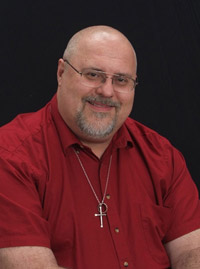 David Weber was born in Cleveland, Ohio, but moved to Greenville, South Carolina with his family by the time he was two. Some of Weber’s first jobs within the writing/advertising world began after high school, when he worked as copywriter, typesetter, proofreader, and paste-up artist. He holds a Master of Arts in history from Appalachian State University in Boone, North Carolina.
Weber’s first published novels grew out of his work as a wargame designer for the Task Force game Starfire. He wrote the Starfire novel Insurrection (1990) with Stephen White. This book was the first in a tetralogy that continued through their last collaboration, The Shiva Option (2002), which made The New York Times Best Seller List.
His most famous series is the Honor Harrington series, but he’s also written epic fantasy (Oath of Swords, The War God’s Own) other space opera (Path of the Fury, The Armageddon Inheritance) and alternate history (1632 series with Eric Flint), and much more: he estimates some forty-seven published or in-the-works novels.
Weber and his wife, Sharon, live in Greenville, South Carolina. They have three children.
The Show:
David Weber likes to quote Robert Aspirin: “Professional writers are like rats, if we don’t wear our fingers down on the keyboard every day, our fangs grow through our brains and kill us.”
He started writing in fifth grade and has supported himself through writing-related activities of one sort or another since he was seventeen. He wrote his first novel-length work in Grade 10, and says, “I can’t imagine not writing for my own pleasure if not for anything else.”
His first published novel, Insurrection, was the consequence of some wargame design he’d done with his friend Steve White. They started exchanging short stories set in that world, and eventually realized they had a novel—which ran some 283,000 words in the first draft. That had to be pared down, but Baen bought it in 1989.
David says he “met science fiction” when he was ten years old. Mobility-restricted because of a broken arm, he read his father’s Fantasy Press hardcover of Jack Williamson’s The Legion of Space and followed that up with Genus Homo by L. Sprague de Camp and P. Schuyler Miller. He was an eclectic reader, he says, because his parents’ position was their kids could read anything they wanted to, figuring, “If we were old enough to handle it we could handle it, and if we weren’t it would sail right past us.”
Other books he mentions are (to Ed’s delight) the Swallows and Amazonsseries by Arthur Ransome. On the science fiction side, he mentions Heinlein’s juveniles, Andre Norton, H.Beam Piper, Mack Reynolds, Gordon R. Dickson, and Anne McCaffrey.
Although Insurrection was his first published novel, his first submitted novel (rejected) was fantasy. That was Sword of the South, published just a year and a half ago or so. (The manuscript had been lost for years, but one of the floppy discs—one of the really big ones, using CPM and not DOS—turned up and then another, and an IT shop was able to recover the files “for a mere $800.” David rewrote it but says it’s still very close to the original novel. Most of the rewrite was to bring it in line with other novels set in the same universe.
In university, David studied military and diplomatic history. “Forever and ever,” he says, he thought he would teach college history and write on the side, but as he was finishing up his Master’s degree he came across a study revealing that half or more all tenured positions were currently held by people forty or younger. He decide he should alter his priorities, and instead took over his mother’s small advertising agency—she’d retired to look after her own mother, then in her eighties. David sold Insurrection about a year and a half after that, and was fortunate enough to be able to support himself writing fulltime with eighteen months or so of making that first sale.
Having been both a copywriter and a production journalist has taught him not to block, he notes: “Blocking is not an option.” There are times he can edit but not write fiction, because he’s thinking through a story problem, but he says he has “never had a time when I couldn’t sit down and put words on paper that made sense.”
“Writing is the medium through which I tell the story,” he says. “It’s the story that matters.” He believes it is the writer’s voice that wins or loses a readership: two different writers can tell the exact same story, and one will succeed and one fail with a given readership because of the manner in which they tell the story. “A weak story that is strongly told will succeed where a strong story that is weakly told will fail.”
While he has written passages and entire books he’s particularly proud of, for him, if the writing style becomes so important it begins drawing the reader’s attention away from the story, then the style has failed.
“Writing is something that is sort of a physical skill,” he says. “You learn it by doing it.”
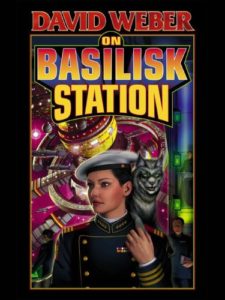 David gives a synopsis of the Honor Harrington books, beginning with, “Honor Harrington is a six-foot-two-inch Eurasian martial-artist starship camera.” He notes the book both are an aren’t about Honor: she’s the focal point for most of the stories, but they’re actually about the series of wars she’s involved in. The first few books are very tightly focused on her, but as the war begins to spread, the stories take place on a broader canvas. There are a lot of secondary characters, “named characters,” David points out.
“I hate passages where you have somebody called the lieutenant seventeen times. I try to make the character a person.”
David has been writing Honor Harrington books for twenty-five years. He originally projected the entire series to be eight books: there are currently seventeen novels and six anthologies, counting the collaborations.
David said Jim Baen, publisher of Baen books, had noted that everything David wrote spawned sequels, so he suggested they try planning a series from the beginning. David sent ten ideas, one of which was the Honor Harrington series, one of which became his Safehold series (published by Tor), one the Multiverse series that began with Hell’s Gate, and one whose first book, The Golden Protocol, written with Jacob Holo, comes out in May.
What David didn’t know was that Baen had been looking for someone to write a version of “Horatio Hornblower in space” for twenty-five things. He leaped at the Honor Harrington proposal and offered David a four-book contract. The first two books were released a month apart, which David says is “brilliant marketing.”
In fact, David says, he doesn’t think anyone else in the publishing industry has ever understood how to grow a new author’s readership so brilliantly.
Another thing Baen created was the Baen Free Library, where free ebooks of some Baen titles were made available—which is where Ed discovered Honor Harrington. “I believe it did nothing but increase readership,” David says. Baen also used to bind CDs containing earlier books and a series and other titles into the back of new hardcover releases in series.
“Spider Robinson once said Jim Baen was the only science fiction publisher who actually wanted to live in the twenty-first century, which makes it even sadder he got to see so little of the 21st century,” David says. (Baen died in 2006 at the age of sixty-three.)
Technology plays a major role in the Honor Harrington books. David said some of that comes from his background designing wargames, and some from the fact he’s been studying military and diplomatic history since he was ten or eleven years old. Before he wrote the first word of the first Honor Harrington novel (On Basilisk Station), he wrote an 80,000-plus word essay covering everything in the Harrington universe, from colonization to life sciences to technological history to politics.
The technology was in part shaped by the story David wanted to tell. It was important, he said, that there be tactical constraints. “In a lot of ways, the story is about what you character can’t do, not what about what your character can do,” he says. “It’s about the limitations they have to work around.
He decided technology would evolve over the course of the novels, and that technology would what would equalize the fight between societies where one was hugely outnumbered by the another.
He also wanted technology that made tactics important, because he’s always been interested in tactics as well as the operational and strategic levels of military campaigning. “I needed a system that would give scope to a tactician who was smart, and one which would create limitations on how you could approach a combat situation.” Readers had to be able to understand the tactical situation, as well, in order to understand why characters did what they did.
He notes that he wrote the first two books before the World Wide Web appeared, so some of his starting assumptions might be different if he was starting it today.
Ed noted that descriptions of technology often appear within action scenes, creating an odd sense of suspense by delaying the combat climax. David says he thinks this goes back to the writer’s voice.
“This is the natural way for me to tell the story. I can use that as a means to accelerate or decelerate the action tt the same time as it’s serving the function of telling the reader this is why the folks involved are really sweating what just happened or is about to happen…I’m not sure it’s a technique that would work for other writers.”
He thinks he got the balance of hardware descriptions, descriptions of societies and political systems, and development of planets and cultures write because some people tell him they don’t like some of those but like others. Almost everyone says they love the characters. “The characters are the common factor,” he says.
Some restrictions baked into the Honorverse are the impossibility of creating a self-aware AI (something David had dealt with in other novels and didn’t want to repeat), and the impossibility of faster-than-light communication—which means information can only move aboard courier starships.
“That had very interesting and significant implications for military operations. You spend a lot of time going from point A to point B. It also means a huge amount devolves onto the initiative of the station commanders, the task force commanders.” This puts the situation back to about where Earth was in the 18th or 19th century, when nobody could micromanage their forces from Washington or London or Moscow. They didn’t even now there’d been a battle until a courier came back with news, which might be that an invasion force was close behind!
That restriction, David says, is “a big part of the flavor or the books.” It allows him to “cut Honor Harrington loose from the apron strings.”
“She’s constantly aware she represents her Queen and star system, and that informs a lot of her decisions.” That means it’s her job to face overwhelming odds even with little or no chance of success…and that’s one of the things that makes her beloved by those who have followed the books.
Honor, in other words, is part of her character as well as her name (which David knew going). Her second name, Harrington, was a nod to C.S. Forester’s Horatio Hornblower novels, so that she would have the same initials.
There are parallels between the Star Kingdom of Manticore and England, and apparent parallels between its rival, Haven, and the French Republic—but David says that latter paralle is a red herring, that Haven became what it becomes in the books not from a version of the French Republic but from a version of the United States, “if you look at their constitution.” David deliberately used his knowledge to create something that looked like the French Revolution within Haven—but really wasn’t. “I don’t know why people call me sneaky,” he adds.
David says he uses history as a source of building blocks rather thanb an operating model. Although Honor is set in a space-going version of the Napoleonic era, his original thought was that it would more closely follow the Punic Wars, only with Carthage winning. That changed when he realized his version of space combat meant controlling space around a planet meant controlling the planet, and planetary combat would be vanishingly rare.
“But I never intended the model I had built to be anything more than the starting point for cultures that had gone in different directions,” he says, so that readers would say to themselves, “iI know what he’s going to do here,” and then would be surprised when he did something else.
That initial lengthy monograph David wrote for himself about the Honorverse spelled out what would happen in the war through what became Honor Among Enemies. Originally, he planned to kill Honor in what became At all Costs. However, Eric Flint, writing in the Honorverse, wanted something both a Havenite and a Manticoran secret agent could hate enough to collaborate, and David gave him the genetic slave trade. By so doing, he moved a plot strand twenty years forward without really being aware of it, which meant he couldn’t kill off Honor and have her children become central characters as he’d intended.
“I think the readers would have forgiven me because of the way she would have died, the culmination and perfection of what she had lied her entire life to be and to do,” he says. “I won’t pretend I was broken-hearted when I realized I couldn’t kill her off, and not just because the character had become so successful, but because I had come to care so deeply about the character…I’ve killed characters it hurt as the author to write the death scene. This would definitely have been one of them.”
But, he notes, he’s writing military fiction. “Most people’s experience with violence is vicarious,” he says. “We form our views of it through what we see on the news in our entertainment.”
He thinks it’s important for someone writing military science fiction to make it clear that war is an ugly, ugly thing. “It can be a very noble calling to, as Heinlein said, place yourself between your home and war’s desolation, and I think the profession of arms is worthy of deep respect, but…not just bad guys die. If you’re going to be fair with the story and the weight of the story, you have to be willing to kill characters you know your readers love. It’s hard on you and them, but that’s part of what a combat situation is about…war, however exciting it may be, it is a voracious devourer of human life.”
David says the only character he did a detailed sketch of before he began was Honor—and even that wasn’t all that detailed in terms of where she finally wound up. He says he normally starts with a physical description and some aspect of their personality. As the character interacts with other characters and situations he goes back and adds notes.
When he’s writing solo, he adds, he tends not to outline (although he’s done more in the last four or five Honorverse novels just to keep things straight, by creating a detailed timeline). When he does a collaboration, there tends to be a much more detailed synopsis of where the story is going, so there’s no confusion between the two writers.
On his own, he says, “I do tend to have a very clear idea of where a series is going to begin and end, and a feel for what’s going to happen out in the middle, but I’m very much improvising on the theme as I go along in terms of getting from A to B.”
Wever says he can write 5,000 to 7,500 words a day when he’s in the groove. (The most he’s ever done was 34,000 words in a day, and then, he says, he slept for a couple of days.)
Each day, before he begins, he goes back and rereads and revises and tweaks the previous two day’s work, so every portion of th book had been revised and tweaked at least three times by the time he gets to the end. “This gives me an opportunity to strengthen and clean up as I go along, also builds storytelling momentum for the day’s work.”
David shattered his wrist in a fall about twenty years ago, which means today he can only type for about forty-five minutes at best. Since then, he’s been using Dragon Naturally Speaking to dictate his books. One thing he’s noted is that Dragon prefers complete sentences, and so he now has a tendency to think more in complete sentences than when I was writing with a keyboard. “It’s interesting: the way in which you get those photons corralled on the display affects the way in which you write.”
Now the big philosophical question: why does he write this stuff?
“We are storytellers. That’s what we love to do. We love to create and craft stories. We communicate, we share those stories, by writing them down…I am fascinated by history, I am fascinated by the way that people’s personalities work, and how that motivates them to be who and what they are in real life. Telling stories lets me get inside that process…I honestly believe almost anyone could learn to love history if you could just get them to understand it is the greatest, most complex novel ever written. You have all of these characters, all of whom have their own motivations, their own responsibilities. How do they meet them? This is part of what makes us human beings, and defines the difference between responsible conscientious human beings and the predators. I think that I tell stories in part because that’s what I want to look at.
“Obviously, I want to entertain my readership, and don’t want to be in the position of lecturing. But any writer, the moment he or she begins to write, steps up onto a soapbox. If I present a character who would be unsympathetic to you under normal circumstances, but I get you inside that character…the character’s views might not be those you would espouse on your own, but you discover that you like this character…then I have made those contrarian views more accessible to you, and I think that’s something we are, especially these days, in sad need of.
“That’s why I play fair with the bad guys in the books. They are decent human beings, even if they come from a different value system…
“To me, that’s what being a human being is all about me. To me, good storytelling is about the human condition. Science fiction is a technological age’s fairy tale. It’s inspiration, its cautionary, it’s explicative, it’s all of those things…instead of using demigods and demons and what not, we’ve got scientists and cyborgs and computers, but we’re looking at the same issues, the same questions: what makes us human, and what is involved in living up to your responsibilities as a human.
“You can see that in Heinlein, in all really good science fiction.” He recalls Heinlein writing that, “Greater love hath no man than a mother cat dying to defend her kittens.”
“It’s a very profound statement that cuts to the heart of what it means to e human. And I think that’s what I write about.”
Weber concludes, “It’s been a heck of a ride the last thirty years. I’ve been very fortunate in how well the books have done, and I’ve been very fortunate to be allowed to do something I love to do, and actually get paid for it.”
 Joe William Haldeman (born June 9, 1943) is an American science fiction author. He is best known for his 1974 novel The Forever War. That novel, and other of his works, including The Hemingway Hoax (1991) and Forever Peace (1997), have won major science fiction awards, including the Hugo Award and Nebula Award. He is a Science Fiction and Fantasy Writers of America Grand Master and was inducted into the Science Fiction Hall of Fame in 2012.
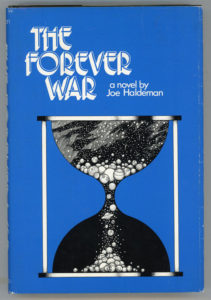 The Forever War was essentially his master’s thesis at the University of Iowa. “The academic establishment, if you can call it that, thought I was crazy to write a science fiction novel,” he says; they saw that as children’s literature.
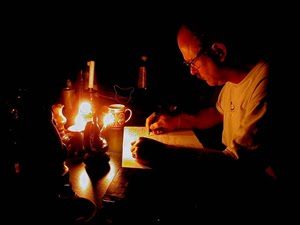 He mostly writes long-hand. “I like the fluidity of handwriting,” he says. However, some books are a mix of handwriting, typing, and computer printouts.
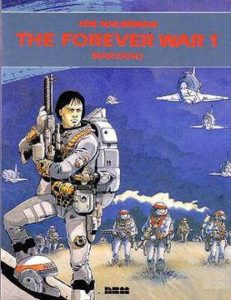 There has also been a graphic novel series based on The Forever War. Joe notes he didn’t know anything about graphic novels, but head read a few and thought they were cool. Then, at a science fiction convention, an artist came up to me and pitched a graphic novel of The Forever War. “I said, wonderful, let’s go do it. He wrote up a few pages of storyboards, and we pitched it together.” That began a long collaboration with artist Marvano. “Marv is an extremely good artist, and I like his style. We were very much in parallel all the way.”
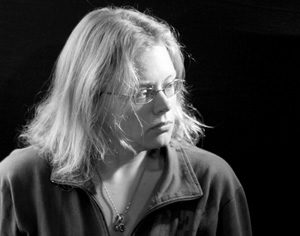 Seanan McGuire was born in Martinez, California, and raised in a wide variety of locations, most of which boasted some sort of dangerous native wildlife. Despite her almost magnetic attraction to anything venomous, she somehow managed to survive long enough to acquire a typewriter, a reasonable grasp of the English language, and the desire to combine the two.
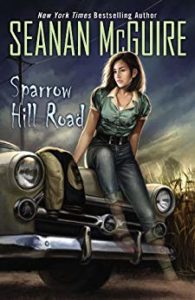 Seanan synopsizes the Rose Marshall books, Sparrow Hill Roadand The Girl in the Green Silk Gown, this way:
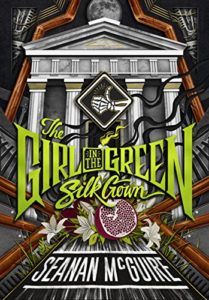 both avoid and destroy Bobby Cross, who ran her off the road and is a danger to both herself and other ghosts, who don’t want to do any harm to anyone.
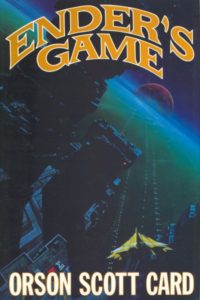 Card notes his family had a tradition of thinking of themselves as writers. Growing up Mormon, there was a practice of creating comedy sketches, called Road Shows, taken from one church meetinghouse to another and performed for others within the diocese. They were usually based on some Broadway show, and required a writer to make a script that would be entertaining. Card’s mother was particularly involved in writing those, but his father also thought of himself as a writer.
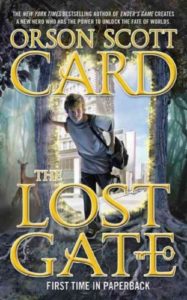 Card provides a synopsis of the Mithermages trilogy. The idea came about when he was working as a proofreader. It occurred to him that fantasy stories are always about the magic system, because that’s what gives you the story.
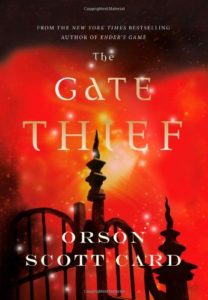 He realized if he made the mages of the Mithermages world actually from Earth, who gained great power by travelling through gateways between the worlds, it would make things more interesting. He started coming up with rules for how it would work, and realized there would need to be gate mages (which he hadn’t thought of before). And then he came up with a history in which these Mithermages had once been the Indo-European gods.
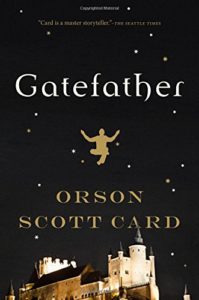 So, in the end, it became a contemporary novel with gods. (Card has read Neil Gaiman’s American Gods and admired it, but says it has absolutely nothing to do with what he was doing.)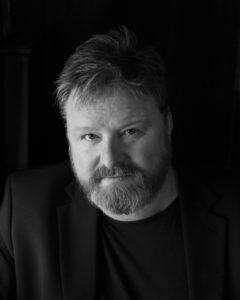
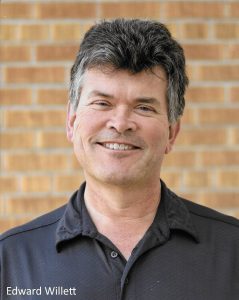 Edward Willett is the award-winning author of more than sixty books of science fiction, fantasy, and non-fiction for readers of all ages. Besides
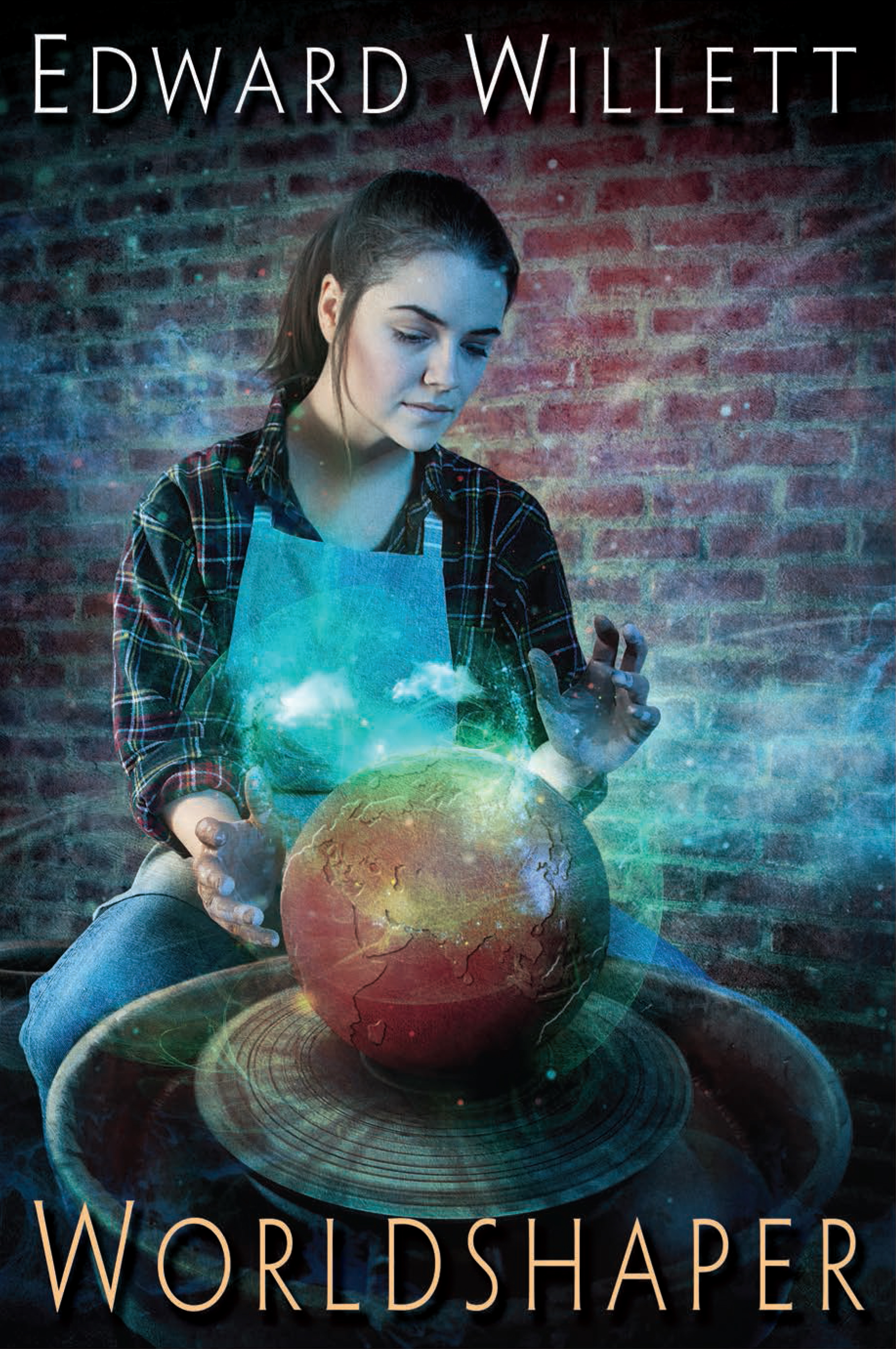
 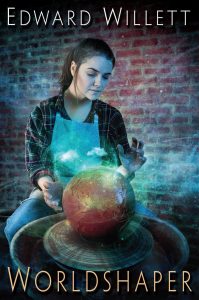 Guest host E.C. Blake, author of the Masks of Aygrima trilogy for DAW Books, introduces himself and explains that Edward Willett has a new book coming out, Worldshaper, and asked E.C. to guest host so he could be a guest on his own podcast. They have a lot in common: both born in New Mexico, both lived in Texas, both moved to Saskatchewan. For some reason, though, E.C. still has a southern twang to his voice.
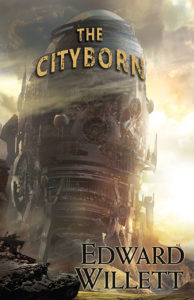 Ed says it can be a number of things. For example, his science-fiction novel The Cityborn began with a mental image of a towering city, squatting over a canyon filled with a massive garbage dump, in which there are people scavenging to survive.
 Julie Czerneda was born in Exeter, Ontario, and grew up on air force bases, her family moving with each transfer, from Ontario to Prince Edward Island and finally to Nova Scotia. When her father became a civilian, the family moved to Ontario, settling in what was then a rural setting near the shores of Lake Ontario (and is now that not-so-rural setting known as Mississauga.
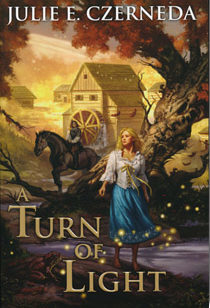 Still, the prospect of writing a fantasy novel terrified her. She finally did (
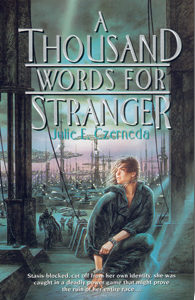 She likes to put as much as she can into a story so she can draw on it latter—such as the giant lobsteresque alien from
 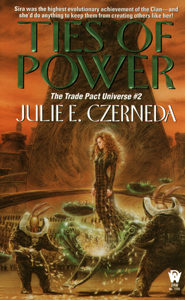 Sometimes minor characters threaten to take over a book. Julie remembers that in her second book in The Clan Chronicles,
 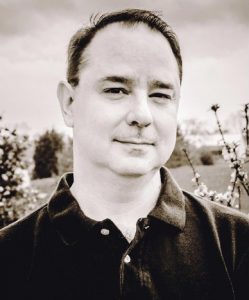 John Scalzi was born in California in 1969 and currently lives in Bradford, OH. He studied philosophy at the University of Chicago, which is where he began his freelance writing career. He wrote film reviews and was a newspaper columnist for a few years, and in 1996 was hired by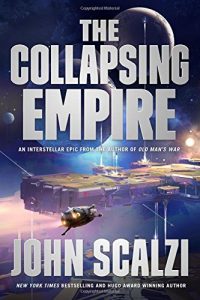
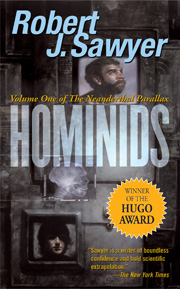
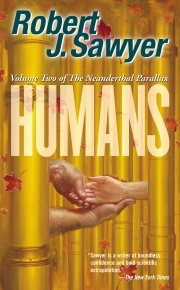
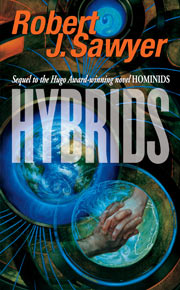
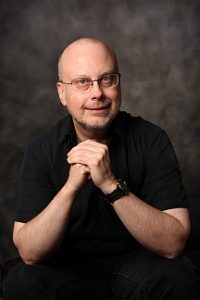 Robert James Sawyer is a Canadian science fiction writer, born in Ottawa and now living in Mississauga. He’s the author of twenty-three novels and innumerable short stories (well, not literally, obviously they’re numerable, but it’s a large number), and is the most-awarded science fiction writer of all time, said awards including the