Fourteen jewel-like stories unveil the tender chaos of lives unlived and loves unspoken
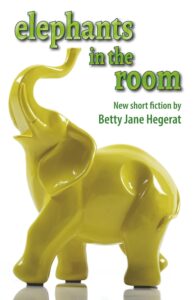
In Elephants in the Room, Betty Jane Hegerat masterfully uncovers the quiet fractures of ordinary lives—the unspoken regrets, the buried griefs, and the fragile threads of connection that bind families across generations.
From a devoted son’s frantic dash to help his mother glimpse the Queen to a reluctant father’s stunned reunion with the daughter he never knew, from a woman dressing her mother-in-law for an eternal rest to a boy’s guilty reckoning with a bully’s untimely death, these unforgettable stories illuminate the elephants in our lives we ignore at our peril.
With tender wit and unflinching insight, Hegerat explores the weight of what we leave unsaid: the ache of lost chances, the solace of small mercies, and the stubborn grit that carries us through. As poignant as a stolen glance, as resonant as a half-forgotten lullaby, the stories in Elephants in the Room whisper the unvarnished secrets of family ties—where regrets loom large, and small acts of grace light the way home.
Praise for Elephants in the Room
“Betty Jane Hegerat is a meticulous observer of the human condition, and the family in particular. The stories in Elephants in the Room are written with succinct, unadorned prose and a gentleness that belies the strength of their messages. With warmth, humour, empathy, and intimacy, her characters search for the connection and remembrance we seek in those moments of heartbreak that punctuate all of our lives. A most moving collection of short fiction.” – Lori Hahnel, author of Flicker and Vermin: Stories
“Elephants in the Room is a gorgeously beguiling collection. Individual stories are beautifully paced, with a skilful interplay between past and present. Delightful.” – Peter Midgely, writer, editor, and translator
“Betty Jane Hegerat tells her stories with intense care and in a soft-voiced, clear way that is lean on descriptions, explanations, and emotional fireworks. Even the passages of dialogue are kept short. The stories range from family members struggling to deal with everyday problems familiar to most of us that are nevertheless inescapable and painful, to the heart-shattering issues in the aftermath of broken marriages, to what to do with the willfully (or not) unfailingly incompetent family members of whom most families have at least one, to the deep love for friends whose suffering one is helpless to alleviate. In this collection, Hegerat examines with admirable restraint the serious and mostly unanswerable questions about living the ordinary life with dignity and kindness. This is a book to be loved.” – Sharon Butala, award-winning author of Leaving Wisdom
About Betty Jane Hegerat
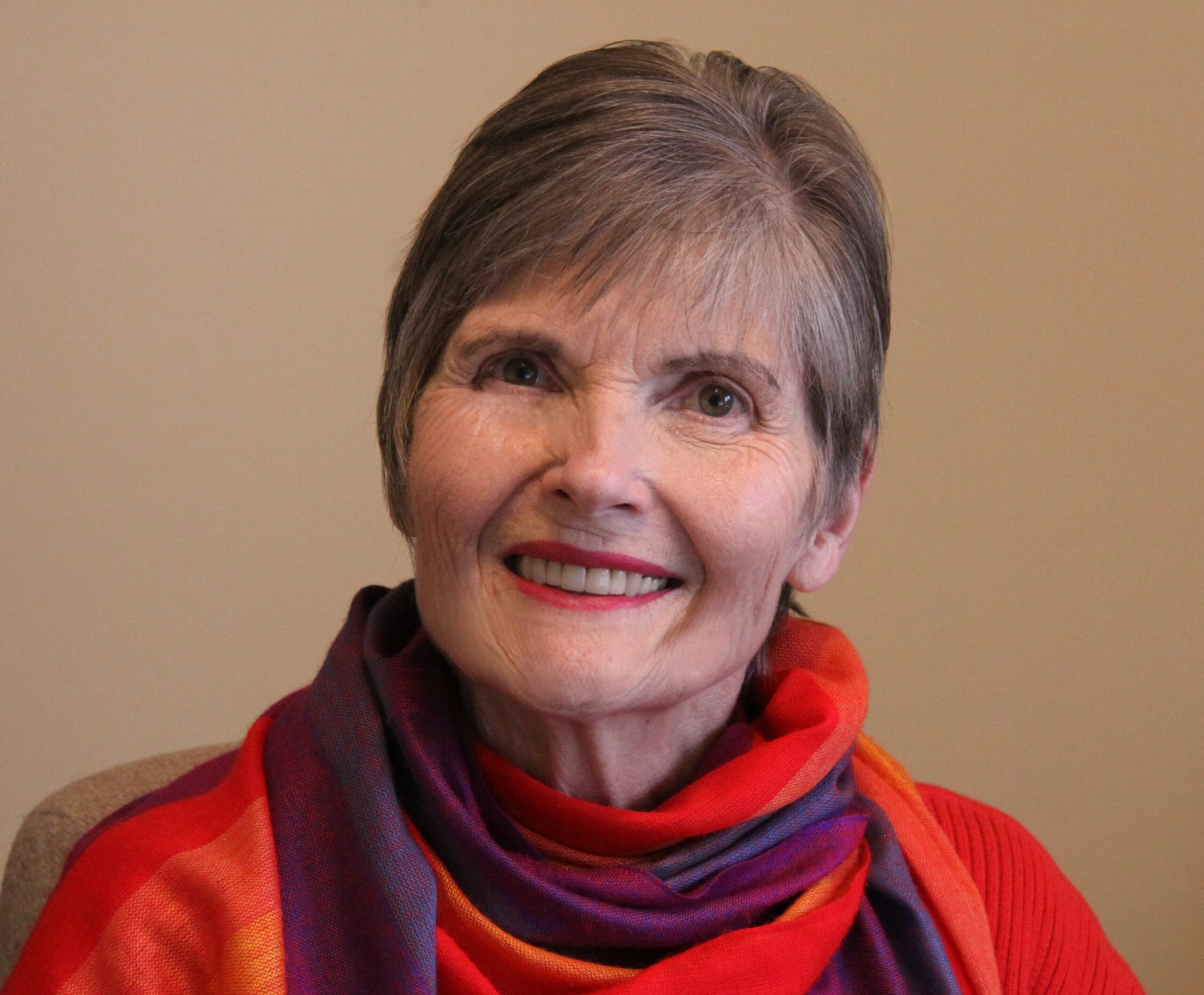
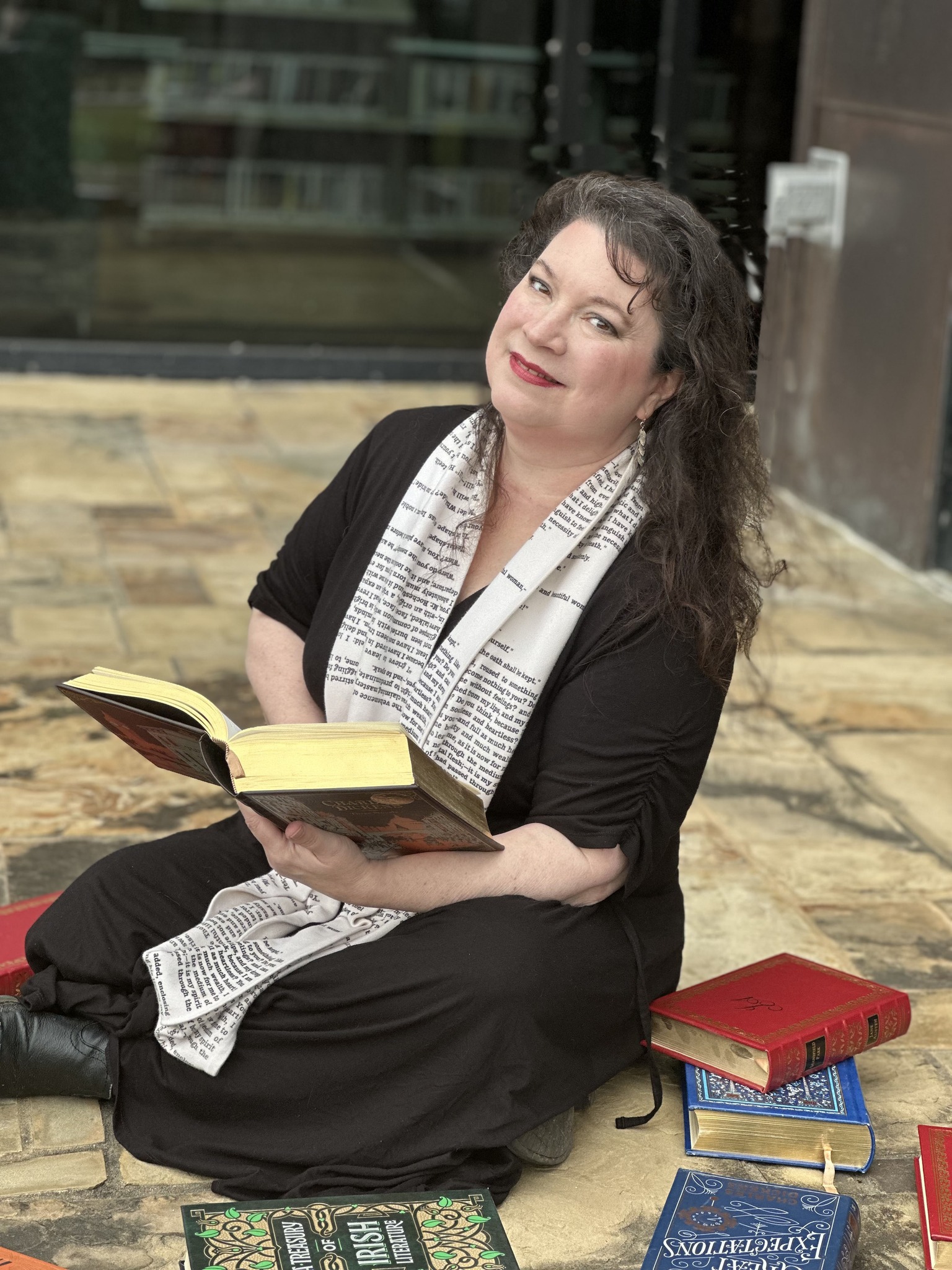
Betty Jane Hegerat
Calgary author Betty Jane Hegerat was a social worker in a long-ago life. The stories she has written since she left that career behind reflect an ongoing need to make sense of conflict and chaos in relationships, and to find moments of laughter and even glimmers of redemption.
That seriousness aside, she loves the Calgary writing community. She has taught at the Alexandra Writers’ Centre, the Fernie Writers’ Conference and for Continuing Education at the University of Calgary, and was Writer in Residence for the Calgary Public Library. In 2015 she was honoured to receive the Writers Guild of Alberta Golden Pen Award for lifetime achievement in writing
Betty Jane’s stories have been published in anthologies and magazines. She has five previous books: a novel, Running Toward Home (Newest Press), a collection of stories, A Crack in the Wall (Oolichan Books), another novel, Delivery(Oolichan Books), and two YA novels, Odd One Out (Oolichan Books) and The Boy (Oolichan Books). The Boy is a French braid of investigative journalism, fiction, memoir, and meta-fiction. The book was shortlisted for the Calgary Book Prize, the High Plains Book Awards, and the Alberta Writers Guild Wilfrid Eggleston Non-Fiction Award.
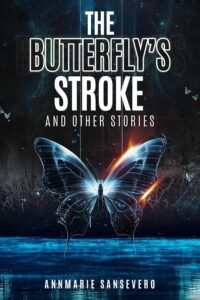
A conversation with Annmarie SanSevero about her new science fiction/fantasy short story collection, The Butterfly’s Stroke and Other Stories, just released by Stark Publishing.
An intricate and harmonious dance between humanity and technology
Dive into Annmarie SanSevero’s gripping collection of speculative fiction, where suspense, mystery, and the supernatural collide with the frontiers of science.
Each story pulses with themes of hope, resilience, and the ethical complexities of technological advancements. A testament to the human spirit, these tales weave suspense, mystery, and supernatural elements into a tapestry of speculative fiction that resonates with contemporary societal issues.
Don’t miss your chance to experience these unforgettable narratives and embark on a journey that both challenges and inspires.
About Jonathan Handel
Annmarie SanSeverol
Annmarie SanSevero grew up in New York City but was transplanted to the south in high school. She writes stories about hope, courage, and resilience in fantasy, science fiction, steampunk, and mystery. She loves exploring the human experience and wants readers to feel like they can do more than survive.
When she’s not writing, Annmarie enjoys learning just about everything, playing violin, and singing. She can occasionally be found tap dancing or playing D&D. One day, she wants to go LARPing.
A chat with Aurora Award-winning YA author James Bow about his new science fiction novel, The Sun Runners, and its companion anthology, Tales from the Silence.
“Hello, people of Mercury. This is planet Earth. Are you receiving this? Please respond.”
Lieutenant Adelheid Koning was only twenty-three when the Earth’s long fight against its environment ended in collapse and nuclear war. Earth’s sudden silence leaves the colonies of the inner solar system without lifelines, in various stages of self-sufficiency.
Or, in Mercury’s case, not.
To help her fellow stranded colonists of Mercury survive starvation and a breakdown of order, Adelheid fights some cold equations and makes some hard choices, ending up wearing an iron crown as queen of one of the rail cities of Mercury, constantly moving to stay ahead of the Sun.
Fifty years later, Adelheid’s granddaughter, Frieda, is a seventeen-year-old princess who would rather be an engineer. Frieda’s life is shattered when a suspicious accident takes one of her arms—and is then turned upside-down when her mother dies from that accident. Frieda is left a young and vulnerable queen, locking horns with her grandmother, who is now regent and dowager.
When the Earth makes contact again, after fifty years of silence, Frieda is eager to end Mercury’s isolation, but Adelheid is suspicious of the Earth’s sudden return, and wary of the other latitude towns’ desires to accept all that the Earth is offering, without question.
With thousands of lives on the line, is it wise to hope for healing? Or are we forever defined by what we do in the dark?
About Tales from the Silence
On August 4, 2151, the world will end.
It’s been a long time coming: climate disasters brewing conflict, conflict breeding chaos. But on that fateful day, someone will set off the nukes. On August 4, 2151, human civilization on Earth will fall silent.
There are survivors, of course—and not just on Earth. There are scientists on the Jovian moons. Miners in the asteroid belt. Thriving colonies on the surface of Mars and above the clouds of Venus. Far more precarious ones on Mercury. When the silence falls across human space, one thing is clear: Earth’s space-born children are on their own. No more supplies are coming. No more orders. No more meddling. No more help.
Set in the universe of James Bow’s new novel, The Sun Runners, Tales from the Silence is a gathering of award-winning science fiction, fantasy, and YA authors who explore the worlds the Earth left behind, as well as the Earth itself, as they struggle through Earth’s new dark age.
Join James Bow, Phoebe Barton, Kate Blair, Cameron Dixon, Mark Richard Francis, Jo Karaplis, Kari Maaren, Fiona Moore, Ira Nayman, Kate Orman, and Jeff Szpirglas as they tell the stories of what happens after the end of the world.
About James Bow
James Bow
James Bow writes science fiction and fantasy for both kids and adults. He’s been a fan of science fiction since his family introduced him to Doctor Who on TV Ontario in 1978, and his mother read him classic sci-fi and fantasy from such authors as Clifford Simak and J.R.R. Tolkien. James won the 2017 Prix Aurora Award for best YA Novel in Canada for Icarus Down.
By day, James is a communications officer for a charitable land trust protecting lands from development in Waterloo Region and Wellington County. He also loves trains and streetcars. He lives in Kitchener, Ontario, with his two kids, and his spouse/fellow writer/partner-in-crime, Erin Bow.
A collection of short stories contemplating horror, grief, and trauma.
Simulacrum: A dark comedic tale about college life, and love. It is the story of what happens when two sociopaths attend art exhibits, drink lemon vodka, and spar over everything and anything.
Periods.
Coloring books.
Art.
This is the story of our unnamed narrator . . . an origin story of a would-be, hopes to be, serial killer.
The Japanese Box: Story that blends memoir, creative nonfiction, and the horror of a coming-of-age story, and a coming of middle-aged story.
Imagine growing up with a reflection that is often absent, and a Japanese box that is filled with things that should never have been there.
Memories.
Violence.
“The Japanese Box” is a love letter to anxiety, trauma, grief, and longing. It is a story of a child becoming an adult, and all the ghosts and misfortunes that happen in order to survive.
The Lithium Moon: Simone is an artist by day, and an emotionally abused wife at night. She is a successful artist with a long history of schizoid effective disorder with bipolar tendencies.
When her marriage goes from good to bad, she suffers her first miscarriage. The tragedy coincides with a wolf moon-Trauma and magic converge seem to converge in Simone’s head.
This story explores sadness, illness, hallucinations, full moons, and the creative process.
What Stage of Grief is not a poem, or a song, but a dirge.
Fantasy and facts, this poem walks a fine line between nightmares and memories. Grief stories and love stories. Dogs, and drama. Nightmares, and nevermore.
Praise for The Japanese Box and Other Stories
“The precision of observation here speaks not only to the honesty of the writer, but to the respect granted in all phases of life; Jennifer Anne Gordon is on full display. Smart, full of character, vibrant. You will feel, you will feel big, and you will return, too, to the richest moments of your own history, landmarks that bring you to both smile and weep.”–Josh Malerman, New York Times best-selling author of Bird Box and Daphne
“I compulsively read anything Jennifer Anne Gordon writes. Like the best contemporary filmmakers stitching together grief and horror, her storytelling is a sharp needle that both pierces and tugs us close. Compulsive and genre-slashing, with exquisite, rhythmic prose, THE JAPANESE BOX is an extraordinary exploration of alone-ness that beats and breathes: grief is horror, grief is love. We as readers are drawn ever closer to this beautifully haunted narrator until we’re face-down in the box with her. Does she feel us? She thinks she is alone. We all think we are alone. By the end we’ve become the ghosts in her black room, reaching out to gently touch her hair and whisper we’re here.”–Diane Zinna, author of The All-Night Sun
About Jennifer Anne Gordon
Jennifer Anne Gordon
Jennifer Anne Gordon is an award-winning author and popular host of the Vox Vomitus podcast. Her novel Beautiful, Frightening and Silent won the Kindle Award for Best Horror/Suspense for 2020 and Best Horror 2020 from Authors on the Air, and was a finalist for American Book Fest’s Best Book Award- Horror, 2020. It also received the Platinum 5-Star Review from Reader’s Choice as well as the Gold Seal from Book View.
Her latest novel Pretty/Ugly, won the Helicon Award for Best Horror for 2022, as well as the Gold Medal from Literary Titan.
Jennifer is a member of Mystery Writers of America, the Horror Writers Association (where she served on the jury for the Stoker Awards), and is an A&E chair of the New England Crime Bake Committee.
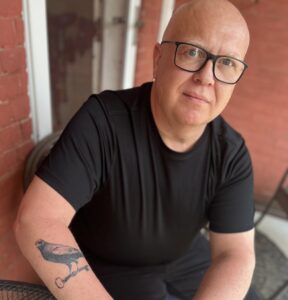
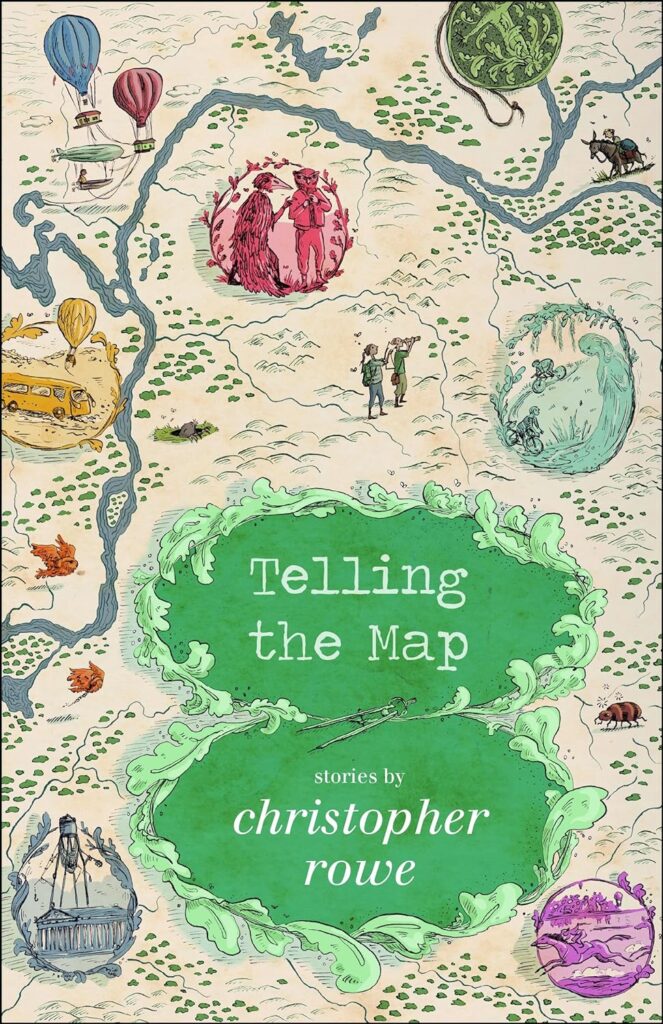
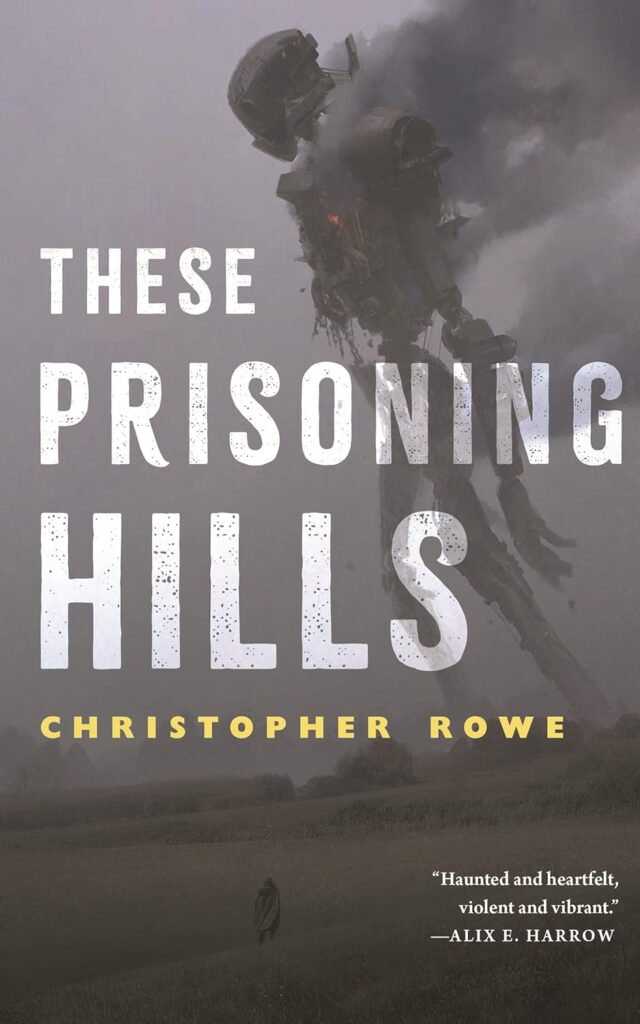
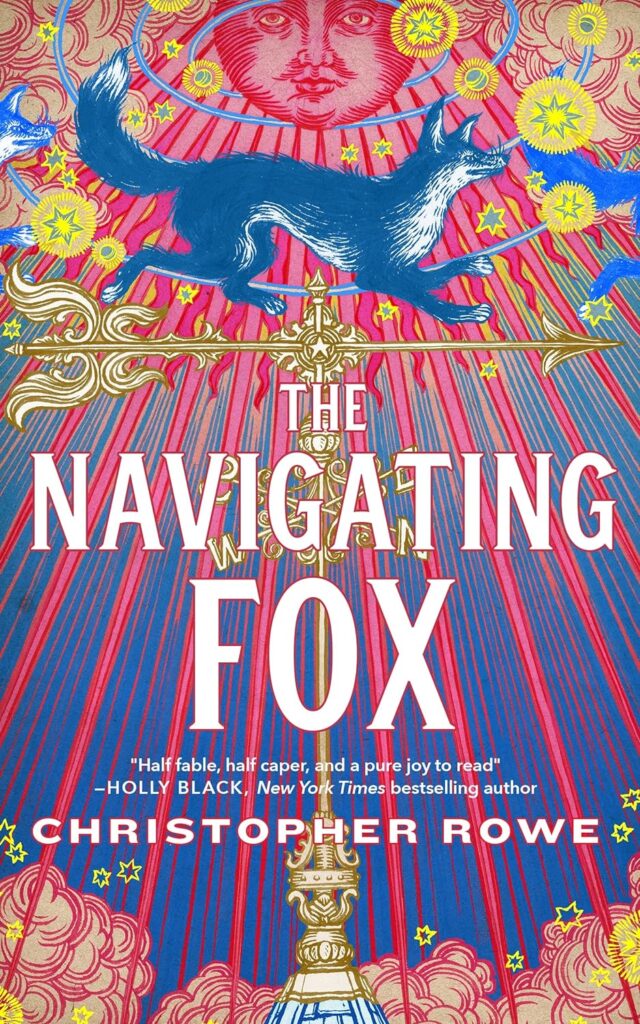
An hour-long chat with Christopher Rowe, Hugo, Nebula, World Fantasy (and others) shortlisted author of the critically acclaimed novellas The Navigating Fox and These Prisoning Hills, as well as the story collection Telling the Map.
Christopher Rowe is the author of the critically acclaimed novellas The Navigating Fox and These Prisoning Hills, as well as a story collection regarded as one of best of recent years, Telling the Map. He has been a finalist for the Hugo, Nebula, World Fantasy, Neukom, and Theodore Sturgeon Awards, as well as others. He lives in Kentucky.
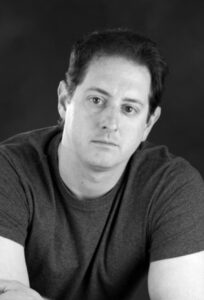
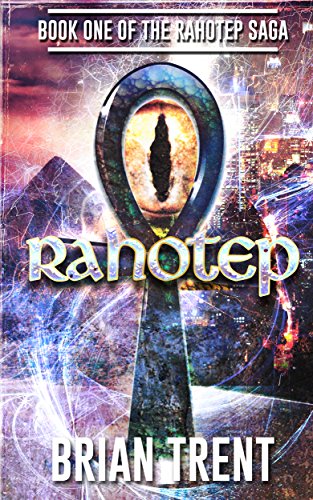
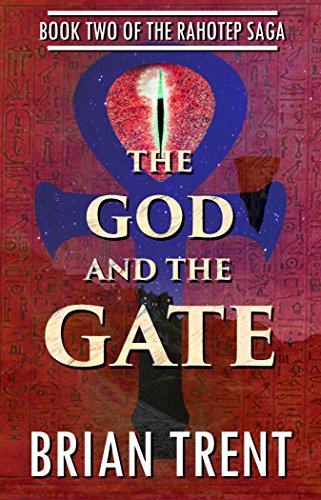
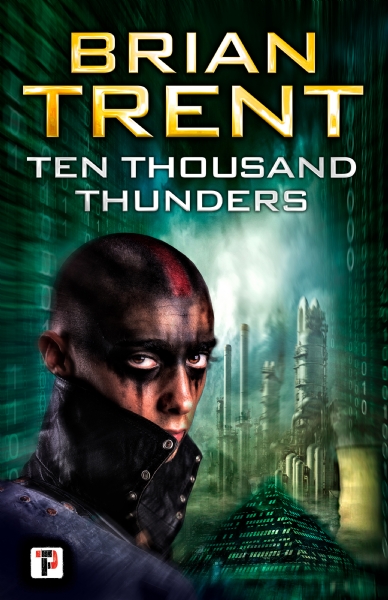
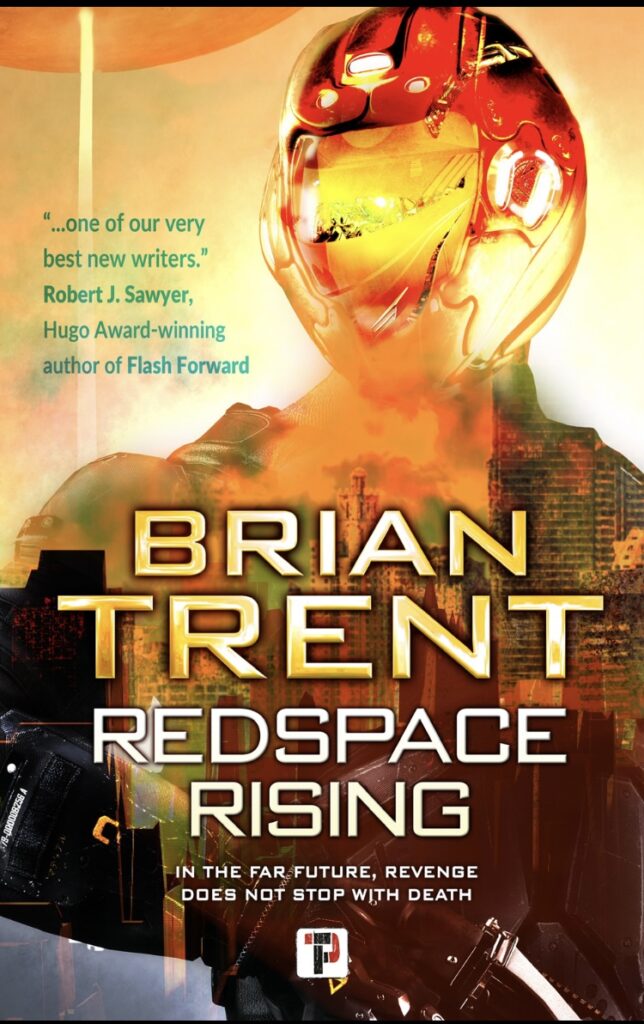
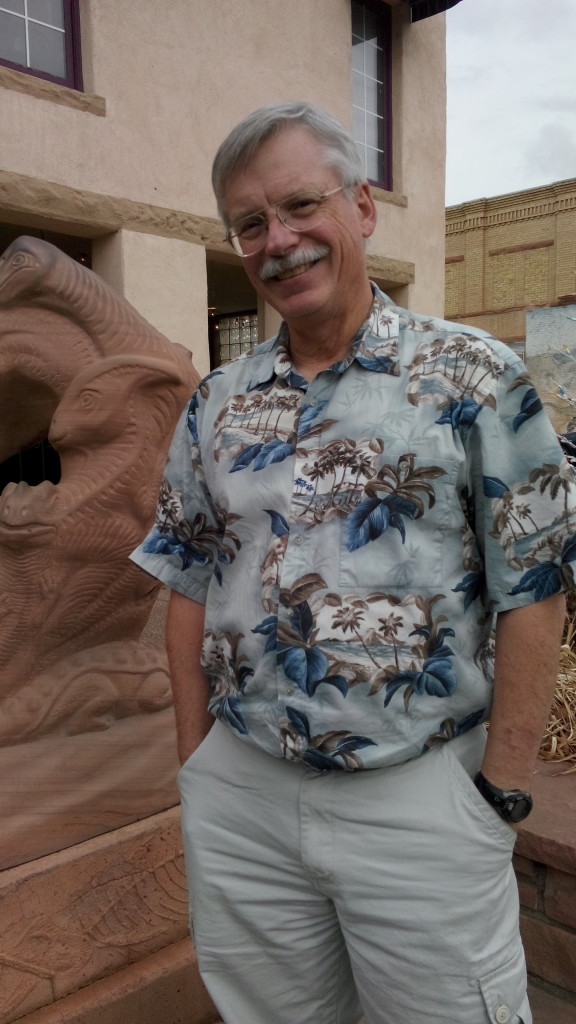
Brian Trent’s work regularly appears in The Magazine ofFantasy & Science Fiction, Analog Science Fiction and Fact, the New York Times-bestselling Black Tide Rising anthologies, The Year’s Best Military and Adventure SF, Terraform, Flash Fiction Online, Daily Science Fiction, Apex, Pseudopod, Escape Pod, Galaxy’sEdge, Nature, and numerous year’s-best anthologies.
The author of the science fiction novels Redspace Rising and Ten Thousand Thunders, Trent is a winner of the 2019 Year’s Best Military and Adventure SF Readers’ Choice Award from Baen Books and a Writers of the Future winner. He is also a contributor to the Baen anthologies Weird World War III, Weird World War IV, Weird World War China, and the newly released Worlds Long Lost. Trent lives in New England.
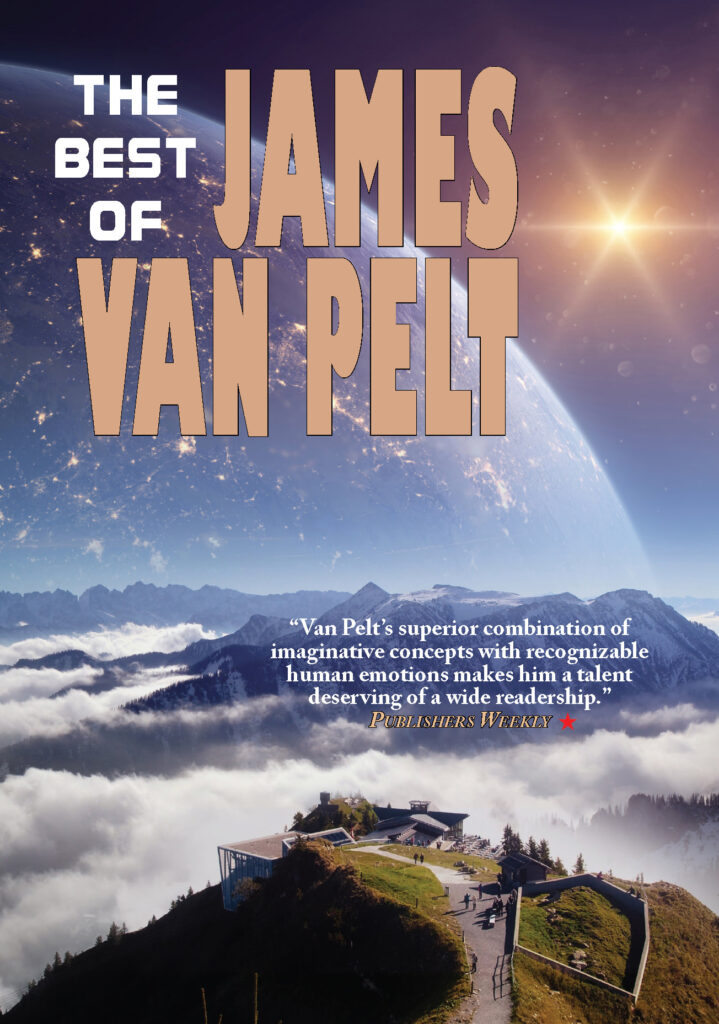
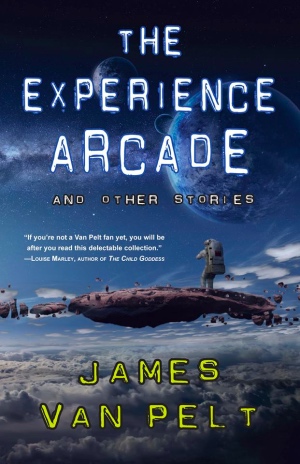
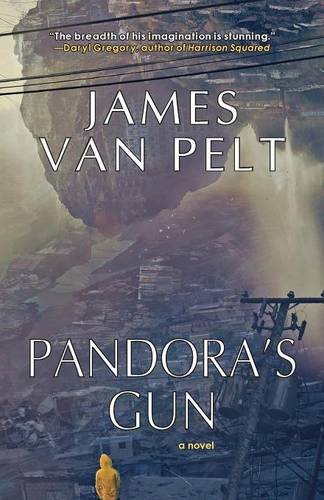
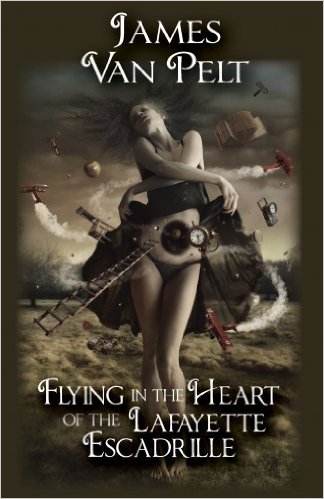
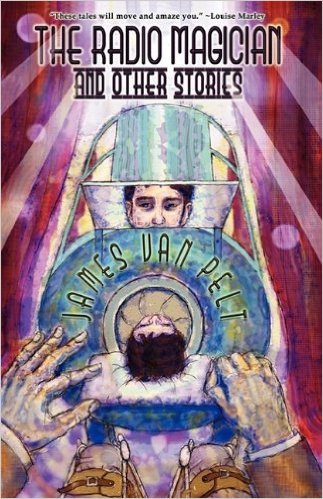
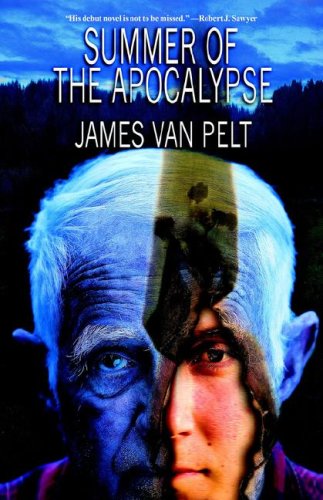
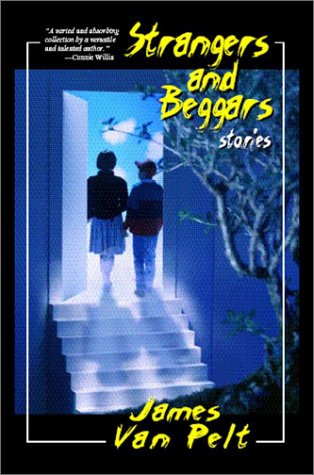
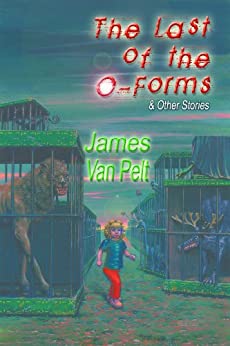
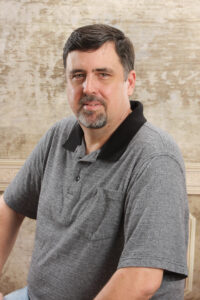
James Van Pelt is a former high school English teacher who is now a full-time science fiction, fantasy and horror writer (among other things). His short stories have appeared in numerous magazines and anthologies, including Asimov’s, Analog, Talebones, Realms of Fantasy, Weird Tales, and others. He has eight books out, including six short story collections, Strangers and Beggars, The Last of the O-Forms and Other Stories, The Radio Magician and Other Stories, Flying in the Heart of the Lafayette Escadrille, The Experience Arcade, and The Best of James Van Pelt. His two novels are Summer of the Apocalypse and Pandora’s Gun.
He has been a Nebula finalist and a John W. Campbell Award for Best New Writer finalist and has been nominated for Pushcart prizes. His first collection was named a Best Book for Young Adults by the American Library Association, and his last collection won the Colorado Book Award. Many of his short stories have appeared in various Year’s Best collections.
Richard Paolinelli began his writing journey as a freelance writer in 1984 and gained his first fiction credit serving as the lead writer for the first two issues of the Elite Comics sci-fi/fantasy series Seadragon.
After nearly a quarter of a century in the newspaper field, in 2010, Richard retired as a sportswriter and returned to his fiction-writing roots. Since then he has written several award-winning novels, two non-fiction sports books, and has appeared in over 20 anthologies including eight of the 11-book Tuscany Bay Books’ Planetary Anthology Series and five Sherlock Holmes collections. He also blogs and writes some fan fiction on his websiteand is co-owner of Tuscany Bay Books.
He runs weekly features on his website, including an occasional podcast, and serves as a regular co-host on LA Talk Radio’s The Writer’s Block. He sometimes leads the show whenever Jim Christina’s horse runs off and leaves him stranded in the middle of the desert.
A 45-minute chat with Cat Rambo, Nebula Award-winning author of more than 200 published short stories and several novels, editor, writing teacher, and past president of the Science Fiction and Fantasy Writers of America, about her creative process.
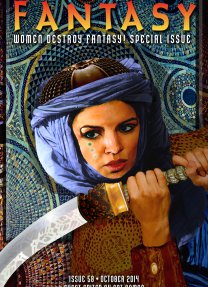
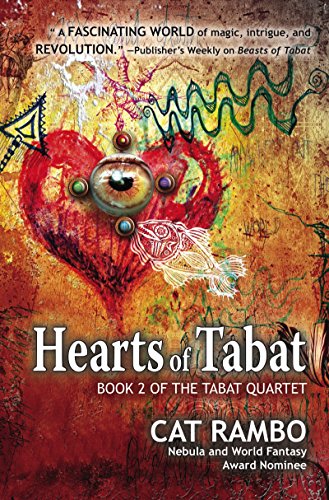
Cat Rambo’s more than 200 published short stories have appeared in Asimov’s, Weird Tales, Clarkesworld, Strange Horizons, and many others, and consistently garner mentions and appearances in year’s-best-of anthologies. Cat’s collection, Eyes Like Smoke and Coal and Moonlight, was an Endeavor Award finalist in 2010 and followed their collaboration with Jeff Vandermeer, The Surgeon’s Tale & Other Stories. Their most recent collection is Neither Here Nor There, which follows Near + Far, containing Nebula-nominated “Five Ways to Fall in Love on Planet Porcelain.” Their most recent novel is Hearts of Tabat from Wordfire Press, Book Two of the Tabat Quartet. They have edited anthologies, including the political-SF anthology If This Goes On, as well as the online, award-winning, critically acclaimed Fantasy Magazine. The work there earned a nomination for World Fantasy Award in 2012.
Cat runs the decade-old online writing school the Rambo Academy for Wayward Writers, a highly successful series of online classes featuring some of the best fantasy and science fiction writers in the business, and has also taught for Bellevue College, Johns Hopkins, Towson State University, Clarion West, the King County Library System, Blizzard, the Pacific Northwest Writers Association, Cascade Writers, and countless convention workshops. And although no longer actively involved with the game, Cat is one of the minds behind Armageddon MUD, the oldest roleplay-intensive MUD (interactive text-based game) on the Internet. They continue to do some game writing, as well as technology, journalism, and book reviews.
A long-time volunteer with the Science Fiction and Fantasy Writers of America, Cat served as its vice-president from 2014 to 2015 and its president for two terms, from 2015 to 2019, and continues to volunteer with the organization.
The (Lightly Edited) Transcript
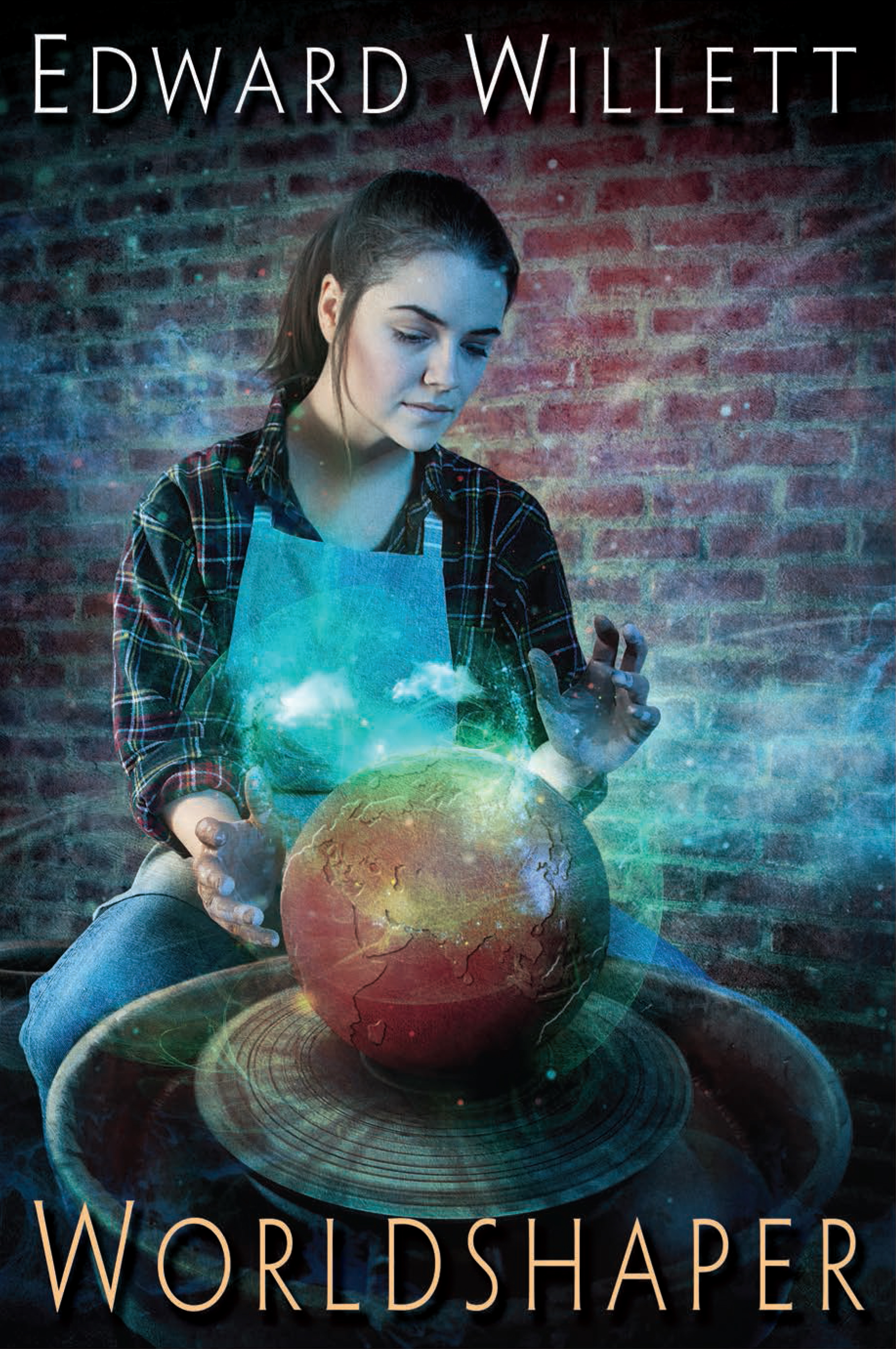
So, welcome to The Worldshapers.
Thank you.
You may not remember…we did meet, actually, at the SFWA table in San Jose, I think. I was volunteering, and you happened to come by.
Oh, nice.
Like I said, you wouldn’t remember, but I remember you.
Conventions become a giddy world for you when you’re SFWA president, unfortunately.
I’m sure. So, we’ll start, as I always start by taking the guest, you in this case, back into the mists of time, which…as I keep saying, especially when I’m talking to young authors, the mists of time is deeper for some of us than for others. But, how did you get…well, first of all, where did you grow up and all that kind of stuff? And how did you begin to become interested in science fiction and fantasy and in the writing of it particularly?
Well, I grew up in South Bend, Indiana, which is northern Indiana, and I was a child who read ravenously and early on discovered that I loved fantasy and science fiction. My babysitter was reading Tolkien’s The Hobbit aloud to me, and I began sneaking chapters on weekends when she wasn’t there. And at the same time, it was always assumed that I was going to write because I loved to read so much and because my grandmother wrote young adult novels, under her initials because they were sports novels. So, she was the author of such classics as Football Flash, Basketball Bones, and my favorite Martha Norton, Operation Fitness USA.
I’ll have to look those up. So, when did you start writing? I.
I started…when I was, I want to see nine or ten, I had a poem published. My grandmother had actually given me a book on writing, and I started writing poetry and sent something off to a contest. So, I was writing from nine or ten. After a fashion. Some of them were, I think, more story-shaped than others.
I always like to say that—because it’s true–that my first published work was in Cat Fancy Magazine when I was about 12 years old or something like that. They had something called Young Authors Open, and you could send stuff in. And it was a terrible pun about…they were looking for a replacement for Santa Claus, and they found this guy that looked like he’d be perfect, but the previous Santa observed him all year, and when he saw what his garden was like, he realized he could never be Santa because he wouldn’t hoe, hoe, hoe.
Oh, that’s cute. That’s awesome, though.
So, I think I got like fifteen dollars or something. So, my first professional sale.
I remember that magazine? So, yeah. Oh, that’s too funny.
When you started writing, did you…you had the poem, but were you writing other stuff, and were you sharing with other people? I always ask that because I shared my writing and with my classmates and so forth, and that’s how I found out I could tell stories.
I was. I had a story, a serial story that I was writing instead of actually practicing in typing class, because my parents and the parents of four of my friends enrolled us in summer school in typing class because they thought it would be good for us. And my act of rebellion was to actually write a long serial space opera that the other girls loved. And so, I did. I learned that people enjoyed my stories and kept writing them after that.
Did you write longer and…I guess, when did you start trying to get your stories published? I guess that’s the next step.
I had a few stories published in high school, usually connected to gaming, like, in gaming magazines. I had a couple of game reviews and book reviews and a terrible, terrible short story. So that, yeah, in high school pretty much.
Did you study writing formally at some point?
I did. I was one of those people who took a while to go through college, and so I dropped out and worked in a bookstore for a long time and then came back and actually dropped out a second time, just to make sure I was totally confused. But then, after I came back to college, I ended up going off to get a master’s in writing at Johns Hopkins, where I studied with John Barth and enjoyed myself very much.
I often ask people who did do formal writing training if it was helpful. And it sounds like in your case, it was.
Well, I think it was. But I also want to say that it wasn’t until I came to fantasy and science fiction that I got a lot of the nuts-and-bolts stuff. I felt like Hopkins was a lot of theory, which certainly is very useful, but it wasn’t until I got to Clarion West that we started talking about kind of, like, here’s the advantages of, say, first-person versus third-person. The more crafty sort of stuff.
And when the longer there, did you start making sales?
I…let’s see, I started selling stuff when I was in grad school, to small literary magazines, which meant I was making like five dollars or ten dollars a sale. And then I got kind of sidetracked and went into computers. And it wasn’t until 2005 that I sort of came back and started sending stuff out again, began sort of taking it seriously. And so, after about 2005, I started making some decent sales.
Yeah, well, I was interested in the writing, working in computers. My first books that I wrote were all these sort of basic computer manuals. My first book was Using Microsoft Publisher for Windows 95.
Then you will appreciate, that’s what I did, I was a documentation manager, and we were documenting VisualBasic.net.
And has any of that fed into your writing in any other way, the working on that side of things, has that fed into your stories at all?
Well, I tend to be more open to new technology and interested, particularly in new computer stuff, I think, than some other writers. One of the things I found, paradoxically, about science fiction writers is that many of them seem to sort of freeze at a particular technological level. And apparently, I haven’t encountered the one I’m going to freeze at yet.
When did you move on to the longer work, your novels?
I went to Clarion West, which is a local fantasy and science fiction workshop in 2005, and started writing a book immediately out of that, but it didn’t get published until eight years later. It went through, like, thirteen drafts and various convulsions. One of the jokes in my family is that I could never leave my husband because he’d read thirteen drafts. Which I’m not sure…we don’t need to tell him this, I’m not sure I would have done for him. I mean, can you imagine reading thirteen drafts of the same book? Holy crap.
I get tired of reading my own books, much less somebody else’s.
Oh, God.
Do you think that you’re…I mean, people do seem to specialize in one thing or another. You’ve clearly written more short fiction than long fiction. Do you think you’re more naturally a short-story writer than a longer fiction writer? Or do you even think that’s true, that people tend to be one or the other?
Well, I think they’re very different forms, and I think that they play to different strengths. One of the things I have to tell my students often is that a novel is not just sort of a bunch of short stories clumped together. It’s a lot more complicated than that. I think I’m good at both of them. I think I’m better at short stories. But I don’t want anybody to go, “Oh, shitty at novels. Why should I check them out?” Because my novels rock. Go buy them immediately.
Yeah, I was not suggesting that people not go out and…
No, but a good short story is, just can be, so pleasurable and so interesting and, at the same time not be the huge investment of time that a novel is, right? Depending on how fast you read, a novel can be a substantial investment of time, and a short story can be fit into standing in line somewhere.
Well, you’ve also done editing. How did you fall into that?
I was very stubborn about sending out stories. And so, I was sending stories to Fantasy Magazine, and at some point, the editor asked me if I was interested in, I think in reading slush, and then, was I interested in editing? And it was because we had done a lot of talking and I had been, I think, very persistent about sending him stories. So, I became the editor. I sort of fell into it. And since then, I’ve pursued a couple of projects. I’ve actually got a project coming up that I’m really excited about, which is going to be an anthology of near-future science-fiction relationship stories, because I think one of the things that science fiction has fallen short on is…often it’s very good at projecting what technology will change, but not so much on what the social dynamics are that will change.
What have you found…I mean, the editing I’ve done, and I’ve done a lot of…and so have you, you teach writing, and this will tie into that, too. But all that kind of working with other people’s work, how does that fit into your own work? Do you learn, you know, by…what’s that thing from The King and I, that by your students you are taught, if you become a teacher by your students you are taught?
Oh, you do. No, you really do learn so much. And I think that critiquing and editing other people’s stuff gives you some distance that lets you learn things that you might not from reading your own. But the other advantage of the school is that I go out and pursue teachers that I want to study with. And so, like, Seanan Maguire has done four classes for me now. I just got Henry Lien to do an awesome workshop that I’m very excited about. And so, I don’t just have the benefit of teaching. I have the advantage of, at least once a week, I’m sitting in on a class with someone world-class talking about fantasy and science fiction, and I count myself incredibly lucky.
So, despite all the teaching and everything you have published, you still feel that you’re learning the craft as well as teaching the craft?
Oh, absolutely. You’re always learning. It would be sad to stop learning.
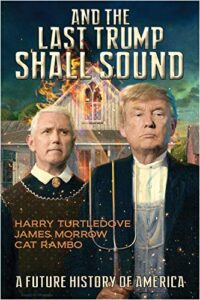
Well, we’re going to talk about two things here. You have a…so, we’ll start with the joint project that’s coming up from Arc Manor, you and Harry Turtledove and James Morrow. James Morrow is going to be on the podcast; I’m talking to him in a couple of weeks, as well. So, tell me a little bit about that and how that came about and what your contribution to it is.
Well, A, how fricking intimidating, to write something with Harry Turtledove and James Morrow. Harry and I are Twitter friends, you know, and then we’ve met at a few conventions and talked back and forth. I’m a huge admirer of his work. And he said, are you interested in being the third in this project that Arc Manor is putting together? And I said, sure. And it was…I don’t know, it’s a really interesting project. The three novellas are incredibly different. I don’t know that you could find three more different pieces.
Three very different writers.
And Harry’s is very considered, and it’s full of quotes from Confederate history and civil war history. And you could tell he really knows his politics and stuff. So, I’m reading it, and I’m thinking, “OK, so this is what I need to do.” And then I read James’s, and James’s has a cross-dressing porn star persuading Mike Pence to do increasingly improbable things, and I’m just like, “Well, this is so like, OK, you know,” and so my story is, I just went in a completely different, different direction and went rather Black Mirror and depressing because I figured all the humor had been absorbed by James.
So, the name of the book is The Last Trump Shall Sound, is that right?
And the Last Trump Shall Sound. Yeah, it’s got a great cover based on that Grant Wood, “American Gothic,” Trump and Pence dressed up as that couple.
And that’s coming up in September, right?
It is coming out in September. And that was surreal. I’m going to say…I just did an essay about this. It’s coming out in the SFWA blog, where it was just weird. I had turned the novella in January, and I got the copy edits back a few months later. And I was just like, “Wow, the world has changed radically in the last three months.” And it was hard knowing whether to go back and insert some of the incredibly improbable things that had happened in the meantime.
Yeah, this is one of those years that should have been a science fiction novel about, oh, 1990.
Yeah.
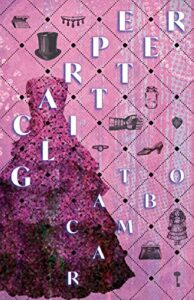
Except nobody would have believed it, so…and then the other one, and we’re going to use this one as kind of focusing on your creative process. You have the Nebula Award-winning novelette Carpe Glitter.
Mm-hmm.
So, for those who have not read it, can you give a quick synopsis?
Carpe Glitter is about a young woman who goes to sort through the belongings of her grandmother, who was not just a hoarder, but a stage magician. And in the course of sorting through not just one but three houses worth of clutter, she discovers a magical legacy that has influenced her family history in a way that she was not aware of.
OK, so how did this one come about and how does, more generally, I know this is a cliché question, and yet it’s a legitimate question…
It is a legitimate question.
…where do you get your ideas? Or as I like to say sometimes, what was the seed of this particular…?
What was the seed? So, with this one, it actually was the title. I was playing around with phrases, and I really liked “carpe glitter.” And I started thinking about what sort of person might have that as a life motto. And at the same time, I had been reading a book that was talking about hoarders, and I started thinking about that idea of kind of seizing the glitter and then never letting it go. And at the same time, there was a call for dieselpunk short stories. And so, I threw in a dieselpunk context and started writing from there. As far as where ideas come from, I find that the more that I am both reading short fiction and writing down ideas as they come to me, the more ideas come. It’s when I’m not reading or not paying attention to inspiration that things dry up.
I can’t remember who I was talking to, maybe it was James Alan Gardner, who said ideas are like neutrinos. They’re everywhere, but you have to be dense enough to stop them, or something like that.
I like to think of it as…your unconscious mind is a lot like a cat, and it will bring you small dead-animal story ideas as long as you are praising it. And if you are not sufficiently appreciative of the little bodies, then it will stop bringing them to you. It’s actually a pretty bad metaphor.
I like it. So, once you have your idea and you’ve decided you’re going to write this story, what does your plan…and this applies to all of your stories and also to your novels, because they often would take more planning, I would think. Are you an outliner, or are you more of a just launch right in and get writing…?
That is something that has changed a lot over the course of my writing career. And I used to be a total pantser, and now I’m much more of an outliner. But I also…I have, actually, a book called Moving from Ideas to Draft, which is about the fact that…I think ideas come in different forms. And the question I often get asked at conventions is how do I tell the bad ideas from the good ideas, by which people mean, you know, how do I tell the idea that I can turn into a story versus the one that I get halfway into and then abandon? And my theory is that there are no bad ideas. It’s simply that different ideas give you different things. And so, I have stories that started as titles. I have stories that started as characters. I have stories that started as, I want to write a story about how people carry grudges around with them and how it gets in the way. I have stories that have come about in all sorts of different ways, including just springing into my head full-fledged, which is very nice and does not happen half as often as it should.
Yeah, and sometimes…well, I have a metaphor I use sometimes, which is when you have that initial idea, it’s like you have this beautiful Christmas ornament and it’s perfect and round. And then you smash it with a hammer, and you try to get back together using words.
That’s perfect. That’s exactly what it’s like.
Because sometimes those ideas are, like, this is brilliant! And then somehow, the process of actually turning them into story can be a challenge.
The thing I always say to my students is, I used to be like, “Well, yes, sure, there’s some ideas you just, you can’t do anything with.” And then I read a story by Michael Swanwick, which basically is a story of people journeying across the surface of a giant grasshopper. And I was like, “OK, if Michael could carry that off, you can do whatever you like in a story,” because that is the dopiest idea I had ever heard. And he did it.
I always think of Cory Doctorow, who’s also going to be on the show, no too long from now.
Oh, awesome.
And, you know, he had the one with one of the characters was a mountain and one was a washing machine.
Was it, like, Someone Comes to Town, Someone Leaves Town?
Yeah, that was it. Yeah.
That was an excellent, excellent book. Yeah. Yeah.
So, once you begin writing, are you a straightforward start-to-finish, or do you write, especially in longer stuff, do you tend to write scenes and piece it together, or how does that work for you?
The longer the piece is, the more likely I am to write it as a sort of a creation of scenes. I just got…Beneath Ceaseless Skies just took a novelette from me. And one of the things I was very worried about, in fact, that it was that it had gotten written out of order. And I was worried that in the rewrite I had not made it, put it all in order. But apparently, I seem to have. So, yeah, it’s…and it’s hard. I just finished designing a class called “Principles for Pantsers,” which is basically about kind of like what to do when you’ve got these huge lumps where you’re just like, none of this makes sense. How do you untangle it?
That’s interesting that…you know, you’re teaching all these classes, and as I said, I’ve done some teaching as well, and I sometimes find that I will be telling, you know…I was writer-in-residence at the Saskatoon Public Library for nine months, this last September to May, although I was writer-in-residence in my residence for the last two and a half months of that, but anyway. And, you know, I’ll tell them something, and I’m all confident and, you know, this is this…and then I think, you know, if they look in that book of mine, they’re going to see that I didn’t actually do any about it. Do you ever feel that when you’re, a little of that, when you’re teaching writing, that, you know, that sometimes you don’t do what you teach?
Oh, every once in a while, yeah. Because I’m…one of the things I’m big about is, for example, is telling people that they need to build enough time into the writing process for revision. And I suggest that they put the story away for a week at least, and then come back to it. And of course, you do that because the story in your head and the story on the paper are, as you said, one is a Christmas ornament that is beautiful, and the other is much less beautiful. And I do try to do that, but I’m also aware that I am human, and I am prone to procrastination and there is always at least a few times each year where I am like, “Holy crud, this story is due tomorrow. Why is it not done yet? Oh, oh, oh, and then turn it in at the last minute.
I always think of the…I guess it was Douglas Adams that had the quote that he loved deadlines, he loved the whooshing sound they made as they rushed by.
And as an editor, you become aware of what a pain in the ass those writers are, right? And so, you don’t want to be that person. I just had a friend, bought a reprint from me, and she sent me an email that said, basically, “We cannot send this to the audio folks until you send in the contract,” and I was like, all right, that was a really smart thing to say, because if it was just sort of like, we’re not going to pay you till you get the contract, you know, it’s ten dollars. So, of course, I’m going to probably procrastinate because, you know, ten dollars. But when I know that I’m holding people up, I’m going to be much better about it. At least, I’d like to think so.
You mentioned the revision process. So, what is your revision process…first of all, do you do it all yourself? Do you use beta readers, or how does that work for you?
I try to use beta readers, particularly for longer work, and I do have a fairly structured process where I do try to put it aside, and then I read, I create a sort of plan of attack. I move the big, kind of look for the big-ticket items, and I try to sort of work my way in with finer and finer-grained edits because it doesn’t make sense to polish a scene if you’re going to cut it out. So, the line edits are the last thing, and then the read-out-loud pass, which has to happen, is one of the very last steps.
Do you find that you have certain things that you find yourself having to polish every time?
Oh, yeah.
We all have tics that…
Oh, yeah. One of the things I do, which your listeners may find handy, is if you run a word-frequency count, you will catch, for example, the fact that you had characters tilt their head twenty-seven times over the course of a single book. So, I look for that sort of stuff because, you know, sometimes it’s basically, your mind is just saying sort of “insert body language here” and you have defaults. And so, you stick in your default, and you need to go back and just sort of make sure that you aren’t constantly tilting your head.
Yeah, I saw somebody on Twitter today who was talking about writing, say, “Is there any way that characters…” I don’t know what he was reading, or maybe it was something he was writing… “where the characters express emotion other than taking deep breaths, taking short breaths…”
Yes. And you find yourself doing whatever you’re doing. I can remember writing a short story at one point, it was when I was a smoker, and I went back and looked at the draft and realized that I’d had the character light a new cigarette like every two pages and that they surely had an ashtray smoldering in front of them, just disgustingly full of cigarette.
Somebody asked me if my character was perhaps drinking too much and if I had a problem. But no, it was just, you know, again, it’s business to fill. Sometimes you need something for the character to do. And I said, you’re probably right. I should maybe not have her, especially when she’s, like, about to be interrogated or something. She probably shouldn’t be having that second glass, whatever.
Yeah.
I also find that my characters tend to make a lot of animal noises, like, they tend to growl dialogue or snarl dialogue. And I try to catch all that, although my most recent one has werewolves and vampires in it, so the werewolves, I guess, you know, they do growl dialogue. So then, once you have this polished to your satisfaction and it goes to an editor, what kind of editorial feedback do you typically…in short stories, it’s there’s sometimes a lot, sometimes a little. In longer stuff, you’re more likely to get more editorial feedback.
Some places I get no changes at all, or they’ll fix a typo or whatever, but, like, the novelette with Beneath Ceaseless Skies, I’ve just got a second round of edits from the editor, which is kind of, that’s actually outside the norm for there to be that much. But Scott Andrews is just super, super careful with the sentences. Plus, I think he has learned to explain things at length when he makes changes because he knows I will push back if I don’t understand the change. I love Scott, and just we really go back and forth on the edits, so that may be atypical. I think most of the time when you sell stories, though, there’s not that many edits.
And if they are, I mean, I think you probably run into this when talking to starting writers and some writers are worried about what an editor will do to their…
Oh, yeah.
…deathless prose. And I always say they make it better. Typically, they make it better. If it’s a good editor.
Yeah. And it’s so rarely…I mean, I can only think of a couple of times when I have run into an editor where I thought, “OK, they are they are not doing happy things to my prose.” And I think most of the time editors are also very good about letting you push back if you can say why you’re pushing back, and” because it’s my deathless prose” is unfortunately not sufficient reason to push back.
Now, Carpe Glitter is a novelette. Was it published as a standalone originally, or did it appear somewhere else or…?
It was a standalone. Meerkat Press came to me and asked if I had any novelettes or novellas because they were starting a standalone series. And I think it had been to a couple of markets. And it actually was sort of sitting on my shelf because, as you know, longer stories are harder to sell. And so, I gave it to them, and I was so happy to work with them. And then it surprised me by winning a Nebula Award, which was super cool.
Yeah. What was that like?
That was a ton of fun. I’m kind of sad that I didn’t get to go to the Nebulas in person, but they did just a glorious job with the online events. And honestly, I had talked myself out of it by the time that they announced it, you knew, as you do, you’re just like,” I’m not going to be disappointed. I know I haven’t won.” And so, when I won, it was just…really, it was very cool.
You’d been nominated before. But that was the first time you’d won.
That was the first time I’d won. And I’d…actually I had been nominated once and stayed on the ballot, and then I had been nominated once and there was an unfortunate issue with it having been put in the wrong category. And I ended up withdrawing from the ballot that year because if I had moved categories, I would have bumped three people off of the other ballot because they were tied and I didn’t want to do that.
You’ve been nominated for a World Fantasy Award, too. Do you think awards are valuable?
Oh…no.
I mean, aside from the, “It’s really nice to win one because it makes you feel good.”
Well…I do know that…I think it increases your stock a little bit. I know that I’ve talked to Ann Leckie, who was a classmate at Clarion West and sort of irritated us all by winning, like, every single award that she could the first year she published a novel, and she said, yeah, it’s made a difference to her career. Because she won the Hugo, she won a Nebula, she won a, I forget…Compton Crook, and she won a Clarke Award. She’s just disgusting. And I love Ann, but if I didn’t, I would have to kill her because she’s just way too talented.
Yeah. I mean, the one I’ve won is the Aurora Award here in Canada. Won it for this podcast, actually the first time I won it for a novel, but then I won it the podcast last year. And it’s really nice, and it gives you something. But, especially in the case of the Aurora, which…this is a pretty small market up here…I can’t say I’ve noticed any uptick in sales or anything. But every time a book comes out, they’ll put…you know, you can legally…not legally, but morally, say, award-winning author. So it does that.
Yeah. And you get an award. Like, I have my Nebula sitting on my shelf. I can look at it, and it’s really pretty. And it reminds me that people read my books and like them. Because writing is so solitary, as you know, it’s nice to be reminded that it’s not entirely.
That’s kind of the big philosophical question which I was headed to, which is, why do it, then? Why do you write, and why do you think any of us write, and why write this kind of stuff in particular?
Well, I think to a certain extent…at least, I meet a lot of writers who, like myself, we write because we kind of have to. We are always making stories. We are watching a paper cup floating down in the gutter, kind of going along the street, and we’re constructing a narrative in our head where it’s the brave little paper cup, and it’s, you know, that sort of thing. I mean, we just, we make stories all the time, and we like making them because making art is pleasurable. Making art is very pleasurable when other people like it, it builds to our ego. But making art is simply pleasurable for the sake of making art and knowing that you created something cool that nobody else could create.
Well, I think most writers would…or have, actually, at least for part of their career, wrote without any particular expectation that anybody much was going to, you know…it wasn’t going to get published. And even if you weren’t getting published, would you still write?
Oh, yeah. Yeah, definitely.
Now, I want to go back to the teaching of writing. I have to ask you about the Rambo Academy for Wayward Writers. Where did it come from, and how did it get the name?
So, I was teaching for Bellevue College, and no offense to any Bellevue College people that are listening, but I looked at my paycheck, and then I looked at the brochure and noticed the amount that they were paying me versus the amount that they were charging the students. And I thought, well, that seems like…kind of like a big discrepancy, actually, because I was making, like, twenty-five bucks an hour. And Google Hangouts had just come out, and I was, I had a lot of people who were also coming up to me at conventions and saying, “I really want to take a class with you, but you’re not in my area. How do you do it?” And so, I started teaching classes online about ten, eleven years ago. And at some point, I talked to my friend Rachel Swirsky and said, “You’re interested in teaching, will you come talk to my students about a class?” And then, I forget…Ann Leckie, actually, I think was the second person I brought in, I said, “Ann, will you come talk to them about space opera?” And after that, I started going after people that I wanted to take classes from. And we now have on-demand and live classes. We have a virtual campus, which, during the pandemic, we actually have been doing daily coworking sessions, and we have a short-story discussion group, and the people play writing games for an hour every week. So, the school has become a very important part of my life, actually. Particularly nowadays, that virtual campus is a place that I’m hanging out. Yeah, it’s my community.
How did you get started teaching to begin with? What drew you to, from just writing to start trying to teach other people how to write?
That was how…for Hopkins, for grad school, I got a teaching assistantship. And they had us teaching absolutely hapless Johns Hopkins freshman creative writing. Talk about the blind leading the blind. And it was this class called Introduction to Contemporary American Letters, which was basically, in my opinion, a scam to sell books by the faculty members. And so basically, they were like, here’s a list of twelve books, it just happened to be twelve books of fiction by our faculty members that you will teach. And so, it was always a very eclectic and kind of weird mix of fiction and poetry. But you have not lived until you have tried to explain John Barth to freshmen that are actively hostile to the idea that fiction might actually have something more than just sort of a story in it. It’s just…it was hysterical and wonderful.
But clearly, you got the bug.
I did. I like doing it. I like teaching. I like explaining things. I don’t even know…I like talking to people. And I think I’ve always been one of those people who enjoys talking to people and giving them advice. I suspect, were I not a writer, I would be a counselor of some kind.
Well, and is that side of things kind of what led you into becoming so involved with SFWA?
A long time ago, when I was up at DragonCon, I took one of my first writing workshops with Ann Crispin, who was a long-time super volunteer. This would have been in 2004. And she said to us, “You write a story and you qualify for membership. You join SFWA and you volunteer. And that is what you do. That is the career path you will all take.” And I was like, “Yes, ma’am.” And so, I qualified and joined. I was on a committee actually with Cory Doctorow on copyright. So, that was interesting. So, yes, that was one of my first experiences.
And then you rose up through the ranks…
Rose up…
And is it as much like herding cats as has sometimes been said?
Oh, God. It’s hysterical. Because you’ve got…like, there’s two thousand members and they are all strong, most of them are what I would call strong personalities, and even the ones that are very shy are very capable of being very strong personalities online, and you have a lot of ego, and writers are by nature insecure and prone to imagining things, which is not a good quality in a membership, in my opinion, but I mean, I had so much fun with SFWA. I made so many good friends, and one of the things that I did when I was done that last month was I sat down and I wrote a thank you note, and wrote them to all the people who had helped me or who I had encountered. And I’m sure I left out a bunch of them, but I sent out over 800 thank you notes to people.
Did you get any sense of the…state of the union, I guess, state of the genre, from your time there? You would have a different window on things than I think those of us who are just writing our stories and sending them to editors.
Oh, I think right now science fiction is in an absolutely marvelous time in some ways. I think that you’re seeing a lot of potential with independent publishing. You’ve seen a lot of potential with stuff like games that are also fiction. One of the things SFWA has done is that they now have a game writing award, which includes interactive novels and stuff like that. And it’s also a time when people, many people are working to bring a more diverse group into publishing and trying to help the already diverse folks that are there, and to me, I see a community that is so well-meaning and so good about helping each other that it is, quite frankly, one of the things that still gives me faith in humanity in, as we said, today’s odd world.
Well, I guess we can wrap things up here pretty much. First of all, though, what are you working on now?
I am writing a book two in a space opera series, the first of which is coming out from Tor Macmillan next March.
And what’s it called?
It is called You Sexy Thing, which is the name of the intelligent bioship that my protagonists steal.
So, it sounds like a far-future space opera.
It is. It’s a bunch of retired mercenaries who have started a restaurant aboard a space station. And then a mysterious package arrives, things start exploding, and we are off on adventure.
And anything else that’s in the offing?
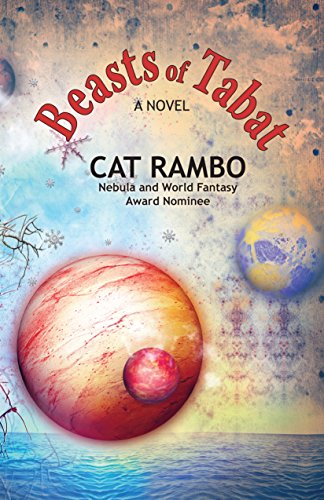
I have a fantasy novel that should be coming out soon. It is the third book of the Tabat series, Exiles of Tabet, and I’m finishing up the edits on that right now.
And where can people find you online?
You can always find me on Twitter as @CatRambo. Most social media I’m there as Cat Rambo or findable thereon, or find me at catrambo.com.
OK! Well, I think that kind of wraps up everything I have to ask. So, thanks so much for being on The Worldshapers. I enjoyed it. I hope you did, too.
I did. Thank you very much for having me. I appreciate it.
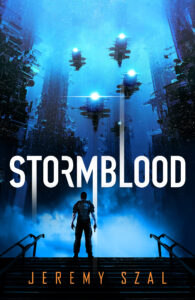
An hour-long conversation with Jeremy Szal, author of Stormblood, Book 1 in the dark space-opera Common trilogy (Gollancz), author of more than 40 science fiction short stories, and former editor of the Hugo-winning online audio magazine Starship Sofa.
Jeremy Szal was born in 1995 and, he says, “was raised by wild dingoes.” He spent his childhood exploring beaches, bookstores, “and the limits of people’s patience.”
He’s the author of more than 40 science fiction short stories, and his debut novel, Stormblood, a dark space opera, came out from Gollancz in June 2020 and is the first of a trilogy. He was the editor of the Hugo-winning Starship Sofa until 2020, and has a B.A. in film studies and creative writing from the University of New South Wales. He carves out a living in Sydney, Australia, with his family.
He loves watching weird movies, collecting boutique gins, exploring cities, cold weather, and dark humor.
The (Lightly Edited) Transcript
Welcome to The Worldshapers, Jeremy.
Thank you very much, Edward. Lovely to be here
Well, thanks so much for being on. I haven’t been able to finish your book, but I’ve delved into it enough to know that it looks really cool. So, I’m looking forward to talking with you about it. But before we do that, we will do…well, first of all, we should point out that we are talking across a vast expanse of the planet since I’m in Saskatchewan and you’re in… Sydney, is it?
Sydney, Australia, yeah. I think fourteen hours difference.
Fourteen hours.
Yeah.
So, he’s actually…you’re actually in the future, from my point of view.
I am in the future. It’s not too bad here, you know. Another day has dawned, we haven’t, you know, destroyed ourselves. Aliens haven’t invaded. Not yet. Yeah.
Well, that’s good to know. I can get up in the morning without fear then. So let’s start, as I always do with my guests, by taking you back into the…I’m going to put reverb on this someday…the mists of time, and find out how you, well, first of all, where you grew up, and how you got interested in science fiction, and how you got interested in writing. So, how did that all work for you?
Yeah, I grew up here in Sydney, Australia. I was always a reader, and I never really thought of genre in any particular fashion. I just read the books I liked reading. But when I was ten years old, we moved to Austria for a couple of years, basically to a small mountain village, because my dad’s from Poland and my uncle and grandfather had died in a very short period of time and he needed to go out and sort some things there.
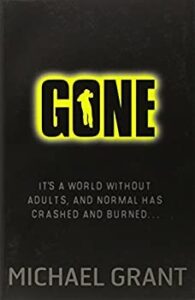
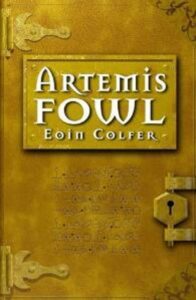
Anyway, so I’m living there in tall mountain regions of Austria. And for some reason, whatever reason, the local school library has a small English section. And, you know, obviously, they all speak German there. Alas, the world does not speak the language I speak wherever I go. You do have to learn the local tongue. And so, I hadn’t spoken German yet, and so I was still picking through what they had for me to read. And, you know, I quickly devoured a lot. But then, you know, my mother is an English teacher, and she was very, very determined to get me books. And so, whenever we would go to London, we’d always stop at the bookstore and I’d always, you know, devour whatever they had there. Like, I picked up whatever I still thought was interesting, you know, there was no, as I said, it was no genre, I didn’t think of fiction as science fiction or not. I just picked up whatever I wanted to pick up. And one of those things happened to be the Artemis Fowl series. And then I picked up the GONE series by Michael Grant. And then I picked up a few books by Stephen King. And again, I didn’t think of them…I just bought whatever I liked reading. And the covers appealed to me. I liked the action, I liked the adventure, I liked the weirdness of it.
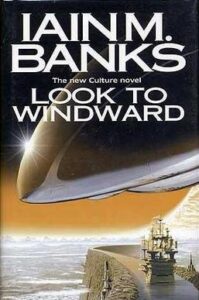
And then, I remember distinctly seeing a cover from Iain M. Banks when I walked into a Waterstones when I was thirteen, fourteen, and something about it just appealed to me, you know, the spaceship, the planet, the weirdness of it, the technology. And I couldn’t put my finger on it. Like, I couldn’t think, “OK, why do I like this?” I just did. You know, obviously I’d seen Star Wars, I’d seen my own fair share of science fiction, I was an avid videogamer, and so I had a little science fiction, but I never really thought of it as sci-fi. But then, when I came back to Australia and when I, you know, finished, started going into high school, I took up a few creative writing courses, and I found that I quite liked it.
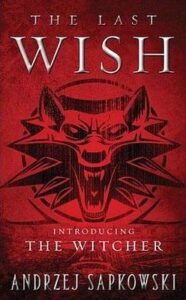
And then, I started reading the whole Song of Ice and Fire series, when I was way, way too young to read those books. And then I saw the first season of Game of Thrones, again when I was way, way, way too young for it–I don’t even think I legally could have seen it at the time–and something about the whole idea of fantasy just appealed to me, you know, the idea of a magical realm with its dragons and creatures and these different cultures and different landscapes and all this weird stuff going on like that, this really appealed to me. And so, when I started acknowledging, you know, the idea of science fiction through video games like Halo and Mass Effect, it just really grabbed me. And so, when I did finish high school, I just started reading, going to the bookstores, and going to a science fiction bookstore, science fiction section of the bookstore, deliberately, like, I started picking up The Witcher books, I started picking up Brandon Sanderson, I started picking up Karen Travis, Greg Bear, a bunch of other people and, you know, as I say, the rest is history.
Well, you said that you took some creative writing classes in high school. Were you writing outside of class at the time? When did you start writing your own stories?
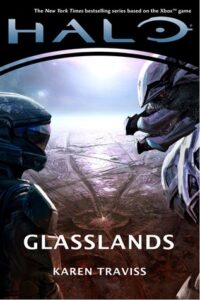
Yeah, it was probably earlier. I just basically parroted whatever the hell I was reading at the time, you know? And, you know, I didn’t really think of myself as a writer. I just thought of myself as someone who, you know, I liked typing, and so I just started getting it all down. I mean, like, I don’t even think it was, you know, anything remotely cohesive. I just, you know, did whatever jumped to mind. But then, when I was in high school, and I started taking those classes, I did start thinking of the idea of writing to be published, you know, writing to be read. And one of the things that did that was reading the adaptation of Halo, one of the video games, novelizations by Karen Travis. And I just…it was very, very little action, but it was a very human story. And I just found that I could visualize it very easily because I’d played the video games. And so, it just…I was able to pick it up very, very easily. And I had a very short attention span, so that was, you know, priceless. And so I started thinking, “Hell, I’d like to do this!” And so, yeah, I started doing it seriously. And when I did finish high school, I started pursuing it seriously.
But you didn’t actually study writing when you went on to university. You did film studies, right?
I did both. I did creative writing and film studies. I don’t actually think the creative writing was anywhere near as much help as the film studies thing was. I think the film studies really did hone in on the nature of craft and the nature of scriptwriting and the nature of pushing your characters forward, always intriguing the audience, always having something behind the next corner. A lot of the creative writing classes were, “OK, how do we allude to metaphysical imagery that this obscure 1920s writer was trying to get out, probably while he was depressed, high, and on his deathbed? How can we apply that to our own, you know, creative process, our own creative lives?” And, you know, I zoned out pretty early on in most classes. But the film study was quite educational. So, I think it’s very good to get a diverse range of inspirations.
I often ask people who have taken creative writing in university how helpful they found it for the kind of writing they ended up doing. And you just answered that. And I often get that, especially from people who write in science fiction and fantasy.
Yeah.
It’s just still not a genre that is particularly welcome at university creative-writing programs.
Absolutely not. I straight-up had one teacher tell me that any sort of science fiction, fantasy, anything like that, is just bad. And you could just hear a groan go around the audience, and some girl put her hand up and said, “Yeah, but why?” And I don’t remember the answer because I was too annoyed to pay attention.
But I do remember this one creative writing class where this one girl literally showed up to class with, not a story, she just pasted together all these newspaper clippings of various things that happened around the world and then wrote her own sub-stories about the Salem witch trials, but not really. And so, there were newspaper clippings on this big canvas sheet, like a collage. But the thing is that there was a massive bloodstain on it. And we’re all sitting there, thirty of us, looking at this bloodstain, and wondering who this, you know, ultra-Goth writer, this girl who, what she’d given us. And the teacher’s like, “Uh, what is this?” And she’s like, “Oh, yeah, I was cutting together all these newspaper clippings with a box cutter and accidently sliced my own fingers. And I started bleeding all over the pages. But I’ve decided, you know what? Instead of that, instead of just getting a new one, I’m just going to keep it.”
And I looked at the teacher, waiting for her to tear her down, and she’s like, “Oh, yeah, I can see there that there’s a bit of an arterial spray around the word ‘pain’, there’s a big, big splatter around the word ‘witch,’ there’s a big clump of hair and, you know, residue of nails and tissue right there around the words, the time, you know, and it’s like echoing back to the blood spilled by generations lost.” I almost flipped the table across. I’ve never been closer to picking up a chair and hitting someone with it in my life.
And because one of my friends at the time, she–who ended up ultimately beta reading Stormblood and is in the acknowledgments for Stormblood–she was a filmmaker, and she’d just come off making a short film that had been screened around the world. And a lot of the actors, some of the actors in the short film have gone on to do bigger things, like, one of the actresses, she’s in a movie, just finished a movie with Jason Clarke and Helen Mirren. And she’s in these, like, another TV show that’s going to be on HBO, and, you know. So, my friend basically helped discover her in short film. And so, we both of us had a background in what we were doing, a semi-professional background. So, we just looked at each other, and we were just boiling. And this other girl, of course, got top marks, for doing, like not even, she didn’t even do any writing. She just cut newspapers together and bled all over them. I think that, if nothing else, that summarizes what my experience at university was like.
Well, you’ve written a lot of short stories, and you’re not a particularly aged individual. So, when did you get started on the short stories, getting-published short stories,?
I think when I was 19, I started getting good news from short-fiction editors. The responses weren’t just, “No, we don’t want this,” The responses were, “This is interesting, but we’re going to pass.” And so, I kept sending them out and sending them out and sending them out, and eventually, one of them sold for actual money. And I was over the moon. I’m like, “OK, I’ve cracked the code. I actually can do this. There is actually a way for me to do this,” because, you know, if you look at that wall, that impenetrable wall between you and being a published writer, it looks unscalable. But now that I actually had done it, I’d actually reached out and found some measure of success, it boosted my confidence.
And so, I kept writing and kept writing and kept writing and I kept sending them out. And eventually, one of those stories, when I was 19, ended up selling to Nature magazine. So…and that was pretty amazing, for me to actually sell to a professional magazine published by Macmillan and to be able to have that, you know, see my story in print and know that it’s widely distributed all around the world. It was an incredible feeling and showed that I actually could do it. And so, yeah, I just kickstarted from there, and I kept writing short fiction over the years and getting them out, and I kept getting my stuff published. And it was, yeah, it was pretty interesting.
I still don’t think that I’m a good short-fiction writer, and I only say that because, as someone who has edited short fiction for about six years and has read thousands of thousands of stories, I think there’s a very, very, very specific sort of story that most short-fiction magazines want these days, all the sort of structure, the sort of style that they’re after. Short stories are not condensed novels. They’re not truncated novels. They’re not very, very quick stories. Short stories, I think, have a very, very specific sort of style to them, not just the way they’re written but the sort of writers that they appeal to. And that’s great, you know, the more, the merrier. But that sort of style generally isn’t for me. I say generally, because sometimes there’s a sort of freedom being able to just go wild and experiment with something, try a new POV, try a new setting, try any of that, you know, and I’m writing 180,000-word epic dark space operas, that are all from first person, voice-driven, and so sometimes it’s a relief to break away from that and just go crazy. But yeah, I don’t think I’ve quite cracked the sort of thing that most short-fiction readers and editors would like to read
I mean, if you look at something like Ted Cheung, he’s never written a novel, but he’s probably the best short-fiction writer living today. And he’s probably one of the only short-fiction writers, modern writers, who’s had his work adapted to an incredible film. That’s how good he is, not only how good his work is, but how widely it appeals, and that in itself is a skill. And I don’t think that’s something I have quite yet.
I did want to ask you about the editing for Starship Sofa. You’re both a short-fiction editor, but it’s also an audio…magazine, I guess. How has that fed into your own writing and the way that you work with words? Has it been…doing all that editing and reading those thousands of short stories, do you think that has benefited your own writing going forward? And also, how does the audio aspect of that fit in?
It absolutely has benefited me. I mean, it’s hard not to, because I’m reading all this fiction and, you know, you have to come to a conclusion. You know, there’s no, “I don’t know if I like this or not,” it’s, “Do I think this is something I want to buy and give money for? Do I want to accept this and be responsible for helping adapt it to audio and putting it on the podcast as something that I’ve edited? Do I want to work with this story?” The answer is yes or no. And in order to come to that conclusion, you have to look at a story, quote-unquote, “objectively,” and think, “OK, is it ticking the right boxes? Does it appeal to me? Do I like the genre? Do I find the style engaging? Do I want to keep reading? Do I like the ending? Do I like the approach that it’s taking?” You know, you do have to sit down and think, “Yes or no, this is something I want to read?” I mean, we’ve all read books that, we’re not quite sure we love them, but we kept reading them anyway. But doing the short fiction, I think, really helped me know, “OK, yes or no.” And one reason why I did that was, I’d read the first page, the first couple of pages, and think, “OK, do I want to continue.” And knowing, being able to say yes or no, would save me, not only so much time but so many headaches, because I’ve gotten fiction that’s made my eyes bleed, not literally bleed, but close to it, but thankfully that’s not the majority. The majority of the stuff is good, or it’s just OK. But, yeah, I would look at the fiction I was getting and make, come to a conclusion either way.
And it really helped me, I guess, nail down not only what I thought was engaging fiction, but what I liked, you know, “I like this!” And a lot of that…for a long time, I thought I was an epic-fantasy person. And now…I moved on kind of to cyberpunk, and then I started developing a taste for space opera. And so, being able to know that when I get something that was set in space or set in a future or set in an urban city, or something that, especially if it was first-person or especially if it was voice-driven, I’d always get excited, like, “Yes, this is my thing.” And knowing that helped me quantify my niche, I think. And that really helped me establish, “OK, this is the sort of thing that I’m into.” And so, when I’d be reading, I’d think, “OK, this is what I don’t do. And all this is a really good trick. This is a really good method of easing you into a universe.” And so, I did slowly accumulate knowledge in that way.
The last question, the answer to your next question, is slightly less interesting, I think. The audio version, the way it basically works, I read it, I decide if it is something that can be read aloud in audio, on top of whether if it’s a good story, I send it to a narrator, they do all the hard work of actually reading aloud the thing and editing it and cutting it together. They send it back to me, I just pop up on the show, I just pop it up to my the editor in chief, Tony, and he broadcasts it. That’s pretty much it.
How did you end up being the editor for Starship Sofa? How did you make that connection?
I think it was Neil Asher who shared a post by Tony C. Smith, the editor-in-chief at the time, and still is. The other guy had left…I don’t know why or whatever, I think just didn’t work there anymore, and so I just messaged him and said, “Hey, can I have the job?” And a short Skype interview later, I got the job. I wish everything in my life came to me as easily as that did.
You mentioned that, you know, sort of going through the different genres and seeing what you like. In your own short fiction, has it gone through various genres as well, or have you tended to write in one genre in your short fiction? Or subgenre, I should say?
Yeah, definitely. I think I started off very, very much sort of fantasy, a bit weird. Mythological sort of style, you know, like the sort of Skyrim, Game of Thrones-esque sort of low fantasy, Joe-Abercrombie-sort-of-style fantasy. And I still love Joe Abercrombie, but that’s not the sort of fiction I ever want to write. It’s just not me. And I think I did kind of develop more into cyberpunk, sort of New Age punk fiction, like China Mieville, Ian MacDonald, Paolo Bacigalupi, that sort of thing. But then I started, you know, getting more into space opera as I consumed, you know, Alastair Reynolds, Iain M. Banks, Peter Hamilton, that sort of thing. And I just felt, “OK, this is the sort of thing that I like.” And I thought, “OK, can I write this?” And of course, no one tells you what you can or cannot write. And so I thought, you know, I’m just going to take a stab at it. And I did.
But I found that short fiction was a little bit constrictive for the space opera genre, especially the sort of space opera that I wanted to write, and so I started developing it more into novels. And that’s more or less the trend. I think the transition that happened in late 2015, early 2016. I’d just come off writing an epic fantasy, a YA fantasy, that I absolutely loathed. I got about two-thirds of the way in, and I’m like, “I never want to read fantasy, write fantasy, ever again. I can’t stand it. This is not the sort of thing, that is not me,” because I go, you know, “OK, I just got rejected for a YA sci-fi novel and 50 percent of the rejections said, “YA sci-fi is a very hard sell,” like, “Science fiction is a hard sell, YA science fiction is an even harder sell.”
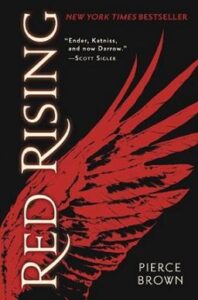
And I’d just come off reading Red Rising, and I thought, “You know, this is the sort of thing that I’d like to do.” But I was writing in a fantasy and I’m like, I felt trapped by the genre. And I thought, “You know, screw it. I’m just going to write whatever I want to write. If it sells, doesn’t sell, that’s fine.” I did look at the market a little bit and think, “OK, what’s the sort of thing that is appealing to agents?” And I’ve always loved crime, always loved murder mysteries, and I thought…I had the great, I had the barnstorming, original idea, “Hey, what if we had a murder mystery in space?” And so I wrote it, and I’m glad I did because I wrote that novel in three months, it was incredibly powerful for me to be able to just sit down every day, no matter what I had on, and just pour out a thousand words or two thousand words every single day. Just get it down. No thought of, you know, “Is this good? Is this not good?” I just thought, “I’ll come back and I’ll fix it later.” I just powered it down, punched it out, and in about three months, literally three months, I wrote a whole space-opera novel, and I must’ve done something right because a year later I got an agent with that novel. So, I’m very, very glad I did it. I did do that.
Now, it was that Stormblood or was that a novel before Stormblood?
That is a novel before Stormblood.
Because I didn’t think Stormblood was–it didn’t seem to be a mystery novel set in outer space.
No, it’s not. It was a previous one called The Rogue Galaxy. It was about, you know, the whole premise of it, basically, what if you were convicted for committing a murder you didn’t remember committing? And so that was…and you had to go to the other side of the galaxy to find that answer.
But no, I’d finished that. I’d written it in third person and about halfway through I’m like, “This would really work well in first,” because I was reading a lot of first-person fiction. And it was a little bit too late, and I thought, “OK, at the end, I’ll just go back and change it.” And when I did get to the end, I’m like, “OK, I can’t be bothered about changing it.” So I thought, “I’ll just write a novel,” I think about the end of that year, I decided to just punch out another novel. I mean, even if you do get an agent, having another project under your belt is always a good thing. Having another project, you know, in the percolator is, you know, it’s always good to keep those juices flowing.
And so I started writing in December, either November or December 2016, page one, chapter one of Stormblood. And I thought, you know, “What if we had, you know, a fiction that was very set in space, but it was also very voice-driven, it was first-person, it had an edge to it?” And that idea just appealed to me. And I wrote that first draft in six months, and I must have done something right because a year and a half later I sold it to Gollancz.
Well, this seems like a good place for you to give us a synopsis of it without giving away anything you don’t want to give away.
All right. Stormblood, yeah?
Yeah.
All right. OK, Stormblood. The basic premise is that the DNA of an extinct alien race is used as a drug, and it makes people addicted to adrenaline and aggression. And so, of course, this one empire injected it into those soldiers and got them to fight off a brutal invading empire. And, you know, all seemed well and good. You know, these soldiers are literally addicted to killing, they’re literally addicted to running headfirst into a bullet-storm. What could possibly go wrong?
Well, everything, because it’s permanent and the high didn’t stop when the enemy was over, and the high didn’t stop when the battle came to a close. And they also had these, all these soldiers restless and not knowing what to do with their own bodies. And it didn’t stop when the war was over, and they got sent home, and they had these tens of thousands of soldiers permanently addicted to being on a battlefield. And so, the main premise of this is that the main character is one of these soldiers, comes back from a war, you know, traumatized, ridden with PTSD, but looking for a way to get his life back together. Anyway, the main forces that injected the DNA into him, the Galactic Empire, whatever you’d like to call it, they call him back and say, “We need you to do something for us.” And he wants nothing to do with them, for obvious reasons, because they ruined his life. They lied to him. They’ve lied to millions of people, the cost of winning a war, but at great consequence. And he says, “Why should I talk to you?” And it turns out that his fellow soldiers, the ones that he knows and loves, are all being murdered, being killed off, being overdosed. And it turns out that his brother is the prime suspect. His estranged brother is the prime suspect.
And so, as the book unfolds, you find out his history, you find out his history with his brother, you found his history with his teammates, and their whole central conflict is that he was very, very close to his brother, they developed a very strong brotherhood, you know, when they were surviving together on a brutal backwater planet, when they were surviving an abusive father. And he transferred that same sense of brotherhood and camaraderie to fighting in a war where the only people who knew what it was like to have an alien organism actually, like, squirming around in your head and sniffing up your chest and sniffing up your backbone was to be with, and, you know, what it felt like to be in cover and see the enemy charging towards you and like, get excited, “Yes! There are people shooting at me,” to actually get an adrenaline spike. The only people who knew what that was like were his fellow soldiers. What it was like to want to be suicidal. And so, he developed a very, very strong personal relationship with them.
And he comes home, as I said, and finds out they’re being murdered, potentially by…his brothers are being murdered by his flesh-and-blood brother. And so, the whole central conflict is him keeping the balance between that, being able to hunt down his brothers’ killers while dealing with the fact that his own brother is murdering them. And, of course, because this wouldn’t be a good story without a central personal conflict, the more he investigates danger, the more addicted to adrenaline and aggression he gets. Because he’s been out of the war for a few years, so he’s able to control his body’s, able to control his urges, but, of course, when he’s going up against killers and a shadowy organization, that doesn’t quite work out. And so, the more confrontations he gets into, the more hyped up and the more dangerous he gets and the more dangerous his body gets. And so, there’s that balancing act of keep of trying to get this all done while still not going insane, basically.
Well, it’s a bit of a cliche question, but, you know, it’s still a legitimate one, where do you get your ideas? So what was the seed for this? Where did this the seed for this novel come from that then sprouted to do this trilogy?
Oh, it was just my original genius, just sitting in a dark room and just thinking at all. No, not at all. I borrow very, very heavily from cinema and gaming because I’m a very visual person. And so, the idea of a far-future society has always intrigued me, both in the ideas level and a visual level, to be able to go to some central city on a spaceship, you know, galactic skyscrapers, you know, kind of like Coruscant from Star Wars, and to go down in all these neon dark cities, on all these busy streets that are frantic with these different alien species and different spaceships. You know, that idea has always very, very much appealed to me. And so, I knew that I pretty much wanted to set my story in that sort of universe.
And one thing I found is that there was very little of a Star Wars-esque sort of fiction being written that is not tie-in. There’s a lot of, you get a lot of alien stories that are either first-contact stories or the stories that are basically war-driven stories, that these humans are fighting a war against these aliens, but there’s not quite as many stories about a future society where humans and aliens have, you know, have joined forces or, you know, there’s this multi-species society, like, sort of Mass Effect. And that’s my bread and butter of fiction, and there wasn’t quite as much a lot as I would have liked.
But, so, I wanted to write that, but then I thought, “OK, what about, you know, let’s make it a little bit weirder. You know, what if the idea of, you know, this, how will we people upgrade ourselves and what sort of modifications would we make?” And then I thought, “You know, what if the modifications we made were from the DNA of aliens, how would that work, and how would we grant ourselves with alien, you know, biometrics or whatever?” But then I thought, “Let’s make it a little bit more interesting. What’s the cost of that? Surely there has to be a cost.” And the cost was that it’s a drug and it makes you addicted to getting an adrenaline spike. It makes you addicted to your own body chemistry. And so, then I started developing the idea of a brother, of two brothers who had a very good relationship but then were estranged, and then started developing that relationship slowly as I wrote the book. But yeah, I am definitely a character-driven author. I am not a plot sort of guy. So, I definitely did combine the idea of this alien DNA with the idea of these two brothers and just mashed them together and just sort of went on from there.
Well, what did your planning process look like? You talked about developing the characters, as you wrote. Did you do a lot of outlining ahead of time or just…what did that look like for you?
That’s a pretty good question. I’m most fascinated by this question, as well, because it’s very hard to tell when you see a finished product, knowing what went into it.
And I get a lot of different answers.
Yeah, yeah. In my case, I outlined the broad strokes of it. I knew that I wanted to have this to happen and I wanted the antagonist to be doing this, and I wanted this sort of resolution midway, and I wanted to have this sort of scene, and I wanted to have this sort of arc, but more or less how I got slithered in between that, I pretty much just wrote on the go. But as I did that, I more or less figured out, “OK, this is not what I want to do.” And one of those things was one of the side characters. I’m like, “OK, I haven’t quite gotten his voice down. I haven’t quite gotten his approach, his personality,” and in order for me to write a character, I have to know the sort of person they are because who they are influences the behavior, the relationship, the dialogue. And I can’t just…you know, if I don’t get a concrete answer, it’s going to be wet clay. And so I went back a little bit and did a bit of character tweaking, but more or less, I just went, you know, started going from point to point and just weaseling my way through those points, deciding, “OK, this has happened, OK, how are they going to get to the next point?” And I just rocked up one day and decided, “You know, OK, they will do this, they’ll go here, they’ll do that.” But the broad strokes of the narrative, the big anchor points, were definitely outlined. And I think that comes from film, of all things, because I’ve said, I’m very inspired by film. And one of my favorite sort of films are films where I feel like the director has a very tight control over the narrative, over every shot, over every scene, of the emotion that you’re expected to get from every point in the film.
Like, I’m a very, very big fan of something like a film, like, for example, the film There Will Be Blood with Daniel Day-Lewis. You know, that film is so incredibly tight. You just know that every, behind the camera, he was in absolute control. Like, a director like Martin Scorsese or Christopher Nolan or Denis Villeneuve, you get like something like Blade Runner 2049. Like, this is what they want to do, and this is how we achieve this…they achieved exactly that. And so that sort of thing that I enjoy doing, being able to control my narrative.
Unfortunately, the human brain sometimes has other ideas. And as I’ve discovered with writing book two, and outlining book three, sometimes that doesn’t always go to plan. And so, sometimes being able to adapt and figure out, “OK, this is actually what I want to do.” I mean, you get to a certain point in the narrative, and you’re like, “Actually, my characters don’t want to do this. Well, I don’t want to do this.” Or, “I could think of something better.” And you have to adapt. You have to be able to go along with it. And I refuse to write anything that I don’t want to write because I feel like, “OK, the narrative needs it” or “this is what I planned.” I can’t do that. I need to be able to write something that I feel is what I want to write.
What does your actual writing process look like? Are you a fast writer, are you a slow writer? Do you use parchment under a tree in the backyard, or do you go to a coffee shop? How does it work for you?
No, I siphon the lifeblood of other authors’ dreams, and I distill that into pen and paper.
I should try that.
Well, I’m pretty sure that girl from university, I’m pretty sure she was doing that. No, what I do do is, I am a fast writer. I can do three thousand, four thousand, five thousand words a day. When I was writing Stormblood, that’s the sort of mileage that I was pounding out. I was doing approximately four thousand words a day. Sometimes only a few thousand of those words were good. Sometimes I would write a thousand words and all of them were good. I wish those days happened more frequently than they do.
But no, I do typically go to cafes because I have a studio apartment and I have a lot of things, all my books, all my games here, and a multitude of distractions, either from my dog or my family or anything else that comes along, take me away from my little world. And so, being able to go to a cafe…you know, for some reason being around screaming children and coffee and, you know, waiters and whatever, for that reason, somehow helps me to cope. You know, if I eat, it doesn’t matter what it is. If I’m away from home, I can write more easily than I can when I’m at home. And so, being able to go down to a beachside cafe near where I live and pound out three thousand, four thousand words, I go to the pub, pout out a few words there in the afternoon, it really does help me distill what I need to do. Editing is a little bit more tricky because I’m, as I said, I try to be in control of my craft, and so, being able to be at home and on my big monitor, I think, helps me more specifically. But being able to get out the raw words, nothing gets it out like I do when I’m going out to a cafe or going somewhere public. It really just helps me get those words down. And sometimes that’s just what you need to do, is to make a fiction work.
Yeah, I ask a lot of authors that, obviously, and I personally like to write outside somewhere when I can, hasn’t been a lot of that recently, but one of the things that I have found, and other authors have mentioned this to me, is that they’re fine with the wash of sound from a busy place but if you get a sort of a quieter place, but there’s somebody sitting close to you having a conversation with somebody else, those words can really interfere when they’re writing. At least, I find that. Are you able to just tune all that out in the background no matter what’s going on?
No, I definitely agree. Like, unless everything is so cluttered that it turns into a white noise, no, I can’t. If someone is having a conversation right next to me, it does filter in. I do have a very nice pair of noise-canceling headphones that I make very, very good use of.
That’s when I listen to music. Instrumental music, though, because words in the music are the same problem.
Yeah, exactly. Exactly the same. So I’ve just got this massive playlist of, you know, soundtracks, Hans Zimmer and John Johnson and Brian Eno and all these other great artists and great music soundtracks that really help me distill the sort of thing that I’m trying to write. It’s very, very useful.
You mentioned editing, so what does your revision process look like? Do you write straight through and then edit from start to finish? Do you do a rolling revision as you go? How do you work?
That’s an interesting question because working with an editor is far different than it is working, editing, self-editing your own project. And my editor is Gillian Redfearn at Gollancz. She edits Joe Abercrombie, Richard Morgan, Alastair Rennolds, Joe Hill, a bunch of other fantastic writers. So she very, very much knows her craft. So, the way that we did Stormblood one was that we edited the first half of the book once. Because we did structural changes. And so, she edited the first half of it, I went back, did my editing, made those changes. She looked at it, saw the sort of changes that I had made, and then edited the second half of the book to apply the ripple effects from the first half. So basically, the things that changed in the first half she then helped edit with those changes in mind for the second half.
And so, she basically edited the first half of the book twice, basically. And so, I’ve actually had to keep that in mind when I am writing, doing my editing, I’m thinking, OK, I kind of look at it as a concentric circle. “OK, what’re the big structural things that I’ve got to change? Is it character? Is it worldbuilding? Is it, you know, the big plot revelations.? What are the big things I’m changing?” You know, I’m not preoccupied with small things like one scene or, you know, chopping down an action scene, or at least I shouldn’t be. I’m trying to think of the big things. “OK, do I actually need an action scene here?” Because you can edit your life, your heart out of a scene, and this is actually applicable for something that I just did in book two. I had all these different plot points going on in those one scene that was taking up a lot of time, and it wasn’t getting too much. And so I’d wilt it down and wilt it down and wilt it down and chop it back, chop it back and chop it back, and it came to the point where I realized, “OK, this is getting me absolutely nothing. I’ve got three action scenes in one hundred or so pages. Why don’t I just chop two of those out and just make one big action scene, and that way I can stack on the tension instead of being a stop-start, stop-start sort of approach.” And being able to do that, being able to look at the whole thing in my head and being able to see, “OK, this is what I need, this is what I don’t need,” helps a lot as opposed to going in and picking up minute details, because I’ll do that forever. Honestly, my editors need to pry the final book away from my cold hands because I’m just, “Wait, no, no, no, there’s one word, I’m not sure to call it a spacecraft or ship. I’m not sure to call it a warp drive or hyperspace. Just let me change it, one thing.”
And so being able to look at the big picture really does help. I mean, to be able to say, “OK, I’m not going to be too preoccupied in this line of dialogue from this character. I’m going to be preoccupied with, is this what I want the background to be? Is this what I want their approach to these, is what I want their arc to be. And that really helps, being able to look at the big picture and hold the big thing in my head. It’s a great help. And being able to do that helps me, you know, really self-interrogate, I guess, the sort of book that I’m trying to write. And even if it’s a waste of time, even if you’re like,”OK, I’ve spent a whole day looking at this character. Yes. I’m happy with the way…I don’t want to change it.” That reaffirms in your mind. “Yes, I’ve made the right decision. This is what I want. And that can be a really good thing.”
You mentioned in your acknowledgments quite a few beta readers. Where do they come into the process?
They came in by telling me, not what I wanted to hear, but what I needed to hear. And yeah, they…one of the best comments I got was from a writer called Gemma Anderson, or she writes under G.V. Anderson, and she said to me, and she’s a writer on her own, she’s won a World Fantasy Award, she’s brilliant. And she said to me, “Your characters, these two main characters, they always clash professionally. They never clash personally. What they argue about is always about the job. It’s never about each other or about each other’s attitudes.” And so, that really helped me separate that when I’m writing characters. OK, are these people just arguing because of a small office problem, or are they arguing because of a big character flaw? And that really helped me shift, I guess, from plot to character, and I always try to get my books as character-driven as I can, And so that really, really helped. And so basically they all did help, you know, help me, you know, understand, come to an understanding of what works, what doesn’t work. And beta readers are always going to disagree. They’re always going to give you conflicting information, which is absolutely fine. But being able to hear from a bunch of people, “OK, this is the sort of thing I like. This is the sort of thing that I think works well,” I think that is more helpful than simply, “OK, well, I didn’t like this, or this isn’t working.” Being able to see, “OK, what’s ticking people’s boxes,” I think that’s a really good way to find out what’s working in your book.
How did you find your beta readers?
Well, I knew a few of them, from Starship Sofa partially, from a few other things, but I did, I emailed a few of them or told a few people, “Hey, I would like to do a beta reader swap,” and I read some of their books and they read mine and, yeah, they just, that’s basically how it happened. There’s no lottery, alas, there were not people clamoring to read my scribblings, it was just me reaching out to some people that I knew and asking them, “Hey, want to read my book?” And not all of them ran away screaming for the hills. So they’re the ones that didn’t run away screaming for the hills.
So the book came out in June. It’s your first novel. What was the experience like for you to get that first book and see it in print?
Oh, exhilarating. I mean, it was probably the worst time in the world to be having a debut novel.
Not great.
Yeah, well, you know, COVID, but case in point, the hardback got canceled for my book, but the reason it got cancelled is because Goldsborough Books, a very, very nice independent seller in London who collects first-edition, signed hardbacks and gives them sprayed edges, so they’ve got everything, they’ve got a signed edition of Catch-22, they’ve got all the signed editions of all the James Bonds, every major author pretty much gets, you know, a hardcover signed with them. Like, you know, I think I’ve got a very nice hardcover from Joe Abercrombie, and some of them are still going up for, like, five thousand, ten thousand pounds, for a first edition. Anyway, so, I got 250 copies from them, they decided to take 250 hardbacks, and I got a very nice, gold-sprayed edges. And so, they sold out within a week, 250 copies sold out in hardback, the week before the book had even come out officially, and according to my agent, that’s incredibly rare to happen for science fiction, although that happens all the time for fantasy, but less so for science fiction, apparently. But that was quite a shock to realize, “OK, wow, there is actually an audience,” because it’s impossible to gauge how many people actually know about your book, how many people actually know what people are interested in. And so, that was quite a bit of a shock
But nothing, I think, compares to being able to get that package and being able to open it up and see, you know, your name on the cover and all your words written in these pages. It was exhilarating. But being able to go out and see, go to the bookstore and actually see it in the wild, see it ready for purchase and see people walking past it, that is another thing entirely and being able to see who your neighbors are as well as quite interesting. My actual neighbors, I have pretty good neighbors in my name. I’ve got John Scalzi, Neal Stephenson, Tade Thompson, and Adrian Tchaikovsky and some little known hack called Tolkien. I imagine he’ll be quite big someday. That is more or less my neighbors, depending on what’s in the bookstore. But, yes, that’s quite fun.
As somebody with a last name of W, I tend to be on the very bottom shelf, which is always annoying, but I’m down there with Ted Williams. So that can’t hurt.
No, no, no, definitely not. But yeah, it is quite fun to be able to go there and say, “OK, it’s actually a real thing now,” because the way the industry works is you don’t actually know if anything is going to go pear-shaped at any time, but being able to see, it’s in the wild, it’s a real thing, it’s in people’s homes, people can buy it and read it. It feels real, feels done, like, this is a book that’s part of science fiction canon. And we’re all readers, and so to be able to know that you’ve contributed to that canon, you’ve actually contributed to literature, is quite amazing.
Well, that kind of segues nicely into my other reverb question, the big philosophical questions, which is really, why? Why? Why do you do this? And also, you know, this podcast is called The Worldshapers, and I often say that, you know, it’s a lot asking any fiction to actually shape the world, I think very little fiction has had a huge impact on the world as a whole. But you’re shaping readers in some fashion with your fiction. So, why do you write, and what do you hope your writing, what impact your writing will have on readers?
I write so the lambs stop screaming. No, no, no. I write because I enjoy it. I do actually enjoy the process of getting those words down. I enjoy being able to create something that didn’t exist and being able to transplant that idea of, something that prior to me sitting down and putting words to it, didn’t exist. It wasn’t a thing. And being able to have it be concrete and being able to put that in other people’s heads, is something that I quite enjoy, and being able to impact people is even better. But to answer your question, I’m getting a lot of people, quite a lot of people saying to me how much, how touched they were by the portrayal of brotherhood in my book, and how much they, you know, really felt for the main character and his feelings and how heartbreaking that relationship, that deteriorating relationship was with his brother and how heartwarming it was to see him gaining that relationship with his fellow soldiers and his friends and being able to see it slowly built up.
And that’s something that’s quite special to me, because in a lot of fiction, especially between men, I think there’s a lot of…it’s very rarely platonic, it always seems to be sexualized, and a lot of fiction as well, even between men and women, automatically, it seems to be sexualized or automatically seems to be building up to a romance. And my point–and that’s great, you know, and there’s definitely romance in my book, but I do come from a perspective of friendship, of brotherhood, of, you know, really doing what you can for your friends, no matter how much it hurts, and being able to see that it worked, that I actually…that’s something that appeals to me very much, of being able to see that my stab at it, that my attempt of portraying brotherhood and showing the heartbreakingess of it and showing the highs and lows and the benefits and being slowly built up and what it means to people and how, you know, guilt influences people and how people try to get redemption and go out of the way for forgiveness, just so the people that matters to them, that they can build that relationship back. You know, that’s a very messy and sticky, you know, sort of topic, and being able to see so many people have reached out to me saying how much this meant to them, is…it’s great. I mean, that’s all I could want. I mean, I could have people tell me the worldbuilding is good, the plot is interesting, I didn’t see this coming, but really, at the end of the day, if I can, if some people say to me, “These two characters, the emotions that they were feeling, I felt them, and it touched me.” You know, that’s all I can want.
And we are getting close to the end here, so what are you working on now? Obviously, book two and book three in the trilogy.
Yeah, book two and book three. Book two is done in the sense that the words are on the page. Not all of them are in the right order yet, but I am working on that. And I’ve just been talking about it with my editor. I’ve been slowly outlining what I’m going to do in book three, which is a little bit scary. I mean, when I first got the deal, way back in, like, 2018, when we could still go outside, I never, it didn’t cross my mind that I’d be writing a trilogy, because I try to just write my books as a singular product. So, now that I actually I’m sitting down thinking, “OK, I’m going to do that in book three, I’m going to have that plot thing happen in book three,” it’s quite a different feeling, I think. And so, that’s what I’m kind of doing now, really sitting down and distilling that, you know. But it is a slow process, it is happening slowly, but it’s keeping me out of trouble. So, that’s always good.
And have you thought beyond this trilogy to what might come next?
No. No, I’m not allowing myself to do that, I’m just working on this now, I mean, I have ideas, of course, I’ve got plenty of ideas. Not all of them are worth, most of them aren’t worth the page they printed on, and since mine are in the computer that’s absolutely none at all. But I am, of course, you know, always having things churning on back in the mental percolator, but not at the moment. I’m just really focusing on making these the best books that I can. I mean, even if I never get to write another trilogy, I just want to make sure that these count. So this is where all my attention is going.
And Szal is S, Zed, A, L. Do you say zed in Australia like we do in Canada?
We say zed, yeah, not zee, not like Americans, you know, we are from English descent.
S, Zed, A, L. Well, thanks so much for being on The Worldshapers. I had a great time talking to you. I hope you enjoyed it.
All right, thank you very much, and thank you very much for checking out Stormblood as well. I really do appreciate it.
Well, I’m looking forward to finishing it. I found the writing really driving me forward and very rich and very descriptive and great characterization and all the stuff I like. And I’m a big fan of space opera. In fact, one of my proposals to DAW right now is for a space opera. So, yeah, so I’m looking forward to finishing it and then carrying on and reading the rest of the trilogy as it comes up.