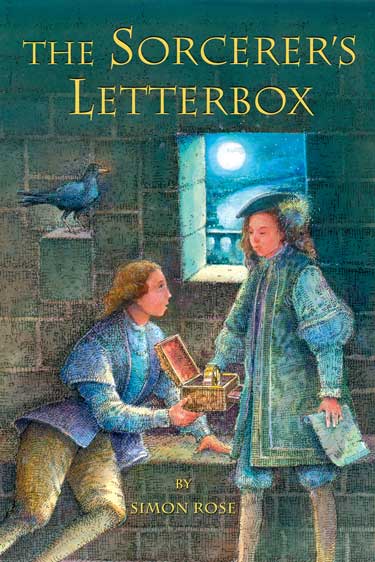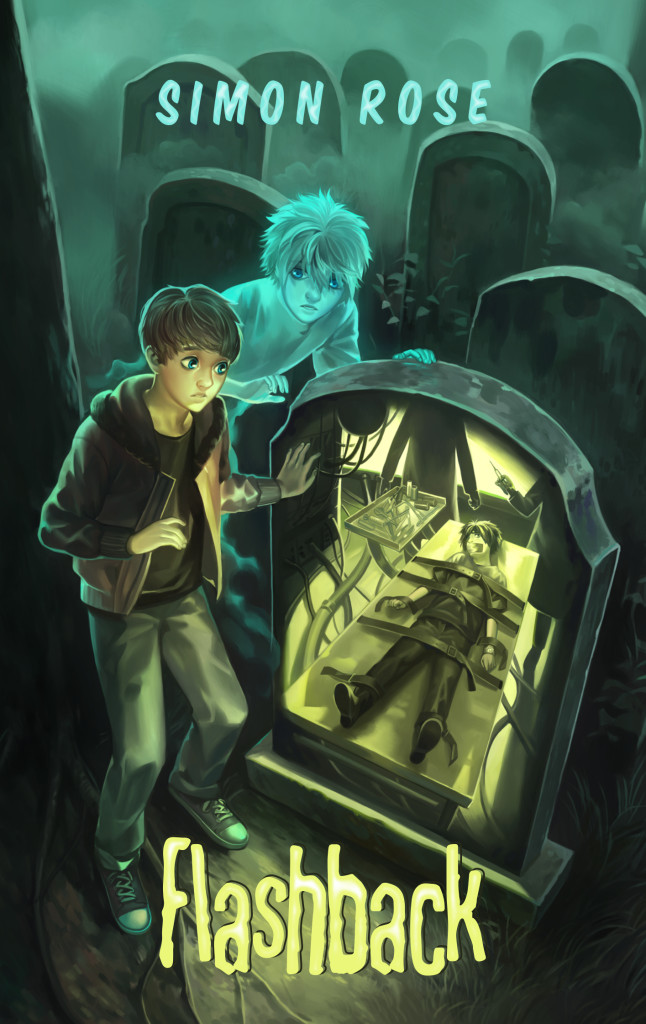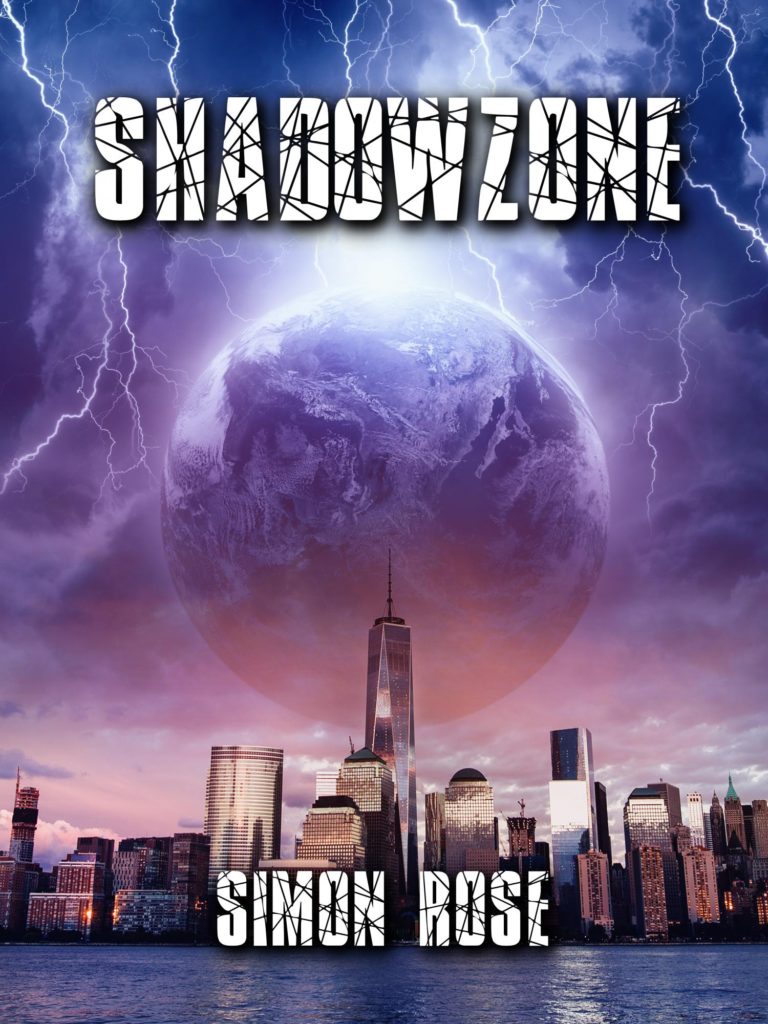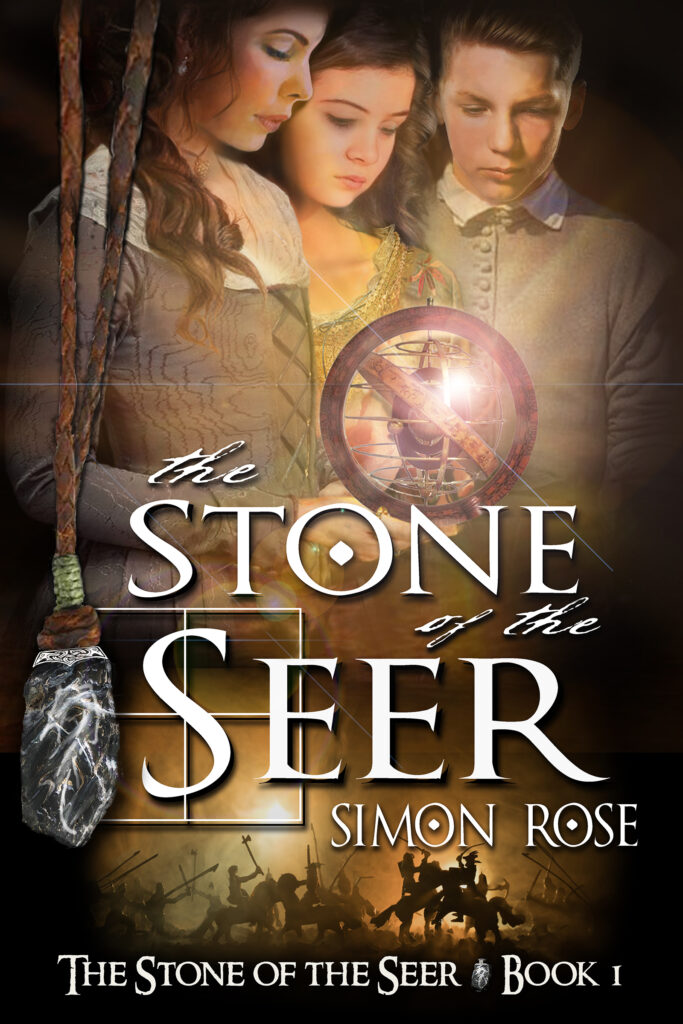
An hour-plus chat with Simon Rose, author of eighteen middle-grade novels, including the Flashback series, the Shadowzone series, and the Stone of the Seer series, plus eight writers’ guides and more than 100 nonfiction books.
Simon Rose graduated from university with a degree in history and is also a graduate of the Institute of Children’s Literature of West Redding, CT. Born in the UK, he moved to Canada in 1990 and has lived in Calgary, Alberta ever since.
His first novel for middle grade readers, The Alchemist’s Portrait, was published in 2003, and has been followed by many more novels and series, most recently The Stone of the Seerseries. He’s also the author of The Children’s Writer’s Guide, The Working Writer’s Guide, The Time Traveler’s Guide, and The Social Media Writer’s Guide, is a contributing author to The Complete Guide to Writing Science Fiction Volume One, and has written many non-fiction books.
Simon also offers a number of services for writers, including editing, manuscript evaluation, coaching, mentoring, and writing workshops, in addition to copywriting services for the business community. He’s an instructor for adults with the University of Calgary and offers online workshops for both children and adults. He also offers a wide variety of presentations, workshops, and author-in-residence programs for schools and libraries, as well as virtual author visits.
A regular presenter at conferences and festivals, Simon has served as a juror for the Governor General’s Literary Awards for Children’s Literature, the Saskatchewan Book Awards, the Parsec Awards, and the Sunburst Awards for Canadian Literature of the Fantastic. He’s the founder of Children’s Authors and Illustrators on Facebook, managed the Calgary Children’s Book Fair and Conference, served as the Writer-in-Residence with the Canadian Authors Association, is a member of the Calgary Association of Freelance Editors, and served as the Assistant Regional Advisor for SCBWI Western Canada.
An hour-and-a-half interview with Sarah A. Hoyt, Prometheus- and Dragon Award-winning author of more than 30 novels of science fiction, fantasy, mystery, and historical fiction.
Sarah A. Hoyt was born in Portugal and raised her family in Colorado. In between, she has held some improbable jobs – she thought it was a requirement to write science fiction – ranging from dishwasher to multilingual scientific translator, and she’s published more than thirty novels in science fiction, fantasy, mystery and historical fiction.
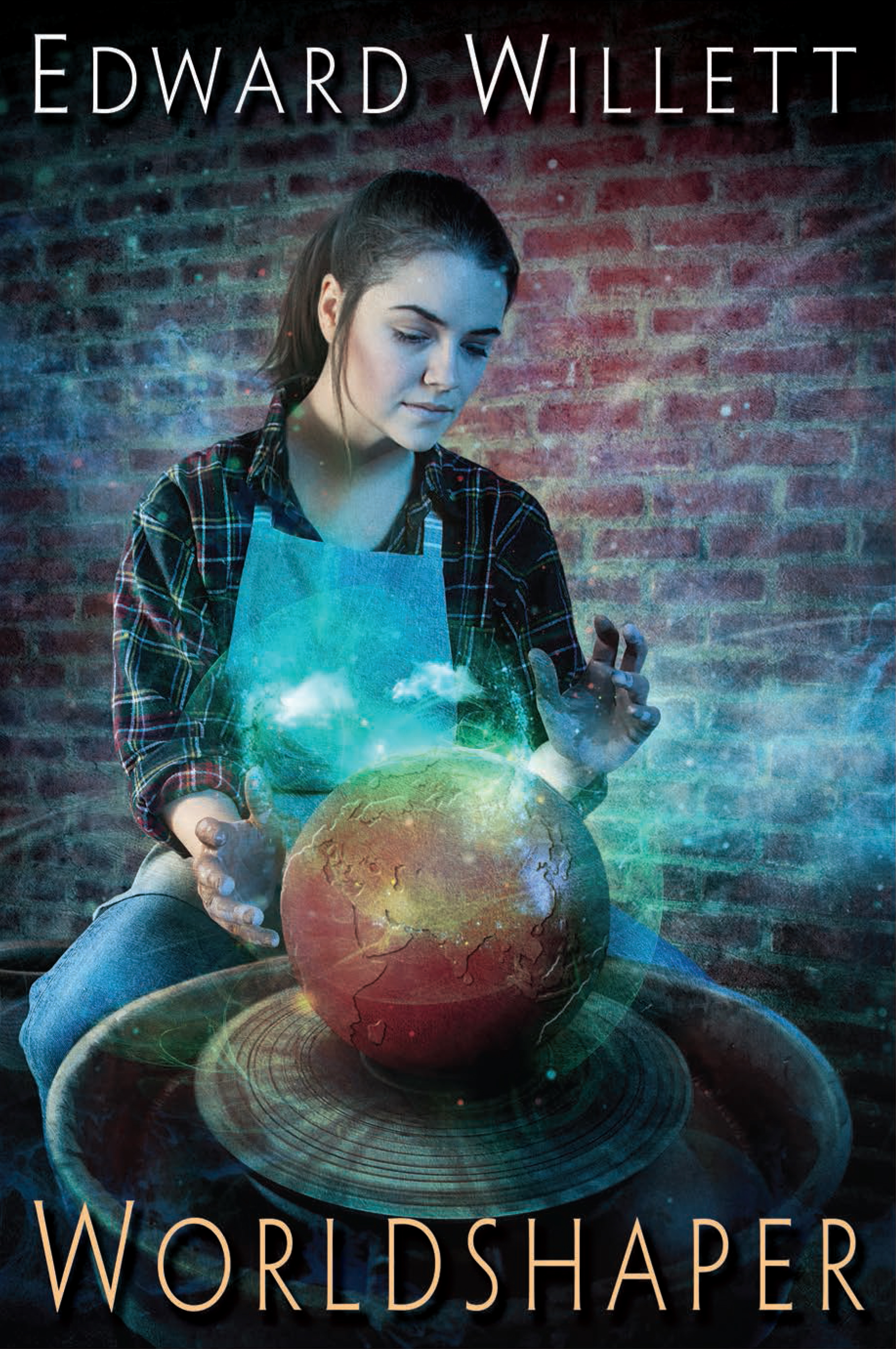
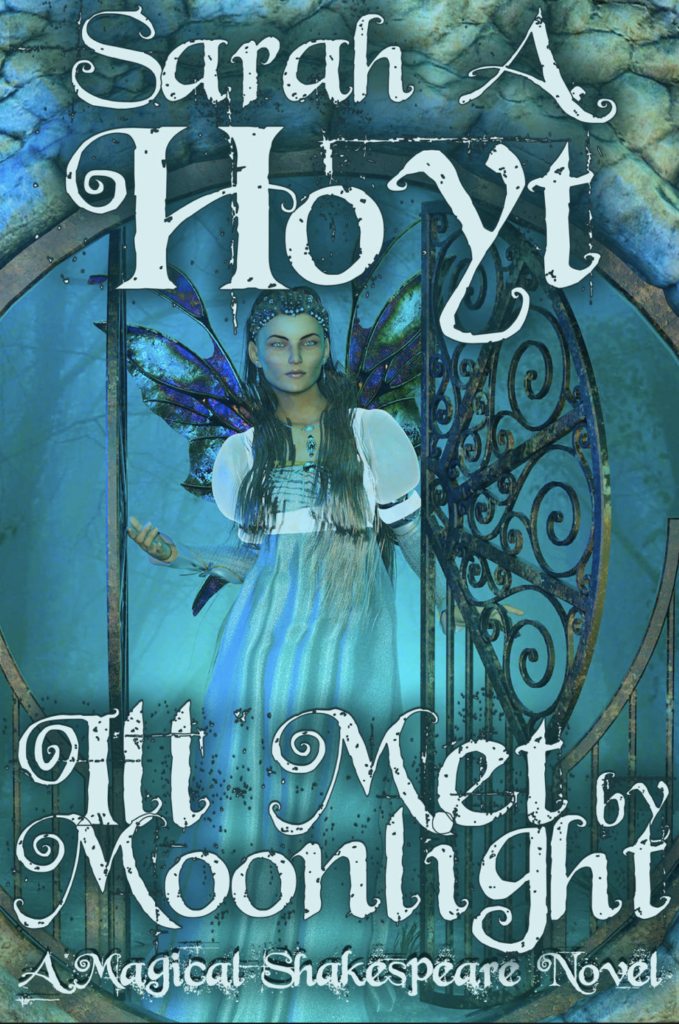
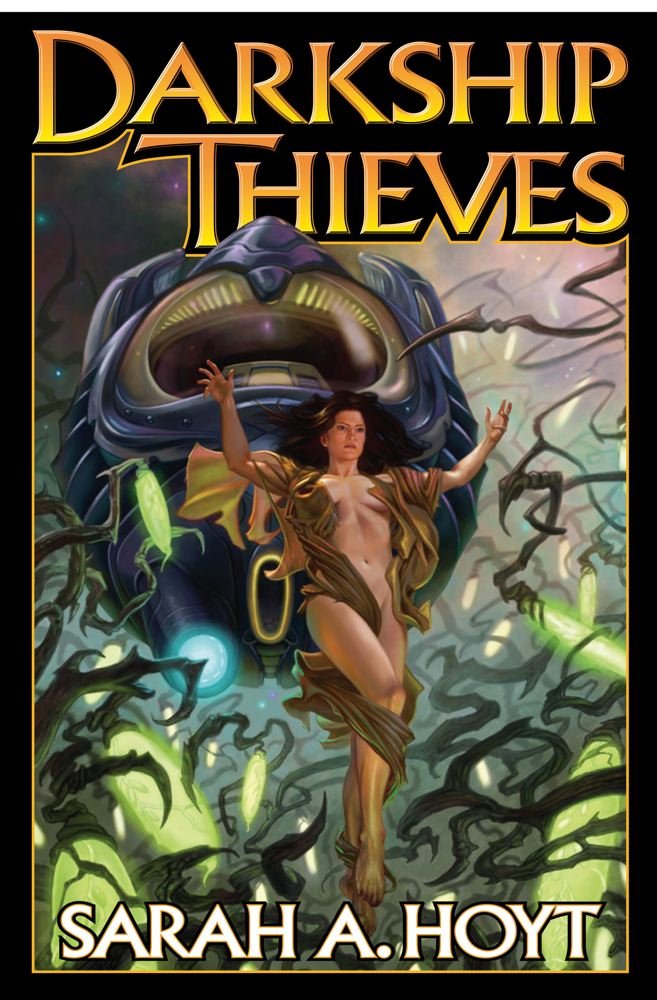
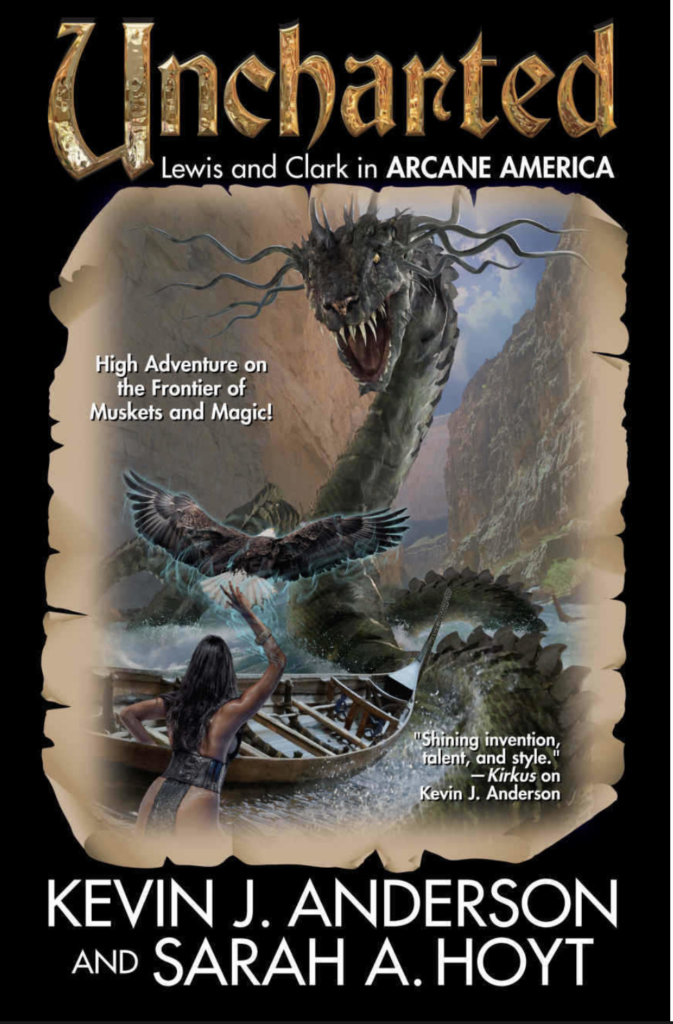
Her first published novel, Ill Met By Moonlight was a finalist for the Mythopoeic Award. Her first space opera, Darkship Thieves won the Prometheus. She also won a Dragon for Uncharted, an alternate Lewis and Clark expedition (Now with magic, and oh, yeah, Coyote) co-written with Kevin J. Anderson.
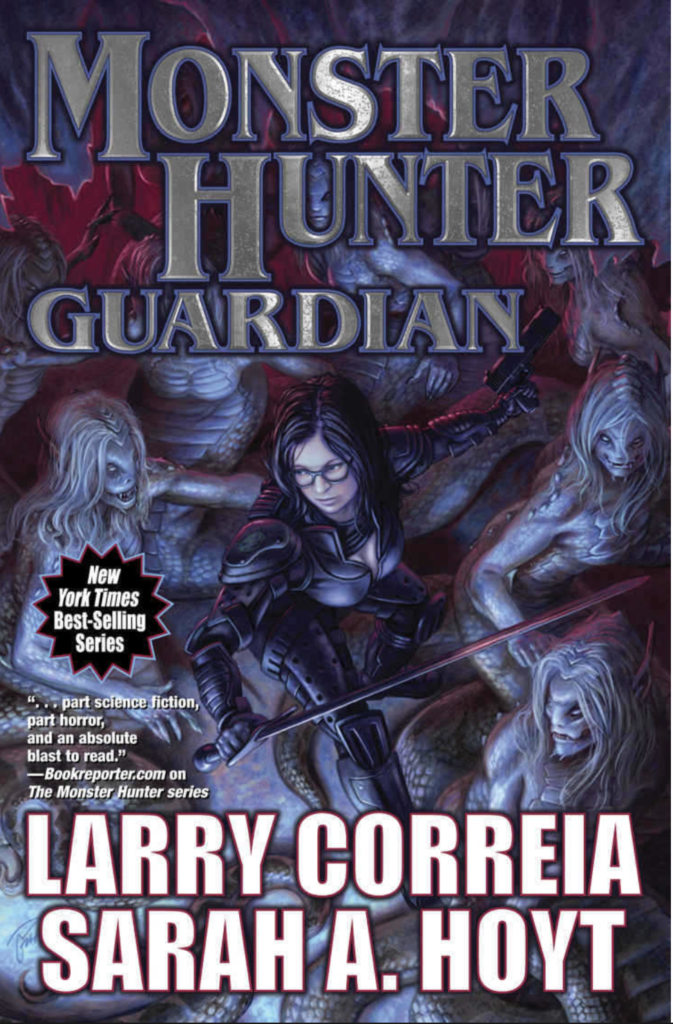
Arguably her best-selling book is Guardian, co-written with Larry Correia.
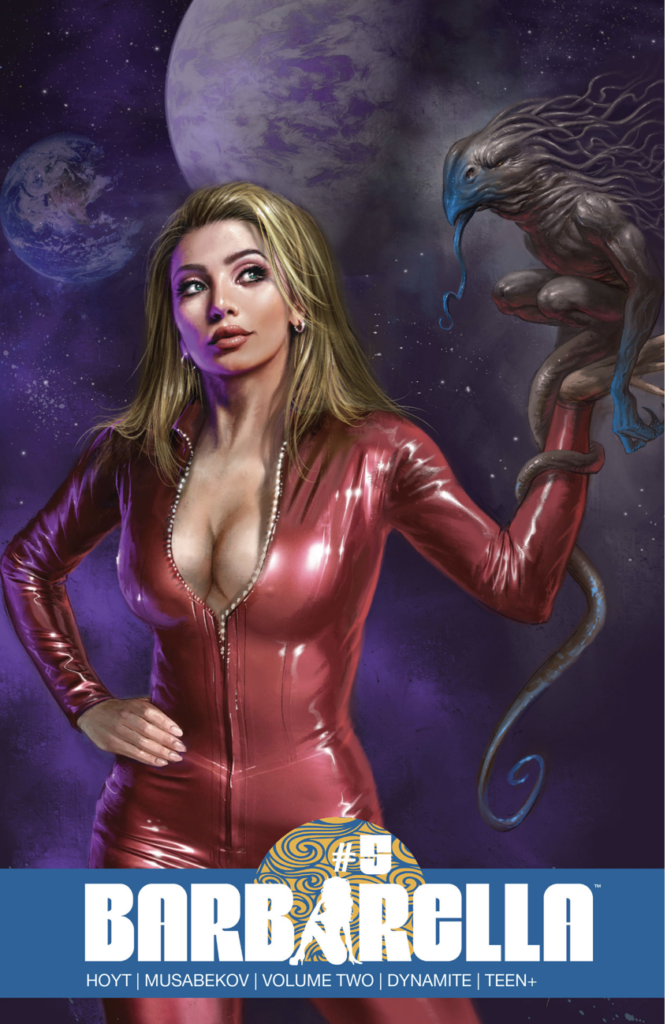
She’s currently writing the script for the latest comic book iteration of Barbarella.
Her plans for the next thirty years consist of writing a lot more.
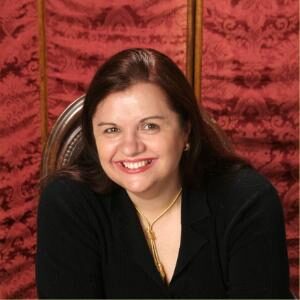
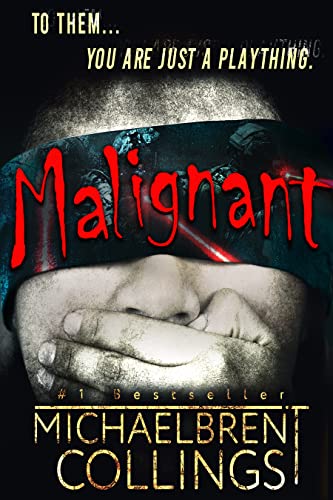
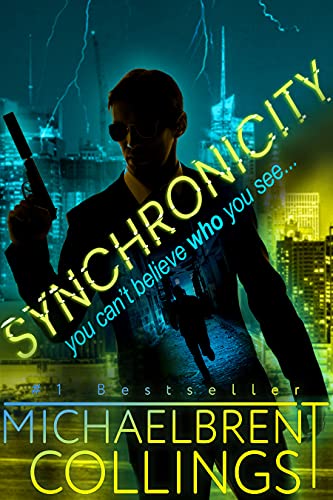
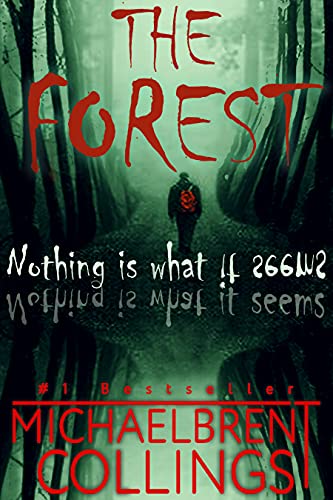
An hour-long chat with Michaelbrent Collings, internationally bestselling author of thriller, fantasy, science fiction, mystery, romance, humor, young adult, and middle grade works.
While he is best known for horror (and is one of the most successful indie horror authors in the world), Michaelbrent Collings has also written internationally-bestselling thriller, fantasy, science fiction, mystery, humor, young adult, and middle grade works, and romance.
In addition to being a bestselling novelist, Michaelbrent has also received critical acclaim: he is the only person who has ever been a finalist for a Bram Stoker Award, a Dragon Award, and a RONE Award, and he and his work have been reviewed and/or featured on everything from Publishers Weekly to Scream Magazine to NPR. An engaging and entertaining speaker, he is also a frequent guest at comic cons and on writing podcasts like Six Figure Authors, The Creative Penn, Writing Excuses, and others.
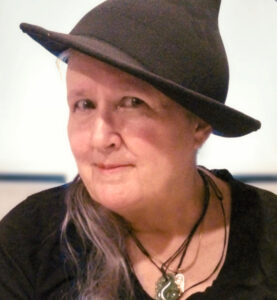
Mercedes Lackey, recently named the 38th Damon Knight Memorial Grand Master by the Science Fiction and Fantasy Writers of America (SFWA), was born in Chicago Illinois on June 24, 1950. The very next day, the Korean War was declared. It is hoped that there is no connection between the two events.
She was raised mostly in the northwestern corner of Indiana, attending grade school and high school in Highland Indiana. She graduated from Purdue University in 1972 with a Bachelor of Science in Biology. This, she soon learned, along with a paper hat and a nametag will qualify you to ask “would you like fries with that?” at a variety of fast-food locations.
After spending time in jobs ranging from artist’s model to lab technician at the Mosquito Genetics Project to short-order cook, she took training and became a computer programmer. About this time she discovered science fiction conventions and the Society for Creative Anachronism, and began attending functions of both, more often in costume than not.
She had always written from her early teens, and developed this hobby by writing fan-fiction for various amateur magazines. In the 1980s she took a job programming computers for a major airline and as a consequence moved to Oklahoma, where she continued to write. At this time she met both Marion Zimmer Bradley (author of The Mists of Avalon, and .C J Cherryh, both of whom helped mentor her from the ranks of the amateur into those of the professional writers.
In 1985 her first book was published. In 1990 she met artist Larry Dixon at a small dcience giction convention in Meridian. Mississippi, on a television interview organized by the convention. They began working together from that time on, and were married in Las Vegas at the Excalibur chapel by Merlin the Magician (aka the Reverend Duckworth) in 1992.
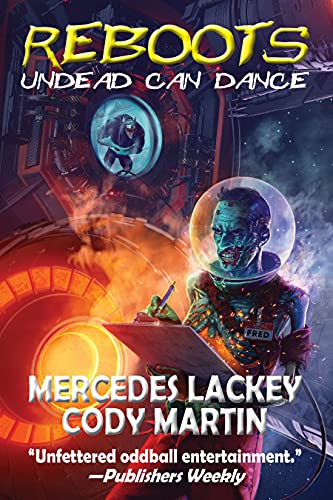
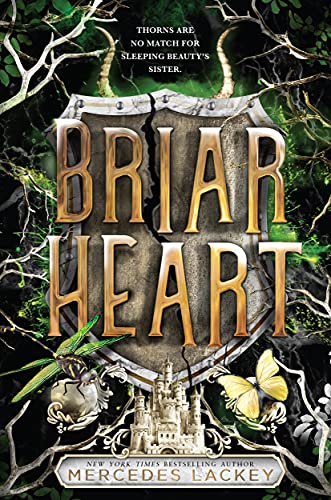
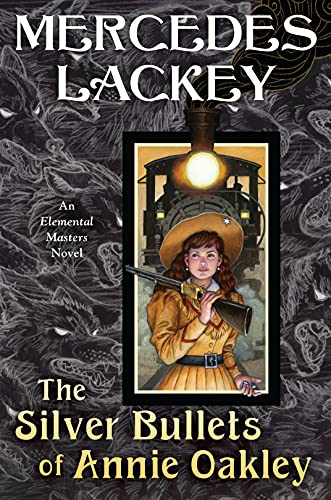
They moved to their current home, the “second weirdest house in Oklahoma” also in 1992. She has many pet parrots and “the house is never quiet.” She has 144 books in print, and publishes between five and six books a year, alone or in collaboration. Some of her foreign editions can be found in Russian, German, Czech, Polish, French, Italian, Turkish, and Japanese. She is the author, alone or in collaboration, of the Hunter, Heralds of Valdemar, Elemental Masters, Secret World Chronicles, 500 Kingdoms, Diana Tregarde, Heirs of Alexandria, Obsidian Mountain, Dragon Jouster, Bedlam Bards, Shadow Grail, and other series and standalone books. In November 2021 she was named the
She has continued her hobby of costuming. She also does art-needlework and beadwork, sometimes combining these hobbies with her doll-making, usually sending these as gifts or to charity auctions as well. She always has several of these projects going at any one time, because they give her the opportunity to think about her stories while her hands are busy. Occasionally she costumes porcelain dolls as one of her characters to be sent as charity auction pieces. Her current project is a set of Secret World Chronicle dolls.
A night owl by nature, she is generally found at the keyboard between 10 p.m. and 6 a.m.
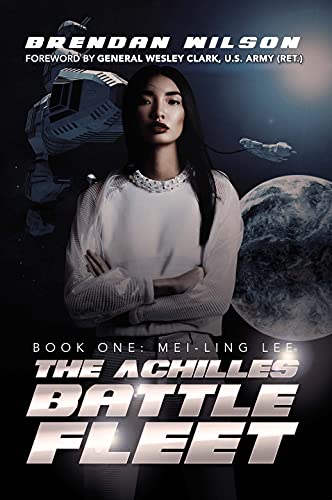
An hour-long interview with Brendan Wilson, former Army ranger and paratrooper and NATO defense planner and diplomat, master martial artist, and author of The Achilles Battle Fleet, Book 1 in the Mei Ling Lee Trilogy.
Following 25 years of military service as a US Army ranger and paratrooper, Brendan Wilson retired as a lieutenant colonel and then joined NATO where he served as a defense planner and diplomat for the next 15 years. During the course of his 40 years of work as a soldier and diplomat, he saw service in war-torn Libya, Ukraine, Kosovo, Bosnia, and Iraq. A former coach and team captain for a military martial arts competition team, he holds master ranking (8th Dan) in three different martial arts, and won the silver medal in the 2009 US Open for Taekwondo.
In retirement Wilson turned his efforts to filmmaking. He wrote and produced two award-winning short films (Doug’s Christmas, A Child Lies Here) and served as executive producer for ten episodes of the award-winning web series, Greetings! From Prisonstarring SNL’s Chris Redd. Moved by seeing human lives upended in war-torn areas, Wilson is earning his law degree and, once qualified as an attorney, plans to volunteer to help refugees. A former assistant professor who taught military history and the Univerity of Colorado, Wilson holds a Ph.D. in international relations and has about a dozen publications on defense-related topics. He is the father of two adult children.
Wilson lives a quiet life in Sycamore, Illinois. He spends his days writing, hiking, studying law and practicing his martial arts. The Achilles Battle Fleet, the first book in the Mei-Ling Lee Trilogy, is his first novel.
The First Novel of the Mei-Ling Lee Trilogy
Naval Academy martial arts champion Lieutenant Mei-Ling Lee serves in a backwater assignment as an aide to the inspector general of a rag-tag group of starships thrown together as a convoy evacuating civilians from a contested area of the galaxy. When the convoy is attacked, she finds herself thrust into the center of a galactic struggle as the chief of staff for the newly formed Achilles Battle Fleet. As the conflict continues, Lee is forced to draw upon her martial arts skill and her inner strength as she fights alongside the Fleet’s marine commando unit. Struggling with budding romance, new friendships and startling betrayals, Lee becomes the warrior she was meant to be.
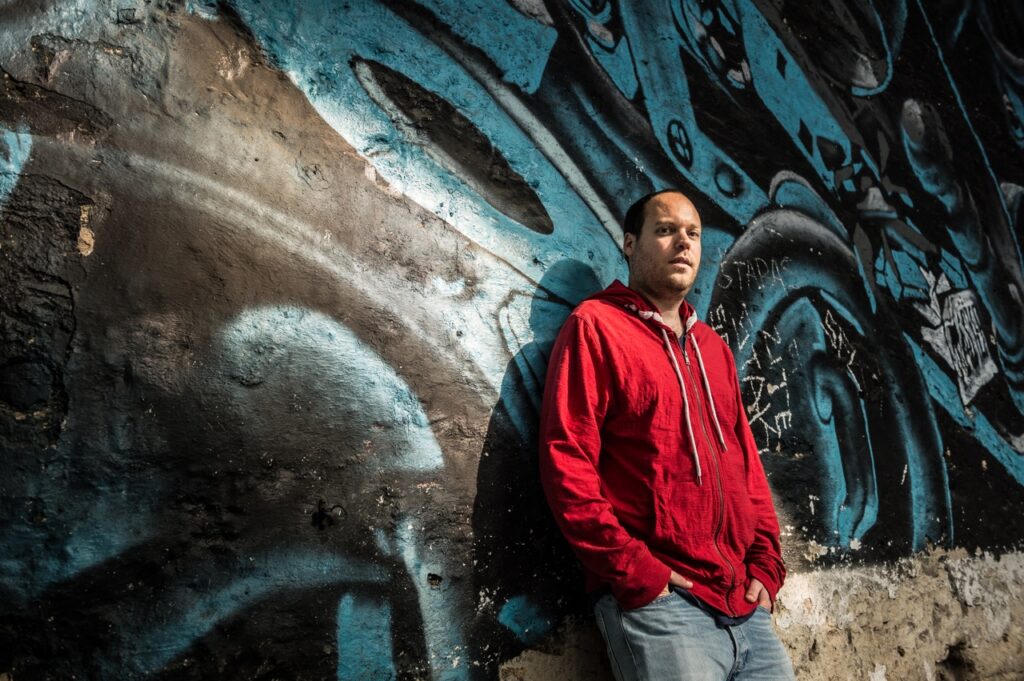
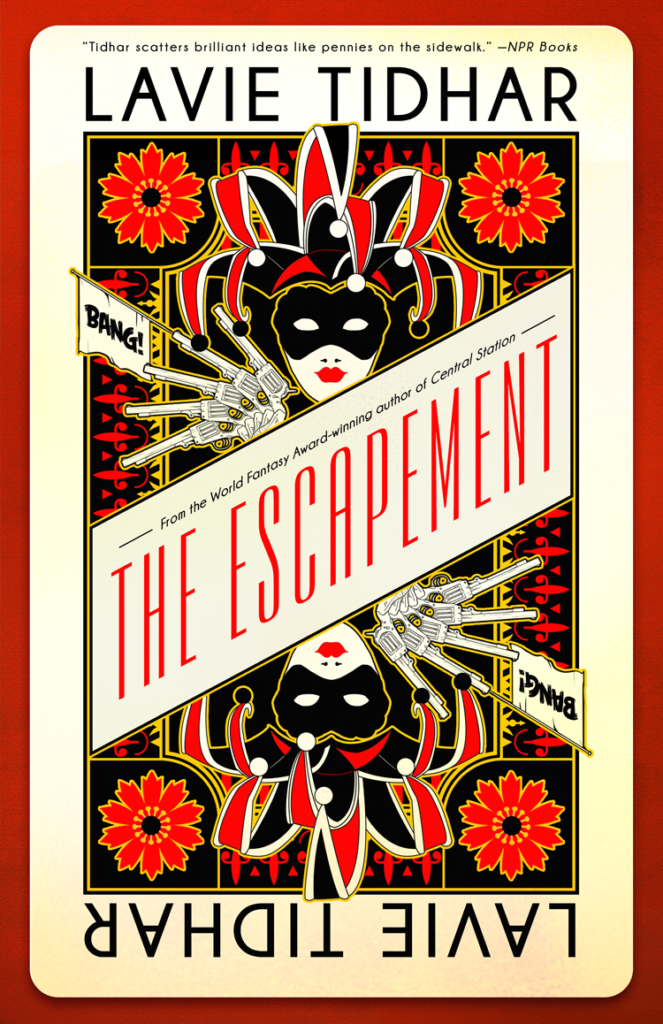
An hour-long conversation with Lavie Tidhar, World Fantasy Award, Jerwood Fiction Uncovered Prize, Campbell Award, and Neukom Prize-winning author, speaker, and book columnist for the Washington Post, about his creative process, with a focus on his new novel The Escapement (Tachyon Publications).
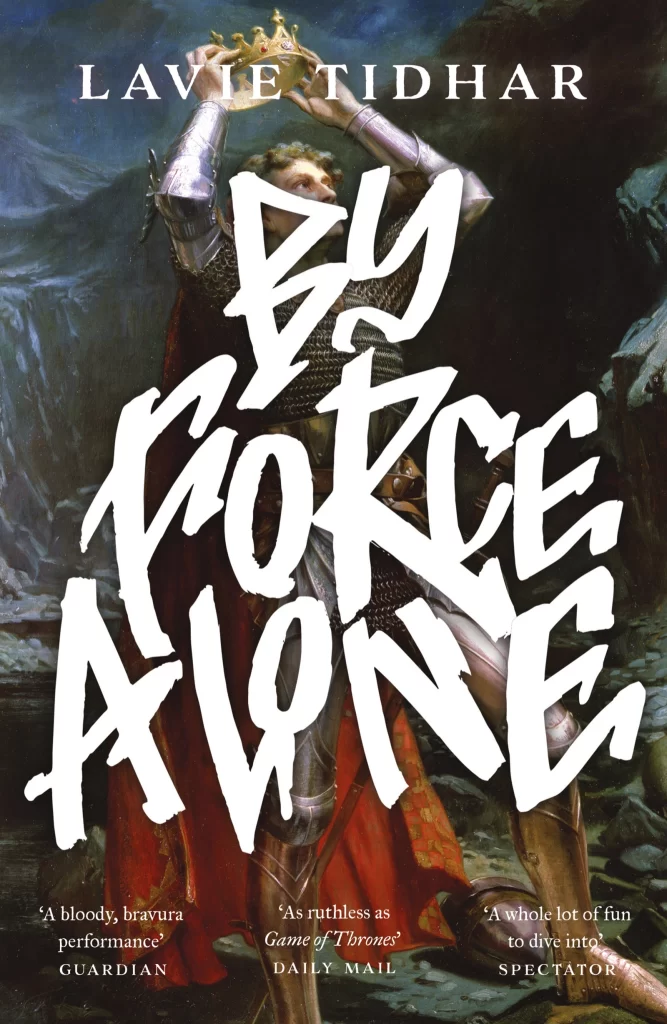
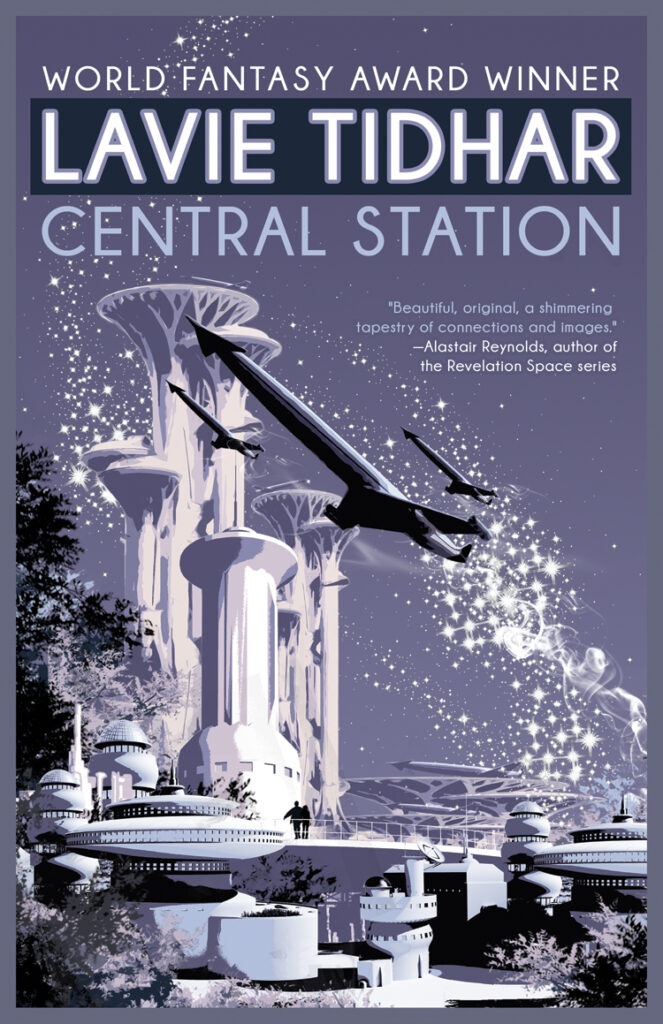
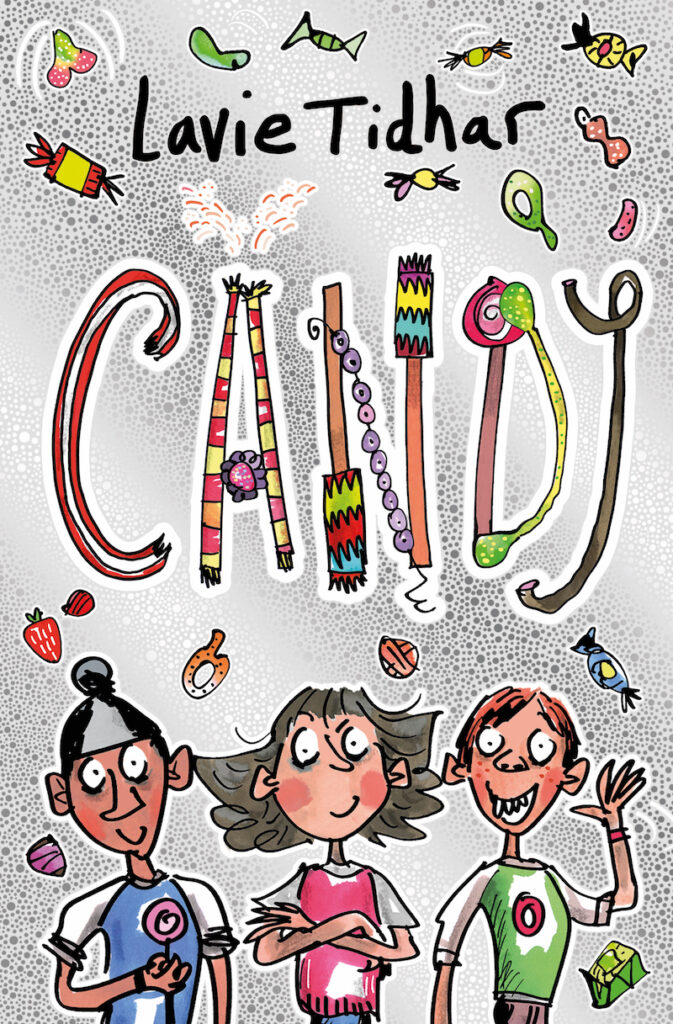
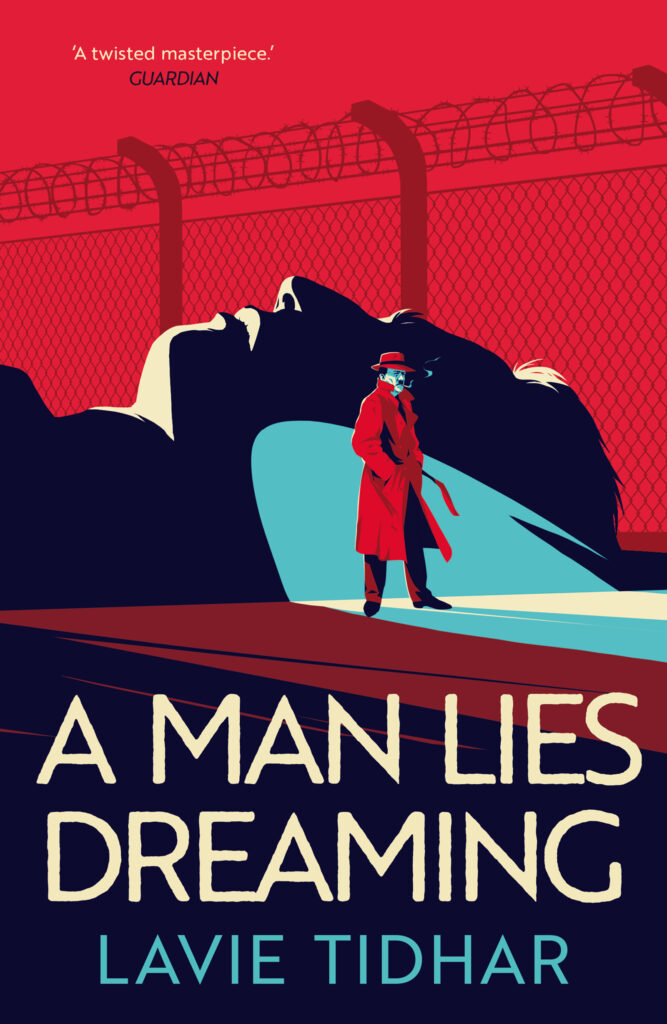
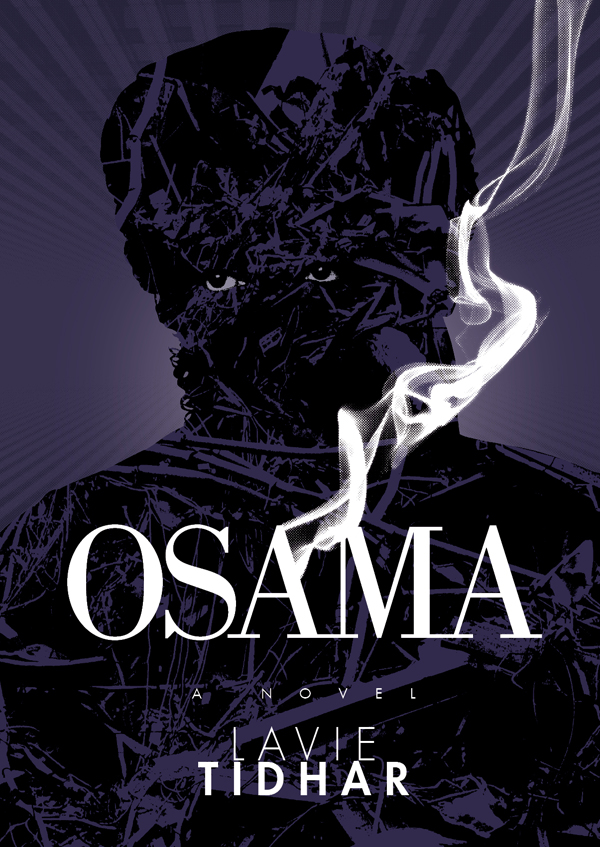
Lavie Tidhar is the World Fantasy Award-winning author of Osama (2011), Seiun-nominated The Violent Century (2013), the Jerwood Fiction Uncovered Prize-winning A Man Lies Dreaming (2014), and the Campbell Award and Neukom Prize-winning Central Station (2016), and Locus and Campbell award-nominatedUnholy Land (2018), in addition to many other works and several other awards. His latest novel is The Escapement (Tachyon Publications). Other recent novels includeBy Force Alone (2020) and debut children’s novel Candy (2018 UK; as The Candy Mafia 2020 US). He is also the author of the comics mini-series Adler..
Lavie works across genres, combining detective and thriller modes with poetry, science fiction, and historical and autobiographical material. His work has been compared to that of Philip K. Dick by the Guardian and the Financial Times, and to Kurt Vonnegut’s by Locus.
Lavie’s media appearances have included Channel 4 News, BBC Radio London and others. His speaking engagements have included a wide range of events, including for the Ministry of Defence, Cambridge University, English PEN, the Singapore Writers Festival and various Guest of Honour appearances in Japan, Poland, Spain, Germany, Sweden, Denmark, China and elsewhere. Occasional commissions include work for Conde Nast, Braingle/Puzzle Tales, I Speak Machine/Penguin Random House, the Tel Aviv Museum of Art, the Jewish Museum Berlin and New Scientist.
An hour-long conversation with Christian (Miles) Cameron, author of more than forty novels, including the just-released epic space opera Artifact Space (Gollancz).
Christian (MIles) Cameron was born in Pittsburgh in 1962 and graduated from the University of Rochester after an outstandingly long undergraduate career. He served in the US Navy onboard aircraft carriers and elsewhere, and then moved on to a writing career.
He’s written over forty novels, including The Red Knight from Gollancz and Killer of Men from Orion Books. His latest novel is Artifact Space, an epic space opera set in the not-too-distant future.
He lives in Toronto with his wife, daughter, and too many cats.
The Automated, Lightly Edited Transcript
(Check against recording before quoting)
So, Christian, welcome to The Worldshapers.
Well, thanks for having me. Should I call you Edward or Ed?
Ed is typical. Edward is my formal byline. Ed is what most people call me. And Eddie is what people called me until I left my hometown, so when somebody that calls me Eddie, I always know they knew me back in Weyburn when I was a kid or a newspaper reporter there.
So, what is a very useful, fabulous lesson I learned from my grandmother was to never refer to anyone by their diminutive unless they told me to.
Yeah, that’s good advice. So, I’m very happy to have you on. You have a very interesting background and an amazing collection of books. And we do share a connection through Mickey Mikkelsen at Creative Edge Publicity.
Yes.
And I always look for connections. This is not much of a connection, but I know that you were in the Navy in the US and I have a nephew who was in the Navy. And I know that the new book that you’re going to talk about had some inspiration from aircraft carriers. And my nephew served on the Harry S. Truman for, I think, two tours. So, there you go. That’s not much of a connection but it’s something.
So, here’s our age difference. Your nephew would have been going on board an aircraft carrier that I’m pretty sure was commissioned the year I left the Navy.
Well, he’s quite . . . I think he’s quite young, actually. I guess he’s forty something now, but we won’t talk about age too much. I’m pretty sure I’m still older than you. So anyway, so let’s start, as I always like to do with my guests, taking you back into the mists of time, and find out a little bit about your background and, you know, where you were born and grew up and how you got interested in writing—it usually starts with reading for most of us—and especially in writing . . .I mean, I know you write historical fiction as well, but especially in writing fantasy and science fiction stories. How did that all come about for you?
So, I was born in Pittsburgh, Pennsylvania, in the USA, and I’m going to drop a dime right off on my mum. My mother was an actress and a voice actress or actor, we say now, her whole career. And one of the things that she was just glorious at was reading books aloud. And she read me The Hobbit when I was, I think, five. And it was such a success. We were in Tobermory in Canada on summer vacation and she read The Hobbit. And some days my dad would read to and, you know, he was an actor and a director and also had a good voice. And it was such a success that we moved straight on to The Lord of the Rings. And I fully admit that I did not really understand very much of The Lord of the Rings at age six or seven, but I really loved it. And I still, when I reread The Hobbit and I still reread The Hobbit and The Lord of the Rings, I can both hear my mom’s voice. But also remember just the sheer sense of wonder, like I could never go back.
And I’ll just add this story when I was in first grade, so, like seven. The year after being read The Hobbit during summer vacation, we were learning to read like good little first graders in Iowa. And I lived in Iowa at the time. And they handed us these terrible storybooks. And I was like, my mom just read me The Lord of the Rings. I don’t care about Mr. Penguin. And I don’t think I ever went back to Mr. Penguin. And that actually caused me some troubles in first grade. But anyway, that’s where my love of fantasy started. It was like the first book I can remember, and I started right from there.
And continued. Any other books growing up that had that kind of impact on you?
Yeah, so weirdly, I mean, this may be too much information, but I was kind of late to reading. I was a very outdoorsy kid. You know, I’d spend my summers on a farm in upstate New York and where my grandmother, in a very traditional and somewhat 1930s way, would sort of kick me out of the house at nine in the morning and say, don’t come back till four thirty and that sort of thing. That sounds terrible. It was actually quite loving and fun. And I learned to, you know, make a fire and make my own cup of tea and all those things. So, my dad was worried that I wasn’t reading enough. And so, I think at age 10 or 11, he offered to buy me a model I wanted to build if I would read this book. And he handed me a copy of The Three Musketeers, which he had paid a quarter for at our church sale. And man, what a revelation. It turned out that The Lord of the Rings wasn’t the only book in the world. And, you know, I read The Three Musketeers because I was made to and then I can’t remember ever not reading again.
And my dad was a writer. I don’t know if you’re aware of that, but my dad was a writer his whole life. He just passed away a couple of months ago. And part of being a writer in those days, I kind of wish it still was, was that his various agents and publishers would just send him crates of books, not his own books, other people’s books from the same publisher. And so, we would always have these crates of books laying around the house with kind of utterly random books like romance novels, mystery novels, crime novels, thrillers, potboilers that no 14-year-old should have been reading at the time. And I would just read my way through the latest crate of books, and that caused me to kind of love genre fiction of all kinds, not just fantasy. And it also probably helped my vocabulary. And mostly it really caused me to fall in love with historical fiction and a particular writer, Dorothy Dunnett, whose work I still think is amongst the best ever, ever done.
So, when did you start writing?
Well, so, when I was 17, I wrote a novel, which I still have right here in this house, and you will never see it.
My first one’s right here on my on my desk.
Good. Well, it was my attempt to channel the American Revolution, which I was in love with because I had started re-enacting, as a fantasy novel with vampires. Need I say more now?
Abraham Lincoln with vampires. Wasn’t that a movie not that long ago? Wrong war, I know, but . . .
So. Yeah, well, this was more sort of George Washington with vampires. But even then, even that’s not really fair because it wasn’t really the American Revolution. It was a sort of fantasy. Eighteenth century. I don’t know if you’ve ever read Ellen Kushner’s Swordspoint, but she did it much better than I did anyway. It was really bad. But I keep it around from time to time and look at it and go like, “Wow, that’s really bad.” And that was my first attempt to write a full-length novel. And I hand wrote it on notebook paper and it was 217 pages long. So, I figured, OK, I could write a whole book.
And then, when I was in the Navy later, on night watches sorry, Navy Anti-Terrorist Alert Center, we copied in message traffic that had to do with terrorism from all over the world. And we basically built a file for senior politicians and military leaders to read in the morning. And so, it was a night watch that was important and involved a whole lot of, like, reading and analyzing. But some nights, thank goodness, there was no terrorism. And I finally sat down and wrote a novel which we will call Elves in Space. And it was also really, really bad. I was trying to be C.J. Cherryh and it turns out nobody can be C.J. Cherryh but C.J. Cherryh. So, you know, there you go.
And that was the end of my writing career until an afternoon camping with my dad. We were fishing in the Adirondack Mountains. And I said, “Dad, I have an idea for a novel.” Now, I would say that to my dad sort of every summer because he wrote novels and I always meant for him to write them. And when I said this, I was a full-time clandestine operations officer, which is like being a spy. And I had had an idea for a spy novel. And my dad said, he would always say, “You should write it.” And I feel like, “I’m not a writer. You’re the writer.” And then on this occasion, he said, “We should write it.” I’m like, “Whoa, that’s a great idea,” so we wrote that novel together and then we wrote seven more books together and we published all of them, and that’s how I became a writer.
Well, that long stretch in there when you weren’t writing, you were clearly doing some very interesting things. What else are you doing through there besides writing?
The truth is, I was writing a ton. So, being an intelligence analyst, which I was first, is really all writing. And, in fact, if you think of the Navy Anti-Terrorist Alert Center as a newspaper that just happens to be highly classified, you’d pretty much have it pegged. So, we were responsible—and this is like 30 analysts and some other officers—we were responsible for producing 50 to 100 pages of articles a day. And I was eventually the commanding officer of that, and that made me the editor of a newspaper, but before that I was just one of the analysts that, I would write articles all day, every day that the various, the sort of editorial staff, would decide if my articles were worth reading or not. So, that was like an incredible training school in writing quickly and accurately, in doing research and doing research that was accurate. And yeah, so that was writing. But yeah, I did other things before that. I flew off an aircraft carrier for three years. I don’t think that’s what my detailer thought I was going to do. Detailers in the Navy are the people who assign you your career. I was supposed to be an intelligence officer, but my squadron commander, thank heavens, decided that I would be better utilized learning how to run radars and sit in the back seat of an airplane and do things. And by sheer luck, and I have been a very lucky person, and by sheer luck, the skills that I sort of trained in were very valuable in the first Gulf War.
So, I got to fly a lot. And that was really exciting and interesting and way more what I joined the Navy for than the being an intel officer, being an analyst was. And so, I did that for a number of years and that was very interesting. And I got to go to see and, you know, I don’t know if you’ve read a lot of my books, but I love the ocean and I love being at sea and sort of living on an aircraft carrier is the best way to be a tourist. We went all over the Mediterranean and Middle East and stopped at dozens of liberty ports. And I really enjoyed that. I had never been outside the United States except to go to Canada when I joined the Navy. And suddenly, I was in France and Israel and Spain and Italy and Palmerton, America and Jerusalem. And it was just fabulous. I really enjoyed to travel and I still do. And I think travel is incredibly formative. So that was all good. And then, yes, I was after that at the Anti-Terrorist Alert Center. I sort of went to the darker side of intelligence operations, and it is a little bit dark, where you recruit assets and do all that spy stuff, which I then did for some number of years before falling in love with a Canadian, marrying her and moving to Canada. The End.
It was going to ask about your connection to Canada as well.
Yeah. So probably my greatest lifetime passion, in addition to writing, is re-enacting. And for thirty-five years I re-enacted the American Revolution and I have almost always done either British or Loyalists, not so-called Americans or Patriots or whatever you want to call it, the side that ended up winning the war and forming the United States. Continentals, we might call them. And because of that, I spent a lot of time with aCanadian group called the Kings Royal Regiment of New York, which is a name that always makes Americans smile, Kings Royal Regiment of New York. But it was a real loyalist regiment during the American Revolution that fought bravely to protect their homes from the insurgent rabble who were trying to burn them out of the Mohawk Valley. I mean, that’s one way of telling the story. And they were Canadian, and I spent a lot of time with them. And eventually, I married one.
I’m going to go back to the the analyst work, I was a newspaper reporter and a newspaper editor, you know, not classified, but what I found during those years when I was doing that was, you know, that writing every day . . . and it didn’t matter that you weren’t writing fiction, just the mere act of putting words down on paper . . . I always found very helpful. Has that been, looking back on it, do you think that really was a huge contributor to your ability to, obviously, tell stories prolifically?
Now I do. And what I’m about to say may go against the grain for some readers. And I apologize. I don’t I mean, no offense to anyone, but I believe that the fact that I almost never have anything even vaguely resembling writer’s block is because the Navy taught me to write every day whether I was happy or sad, hungover or feeling great, whether I’d had my workout or not, had my workout, whether it was four-thirty in the morning or four-thirty in the afternoon, because I had a daily production quota. And it’s the military. No one cares whether you feel good. That’s not really true. I always had pretty good commanding officers, but you have to produce whether you’re feeling good or not. And that turned out to be a very useful lesson.
Well, the newspaper business is similar because the newspaper comes out on a specific . . . it was a weekly, but it came out on a specific day at a specific time, and you had to have the stuff ready. There just wasn’t any other option. So, I’ve always said that that work helped me not have writer’s block either. So, it’s interesting to hear. Did you ever have any formal fiction writing, training of any kind?
None whatsoever. I when I was in university, I had a fabulous poetry-writing course at the time I wanted to be a poet. Just let’s blur past that. But let’s just put that in the same drawer with the not-very-good first two novels I wrote, some not-very-good poetry. I wrote a couple of pretty decent poems and convinced myself I was going to be a great poet. Many people do, I find. But that class taught me a great deal of what I know about writing, sorry, about what I know about writing imagery. And, you know, writing imagery is a definite tool of the trade. I will confess to you that my dad, who, like I say, was a professional writer and who taught university for most of my adult life, was contemptuous, would be a good word, of writing courses and believed things that I don’t necessarily believe myself, and yet I probably have been influenced by them about, you know, learning to write and the relative importance of, let’s say, a university degree or university training and writing as opposed to rich life experience or whatever. And so, no, I assumed all that. I did medieval history in university.
When you started writing with your dad, were those historical novels?
No, those were spy novels.
Right, right.
We wrote eight of them together, which was super funny because I was, in fact, an intelligence officer while I wrote the first three of them, like an actual functioning intelligence officer. So, every word I wrote had to be passed through a security program before it could be published. And that that was an additional wicket that no author needs to have ever.
And I also want to ask you about the other thing I found on your Web site, looking at what you have to say there, and that’s the martial arts and historical combat aspect of all this. It seems like you’ve tried a lot of different kinds of martial endeavors.
Yeah, I did that . . . again, at the risk of sounding like a maverick, I think at some level they’re all kind of the same. They’re all simulations. And the more of them I do, the more I think like, “Oh, this is kind of like that one, which probably just shows what a dilettante I am.” Yeah. I started fencing after I watched a movie of The Three Musketeers when I was twelve years old, with Michael York and Michael Walsh.
I love that one!
Yeah, well, it’s probably got some of the best fight sequences in terms of authenticity ever filmed, because William Hobbs was the fight director and he was incredible. However, what I was going to say is, my dad, who is always full of surprises, revealed after the movie was over that he, in fact, had done a fair amount of fencing and stage combat and would I like to learn? And I’m like, “Yes!” So, we made swords out of aluminum because that’s what dad knew from the stage-fighting world. And we broke each other’s fingers for a while. That wasn’t so good. And then, I mean, it was totally fun. And then I went into the world of what we now call classical fencing or Olympic fencing, which I enjoyed thoroughly. And I was not quite good enough to make the big time, but I was pretty good.
And then, I don’t know, I sort of dropped the whole thing for a few years. And when I was in the Navy, of all things, I found lots of fencers in Washington, D.C., and went back to fencing. And I’ve never stopped since then. And so. in the ’90s, what we now call Western martial arts, which is not a term I particularly love, suddenly got very popular and people started researching all of the old European techniques. So ,I think when we say martial arts to each other, we conjure up visions of samurai and, you know, sort of Asian martial arts, and goodness knows, I’ve done some Asian martial arts and found them very enjoyable, I can do Aikido and I’ve dabbled in a couple of others. And they are most excellent. Um, but the little historian in me, the little re-enactor in me. I always had questions., I’m going to use Kendo as an example, and I was like, “I don’t think this is the way you would train to fight with a katana, any more than the fencing foil is the way you would learn to fight with a small sword or a rapier. I think this is pretty fossilized,” I thought.
Now, it turns out that now there are fabulous researchers in Japan and Korea and other places who are doing all the research to indicate what the roots of Asian martial arts are. But that wasn’t sort of around in the 1970s and 80s. And so, I was sort of just swimming along in the in the cultural artifacts of the time. Yeah, I can probably go on for too long about martial arts. I did some of them. And then I mostly continue doing Western or European fencing until the historical martial arts movement caught me. And then I was really excited. And I’ve landed in the 14th century Italian art of fighting and armor, which I adore, and which to me is sort of the culmination of all the things I ever tried to learn. And it’s I won’t say it’s sad. It’s just real life. But I’m about to age out of it. You know, I’ll be 60 in a year. I’m a little more brittle. I don’t bounce as well. Wearing 80 pounds of chain and plate is a little harder than it is for the 35-year-olds.
I think I’m three years older than you, so . . .
Yeah, and the last couple of times I fought in a big competition . . . so, speed degrades. Everybody knows this, from runners to tennis players, but the skill will compensate for speed up to a point. And then, yeah, last couple of competitions, I sort of hit a point where it’s like, oh, I see, any 25-year-old who’s fast can now pretty much beat me unless I’m boringly super cautious, which is sadly not my normal characteristic. So, that’s fine. I don’t mind losing. I do mind always losing. I’d like someone to create a seniors’ league for old knights. But anyway, it is great fun. It is, of cours,e a huge part of my writing. And yet I want to say to your listeners that to me it is key to understand that every martial art ever. No matter how it bills itself, they’re all simulations, none of them are real, none of them are like real fighting. And that that’s super important to remember as a writer. Like, you can get structure and so on out of. Almost any martial art, and you can imagine how a fight would work, and that’s extremely useful, and I think the more fighting you do, the easier it is to imagine this happens than this happens. And this happens in logical terms that are easier to write. All that is true. But years ago, I received a damning piece of praise from an SS officer in Great Britain who wrote and said, “I love your Greek novels, but you got to know that all of us who have actually killed people hand to hand, we don’t remember how we did it and we don’t think about it when we’re doing it.” And I was like, “Yeah,” and I’ve now heard that from enough other people. So, all of this careful description, especially first person, like, “I did this and then I did this and I did this.” Yeah. That’s not what happens in their mind. And it’s all got a certain element of construct to it.
There’s a group in Vancouver that does sword fighting and all that sort of thing, and I was at a convention out there and I actually somehow ended up on a panel about writing, writing fight scenes with all these people who actually did all of that. And one of the comments that came up at some point was, well, you know, everything happened so fast that you don’t necessarily need to describe all of that detail, depending on your readers are, I guess, and what they’re expecting. But I think what my take-away was, if you can’t be accurate, be vague. That’s what I came away with.
Yes. It seems it’s it’s funny. Maybe it’s not funny, but I have started to write more and more . . . sorry. There’s an author whose work I love named Patrick O’Brien, he writes historical fiction, wrote historical fiction. And he had a tendency to elide over fight scenes. He had a tendency to say like, “And then it happened and then so and so was dead,” and that can be very effective and I’ve now found times when that’s how I want to write it, especially because, and this is, “I’m going to stand on a soapbox here and it might be boring, but there’s a cultural meme throughout the English speaking world, which I’m just not that fond of, and that is that whether it’s James Bond or Captain America, the hero has to have the crap beaten out of him before he can win the fight. Ah, you know what I’m talking about.
Mm-hmm.
And sadly, my experience of both martial arts and actual war suggests to me that that’s nonsense. If you get the crap beaten out of you, you lose the fight. And I just can’t write those scenes. So instead, I’ve started wandering off in the direction of fight scenes where the more skilled person just wins, which is fast and often maybe a little dull. And as I said on a panel at Worldcon a couple of years ago, you know, “Sometimes writing a fight scene should be like writing about a master carpenter using a hammer, which is not that exciting, you know, and then he hit another perfectly placed nail perfectly and then another one.” And we’re titillated by the idea of violence. But like, when you watch somebody who’s really good . . . I once watched a Navy SEAL use a submachine gun on a target range. And I had never fired a submachine gun at the time. And I had a great deal of trouble hitting a man-sized target at about fifty feet. And they called in this guy whose name I never learned, and he in one magazine put two or three rounds into each of five man-sized targets just by sort of waving his gun over it. And I said, tried to say something witty, like, “That wasn’t luck, was it?” And everybody just looked at me and I thought, Like, I see. That’s what you guys spend your life learning to do. And that’s why people like me would just die entering a room there. And I know that doesn’t make a good story because the plucky hero is supposed to be able to overcome years of skill with bravery. But yeah, anyway, it’s my soapbox.
OK, well, let’s go out and talk about your writing process, and we are going to focus on the new science fiction novel that’s coming out in June, called Artifact Space. And maybe the first thing to do is to give a brief description of it so people will want to rush out and read it.
Well, so, we all love genre titles. And I’m going to say unashamedly it’s space opera and it’s space opera based on four things. Hopefully this will excite everyone. One is a conversation I had with Alistair Reynolds about aircraft carriers and about how aircraft carriers kind of resembled giant spaceships. And he and I were sitting next together. I was being a fan—boy, I adore Alistair Reynolds’s writing—at Gollancz Fest in London. And he said, “I hear you were on aircraft carriers.” And that was all we talked about for the rest of the time. So that conversation sort of put in my mind, like, “Aircraft carriers in space. I wonder if there’s something there.” And then, last January, just as Covid was sort of beginning to exist, I was reading about the Venetian great galleys, the huge galleys they sent around on trade missions in the 15th century, and Venice had them, too. And I was fascinated by these huge galleys and how, you know, they went all the way to London and all the way to Antwerp and all the way to Alexandria, and the crews would sort of know all these people. That is the Middle Ages, where you don’t think of people traveling. And yet, even the oarsmen—who were not slaves, they were pretty well paid—are sort of going all over the place, from Egypt to Spain to England to Antwerp. And that cooked away in my mind. And then, just before Covid closed the theaters, my family and I went to see Little Women and I was sitting in my seat . . . I enjoyed the movie thoroughly, in case you care. But sometimes, I’m sorry, it’s a phrase from a ballet instructor friend of mine, she says, “Art makes art.” And I was enjoying this movie thoroughly, but in some part of my mind something was cooking, and suddenly I had the whole book in my head, like late in the movie, it’s related to a particular speech one of the characters gives, and it’s sort of about feminism and sort of about roles. And anyway, the whole thing, all the characters popped into my mind. It was done.
And it’s a space opera about long-range trade in the not-very-far future when everything has gone wrong on Earth and a heroic generation, a sort of golden generation like we think of the World War Two generation, got people off Earth into our ships, found other worlds, settled them, and in the process, lost a lot of contact with each other and with culture. So, what’s holding them together is these giant trade ships for a while. And when my novel opens, we’re actually almost at the end of that period. New technologies are being discovered, science is reborn. And I tried to give the novel a very, if you’ll pardon me, 18th century feel, that feeling of the Age of Enlightenment and everything being a little bit new. Time to throw over the old time, to look carefully at assumptions and decide whether they’re real or not. So, it’s like old-new old-new science-fiction space opera.
Well, that pretty much covers the first question, which was, “Where did the particular seed of this novel come from?” But looking at all of your novels, is that very typical for you, or is there any typical way that you get ideas for novels?
So, I’m always inspired by something, and it’s usually by history. I will say that Artifact Space, like one of my historical novels, Killer of Men, literally, it’s as if it was inserted into my brain. I wrote Artifact Space in 46 days. I wrote Killer of Men in, I think, 51 days. And that it’s like divine inspiration. I assume this is what the Greeks meant when they spoke of divine inspiration. It’s like someone is dictating to me and I’m just getting it down, which is a very different feeling from other books.
My most recent historical books are a pair of novels called The Commander Series—I’m not sure I chose that name—about Philopoemen of Achea, who, in addition to being a general—and he was a great general—was a master politician and, you know, sort of saved the Greek world for another 50 years from the Romans and various other competitors and created our modern idea of federal democracy, which probably is why anybody remembers him today. And those novels did not come to me by divine inspiration. I mean, they did. I was standing in Delphi with a tour looking at at the stone dedicated to Philopoemen. And I always get this feeling in Greece. It’s the most amazing thing. You know, there’s Philopoemen’s name. I can read ancient Greek, but it’s very hard carved in stone in all caps. And yet his name jumped out at me from like 20 feet away. And I always get this feeling like, “Oh, so it’s all real.” It’s hard to explain, but it’s as if one was somewhere in the deep forest and when suddenly found proof that The Lord of the Rings had actually happened. And that makes no sense for someone who loves history as much as I do. But I looked at Philopoemen ‘s name and went, “Wow, that’s real.” And that was so deeply inspiring. Call me crazy, but I had to learn all about him and read everything that had ever been written about him. And then I had to write a novel about him that took tons of research and time and effort and was not divine inspiration. That was just work. I mean, it wasn’t unpleasant work, but it was work. And that is a very different feeling from the feeling that I had about Artifact Space.
So, once you had the general idea, you wrote it, and the muse was dictating it to you. But did you do any planning ahead of time? And do you normally do some sort of planning or outlining?
These are questions, by the way, and you know, I’ll do my best for you—as I grow older, I do more planning. Artifact Space defied that. Nothing needed to be planned because, like I say, it was in my head and I had the whole thing beginning to end. But since I wrote the Red Knight series, the Traitor Son series, I now write much more extensive outlines and much more detailed character summaries and arcs. And that’s actually an artifact in part of the industry, which, you know, agents and editors now require those things, which always struck me as slightly amusing because I’d always go like, “But I’ve produced twenty-six novels already. Can’t we just believe I can produce a twenty-seventh?” But that being said, as I get older, I just can’t necessarily keep it all in my head and that that is a fact of life. So, it’s much better to write it all down. And so, now I have pages of character. I can tell you that when I was writing the Traitor Son series, all I had was a list of character names so that I didn’t forget them. And in the middle of the series, I learned that I needed to put a plus sign next to people I’d killed off because Phillip Dubos (sp?), a jousting character in the Red Knight series, I killed three times, which was, you know, kind of an error. And yeah. So, I’ve been developing that way.
Outlines I always find very interesting. And I’m fascinated to talk to other authors about this because I have always written some form of outline and then I almost never stayed with them because things happen organically and I just roll with whatever comes to me. And I’ll give you an example from today. I’m writing a fantasy novel right now and today . . . so, I ended yesterday with a pretty big and characterful fight scene, magical fight scene, not a sword fight. And that was good. And what I was supposed to write today was the consequent political follow-on from this duel. And instead, for no reason that I could name, I discovered that I was writing my character, who was badly wounded in the fight, basically lying on a featureless gray plain and discovering that to some extent he was dead and considering his whole life and wondering if he had ever done anything worthy and if he was about to be judged. And it turned out that was all just an artifact of the healing, the magical healing process. And I did not sit down to write that scene, not even sure where exactly that scene came from. But when I looked it over just before you and I started this call, I thought, “Oh, this is really good and far better than the banal political crap I was going to write. So, we’ll just roll with it.”
Yeah, it’s certainly my experience. I mean, I’m typically, with my publisher, I’m writing maybe a seven or eight single spaced page kind of synopsis at the most. Yeah. And then I start writing, but the one I’m writing now, The Tangled Stars it’s called, it’s a space opera as well. Humorous Space Opera I. It’s just not going where the synopsis said it was going. Not exactly. I keep surprising myself with it.
So does that worry you?
It worries me a bit in that this is not one of those books that the muse is dictating to me. I seem to be struggling with that. And I think partly that’s just the change in circumstances and not . . .I tend to write out of my house in a coffee shop or something, and I haven’t been able to do that. And I find I don’t work as well at home, which is odd, but . . .
You and me both, Ed. I’ve just discovered that we are brothers separated at birth. I have a coffee shop I adore. I have written . . .I couldn’t count the books I’ve written there. Eleven? And, you know, because of Covid I’m writing at a dining room table with, until a week ago, my daughter doing her high school homework. My partner has my office on the third floor because she’s working at home. So, she’s going by in both directions. And I don’t mind people, you know, I write in a coffee shop, but somehow, it’s deeply different.
Yeah, that’s exactly been my experience. And so, I’m kind of struggling with it. But yeah, for me, it changes. From what I . . . you know, you have this . . . it all seems so clear in your head when you first think of the book, and you know what’s going to happen. But then as you write it, characters change and things develop and stuff you didn’t even know was going to happen happened. And it influences what’s going to happen further down the road. And so, one of the interesting things on the podcast is asking people that question, and everybody is so different in how it works for them. And I always go back to Peter V. Brett, who wrote The Demon Cycle.
Yeah, yeah. I know him.
I interviewed him, and he writes 150-page outlines before he writes anything of the book itself. And then he’s just basically filling in the outline. So, he’s put all that that work into the outline and then is able to just expand on it without wandering from it. And then there’s other people who just start writing and see what happens.
So, have you interviewed Evan Winter?
No, I haven’t.
I’m lucky in that I think I knew Evan a little before he was famous. And I believe he has said almost exactly the same thing, very detailed. And I mean . . . and that’s great. If that’s what works. I have always been friends with a bunch of other writers, and as you know, because you interview us, no two alike, you know.
Exactly.
But at the same time, I yeah, I wouldn’t write a 150-page outline because things change. Characters change. And I really do, I think I would say, I write by inspiration, it’s not seat of the pants. But my dad had . . . sorry, I’m very respectful of my dad’s writing ability, he wrote 42 books, he won prizes, he was a darn good writer. And my dad used to say there’s an idea and then there’s a book and they’re often very different and that you should never let the idea get in the way of the book. And I have often found that to be true, like I’ll have an idea and I am sometimes fooled and I think it’s a book, I have an idea and it’s usually a character, a situation, a moment, a fight scene, even an artifact, right? And I’m like, “Ah, there’s a saleable book.” No, that’s just a saleable idea. And even if I turn out an outline on it, it’s going to turn out that once I grapple with it really hard, that there was more or less. And sadly, occasionally, the answer is there’s less and I don’t really have a book at all, which is my horror, maybe everybody’s. But more usually, once I grapple with it, I go, “Oh!” So, I’ll give you a quick example. Then I’ll ask you for an example, since we seem to have some of this in common. I finished in March or, you know, earlier than that, the first fantasy novel in a series called Against All Gods. And it’s Bronze Age, and I’m very inspired by the Bronze Age. I’ll leave that alone. Somewhere about a third of the way through, I asked myself, like, “Why do we have so much violence in fantasy fiction?” And just out of nowhere created literally a race and family of pacifists and inserted them into the book, which they then began to take over. And they were not in the outline. They weren’t planned. I had to change the map to make room for them. I had to change the whole way mercantile behavior worked to justify how they survived as pacifists in a very nasty world. Yeah, good times.
I think the best example I have of things changing was a book called Terra Insegura, which is the second book in a two-book series collectively published as The Helix War when they put it out in an omnibus. The first one is Marseguro, because for some reason, I decided to use Portuguese titles, I don’t know why. But there was a character—and I’d only introduced him simply because I needed to have somebody, you know, multiple viewpoints, and there was something happening and I needed to have a character there who could be there for that scene. And then all of a sudden he had this backstory and he had different . . . he was supposed to be, like, the second in command on this spaceship, but he had a different agenda that came out of the backstory I kind of made up on the spot. And the next thing I knew, I was about two thirds of the way through the book, and I had to completely replot to the end of the book because my original plot just didn’t work anymore, because I’d introduced this character simply to solve a writing problem. So, yeah, it’s a fascinating process, which is why I have this podcast.
Yeah, well, it is a fascinating process. And like I say, I know a bunch of other writers and I really enjoy listening to them. And sometimes I, you know, I am capable of changing my modus operandi. And once in a while I hear something from somebody and I go, “That’s a good idea. Oh, yeah, that sounds very professional.” And I’ll just I’ll just take that on board. But what I can’t seem to fix is the difference between an idea and a book around page 250. I usually go, like, “And now it’s a book.”
I use a metaphor. To me, an idea is like this. When you think you have the book, it’s like there’s this shining Christmas-tree ornament, you know, it’s all silver and perfect and everything. And then you take it, and you smash it on the floor, and then you try to glue it back together using words.
That is brilliant!
And sometimes it works and sometimes it doesn’t.
Oh, that’s so good. I will steal that, but not claim it for my own. I’ll give you credit for that. That’s good. Yep. And very accurate. I see that—rarely, talking to other authors—you and I may have a similar creative process.
It sounds like there might be some similarities for sure. Yeah, the books that have really worked for me, you know, I wrote 50,000 words in a week once because it was that sort of being dictated, and a 60,000-word YA in two weeks flat. You know, when it’s really working, it works. Which takes us back to your writing process. Are you . . . obviously you are a fast writer sometimes. Do you think of yourself as a fast writer? And also, you said you like to write in a coffee shop. Sometimes . . . I presume you’re a, you know, you’re clearly not writing longhand anymore like you did when you were 17.
No, no, no writing on a laptop. So, yeah, I didn’t think of myself as a fast writer until I went to my first WorldCon, where I took enormous amounts of teasing for my writing speed and came to the conclusion that I was a fast writer and I will just say, not entirely as a brag, I wrote five books last year. All of them will be published. And I say to younger writers and people who are starting out and stuff like that, that I literally believe that writing is like a martial art. And that is, the more you do it, the better you are at it. And so, I don’t think of writing faster or more as being . . . let me restart that sentence. I think F. Scott Fitzgerald convinced a lot of people incorrectly that there was some magic to the first novel and that you were magically great when you were very young and then you could never really do that again. It was an interesting thing that F. Scott Fitzgerald did, but I’m not sure that that’s a valid way of approaching the art of writing. And I suspect that you get better and better the more of it you do.
I look at people like Jack Williamson, right? Started writing in covered-wagon days and was still going 70, 80 years later. So, yeah, that’s my hope, anyway.
Well, it’s my hope too and, you know, I’m not really just here to plug Artifact Space, but I think it might be the best novel I’ve written. And that makes me happy because who wants to be getting worse, right? Like, it would be nice to think one is getting better even at the advanced age of 58, anyway. Yeah, I think I’m a pretty fast writer, but part of that . . . I find again, because I talk to other writers, I’m not as fast as Sebastien de Castille, who is faster than I am. There are definitely a bunch of people out there who write faster than I do. I find that what I do well is to just sit down and write every day. And we were talking about that, you at the newspaper and me at the Anti-Terrorist Alert Center. But just learning that there really wasn’t any reason not to write. You know, if you only produce 500 words a day but you produce 500 words every day, you’re going to get done. You are going to get done. You just plow through it eventually. That’s not my acceptable output, but I’ve had 500-word days and one of the biggest breakthroughs in my writing life . . . and again, this is something that I tell younger authors . . .it was learning to write in what I call scraps of time for the longest time. And I mean right through the first Traitor Son novel. I believed that I needed four to six hours to make it a valid writing day. And I would not bother writing if I didn’t have four to six clear, uninterrupted hours. And then I suddenly was writing two historical novels and a Traitor Son novel at the same time, you know, all with contracts and due dates. And I went, “You know, what I need to do is, if I only have an hour, I need to produce the words I can produce in that hour so that I just accept whatever time I have.” And that has been a major breakthrough for me because now I could just sit . . . right, I’ll give you an example. In 2014, if I had an interview with you today, I wouldn’t have written this morning because I had a bunch of yard work and stuff to do this morning and I didn’t really get done with it till ten in the morning. And that would make for a two-and-a-half-hour writing day. And it’s not enough time, right? Except instead, I wrote 2,100 words because I’ve learned that whatever time you get is the time you have.
Good advice. I’ve been like that sometimes, and sometimes I’d still let it slip away from me because I know there’s not enough time.
Well, I’m full of useful aphorisms that I don’t always follow myself, too. Please don’t imagine that I am perfect at this. But learning that it was true was very helpful. And I had to admit to myself, even my Navy veteran self, that telling myself that two and a half hours wasn’t enough time to write was actually just one of those excuses. It’s enough time once you . . . I’m sorry. No, you go ahead.
I was going to say, once you have a first draft, presumably, what does your revision process look like to you, a rolling revision, or how does that work for you?
I only have one draft and I do a rolling revision and it works like this. I start each writing day by reading the twenty pages before it and editing and correcting. About every hundred pages, which technically should be every week and a half, but I don’t always write that fast, I go either all the way back to the beginning or at least back 100 pages and do another layer of revisions. And often, by then, I’ve thought of things I didn’t like, which could be as simple as I’ve changed a character’s name or I’ve discovered how I want the alien language to sound or something like that. But it could be quite big. It could be that I’ve decided that that character doesn’t work and she’s got to go. And so, I do that revision. But when I write the last word, the next day, I’ll revise the last 10 pages and then it’s done. And I send it in.
Well, they’re we’re different. I tend to do a full draft and then rewrite from the beginning, although sometimes I have to do one halfway through because just to sort of break through a barrier or something, I’ll go back and do a revision of the first half of the book or something so I can sort of power through some place where I’m stuck. Do you use beta readers or anything like that?
Yes, but first I want to give a plug to my high school. I went to a Jesuit high school, which is funny because I’m not Catholic, but I went to a Jesuit high school and the Jesuits taught writing. And, you know, I was unfair earlier in the interview when I said I hadn’t taken writing classes, because they taught very intense writing classes and we did a ton of writing, I should admit that. But one of the things that they said that stuck with me and, you know, believe it or don’t, Father Abluski (sp?) insisted that usually your first idea is your best idea and you should roll with that. And it’s not always true, but I hear that voice often when I attempted to make a big change and I go like, “Really? Is it really better or are you just doubting yourself?” Anyway, I felt that truth in advertising required me to give some credit to the Jesuits if credit is what’s involved. Sorry. Now ask that last question, please.
Do you use beta readers or does anybody see it before you send it off to your editor?
Yeah. So, given the time it takes editors at Orion and Gollancz to get to a manuscript, I send it out to everyone at the same time because it’s going to be three to five months before my editor looks at my manuscript when I send it, and I know that because I’m a veteran, and so I will send it to my beta readers. So, I have a . . . I won’t call them a legion, but I have a number of beta readers. And dare I say, each of them has kind of a different purpose. Some of them are truly critical. Some of them are more what I would call appreciative. Some of them are big-picture and some of them are nitpicking. And that’s great. They’re like a team and they criticize different things. And they, you know, one beta reader I can think of will tell me what she feels about a novel, which I find shockingly accurate for what future readers are going to feel, you know, over the course of 10 books. And another beta reader is really good at catching story-arc errors. And he has always been sort of my favorite beta reader because he’ll say, “You know, like, I really didn’t believe it when X happened because of this, this, and this you’d already said. And I go, “And you’re right again, Joe. Well done. Thank goodness for you.” And I trust my beta readers. If they say something is flawed, I fix it. I don’t go through long questions with myself or whatever. I just fix it. And pretty much the same thing with editing. I believe in editors. So, Gillian Redfern, my editor at Gollanz, is one of my favourite editors ever. And if she says something has to go, I think nine out of 10 times I kill it, and if she says something, it doesn’t work for her, I believe her. And that’s a decision I decided at some point to roll with. Editors are not idiots.
Yes, I do a lot of talking to young writers. I’ve been a writer in residence at the Regina and Saskatoon Public Libraries, and I’ve done classes, you know, all that sort of stuff. And I do occasionally run into somebody who’s quite terrified of editors and that they’re going to somehow ruin their prose or something and I say, no, not in my experience.
You know, this is literally . . . so, I keep praising my dad. Now I’m going to say something the opposite of my dad. My dad believed that writing was a solitary, bohemian art. A very 1950s sort of ideal of what writing was or is. I think the opposite. I think it’s a team sport and I’m on a team. I’m not even always the captain. I have an editor. I have a copy editor, a copy editor is super important for me because I use, you know, ancient Greek and Chinese and stuff in my books. Got a cover artist, got betareaders. It’s a team, it’s not just me. I am not creating on my own, and it’s silly of me to ignore my teammates if they say something is wrong.
Well, that’s we’re getting close to the end of our hour here, so let’s move on to the big philosophical questions. I’m going to put that in reverb. There’s three. The first one is,. Why do you write? The second one is, why do you think anybody writes, why do human beings, if you want to be that general, write? And then thirdly, why stories of the fantastic specifically. So, you know, three questions.
Do we have another hour? Because I’ve got an hour’s worth of answers. So, I can tell you quite easily why I write. And it’s pretty banal. I love stories and I literally have found that when I don’t have enough to read, I just have to write because I’m literally telling myself a story, and that may sound terrible, but I enjoy telling myself stories, apparently, and I just hope the rest of you enjoy them too. But I couldn’t stop myself if I tried. I have to write sometimes and stories will boil up inside of me because whatever. And then I can kill the urge to write. And this is really weird because, as you know, Ed, we live in a world where we writers get ARCs to read for other people. And in fact, you know, we owe it to other writers to support them and read their ARCs and comment and say nice things. The problem is, the happier I am reading, the less writing I get done, so that I have to cut myself off from reading to some extent to let the story bubble up inside me. So, I want to tell it, so I write it. Anyway, there it is. I write because I want to tell a story and I think that in some ways that is the human condition.
And I’m just going to say, like, I’ve been reading a lot of Anglo-Saxon stuff lately, maybe you’re going to write a historical novel in that era. But also, just, I enjoyed old English in school and I had sort of let it go and I just gone back to it. And it’s been very interesting to read sort of early Germanic prose and the Icelandic sagas, which I’d never read before and stuff like that, and go, “Oh, we really need stories.” But unfortunately, in the age of, you know, antibacterials and Trump supporters and so on, sometimes the stories are wildly inaccurate or even false. And that is a, you know, if there’s an original sin in the human condition, I think it’s the ability to tell an untrue story. And I don’t mean a fictional story. I mean a straight-out falsehood. But we need to collect information, all of us, I think, and we tend to put it into a narrative, even if there’s no narrative. And I appeal to you, Ed, in your life, is your life a narrative or is it a series of events?
I like to think of it as a narrative.
Well, I like to think of mine as a narrative, but I promise you, at times it seems pretty damn random anyway. I think we want it to fit into narrative structure. We want it to be logical. So, we tell stories to force the events into stories. And I think that is a sufficient cause, maybe not a dramatic one, but sufficient.
And then the last question. Um. Why fantastical stories? That is a fabulous question and one I ask myself often, and I’m going to say that the answer is, much as I love history as a source for adventure, plot, character, the truth is that the history of the human race is slavery, degradation, force and horror to some extent to a pretty wide extent, it is very hard to find heroism in history. It’s very difficult to find people who were good. And the more research you do, the more of your own heroes you kill off. That doesn’t mean there’s nobody heroic in history. And I’m not an utter revisionist, but sometimes you want to tell a story about how people succeeded in bettering themselves, for instance. And it’s probably going to be easier to tell that story in a fantasy or science fiction. Or sometimes the opposite. You want to tell how it all fell apart in a dystopian manner and it’s probably going to be easier.
One of the problems that really exists with writing historical novels is that people carry a lot of mythological baggage with their knowledge or their supposed knowledge of history. And that can make writing a historical novel very dangerous. Something as simple as whether Alexander the Great was Greek or Macedonian can lose you readers and also just cause them to turn off and not accept anything else you say. Whereas if you chose to write a fantasy novel about a conqueror who turned out to not be a very nice person, that’s a different kettle of fish and it’s good to go out to a different audience. And I’m a very Aristotelian writer. I believe it is my job to moralize and teach, which I admit is not a popular 21st century point of view, but it is my Aristotelian job to write, you know, The Iliad, with purpose.
Which segues very nicely into the last question, which is, what are you working on now?
Bless you. So I went through a dry spell. It’s funny. I went through a very long dry spell and wrote a bunch of novels in Covid. And then just about the time I started saying to some of my writing friends, “I don’t get it. What is this Covid depression you guys keep worrying about?”, my dad died and suddenly I couldn’t write. So recently I’ve come out of that, and all of a sudden I’m writing two books at the same time. Yes, I am. So, years ago I started a novel which in my mind I called Rangers. And it’s a pretty complicated fantasy novel. And it was meant to be the prequel to Cold Iron and my Masters and Mages series. And I started it because Gollancz said they were going to buy it and then they didn’t buy it. And then I dropped it because I don’t write for free. Suddenly, the other day I picked it up, read it and went, “This is really good. I think this will be my first self-published novel. I think I’m going to experiment with how self-publishing orks.” So, I did that. And at the same time, I am writing the sequel to Artifact Space, which is called Deep Black, and that’s super fun too. And so, it’s been very odd because I’m sort of writing 1800 to 2500 words of each, each day, and I’ve never done this exact thing before and it’s odd.
And Artifact Space comes out June 24 from Gollancz?
It does. Swords in space. That’s my shout line.
And where can people find you and follow you online?
Bless you. So I’m focused on one, on Twitter, and I have invested a lot of social media time on Twitter. I enjoy Twitter. I know not everyone does. I’m @Christian_Cameron_Author on Instagram. And you know, I’m on Instagram every day doing my doing my best to keep everybody interested. Twitter is where I sort of talk about being an author and Instagram is often about martial arts or my other passion, painting little men and women and playing tabletop games. And I don’t really talk as much about being an author, because endless self-advertising is boring as I suspect you have a feeling you may share.
I’m bored by myself all the time.
Yeah, me too. And I have a Facebook author page, but I’ve spent less and less time on Facebook since the U.S. election. I was in the military. I have many conservative friends. I don’t happen to be a conservative myself and sometimes I don’t want to read what they have to say.
Yeah, Facebook can be well . . . yeah. Facebook can be bad for finding out what people you like think about things and you want to keep liking them, so you don’t want to know what they think about something.
Exactly. Exactly.
Yeah. I’ve had that reaction, too. All right. Well, thanks so much for being on The Worldshapers. That was a great conversation. I hope you enjoyed it as much as I did.
I enjoyed it thoroughly. And I’d really like to meet you in person. And in fact, as one of the things I was going to say at some point is I have discovered since I started doing cons, which I came to very late in life, that I if I like the person, I like that person’s books, I am now going to go buy a bunch of your books.
That’s a wonderful thing to do if you ask me. Well, I’m sure I’m sure we’ll run into each other at some convention once they start up again. I hope. That would be great.
Someday again. Yeah, a great pleasure. Ed, thanks for having me.
Well, thank you very much. It’s always interesting to hear your life done in in short form. And even when I write it myself, I’m always a little behind the times.
I always like to see if I can find a connection. We have not met in person, but back when you had Jane Yolen books, you did reject me once. So, there’s that. Actually, I was a very nice rejection because you said that there was nothing wrong with the book—it was a fantasy called The Dark Unicorn—and that a larger house might very well be able to take it on, it just didn’t suit your house, which, you know, was a lot better than just getting the form rejection backroad. So, I appreciated it at the time. And the book did eventually find a not very good home, but I’m going to be revising it and bringing out it out again with my own little publishing company before too long. And it did get nominated for an award so well that that was it was very nice to get that sort of personal response from you back then.
I don’t want to make you nervous or anything, but I still get rejections. And I love my rejections because, one, they mean somebody read it, then I can move on. But the other thing is the rejections recently say things like this is lyrical, lovely writing. I love the characters. It’s not for us.
Well, I’ve had my share of rejections now after all the years I’ve been writing. And you have 400 books. I only have 60 or so, so I’m well behind you. But still. So ,we’re going to start with, what I usually say is, taking you back into the mists of time just to find out about your, you know, you’re growing up and how you got interested in and writing. Most of us started as readers and then became writers. And how did that all play out for you? So, tell me about yourself, Jane.
Well, there’s a lot to tell because I’m 82 years old. We might be on this for seventy-two hours. I grew up in a family, a Jewish family in New York, and there were books everywhere. My parents made no distinction between what books we could and we couldn’t read. If we were interested in it and we could get through it, we could read it, which meant that I was reading stuff so far over my head when I was four years old. But I loved the sound of the language and I think that stayed with me all of my life.
My father was a journalist who had become, by the time I came along, had become a head of the Overseas Press Club. But he then left journalism itself and became first, a promotion person and then became a vice president at Hill and Knowlton, which was public relations. And he was the one who was involved with getting people into newspapers, magazines, and books. So, there were always books there. And he actually wrote, I am going to use quotes around the term “wrote,” because he got other people to write for him, six or seven books under his name. He never wrote any of them. I wrote the first one that was actually my first book, but I don’t count it because my name isn’t on it. And my brother became a journalist. My mother wrote short stories, but only sold one in her life. But she also made and sold crossword puzzles and double acrostics and all their friends were known and very well-known writers. They ranged from the very known ones like Hemingway and James Thurber to people you and I still don’t know today. But it meant that as I was growing up, I thought that all grown-ups were writers, I knew they were teachers, like, librarians, butchers, bakers, candlestick makers, the cop on the beat. I mean, I lived in New York City, I saw all of this. I thought that was their day job. And at night, they all went home to write. So in my little pea brain at that moment came the idea that whatever I did during the day, I would be a writer because I’d go home at night and write and that . . . it’s sometimes metaphor, but it’s absolutely true.
It’s interesting because I talk to so many writers who say, you know, when I was growing up, I never knew a writer. I didn’t know people could be writers. And then they found out they could be a writer. And you’re just quite the opposite.
Absolutely. And if you ask that, if you talk to my brother who lives in Brazil, who is a newspaper man for all of his life, he’d say pretty much the same thing.
So when did you . . . I assume you started writing as a child?
I wrote as a child. I mean, I, you know, I was the writer in my elementary school, although I wrote class plays that we all played in, I wrote poems, I wrote little lyrics to songs. And the same thing happened once I got into high school. I was the one who was known as the writer. And in college it was the same. I wrote a lot of songs, a lot of short stories, but mostly poetry.
Were there books that particularly influenced you during those early years?
Well, I was a huge King Arthur fan, so I read everything anybody ever wrote about King Arthur. So, yes, along the way I’ve written three or four King Arthur books myself, but I love folk and fairy tales. And Hans Christian Andersen. Oscar Wilde absolutely fascinated me. And it was poetry that stuck with me all through my life, I’m still writing poetry to this to this day.
What was it that drew you to poetry?
I think because I was very musical to begin with, so I started with lyrics. And, you know, we’re talking George Gershwin here, right? But then as I grew up, people like Bob Dylan and Leonard Cohen were writing the kind of music I like, but the kind of also lyrics that I like that were really poems set to music. That kind of, you know, calcified for me.
It’s interesting. I have committed poetry, I don’t know if it’s good poetry or not, but they are very different writing disciplines, writing, writing prose and in poetry. Do you find that writing the poetry informs your prose, the way that you write prose?
I write very lyrical prose, but I tell you, I know when a picture book or a novel or short story of mine is good, I don’t know for the most part if a poem is good or good enough, I’m always surprised when people take my poems for journals, magazines, anthologies. half the time. It’s not the poems I would have taken. I’ll them say I send them seven, they take two or three. Those are not the three I would have taken, so I’m not sure why. I don’t know which one of my poems are the best, when I can tell right away if a book works or a story works.
Once you were . . . well, your first book was published when you were about . . . the first official one was published when you were 22. Is that right?
Yes.
So, you were still in university or just out of university?
I was out three years, I graduated in 1960, but I had poetry published all the way through and newspaper stuff and magazine articles published. But my first book, I sold it on my twenty-second birthday. After I sold it, I ran two blocks to the overseas press club where my father was holding court at lunchtime and I said, “Daddy, Daddy, I sold my first book.” And he looked at me and then he looked at all the guys, there weren’t any women, I think, in the Press Club at that time, and he said, “Fellows, drinks are on the house. And a coke for my little girl!”
You then started doing a lot of editorial work in the ’60s, did you not?
Well, I first worked for Knox Berger before he became an agent. He was an editor at one of the paperback reprint publishers and I worked for him for about a year, and then when I sold my first book, and it was a children’s book, I thought maybe I’d better learn more about children’s books. So, I did two things. I took a course in writing for children at the New School, but at the same time I went to a head-hunter and said, “I don’t care who it is, but I want you to find me a job in children’s book publishing in New York City,” because I was living in New York City at that point, and they found me a job with a packager who did children’s books, which was interesting, because then I got to write a lot of stuff within the books that they were doing. My name never got on them, but I got to do that. So, there were a couple of problems in crossword puzzles and fiddly bits in books that I mean, they’re long gone. And this was 1961 to ’62 that I wrote that, that we’ll never know, except me and probably not even me anymore now, that I had done.
It’s a bit like the backup singers on some recordings, like I think of The Jersey Boys where they’re doing backup vocals for four other singers that nobody remembers anymore. But meanwhile, it’s the Four Seasons singing the backup songs back there.
So that’s how we got started. And then one of my fellow editors at the packager was an older woman and she was a friend of mine. And we had to show the packager anything we wrote first because they had first dibs on it. But if the editor rejected it, it was OK and we could take it elsewhere. And her name was Frances Kane. We all called her queen. And she said to me one time, I showed her a manuscript called The Witch Who Wasn’t, and she said, “I’m going to tell you a secret.” She said, “I like this very much, but I don’t want to publish it here. I’m about to take a job as head of MacMillan’s Children’s Publishing. Will you bring it to me there?” I said, “You got it.” Almost maybe my second or third book that was published. And Kate and I remained friends until her death, which was rather too, too soon. But she was very important in my early writing days.
You mentioned that you had taken a course in writing children’s literature at The New School, and I always ask authors who have taken formal writing courses how helpful they were to their career, because I get a variety of answers to that question.
Well, one of the picture books that I tried there, I thought, “Oh, well, there you go.” Things are so different now that the kind of book that I learned about and that I wrote then I would not be able to write and sell now, but I learned to be aware of how these things change. And that’s important. I think one of the reasons I’ve been so successful for so many years, whereas other people have sort of dropped by the wayside, who had started about the same time as I did, is that I’m very flexible and I’m able to do any number of things. And if the picture book world changes, I change with it. If the novel world changes, I change with it. If I can’t get a big publisher to publish something, I get a wonderful small publisher like Tachyon to publish a book of mine. So, I’m infinitely flexible and I love meeting new editors and talking ideas with them, because having been an editor, I was an editor for fifteen years, having been an editor, I know how to talk to editors. I know they’re the friends, not the enemies. Nobody buys a book to make it bad.
Yeah, there are authors, especially new authors, who are kind of scared of editors and think somehow they’re going to take their deathless prose and ruin it somehow, and that’s just not the experience you have with a professional editor. They want a good book, too. So, your experience as an editor. You’re writing and editing at the same time, how do those two things work together? Do you find that by looking at other people’s work, it makes your own work stronger? You’re able to see how other people are dealing with, you know, the same . . . we all encounter the same problems in our writing that we have to solve. You know, characterization and all that stuff. Did you find that being an editor helped you as a writer?
That’s exactly it. But that’s the second thing I learned. The first thing I learned, looking at people’s writing was, “Gee, I’m a good writer,” because a lot of bad stuff comes over the desk. Anyone who is an editor will tell you that. Eighty-five to ninety percent of the stuff that they see is so amateurish, there’s nothing they can do about it. It’s the other ten to fifteen percent that there are possibilities. And more than half of those are not the kind of book that they’re looking for. When I was an editor and editing fantasy and science fiction for middle grade and young adults, I would get coming over my desk nonfiction books, cookbooks, mystery novels, picture books, none of which was of interest to me. But I still had to send a letter back with it. So, the first thing that I say to anyone who’s a writer is look at where you’re sending it, make sure it’s the sort of thing they’re looking for. If you don’t know what they’re looking for, find out. You can ask other authors. You can join groups like the Science Fiction Writers of America or the Society of Children’s Book Writers and find out information. The more you have information about what a particular editor or a particular publisher is looking for, the easier you’re going to make your life.
I suspect the problem of inappropriate material flooding editors’ offices is even worse now with email being a way to submit. It’s just become much easier for those places that take email submissions. The volume must be enormous.
It’s not that, it’s to say we’re open to anyone. You should see who anyone is. They are people who have never finished something, they’ve started it but never finished it. They’ve written a book that’s just like their favorite book, or they’ve taken characters from their favorite book and used them, which is a no-no, unless the author is long dead or has given them permission. So, there are those sorts of things that you get over and over and over again
You’ve won a lot of awards. How did that all ramp up? I mean, you start out like anybody else. You’re selling a few books and then you’ve built and built. So, were you really gratified by the response to your writing over the years?
Well, of course, I’m gratified. Some of the awards that I’ve won, I go to some of the awards that I that I’ve won, I go, “Oh, my God, I’m so honored.” Some of them I’ve said, “I think they missed the mark on this one.” And some of them I say, “Thank you,” and put the thing up in the attic, because honestly, there are more awards out there than there are writers. And they happen year after year after year after year. The ones that I am especially proud of, those are ones that I keep where people can see them. But at this point, I must have, you know, like two or three hundred awards, certificates, that sort of thing. And occasionally they spell my name wrong on it. Occasionally it’s for a book that I think of my work is minor, but the ones that are really special to me, those are the ones that I take out and look at now.
Which one set fire to your coat?
Well, it was this Skylark Award given by the Boston Science Fiction Convention. Not for any particular work, it’s for somebody who has been doing good work and within the community, the science fiction community. And I always volunteered for things at Boskone, which is the science fiction convention. So ,they gave that to me and I took it home, as I did with any award I would get or any certificate. It would sit on my kitchen table for about a week, and then it would sort of slowly move upstairs to the attic. Now, the attic is not just an attic, it is where I store awards, where I have all my extra copies of foreign editions, where I have all my files. So, it’s a library. My entire folklore library is up there, too. So, it’s a little bit like a library/boasting place. But this award, the Skylark award, was sitting there . . . it had been a rather rainy, dark New England winter. And it was sitting in front of the kitchen window, which is a large, a huge, large window. And it was a wooden plinth with a . . . not a microscope, what is it called?
Magnifying glass?
Right, a magnifying glass up top, because it was named after the Lensman series, right? And my husband and I were coming down the stairs to go actually to Smith College where I was winning a Smith Medal, I was a Smith graduate, and I said, “I smell something funny.” We ran into the to the kitchen and my good coat was smoking because it was a beautiful blue-sky day with the sun coming in from the east, pouring in through the windows. If we had gone later, the house might have gone up. So, I called up my friend Bruce Coville, who had been the one to hand me the award, and I told him what happened. And I said, “Bruce, I’m going to have to put this award where the sun don’t shine.” On the other end—Bruce is a huge laugher—dead silence. And I did what I did to say that and I hung up. So, he told the committee what had happened. The committee said that when they gave the next one would I come and say that as a warning. And so that’s become something that every year at Boskone, when they’re giving out the award, I have to run up and say, “Stop, stop, stop! Before you take that award, I need to give you this warning.” And so it’s, you know, it’s fandom at its best.
The Canadian Science Fiction and Fantasy world, the Aurora Award, the current one is just a plexiglass Aurora, but the original one was this piece made out of a laser-cut metal that you could disassemble and put into your suitcase if you were flying after winning one of them. And apparently the trick with that one was, because of all these sharp edges, you had to . . . people discovered that if they didn’t wrap it very carefully in their suitcase, it shredded their clothes. I have one, but I didn’t have that problem.
And I love that story. I never heard that one.
The other thing about it is, it’s very pointy metal in a base. And when I won mine, it was in Montreal, and I discovered that if you pointed it forward people decided to give you more room on the elevator because nobody wanted to get close to it.
All the fandom.
Yeah. So, we’re going to talk about your your upcoming book, Arch of Bone, and we’re going to use that as an example of your general overall writing process, so you can talk about any books you want during this process. But then, you’ve written also for adults and middle grade and young adults. And I want to get your thoughts on the differences among those three. But maybe, first of all, just tell us a little bit about Arch of Bone.
Well, there are stories that are in your heart, and wherever they started, they were in your heart and you want to tell them if you’re a writer. And this was one I carried for a long time. It takes place in 1964 in Nantucket. And it’s really tagging onto the end of one of my all-ime favorite novels, which is Moby Dick. And I was . . . I am in New York City, a Jewish kid loving Moby Dick from the first time I read it, and I would read it as I grew up every ten years because it’s a big book, it takes a long time to read. And any time I was talking to an editor, it was going to be historical, but it was going to have fantastical elements in it. Any time I talked to an editor, they looked at me shellshocked, like, “That doesn’t sound like something I want to do.” So I put it aside and I put it aside and I put it aside for years. And then I started publishing with Tachyon and Tachyon said, “We’re starting a middle-grade young-adult line now and we’d love it if you would have something for us to see.” And I talked to them about this book because it’s a book that starts out a new way. I knew how it was starting out and I knew where it was going.
But there was a major problem. And I’ll tell you that in a minute. I knew it started out with a young boy, a thirteen, fourteen-year-old boy whose mother has been sick with whatever for the whole winter. His father is on a whaling ship, so he’s away. So, the boy is kind of man of the house. His father’s been gone for about a year or so. And it’s early spring. There’s a knock on the door and he opens the door and there’s this man he’s never seen before. And, you know, normally you would know your neighbors in Nantucket. And he says, “Who were you?” And the man says, “Call me Ishmael.” It’s Ishmael coming to tell Starbuck’s wife and son that Starbuck, who was the first mate in Moby Dick, that everybody died except for himself. And so, that’s how I knew it was going to start, and I also knew that the boy being upset about the man staying at their house and thinking that his mother has gone through widowhood, you know, in the day, and now she’s looking at a new man, which is not true. He takes off on his own little cat boat with his dog and into the teeth of a nor’easter. And that’s all I knew.
A great beginning!
He was going to break up on an island. So, it’s going to be Moby Dick meets Robinson Crusoe with some miraculous dreams or oracular dreams. That’s all I knew. But the thing that stopped me over and over again just going ahead and writing it and then trying to peddle it was that you needed a good knowledge of sailing. I had not a good knowledge of . . . I mean, I lived in Massachusetts, but I lived in western Massachusetts. I could go and I could have somebody sail me around to some of the places, but I didn’t have the deep knowledge of it. Fast forward almost sixty years, and I’m working with Tachyon and they ask for it and I’m thinking about it and thinking, you know, I’m in my 80s. If I don’t write this book, it’s never going to get written. But I still am worried about this. And my husband had died 14 years earlier, so I’ve been a widow all that time. And I re-meet a guy that I had dated in college, and we fell in love, we’re married. We’re living together. We have, you know, children and grandchildren. He is a sailor, had his own boat. He would sail, he and his wife, he and his kids, they would sail on this boat all around the Nantucket area because he lives in Mystic, Connecticut. And I said, “Would you read this book?” Well, he’d been a teacher all his life, and one of his favorite books he loved to teach was, guess what, Moby Dick. It was, you know, the right time. And he read it, he showed me charts of the waters, he told me when I had a boat thing wrong, you know, “They don’t say that, they call it this.” He read it very thoroughly for me. And I couldn’t have done it, or I wouldn’t have done it, without him. So, sometimes a book has to sit, sometimes a book has to mature, and sometimes the author has to mature, and sometimes luck has to come into it.
So what did you . . . the idea obviously had been floating around for a very long time, but when you were finally able to do something with it, once you settled down to write, and your other books as well, what does your sort of planning outlining process look like? And I presume it might be different for an adult book, a YA book, and certainly for a picture book. But what does that look like for you?
You think I outlined, do you?
Oh, well, that’s the question, really.
When I first started writing novels, I did. And then I discovered that they boxed me in. Because no matter what I put on the page as where I was going, as I got into the book, things happened that I wasn’t expecting and weren’t on my outline. I’m more like what they call a pantser, flying by the seat of my pants, I like to think of it as flying into the mist. I know where the book is going. I have to get to know who the characters are. And sometimes the characters say to you, “I’m not going there.”
More like sailing into the mist on this book, I guess, instead of flying.
Exactly. I didn’t know that that he was going to have to rebuild a boat. I didn’t know he was going to have these oracular dreams. Once Tachyon said they wanted it, I knew that I had to have a fantasy element that had never been in it to begin with. So, what did I do? He finds a bone, which is a whalebone jaw, and when he leans against it, he has dreams. The first dream is of a whale telling him about how the whales have been dying and why and how things are changing. And then, the next three dreams are about the boat that his father died on. So, I read Moby Dick, annotated it, and talked to Peter about it over and over again. Some people really need to fill out, you know, everything about their world and everything about where they’re going and know everything bit by bit. That’s not how I work. Now, having said that, I just finished another middle-grade fantasy novel called Sea Dragon of Fife. And it’s part of, I think, a series that’s going to be called—we’re still fiddling with this—The Royal and Ancient Monster Hunters, so it’s R&A Monster Hunters. And in that, because I first outlined it years ago when I still thought I could outline, it turns out that stuff that I put in later changed the ending, made the ending more poignant, because as I was going along and writing it, I realized . . .these are some kids who are out there as monster hunters, they’re school kids. And the head of the group is the schoolmaster. And we’re talking 1900s, Scotland. And they’re in danger, but they’re out there to kill the Sea Dragon. The Sea Dragon’s female. They’ve already killed one of her sons, may have killed the second one, and then they finally come upon her and everybody thinks that’s fine and I’m going, “Wait a minute, wait a minute, they’re killing a mom. You have to say something about this,” and that changed the dynamics when I have the main character, who’s telling the story, saying that she feels bad about this, so she has some real criticism. Meanwhile, you know, it’s a dragon that’s tried to eat two boys and may have killed other people. So, it’s a dragon, doing what a dragon does to feed its family. So that was not in the original outline and it changed things very much.
So, what does your actual writing process itself look like, then? You’re not referring to your outline all the time and then writing things. Do you—I always ask this—do you write longhand under a tree with parchment and a quill pen or do you work set hours during the day? Do you work in your home? Do you go out? Well, not now, but have you sometimes gone out to other places to write? Or how does that work for you?
I have a fairly simple thing. I get up in the morning, I go into my writing room, still in my jammies, and start to write, and write for about an hour. It may just be, at the beginning, just looking at my email, playing a little bit of Boggle, writing a new poem, because I send out a poem a day to subscribers. And then I go downstairs, have something to eat, go back upstairs and get dressed for work as if I were going out to an office. The office is right there in my house. And then it’s butt on chairtime that I teach my students all about. Butt in chair. If you’re not there working and you’re looking for an idea and the muse comes by, she’ll give it to you. But if you’re not in your chair, she’s heading out, you know, out west to give it to someone else. And I literally, I probably work between four and eight hours a day. Some of that is just reading, some of that is writing, some of that is revising, some of that is sending stuff out. But I’m at my desk. You don’t write four hundred books if you don’t sit at your desk, and it’s been an adventure.
I mean, it’s not that I don’t go out and do things. I have a house in Scotland that I go to and I’ll write there as well. Peter and I are right now sitting in his house in Mystic, Connecticut. I was writing this morning and I do other things and I’m a very personable kind of person. I like to see friends and take walks with them and talk business with them. Or if they’re not in the children’s book field, the children’s book world, or just the writing world . . . I have many friends, a huge number of friends, who are artists. I’d love to go to their studios and see what they’re doing. But I’m always a good part of my day writing. Less time at a conference. And interestingly, the stuff that I do when I’m in my jammies feels like fiddling. But when I’m dressed for work, I mean, looking like I’ve gone out of my business clothes, that’s when I do my best work.
That is interesting. I mean, everybody approaches it differently, that’s one of the interesting things about this podcast, is getting these different approaches that people take. Do you consider yourself a fast writer or slow writer or somewhere in the middle, or how do you typify yourself?
Well, you have to say fast, given how many books I have out, but each book is different, some books practically write themselves and other books, you’re banging your head on the wall. But I am a very fast rewriter. If somebody takes the book and it needs some work still, that’s where I put all my energy until that until it’s done.
Well, that’s the next thing I was going to ask you about was the revision process. So, when you have a complete first draft, do you go back to the beginning and revise before you submit? Do you use beta readers? Beta readers are all the thing right now, I’ve never had them, but I know lots of authors talk about that. And you did mention that your husband had read your book to help you with the sailing and so forth. How does all that work for you?
Well, I first of all, even if it’s an adult book, I read it out loud. That comes from all of my work and children’s books. I always read stuff out loud and that makes me hear things that . . . I have a little sign near my desk that says the eye and the ear are different listeners. If you are reading your own manuscript, you can elide, if you’re not reading out loud, so that you miss stuff, you miss the bad stuff. And if you are reading it out loud, then you are going to hear everything that doesn’t work. I’m a good reader, so I can sometimes almost even convince myself that a line works when it doesn’t. But I’m a line-by-line reader out loud. Then I go back and I will . . . with a picture book, I might revise it five, six, eight, ten times before I ever send it out. With a novel, I probably do two really solid revisions before I ever send it out. The longer pieces, and that includes . . . I have, actually, beta readers. Peter is one. My daughter, Heidi Stemple, is another one. And then I have other readers when I’m in Scotland. My friend Debbie Harris reads for me because I think that as much as I know about writing and as much as I know about editing, there’s nothing like a new eye to look at it and say, “I didn’t get this.” The connection was in my head, but I never got it down on paper. So, I really like having those beta readers. Every time, though, I choose somebody who has written something, who has published something, I think that that they are willing to be fierce and I need a fierce reader.
Yes, if, you know, if you give it to, in my case, say my mom or somebody, and they said, “Oh, that’s really nice,” that’s not helpful. You want people to say, no, I didn’t understand what was going on on page 37 and why your character did that stupid thing and all that kind of stuff. The big criticism is actually much more helpful than just than just praise.
That’s why I choose writers. All my children are writers, published writers. My friend Debbie is a well-published fantasy writer living in Scotland. So, there’s that professionalism that says, “:I’m not going to just say nice things about you.” My kids send me stuff for me to read that they’ve done. And I’m very honest with them. From the beginning, when they first started writing, and they would leave little things for me to read on the mantelpiece, I would say to them, “Do you want the Mommy answer or do you want the editor answer?” And they would say, “Oh, we want the editor.” And this is before they were published. I’d say, “First, I’m going to give you the Mommy answer. The Mommy answer is, ‘This is wonderful. Oh, you are such a good writer.’ Now, here’s the real truth from the editor. It’s very good. It still needs work.” So, since I was always honest with them, they’re very honest with me.
When your work does get to an editor, are you still getting, “This is very good, but it needs work,” from editors even at this point in your career?
This is what I’m getting a lot from editors. They will say to my agent, if I haven’t worked with them before, they will say to my agent, “Is Jane willing to work on this?” And I think to myself, “They think tjat a person who has done as many books as I have, would not work with that, would not be revising it?” It sort of makes me stunned. Who they’ve been working with? Of course, I’ll revise. I just recently revised something that an editor liked but still had some problems with. And I sat down and thought about what she said for about a week and a half. And then I said, “She’s absolutely right.” Then I rewrote it. And it’s much better. Will she take it? I have no idea, but it’s much better. And so, somebody will take it.
My editor, my main editor, is Sheila Gilbert at DAW Books, and she’s just wonderful for for pointing out those things that, “Yeah, I can make that better. You’re absolutely right.” And editors do that for you. It’s really quite wonderful to have an editor. And I wanted to ask you about the differences between writing for middle grade, young adult, and adult. Are those just . . . you know, to a certain extent they’re kind of just marketing categories, I guess. But there are . . . do you feel there are distinct differences among those three beyond just the age of the characters?
I think that that in some ways they sort of glide into one another, it’s true. And if you realize that the term young adult had not even been invented until the early 1960s when some somebody figured out that, “Oh, we can get an extra sale out of this if we put it in into that category, as well as perhaps also selling it as an adult book.” And many books are considered young adult/adult as crossover books. In fact, I think there’s now an actual crossover designation . . .
New adult, they’re sometimes called. New adult. Is that the term?
Exactly. That’s the term. So, the problem is in the, not in the book itself, but in the age of the main character. If you have a main character who is fifteen, sixteen, it’ll be nicely read by the younger ones and the young adults. If the character is twelve, thirteen, then a lot of young adults will not look at it. Adults will, but young adults will say, “I’m more interested in kids my age.” So, a lot of times you sort of weasel out of it. You either don’t say how old they are or you put them in exciting enough places that that anyone will want to read the book. I was . . . as I said early on, I was, as a child, reading books that were way over my head. And kids who reads at a very young age will do that. But a lot of young adult readers are really very happy just reading about themselves. I think the middle graders who are still trying to figure out what it is they would like to read, how far up they’d like to read, are the ones who are more flexible. And I think the adults are the most flexible at all because we’ll still read about kids, we’ll still read about Alice in Wonderland, we’ll still read about Huck Finn, and they’re not our age anymore. But we will also read about older people.
The problem is in the packaging. Because I did a book a few years ago with Midori Snyder called Except the Queen, and the two main characters were middle-aged. They were old fairies who have been kicked out of Faerie for spying on the queen, and so they no longer have the magic that keeps them young. So now they are on the high side of middle-aged. And there were two younger characters in it. They’re not the main characters, but guess who is on the cover? Not the main characters. The young woman who is one of the minor characters was here, and when we complained, they said this is the best cover for it, nobody’s going to buy a book with two elderly women sporting around. That’s the problem. Not the readership, but how they market the book.
Do you have a preference out of all the various age levels you’ve written for? Do you love writing in all these various niches equally?
My sweet spot is short. Meaning poetry, picture books, short stories. Or a short novel, but I have written a number of longer novels, which I’m very proud of, and it’s just that they go on and on and on and on for four or five years. That’s when I get tired of that, even if I’m doing my best work. So, I think I have a very short attention span. And a very short boredom span.
We’re getting within the last 10 minutes or so here, so I want to ask my big philosophical question. There’s three. The first one is, why do you write? The second one is, why do you think anybody writes? As human beings, why do we write? And then the third one is, why write stories with fantastical elements in them? So, start at the beginning. Why do you write?
Because I can’t, because I have stories in my head all the time. I go to bed, I dream stories, I wake up, I remember parts of those stories. Sometimes I could use the parts, sometimes I can’t, which is frustrating, but I am never without ideas for books. In fact, I give ideas away to other people.
I get that a lot, actually, from writers who will say, “I can’t not write and it’s almost a compulsion.” I think there’s very much an innate writer . . . I don’t know if it’s a gene, I guess it’s related to some sort of genetic component . . . to people who become, at least become writers who are, you know, published and read and write at that kind of level. I’m reading to my wife Robertson Davies’s collection of posthumous essays . . . I always forget the name . . . The Merry Heart, it’s called . . . and he writes quite a bit about this topic and about being a writer and writers being almost born as opposed to made. Anyway. So, why do you think a lot of us write? Why do you think human beings write? Why do we tell these stories and put them down in words and share them with other people?
Partially because it gives pleasure, partially because it gives information, partially because it gives a new way of looking at something, but partially because human beings are, more than anything else, good liars. We make ourselves look better. We make our children look better. We tell stories about our family that make us look great. We boast about things. It’s a human failing that’s been turned into a human success, I think. We laugh in our family and say all Yolens, all of the Yolens we know, are good casual liars. They tell stories. They are funny, they make up stuff, but only our side of the family and one or two others, sort of outliers, became passionate storytellers. My great-grandfather, I think it was, had an inn in the Ukraine, and he loved, not the work of being a being an innkeeper—that he left to the wife and kids in the hirelings—he would sit by the fire and tell stories. And he used to tell stories that he knew came from somewhere else, but he passed them off as his own. So, he told a Yiddish version of Romeo and Juliet, which was his big piece. Now, I don’t think he ever told anyone that Shakespeare had written the story.
Well, Shakespeare probably got it from somewhere else, knowing Shakespeare
Exactly. We’re passing wonderful lies on.
When I was a kid . . . there’s a famous Canadian writer named W.O. Mitchell, who actually spent part of his childhood in the town I grew up in in Saskatchewan. And he had . . .there was a TV show on CBC, which were . . .I guess they were his stories, I don’t know, he hosted it anyway, dramatized stories. And the name of it was The Magic Lie. That’s what he’d like to call writing: the magic lie.
And that works for me.
And then the third part of the question, you have, of course, written stuff that doesn’t have a fantastical element, but you have also written a lot that does. So, why include things that are completely fantastical in these stories that we like to tell people?
Because people have been doing that forever. They’ve told folk tales and fairy tales and tales of magic and wonder. We all know we’re going to die. So, we make up these wonderful stories of what happens after, before, during, which we all hope that we will have wonderful weddings and marriages to a prince, probably, you know, a king, possibly. We want to change lives with our stories. I think those of us who write for children have a better chance of that than anyone. Once in a while, you’ll get a book that, you know, like Silent Spring, that will change a great many lives. Normally, adult books don’t change lives the way children’s book change lives, because we’re taking someone who has not yet fully constructed themselves. And the stories that we tell help them think in different ways, shape them.
I’m very aware of that. I mean, I get letters from children all the time and I and I meet grownups who say to me, the grandparents, you know, they say to me, “I read your stories all the time to my grandchildren because they were the stories I grew up on.” That makes me feel really old when they say that. But it’s true. Those are the stories that we carry with us into adulthood. And they have, for whatever reason, shaped our lives.
Certainly, the ones I read shaped mine, that’s for sure. I still remember the ones . . . you know, the stories I read as a kid are the ones that really stick with me far more than what I’ve read since as an adult. So, we’re just about out of time, so let’s find out, what are you working on now?
Well, The Sea Dragon of Fife, which is a short novel. I have a book of poems about the Jewish experience and the Shoah coming out called Kaddish. That’s for adults. I’ve written two books with one of my daughters that are being published, one that I wrote with her when she’s ten, and she’s now in law school, and the other we wrote after she said, “Oh, I’m so excited about selling this book. But, you know, I’m really going to be a lawyer.” And the next morning she had the start of a manuscript on my desk. So that’s it. Yeah, right. “OK,” I said, “stick to your day job, but you can write in the in-betweens.” So the one that’s coming out that she wrote with me when she was ten, which we have done significant rewriting since, I have to tell you, is called Nana Dances and it’s a picture book. So, it’s full of pictures and it’s all about the various nannies who dance with their children and boys, girls, different people of different shapes and sizes and colors. And it’s, I think, it’s just a very sweet and lovely book. I have a bunch of easy reader books coming out, two of which are based on the interrupting cow joke that one of my granddaughters used to tell me every time I would visit. You know that joke?
No . . .
Knock-knock.
Who’s there?
Interrupting cow.
Interrupting cow who?
Did you hear me move in the middle of your asking? So this is a cow that nobody in the stable likes because she’s always telling that horrible joke and she ends up with a variety of outsiders who love what she does. So, everybody lives happily ever after. I’m on the fourth book now.
There’s more?
Oh, yes, there’s many, many more. I’ve sold a book called Bird Boy, which is being illustrated, and it’s a kind of semi-sequel to Owl Moon, which I wrote, which won the Caldecott. Let’s see, what else have I sold? I have to get out my list of about maybe fifteen, eighteen more books. I have about twenty manuscripts out there. I have about, in total, 130 unsold manuscripts that are rotating around there and I’m always writing something new.
People tell me I’m prolific and I’m realizing that I’m not. That’s very impressive! It’s been great, Jane, to talk to you. I guess your website is the best place if people are looking to find out more about you?
It’s certainly the most accurate because my son Adam, who is my webmaster, and I work on it on a regular basis. If you go anywhere else, you will find that I have written over one hundred books. You will sometimes find that I’m married to Adam, who is my son. You know, I don’t trust anything other than an author’s own website because we know most about ourselves. We know what’s current, what’s not covered.
And it’s just janeyolen.com.
That’s right.
Ok, well, thanks so much for for doing this. Jane, I really appreciated talking to you. I certainly enjoyed it. I hope you did, too.
I did a whole lot. Thank you.
And best of luck with every single one of your many projects coming up
An hour-long conversation with David Ebenbach, award-winning author of eight books of fiction, poetry, and non-fiction, including How to Mars (Tachyon Publications).
David Ebenbach writes. He’s been writing ever since he was a kid, when he kept his whole family awake by banging away on an enormous manual typewriter, and he’s never wanted to stop.
A Philadelphia native, these days David does most of his writing in Washington, DC, where he lives with his family—because he uses a laptop now, he doesn’t keep them awake with his typing—and where he works at Georgetown University, teaching creative writing and literature at the Center for Jewish Civilization and promoting student-centered teaching at the Center for New Designs in Learning and Scholarship.
The (Lightly Edited) Transcript
So, David, welcome to The Worldshapers.
Thank you so much for having me. And I should say, by the way, that the typewriter was at least enormous when I was small. It wasn’t as big as I remember,
We had this little Smith-Corona portable, which took me right through university. And I loved it because it was mechanical. There was a key that would occasionally quit working, but I knew how to fix it. And as long as I could get ribbons, I actually quite liked it. It had a nice it was easy to type on, and yeah. So, I kind of miss it some, but I don’t really miss the sound of the tap, tap, tap, tap, tap, and then the carriage. I don’t miss carriage returns flipping.
Yeah, that part was not the best, yeah.
And when I started as a newspaper reporter, started my career, we were on big manual typewriters. So, I did my share of that for sure.
That typewriter was practically a weapon. I mean, if you picked it up and dropped it on somebody, that would be the last time you talked to them.
That’s right. I don’t think we have . . . I know for a fact, in fact, I think that we have never met. I don’t know, we might have been at a convention at the same time, but we’ve never met in person. But you came to me through Tachyon, who’s publishing your upcoming book, How to Mars, that we’re going to talk about. And we were talking before we started about what a great publishing company they are. And I’ve talked to several authors who have worked with them and have heard good things about them. So, I’m glad to have you on, again, as another representative from the Tachyon stable of authors.
I’m delighted to be here. And especially as that kind of representative, I’ve got to say, and it’s not just because they’re publishing my novel, Tachyon is spectacular. They’re consummate professionals, but they’re also just a ton of fun. And they seem to have hit it just right. They’re publishing just the number of books that allow them to get a lot of stuff out there but to be able to devote a lot of attention to each book. So, it’s just been a real pleasure. And the stuff that Tachyon publishes, you could easily just pause, you know, if you’re listening to this interview, you can pause it and go grab a bunch of books from Tachyon, almost at random, and you’d be really happy.
They have really great covers. I really like Tachyon covers.
Yes. Elizabeth Story does the covers, or at least most of them. And she did mine. And that was a great day when I saw that design.
Well, we’ll talk about How to Mars a little later on, but first, I will take you back into the mists of time, and we will find out . . . well, I know from your bio that you started writing young. So how did that all begin? How did you get interested? I presume you started as a reader and then became interested in writing, but. . . and you grew up in Philadelphia . . . so tell me all about that and how you got into this writing habit.
It was the books, of course. You know, I mean, I was reading from a pretty young age, and the stuff that little kids get to read is full of wonder and fascination. The first book that I ever read out loud was a book called Crictor, which is about this sentient boa constrictor that can form all the letters of the alphabet and all the numbers but also can thwart crime in Paris. Really kind of a remarkable snake. And I’ll never forget that. I still have that book. And I just absorbed a ton from everything that I was reading and also things that I was watching. So, I had this enormous typewriter, of course, and I banged out what I considered my first novel when I was eight years old, and it was . . . it would get me into serious copyright issues if people were to look at it today because the main characters were the Smurfs. They were close at hand, and I just grabbed them. And it’s this surprisingly violent spy novel about the Smurfs, actually. And I still have a copy of that on my shelf. And I was typing with so much enthusiasm some of the letters pretty much went through the paper altogether and left little letter-sized, letter-shaped holes in the paper. And I just went on from there.
I still remember a very early picture book, and it’s not exactly obscure. Harold and the Purple Crayon. I very much remember reading that as a kid and how much I wanted to be able to, you know, create things just by drawing them. And instead, I create things by writing them, so I do think that was an influence on the whole sort of wanting to make up things. Those very early books can have quite an impact.
Exactly. And, you know, that’s a really interesting point you make. I lived down the block from these two really talented visual artists. I mean, they were kids, but to my mind, they could draw things that look like things. The Minott Brothers. And I was not great at that. And so, I had a kind of breakthrough moment one year when I said, “Well, OK, I’m going to make a comic strip like they’re doing. But first, I’m going to write the story out, and then I’ll see if I can figure out how to draw it.” And then I had this writing of a story, and I thought, “Well, maybe this has something already without the pictures.” And that broke open the floodgates for sure. So that transition from the books with pictures to books with words was a real light bulb moment for me.
Where did the giant manual typewriter come from?
My parents. I don’t know where in the world they got it. It was very old. You know, it just was must have been sitting around as junk somewhere in the house, and they decided that my hands needed something to do. So, it got hauled up to the desk that I had in my room, and I just banged banged banged.
So, you were eight, I presume you continued writing then as you went on through school and high school. How did that all work for you?
Yeah, I kept going in high school. I wrote a lot of pretty bad twist ending stories for the high school literary magazine. I think probably the worst thing I ever wrote, but that I was so proud of at the time, is from the point of view of this narrator who is walking through this post-apocalyptic landscape. Everything is destroyed, it’s sort of a nuclear wasteland. And then, the narrator looks in a puddle and sees its reflection. And the last line of the story is, “Cockroaches: the sole survivors of a war that couldn’t be won.” Terrible. So, this narrator the whole time was a cockroach. And to me, that was like the height of cleverness, but I suppose it at least got me started.
I did . . . at Denver WorldCon, I suggested a panel that they accepted, and it was writers reading their juvenilia, which I think has been done in other places as well. But it was me and Connie Willis and Sarah Hoyt and Joshua Palmatier. And we were all reading . . . Connie actually read from the romance stories, true romance stories, that she wrote when she was starting out for the confessions magazines. But I actually read from some of my high school stuff. So, I was brave.
Solid gold, that stuff. Right? I mean, where would we be, right, if we hadn’t done that? And not only if we hadn’t done that, but if we hadn’t felt good about it at the time. You know, we can look back and question it, but it’s great that we had some early moments of pride, even around stuff that later on we might even regret a little bit.
Did you have a teacher or somebody along the way there that was influential on you in the, sort of the high school years?
Yeah, unbelievably so. There was this teacher . . . I went to Central High School in Philadelphia, which is a big, big school, and I suppose you could get lost in there. Maybe a thousand students, something like that. But this one teacher, Carole Nehaz, taught a creative writing class that just brought me fully to life. I felt, you know, I thought endlessly about that class. I poured a ton into what I was doing there. And even though she must have seen as a grown-up that I was writing things that were kind of silly and kind of predictable in a way, she just gave me a lot of encouragement . . .or more like she gave me a lot of license to keep going. And that really mattered a lot. So, yeah, I have put her on the acknowledgment page of my books because she mattered enormously.
I did that in a novel of mine called The Cityborn. I dedicated it to Tony Tunbridge, who was my Grade 7 or 8 English teacher, because I wrote my first complete short story about that age. It was called “Kastra Glazz: Hypership Test Pilot.”
Awesome!
If I can ever find it, it’s going online for sure. But I don’t know what happened to the copy of it. But he took it seriously, and he, you know, he said,” I don’t understand why your aliens act like this, and I don’t understand what your character did this stupid thing.” And he, you know, he marked it up and took it very seriously. And I’ve credited him because if you find an adult who takes your writing seriously, it makes you think, you know, “Next thing I’m going to write is going to be better,” at least that’s how it was for me.
Yeah. Same here.
Now, once you got to university, did you study creative writing, or what exactly did you go into?
Well, that’s a little bit of a story. I chose my college because it had a strong creative writing program. But then I got there, and I felt like everything I encountered was really kind of pretentious. And I really didn’t enjoy my creative writing classes there. I just took a couple, and then I backed out, and I picked a major for maybe the dumbest reason that you could pick a major. But I was taking a psychology class at the time. It was supposed to be a philosophy class, but my handwriting on the sheet that I filled out for what classes I wanted was so bad that they thought it said psychology.
So, I got into psychology class, and everybody was really nice. And so, I kept going with psychology, and I sort of dropped out of the creative writing, the academic piece of that, though I was always writing along the side. And I went off to graduate school in psychology at the University of Wisconsin, and I really enjoyed that. And I went for my Ph.D. there. But all along, I was running off and cheating on psychology with creative writing. I was taking classes in creative writing. Jesse Lee Kercheval is another name of a professor who turned my life around by taking me seriously at a crucial moment. And it got to the point where I actually enrolled in an MFA program while I was finishing up my Ph.D. in psychology because it was becoming clearer to me that that was the direction I had to go. There was a long detour, and I don’t regret it, a lot of cool things happened in psychology, but it is undeniably not a straight path.
Well, the fact that you did go so far in psychology and you write, well, characters are all about psychology to a certain extent. Has your training in psychology helped you when it comes to things like characterization and storytelling, do you think?
Gosh, you would think so, you know? But I think the distinction for me was I studied social psychology, which is really about how the environment affects an individual, other people, how social pressure and social opportunity affect people. I was really trying to save the world, you know, “How do you make people recycle or take on racism?” And I was looking at that. So, what you do is you run these studies, and you take averages across lots of people. And it’s a great way to learn about folks. But it’s almost, in a way, the opposite of fiction, where in psychology, you ask lots of people a question and average them in fiction. You look at one person really closely and generalize to everybody, or at least to a lot of people. So, they’re quite different from each other. And it ends up that the fiction way of knowing is much closer to the way I think and the way I the way I’m interested in thinking.
So, when did the creative writing start to turn into actual published things?
During that same period before I enrolled in the MFA program, but while I was doing the psychology degree, this teacher, Jesse Lee Kercheval, just kept encouraging me to take myself seriously and to send stuff out. And I got really, really lucky that the first story that got published, first of all, it wasn’t rejected a ton of times, it was rejected, I think eight times, which is nothing in the grand scheme of things. And the magazine that took it, this little magazine from Florida called Oasis, and they only had five hundred subscriptions or something like that, but the letter from the editor was . . . it’s usually not like this, usually it’s, “We’d like to publish this.” But this was so detailed about why he wanted to publish that story. It was so affirming and positive. The publishing world can be really bruising, but it was such a gentle start that it maybe made it easier when the bruises started coming.
They did come?
David’s first collection of short stories, Between Camelots
Oh, yeah. I had one story that . . . this is a story I like to tell because at first it sounds like I’m bragging, but then you realize how dark everything is. So, my first collection of stories (Between Camelots – Ed.) won a prize, and it was the Drue Heinz Literature Prize. And that’s maybe the prize I wanted most in the whole world. And it won another prize as well. And the title story of that collection also won a prize when it was published. But before it was published, that story was rejected sixty-one times.
Wow.
So, you know, if I had held back, maybe it wouldn’t be in print. Maybe that book wouldn’t exist. If I had said, “Well, 50 rejections is a lot. Maybe I should give up on this thing.” Who knows? Would I be here now? So, the thing I’m always telling my students, I tell them that story, and I say, “What’s the number of rejections before you should give up on a story?” Well, you should give up once you’ve asked every single magazine that exists.
I was going to say I’m not even sure I could find sixty-one markets, at least not when I started out. In pre-Internet days, I certainly couldn’t have.
Well, there’s so many places out there. I had my copy of Novel and Short Story Writers Market, and I just went alphabetically.
Hmm, that’s a lot. Well, I guess were those . . . this is really dating me . . . these would be electronic submissions? You didn’t have to send them out with postage attached.
Now, unfortunately, I predate that time. So those were all sent in the mail.
Oh, boy. I remember those days. Not particularly fondly.
Yeah. I’m so glad to not be doing that anymore. Though there was something, there was, in a way, a nice ritual about going to the post office, and I would kind of wave my hands over the envelopes. “Godspeed, may you find a home!” kind of thing. But it is much nicer to be able to seek them out from the computer at home, especially these days, of course,
I think there’s a . . . I mean, an email rejection is one thing, but when that envelope actually came back with the story still in it, that was always a sad moment.
Oh, yeah. And sometimes, if it was a long story and they sort of jammed it into the return envelope, I thought, “Well, I wasn’t even meaning for you to return it. I thought you were just going to, you know, send the rejection note,” and they’d clearly, like, laboured to force it into this envelope. It was a sad sight for sure.
Oh, well. You now teach creative writing and literature. So how did you end up doing that?
Sort of little by little. You know, I had this degree in psychology, and the natural thing would have been to teach in that. And I did a little bit, just adjunct in Philadelphia when I moved back there after the degree. But I was really just trying to build up some publications. And so, I tried to get more and more things published, and then we moved to New York, and there’s a great outfit there called Gotham Writers Workshops that you may have seen online. But they took a chance on me, who hadn’t taught creative writing before, and they just let me try myself out a little bit, and I got some great experience there. And then, you know, a little adjuncting here, a little adjuncting there. I got a teaching gig at a wonderful college called Earlham College for five years out in Indiana, and then after that came to Georgetown.
And it’s sort of a weird situation at Georgetown, in a very nice way, that I teach creative writing in a Jewish studies program, which, as far as I can tell, I’m the only person in the world doing that. But basically, the program felt, well, we’ve got to have some humanities, or else this becomes entirely about the Holocaust, entirely about Middle East politics. And we can’t just have Judaism be about conflict. It also has to be about the things that we’ve created and made. And there are so many wonderful Jewish authors that it’s not hard to put together some courses where students learn to write and the folks that they’re studying are Jewish authors. So, I teach poetry. I teach fiction. I teach a little bit about identity development. I do some literature. They give me a lot of room to teach the things I’m excited about. And then I’m in another program that’s . . . folks who want to go on and shape the higher education landscape are in this master’s program, and I teach a course on creativity for those folks. And that’s what I’m teaching this semester.
Sounds very interesting. Now, I often ask authors who teach, and I’ve done a very small amount of teaching and mentoring and been a writer in residence and that sort of thing, do you find that teaching feeds back into your own writing in some ways so that you, you know, like the line from The King and I, “if you become a teacher by your students you are taught,” do you find that that’s true for you?
It is true for me and in a variety of different ways. Sometimes it produces a kind of pressure that I hadn’t realized I was missing out on. So, one of the things I’ve done when I’ve taught introduction to creative writing, you know, I teach a little poetry, a little fiction, a little nonfiction, a little drama. And after a while, I realized I was teaching drama, but I wasn’t writing it, and something felt off about that. So, I started writing plays, and I’ve done a little bit of that since then, all because the class made me feel like I ought to. And it turns out they’re really fun to work with. But also, I learn a lot from students . . . in particular, students who are just getting started, get themselves into the most interesting possible messes. You know, they write a story, and something crazy happens that makes the story kind of fall apart at the end. And I think, “What is it? What went wrong here?” And watching that and studying that helps me to see what you need to do to make a story work. And then, of course, there’s also that when they succeed at something that’s a model, too.
Yeah, I think it’s . . . when you’re doing any kind of teaching or mentoring or whatever, you’re concentrating very much on a lot of different work often, but it’s that very close reading of something to try to figure out what works and what doesn’t work, I find that that impacts me thinking about my work when it comes time for revision and that sort of thing as well.
Yeah.
Now, when did your first novel come along?
Well, that’s a sort of ridiculous story. So, you know, first published novel versus first novel. I have seven unpublished novels, which, God willing, will never be published because they’re not very good. But I wrote my first one in college. That doesn’t count the Smurf one, which is actually under ten pages. So, calling it a novel was a little presumptuous. But yeah, I wrote a full-length novel in college that was not very good, and I started another one in college, also not very good. And I wrote five others that were not very good. Apparently, it takes a lot of practice to do this well. But I didn’t see it that way. At a certain point, I thought, “You know what, I’m a short story writer.” By that point, I’d had a couple of published short story collections. I felt like, “OK, maybe I know how to do stories at least a little bit. I don’t understand novels, and I’m not going to keep forcing it.” I had one novel that I sent to an agent who said, “You are distorting a short story. This should be a short story, and you’ve turned it into a novel.” It was very kind of her actually to do that.
So, I decided I’m not going to try this anymore. So, I set out to write a short story called Miss Portland. And, of course, that turned into my first published novel. Because, you know, I decided I’m not going to distort this thing. I’m going to take it as long as it needs to go. And no shorter and no longer. And then it was novel-length, and apparently, it worked out. And here we are.
Does all of your fiction fall into the sort of speculative fiction side of things or some fantastical element, or have you written mainstream fiction, as they call it?
It’s actually quite a mix. The novel Miss Portland is entirely realistic.
That’s what I thought from reading the description.
Yeah. It’s about a woman who is suffering from bipolar disorder and is trying to figure out how to get her life right. It’s quite realistic. But then there are stories in my collection, The Guy We Didn’t Invite to the Orgy and Other Stories, that are magical realist or otherwise speculative . . .
That’s a great title, by the way.
Oh, thanks. Yeah, well, I was at an artist colony one time, and somebody came to the breakfast table, and they said they’d heard a rumor about this place before they got there. And the rumor was that there had been an orgy at this place. And I thought, “OK.” And she said, “But the thing is, one guy wasn’t invited.” And I thought, “Now that’s a story, right?” I mean, an orgy is not a story, but an orgy where one guy doesn’t get invited is a story. So, that became the genesis of that whole collection. So those range quite a bit. And then you have this How to Mars, which is quite speculative. And then the novel I’m working on that hopefully will come after that is also speculative. So, I do range a bit, though. I think I’m getting more and more drawn into the speculative world.
But we’ll talk about why you’re drawn into it when I get to the big philosophical questions at the end, I have two things I want to put reverb on mists of time and big philosophical questions. I haven’t done it yet.
I support you if you do,
You also write poetry, which interests me. I committed one book of poetry, so I was interested, but I certainly don’t think of myself as a poet. It was a very odd way that came about. But when did you start writing poetry, and what drew you into that?
Well, first of all, I just want to applaud your courage and admitting that you write poetry. It’s socially unacceptable, but we all have to be honest about who we are. Yeah, I do. Hi, my name is David, and I write poetry, and I do it because there’s material I have that doesn’t make sense in any other form. I’ve written stories that didn’t want to be stories, and so they had to become poems because I was more interested in the imagery or the language than I was on the this happens and then this happens, and then this happens. So, I found that poetry is a great outlet for me to do different things. And I like to have room to do different things so that I don’t lose any of the things that interest me.
Well, to be fair to real poets, my poetry book came about because of . . . during Poetry Month in 2018, I think, the poet laureate of Saskatchewan, Gerald Hill, started this thing where he sent out every day, every weekday during poetry month, to every member of the Saskatchewan Writer’s Guild, he sent out two lines of published Saskatchewan poetry, published Saskatchewan poets, I should say, and the challenge was to either create a new poem using those two lines or creating a poem that was inspired by those two lines and they were, you know, not necessarily connected in any way, and much to my surprise, I wrote a new poem every day using the two lines that he provided. But they’re really stories in poetic form. They’re not poems in some ways because I was still a story writer, but I just put them into a kind of a poetic form, and it turned out quite successfully. Of course, at the end of that, I had twenty-four poems, and so I put out my only book of poetry.
Well, so far. So far. So far. Life is long, God willing. So, well, we’ll see how that goes.
Oh, nice. Well, you know, I think there’s a lot of room to try a lot of things in this world. And I think none of us should allow ourselves to get pinned down as being one kind of thing. It’s too limiting.
I like to imagine I can write anything. That just may be ego, but . . .
No, I think you can write anything.
OK, so let’s talk about How to Mars as an example of your creative process. Before we do that, perhaps you should synopsize it for those who may not have read it yet because it’s not out, so . . .
Right. So fair enough. How to Mars on a certain level is about these six people who, for various personal reasons, agree to go on a one-way mission to Mars. And it’s a pretty, to be honest, dubious mission because it’s run by a really eccentric organization that’s funding the whole thing with a reality TV show. And they have one rule, which is no sex on Mars because it’s dangerous. But of course, everybody breaks that rule. Or, actually, a couple of people in the book break the rules. So, the novel starts with the line, “This is how I find out Jenny is pregnant on Mars.” And the book takes us through the experience of these folks trying to figure out what to do about new life on Mars. And meanwhile, the engineer is getting a little bit angrier and more difficult to work with and perhaps dangerous, and they’re encountering some signs of indigenous life that might not be entirely friendly, and they’re also trying to figure out whether they’ve really left behind the things that they meant to leave behind.
So that, you know, that’s kind of the one level of reading the book. And on the other level, I think it’s really just about how to live life, given that we’re thrown onto a planet without a lot of instructions. In our case, it’s Earth, in their case, it’s Mars, but it’s sort of, “How do you do this thing? How do you deal with life when we don’t know exactly what we’re here for or what we’re supposed to do? How do you do it? How do you Mars? How do you Earth?”
So, what was the inspiration for this, and how does that compare to the way that you normally find . . . you mentioned how the story about the guy who wasn’t invited to the orgy came about. How do stories usually come to you, and how did this one specificallycome to you?
They come in so many different ways. Sometimes a thing happens in my life that I am having trouble getting a grip on. So, I want to write my way into it. Sometimes I hear a really strange anecdote, or I encounter something in the news that’s baffling. The one thing that holds it all in common is it always starts from a place of me not understanding something and feeling nonetheless like I want to. So, I start writing my way in order to try and figure something out. And in this case . . . were you aware as it was happening of the Mars One project?
Oh, yes. Yes, I remember that, yeah.
So, if any of your listeners are not aware, it was this crazy project that possibly was a scam. In any case, it’s gone quite dark now. But the original idea was to send some people on a one-way trip to Mars, and they too had the rule, no sex. And I thought, well, that’s crazy. No one’s going to sign up for that. And then they announced something like 200,000 people had applied. Turns out they probably inflated that number, but certainly, thousands of people applied. And I watched a number of application videos, and my bafflement just grew and grew. I thought, who are these folks who would be willing to never see a tree again, never see the people they love? Some of these folks were married, you know, maybe not very, very happy marriages.
Makes you wonder.
Yeah, right. Some of them were parents, which is sort of inherently tragic. They wouldn’t feel a breeze on their face ever again unless it came from the HVAC system inside the dome on Mars. So, who are they? What would make you want to leave a planet forever? And that became the genesis of the whole book. And of course, Mars One, turns out they’re probably not going to send anybody to Mars, but my folks are already there. So, I guess I won that battle.
You do make the connection somewhere I was reading to Ray Bradbury’s Mars stories . . .
The Martian Chronicles.
The Martian Chronicles. For some reason, that name escaped me. It’s not like it’s a difficult one. The Martian Chronicles.
Yes, well, you know, he obviously . . . I grew up reading in particular the dinosaur stories, but also Martian Chronicles, Fahrenheit 451, all that good stuff. And what I like about the way he approaches Mars is that he clearly didn’t know anything about Mars. I mean, it was 1950. We hadn’t sent any probes by. So, he puts breathable air on Mars. He puts canals full of water. There are birds there, there are Martians who have families and are psychic, can do all kinds of crazy things. And so, he thrived on the lack of science that we had available to us about Mars. And he engaged in what he called mythology instead of hard science. And to some extent, I mean, my stuff is, I think, quite a bit more realistic than that. But it’s not totally realistic, and I’m much less interested in the science than I am in the people. So, in that sense, I’m trying to, I guess, live in his legacy of what kind of interesting things we learn about life and about people by being on this planet, not just about Mars.
So, once you had the idea, what does your planning/outlining process look like? Are you a big outliner, or do you just kind of launch into it?
I bounce back and forth, and this was a particularly unusual case because many of the chapters stand alone as short stories, or at least they originally did, and I massaged them a bit so that they do that a little bit less now. But so, they sort of popped out one by one here and there. But it’s like holding a handful of marbles. Once you have enough of them, you have to get a container because you can’t hold on to all of them. So, I sort of throw myself in, and then I come back out, and I organize, and I make a plan. And usually, the plan is substantially wrong. So, I come, I throw myself into the plan, and I come back out once I’ve realized how wrong it is, and I make a new plan and keep bashing myself against it until I have something. So, it’s a back and forth for me.
What do you actually write down in the way of notes or outlining?
Before the first thing I almost never write anything. I just sort of . . . the very first thing that happened to me was the line, “This is how I find out Jenny is pregnant on Mars.” And that line just came into my head, and I thought, “OK, let’s find out a lot more about that.” And I just wrote my way forward. And then, I wrote a second chapter, which is part of the instruction manual that my Marsonauts were given, and it’s called What You Can’t Bring with You. And it’s this list of really strange instructions about what they can and can’t bring on this trip. And some of it’s very physical, like, “You can’t bring an umbrella because it won’t fit in your bag.” And some of it’s much less practical, like, “You can’t bring the view out in your backyard, out your back window. Can you bring yourself? I don’t know. You’ll have to see.” So, I just threw myself into those things. And then when I had a few of them, I said, “OK, well, do they go together? And what would have to happen next for this to make sense as a book?” And I started filling in some of the gaps. And then that kept going forever. You know, I sent it to my agent who took it. But he then said that “I think you need a couple more chapters.” So, I filled in those spots, Tachyon took the book, and then they had some ideas about some things, so I filled that stuff in . . . it’s a long, long, long process, and it’s not always fun, but it is really fun to be on this side of it, that’s for sure. And at times during it, it’s also really fun.
How does that compare to your previous novels in the way that came together?
Miss Portland came together much more. I got much deeper into it before I had to come out and do any outlining because it’s a much simpler story. How to Mars has a lot of characters, several characters whose point of view you get. Miss Portland is really just from Zoe’s point of view, a close third-person point of view. And you stay with her, and it’s a pretty narrow period of time, it’s about two weeks, whereas How to Mars takes place across the length of a pregnancy and a little bit beyond. So, there’s just a lot more going on. And I even have to think about how to write from the point of view of Martians, you know, that I had made up. So, I had to come back out a lot more often and do planning. And at times, I was not sure at all that it was going to work. There were definitely times when I thought, “This can’t be a book.” But I guess the secret to being a writer is not listening to yourself very much when the self-doubt comes to a peak,
That’s for sure. What does your actual writing process look like?
Well, that varies, too. I think the way I like to do it. I actually didn’t really do it with this book. I like to write by hand first and then to type that up into a document. I like it because that way, I mean, it feels good writing. I have a nice fountain pen that I bought myself, and I enjoy using that. And I get a kind of free revision when I type it up where I what I type up is better than what I have down on the page because I’m not willing to just kind of put it over word for word, and I can see where things are problematic. But in this case, it was mostly done on the computer kind of directly. And then I would, when I was working on it, I would print it out write notes all over it, type up the revisions and then go from there.
I always wish I could still write by hand sometimes, but when I tried it a few years ago, I realized that I absolutely hate it now. I like the idea of it, but I just . . . I can barely handwrite anymore because I type everything and have for so long. I’m almost losing the knack of it.
It is a habit that you can either be in or out of. And it’s not always a great idea. You know, parts of this book, How to Mars, are in unusual formats. The astrophysicists, her chapters are all in the form of charts and graphs and tables and formulas. And that was relatively easy to do in Microsoft Word, and it would have been really tricky to do in handwriting. So, it’s not always the best move, but I do take a kind of pleasure in it when I can.
Do you get a chance to work for long, uninterrupted periods, or do you have to sort of fit it in around all the other things that you’re doing?
It’s more the latter, yeah, that I’m fitting in and around stuff. But over the summer, I typically take a couple of weeks and just take myself somewhere where I can get a lot of time, where I can kind of work all day. There are some retreat centers, one that I go back to a lot is the Virginia Center for the Creative Arts, which is a great place in Virginia, obviously. And there are other artists and writers there. And so, you have interesting conversations over meals, and then you go back to your studio, and you just work continuously. And I find that if I could work four hours continuously, it’s not like four one-hour writing stretches, it’s . . . I get so much more done in four continuous hours than I do in four separate one-hour sessions, and so I count on that. I get a ton of my work done in the summer,
Our best version of that . . . well, there’s many . . . but the one that I have been to is the Banff Centre, Banff, Alberta, right up in the mountains. And yeah, yeah, you can do a self-directed residency up there where they basically just give you a cheap, cheap place to stay in beautiful surroundings. And then you just write. I did 50,000 words in a week up there once, working on a book. So, I’ve only been twice, I think I’ve done for a couple of other programs but only done the writing residency, maybe only once. But yeah, it’s great to be able to do something like that.
It’s beautiful, isn’t it. I mean, think about that. Fifty thousand words. It’s amazing.
Yeah, it was. I was amazed.
Yeah.
So, you have the manuscript or whatever for . . . you said you sent it to your agent and there were revisions, and you sent it to the editor and there were revisions. Was that because of the nature of this book? Was that revision process perhaps a bit more intense than on your other books?
Well, I have to say, I always find revision incredibly painful. I think some people love revision because it’s the time when you’re getting it more right. And I feel that a little bit, but mostly revision makes me want to weep, like just soak my laptop with tears basically every time I’m revising because it’s like breaking a vase to try and build a new better vase, is how it feels to me. In reality, of course, it’s nothing like that, but it feels that way. So, every time I got revisions back, I thought, “Oh, God,” you know, and I went through the five stages of revision, which are for me being overwhelmed, being resentful, depression, deep depression, and then reluctant. . . so, you know, eventually I did what I needed to do in each case. And I luckily kept my resentment to myself because I got tons of good feedback. My agent is a really good reader, the folks at Tachyon are really good readers, but none of it makes me like revision. The only reason I do revision is because I care more about the book than I do about whether I feel bad or not. And that’s the key for me.
It’s interesting. I actually kind of enjoy revision, although I don’t enjoy being told what’s wrong with the book.
Wouldn’t it be great if someone just says, “Oh, you’re a genius,”
Yeah, there’s a famous Peanuts cartoon where Snoopy has gotten a rejection back, and he’s typing, he says, “Dear Editor, in regard to the recent rejection letter you sent me, what I really wanted you for you to do was to publish my novel and send me a hundred thousand dollars. What part of that did you not understand?”
I love that.
So, with the revision and now you’ve got your editorial process, and this book is not out yet, but the books that have come out, what’s that feeling like for you and what kind of feedback have you gotten from readers and how does that impact you?
It’s a really, really nice thing for the most part, when something comes out and you’ve gotten something published, even if it’s an individual poem or a story, but it’s amplified a lot if it’s a whole book, because there’s a different kind of attention that gets put on a book. And I think of it as the victory lap. That you get to just kind of share it with people, and you often get to share it with them to their faces and see their reactions happen in real time as you read to them. If it’s funny, and I hope that a lot of my stuff is funny, they laugh, right there in front of you. You know, if it’s sad that they make these little sounds of sympathy. I love that. And I love when there are reviews that come out. Those tend to be a really nice experience.
One thing that’s going to be interesting, though, of course, is this book’s coming out May 25, 2021, this year, which is to say still kind of during the pandemic, maybe a lot of people will have been vaccinated. I still don’t think they’re going to be a lot of bookstore events. So, the publicity staff at Tachyon is really energetic and creative and thoughtful. And they’re doing lots of cool things to promote this book. But bookstore readings, that really hasn’t been one of the things, because are people going to want to go sit next to each other, masks or not, no masks, and listen to a reading. So, I think this victory lap is going to be much more virtual than the others, which has its advantages, I get to talk to people from everywhere, I’m talking to you right now while I’m sitting in my bedroom, basically. But it also means that I don’t get to physically go places and interact with people in person. And also, I have to delay my trip to Mars, Pennsylvania, which I am looking forward to doing at some point for a photo op with the flying saucer they have in their town square.
I’ve always wanted to do, there’s a town in Saskatchewan called Rama, and I’ve always wanted to go there and stand in front of the sign, shake hands with somebody, get the picture taken, and then post it as a Rendezvous with Rama, which, of course, is the famous Arthur C. Clarke novel.
Oh, yes.
Oh, well, I wanted to go back just a minute because one thing I kind of forgot in the writing process was about characters. I mean, I asked you about psychology and characters earlier on, but how do you find the characters that populate your stories? How do they come to you, and how do you develop them?
Sometimes they come to me with a lot already done. The novel, Miss Portland, on some level, was an attempt for me to get a little bit closer to a couple of women in my family who I lost over the last dozen years. And so, things that it had always struck me about them were present in this character as I began to write, and she went on to become her own person and quite different from them in her way. But I started on the page with a lot because there were these people in my life. The folks on Mars were not connected to people that I knew and are not connected to people I know. And so, it was a slower process. And in fact, one of the greatest things that anyone did for me in this process is, the Kenyon Review offered to publish the first chapter of the book as a story, but they wanted me to do some revision, which, of course, made me want to cry. But it was really good advice. They said they just needed to know more about why they were there, why were they on Mars. And it was a thing that I had been sort of thinking about and never really solved to my own satisfaction. And that question . . . and especially because there was some pressure on, like, they weren’t going to publish this if I didn’t figure that out. So, there was some pressure there, and it was the key question and unlocked the whole book. And from that point, I kind of thought, “I think this is going to be a book. I think this is going to work.” And it’s really thanks to that editor who asked me a tough question.
Characters are always interesting because ultimately, the only people we really understand, and we may not even understand that, is ourselves. And so, characters are really versions of ourselves, influenced by observations of the people around us, I think is the way I usually kind of think of that. Do you feel that there’s a lot of you in your character sometimes?
Yeah, I think in one way or another, there has to be, though, for me, what it often takes the form of is my confusion. And as I say, I’m always writing out of this lack of understanding that seems to be my perennial problem. But it’s a really productive problem, so I’m OK with it. And what I’m writing into it, these characters are things that I that have stuck in me that I don’t understand either about me or about something I’ve observed about other people. I’m often trying to write my way into a position of empathy when I’ve encountered somebody that I’m not sure I get or even that I’m not sure that I like a lot. I want to understand what’s going on for them because I really believe everybody has a story that helps us. If we knew, it would help us to empathize with where they are right now, so that those moments of confusion caused by encounters get lodged in me. And I write characters out of those places a lot of the time.
Well, this may tie in now to my big philosophical questions. There are three. The first one is, why do you write? Why do you do this? Why, why? Why? The second one is, why do any of us write on, you know, like a species level or the level of humanity as a whole? Why do people write? And then, I guess, the third one is why stories of the fantastic, because you said you’re getting more and more into that side of writing. So, those are the three big philosophical questions.
They’re good ones. Thank you for those. “Why do you write?” is really tied to what I’ve been saying about not understanding things. I write basically to figure things out. There’s so much that I see in the world that baffles me and that I find confusing, and that I want to understand better. And so, I try to write my way towards understanding. So, for example, when I was looking at this Mars One project, I was thinking, who would do this? Who in the world would do this? And the answer couldn’t be nobody, because I’m looking at the videos and seeing people are signing up to go to Mars forever. So that made me want to understand who they might be and what that might mean, so that that was a motivation there. But all of my stuff comes out of trying to figure things out. And also, on a side note, I just feel good when I’m, you know, not necessarily in the moment that I’m writing, but if I write regularly, I am a happier person. Then if I take long periods of time off, you know, if I get really grumpy, a lot of times my wife will say to me, would you just go write already? Because you’re getting on my nerves? And I’ll grump and say something like, “It’s not that.” And then I go write, and I come out and I say, “It was that.” Thank you for being so nice to me. So, I do it also because it’s the way I’m at my happiest, I think. So that’s, “Why do I write?”
It’s a harder question to answer, “Why do I think anybody writes?” I mean, my assumption is that there are lots of reasons why. There’s pleasure that we can have and possibilities we can encounter when we mess with words. Maybe we’re trying to learn something or articulate something or capture something. Maybe we’re just having fun. Maybe we’re getting revenge on somebody who was mean to us in middle school. I think there could be a ton of reasons, but I think the one thing that all of us have in common is that we’re not just talking to ourselves, that when you write, you’re using a medium that is interpersonal. Even if you don’t share it with anybody, you’re using language, which is an interpersonal tool. So, there’s a kind of an invisible listener, and most of us do want to share our stuff with others. So, there’s a kind of a larger conversation that we’re participating in or that we want to. And, when I was growing up, my mother, she was wonderfully, she kept her books in bookshelves out in the hallway, or when we moved to another place, in the living room, they weren’t in her room. And that meant that we all, my sister and I, could go read them whenever we wanted, which was wonderful. And I looked at those bookshelves, and I thought, “There’s a conversation going on here, and I want to be part of that.” And I think that was part of what fueled me, is looking at all these authors talking and wanting to get into that conversation.
So. That’s that one. And then, why fantastical stories? Well, we talked about Ray Bradbury earlier. He has a quote that I love. He says, “Science fiction is a great way to pretend you are writing about the future when in reality you are attacking the recent past and the present.” I just love that. You know, I think we think when we read science fiction, this is this isn’t about now, but I think a lot of really good science fiction is about now. And I write about fantastical worlds because it’s an exciting way for me to write about this world, you know, or, put another way, I didn’t write about Mars because I wanted to study Mars, I wrote about Mars because I wanted to study people, Earth people. And Mars seemed like a place where I could just isolate a few of them to look really closely and get to know them really, really well under circumstances that would be likely to test them and show who they really were.
And what are you working on now?
Well, I’m finishing up a novel that has time manipulation at the center of it that I hope will be my next novel, and I’m also thinking a little bit about whether How to Mars is the end of the story or whether there might be room for a sequel or two. So, you know, as I finish up this next book, the question becomes what’s next. And I’m missing Mars a little bit. And I’m wondering if I want to go back.
And where can your readers find you online?
Well, my last name is a bit of a pain, I’ll admit right now, but on my website is David Ebenbach.com. And I would say just look at the Web page of the podcast you’re looking at right now and get the spelling from there. So, you can find me at DavidEbenbach. com. But I’m also on Twitter, Facebook, Instagram. I’m on Reddit. I’m one of the rare people on Reddit who uses his real name. Find me there and all around, do a little Googling and you won’t have any trouble.
All right. Well, that’s kind of brings us to the end of the time here. So, thanks so much for being on The Worldshapers. I certainly enjoyed that. I hope you did, too.
Thank you. This has been really fun.
And the book comes out when?
May 25th of 2021, this year.
From Tachyon Publications, I guess is the name. Or is it Tachyon Books?
Tachyon Publications.
I was right the first time. So, I will have links and all that kind of stuff when this goes live, which will still be before the book comes out. So, watch for it in the very near future as this podcast comes out. So again, thanks so much, David.
An avid reader of science fiction, Mark Everglade takes both its warnings and opportunities for change to heart. His first novel, Hemispheres, published through RockHill Publishing, has a 4.5-star rating on Amazon and went to number five in its category during its launch week.
Mark holds a Master’s of Science in Conflict Theory. His previous works have been featured in Expolanet Magazine and Unrealpolitik. He has appeared on numerous podcasts and newscasts for his books and social activism.
Equally serious about music, Mark has jammed with one of the Rolling Stones, met Randy Bachman, and used to have Jim Morrison’s stage equipment in his basement.
He currently resides in Florida with his wife and four children.
The (Lightly Edited) Transcript
So, Mark, welcome to The Worldshapers.
Thank you, Ed, great to be here.
Great to have you. And thanks for reaching out. A lot of these podcasts are people I’ve, you know, I encounter, or I just see somebody online, and I think they’d make a good interview. But you reached out to me, and I’m glad you did because I think this should be an interesting conversation. You’re down in Florida, I understand, where spring has probably already sprung. We’re still kind of waiting for it here.
Absolutely.
I was walking around the lake this morning, which is not far from the house, and the lake is still quite frozen. I wouldn’t want to go to the ice, but the geese are still on the ice without worrying about it.
Oh, wow.
So, we’re going to start, as I always do, by taking you back into the mists of time—I don’t know how far back that is for you, it’s getting further back for me—to find out how you . . . well, first of all, where you grew up and your education and all that, but especially how you got interested in science fiction. And probably you started as a reader and then moved into the writing side of it. But how did that all work for you? Where did you grow up, and how did you get interested in writing?
Absolutely. Well, I grew up about 20 miles north of Baltimore City, Maryland, U.S. And I’m 40 now, but growing up, I was very interested in some of the books that came out in the ’80s and ’90s that were cyberpunk books that really got me involved in science fiction, science fiction such as Neal Stephenson’s Snow Crash and William Gibson’s Pattern Recognition. And I was reading a lot of that at the time, but I was also reading a lot of philosophy, a lot of Hegel and Kant and transcendental idealism, and the classic transcendentalists in America, Emerson, Whitman, Thoreau, et cetera. And that really generated an interest in me in studying society, so I went on to move to the South and got a Masters of Science degree in sociology. And I’m currently employed as a professional IT manager and sociologist with the state.
Looking at, yeah, those early books, though, like Snow Crash and Pattern Recognition, you know, I saw that . . . I eventually kind of branched off into shows like The Twilight Zone and Star Trek, decades after the rest of the world had already discovered them. You know, books like 1984,Brave New World, Fahrenheit 451, you know, all the classics that we all agree are at the top of the list, although I never read Dune until about five years ago and I wish I would have read it as a boy. Of course, I realized there was something truly unique and intellectual going on here that wasn’t really about futuristic science. It was about the present day’s cultural conflicts. And perhaps nowhere is that more distinguished than in some of the cyberpunk and early proto-cyberpunk literature.
So, when did you decide to try your own hand at writing it? I see from what you have on your website that that was pretty early. You felt that you could write better endings than you were seeing in some of these stories.
Yes. And so, yeah, I was just revising, like, X-Men episodes and other things, you know, writing, writing endings of things, even in sixth grade. However, over time I wrote about four or five novels, but none of them were really up to par. And so, I just destroyed them over the years, cut bits and pieces out from them, until finally arrived at Hemispheres, which took about 4,500 hours to write. And part of that has to do with the planning process, which we’ll go into later. But a lot of that . . . some of those chapters, even though released last year, were written twenty-five years ago that just became kind of cut and paste from all these other works that I destroyed.
So this is something that’s been simmering around in your head for a long time.
Absolutely.
Well, are you . . . did you have any formal writing training at any point, or is this something you just kind of taught yourself?
Yeah, I started out as an English major and took some creative writing classes in college, but then switched over to social sciences, psychology, and then sociology, and I feel like when you do that, when you have that social science understanding, you’re able to create a character’s interiority and motivations and kind of create that complex cognitive dissidence in a character really, really well. On the other hand, without having a full creative writing background, some of the easier things, such as the dialogue, for instance, were very, very challenging to write without having that practice in a formal institutional atmosphere.
Oh, I don’t know. I always ask that question of authors, and an awful lot of them, especially in the science fiction and fantasy field, who did have some sort of formal creative writing classes, they found that they were of limited use because you so often run into a pushback against the very idea of writing that science fiction and fantasy stuff, so some people still run into that even today. You’d think that mindset would be in the past, but it apparently still exists in some creative writing programs.
Right.
I never took creative writing myself, exactly. I took one class. I went into journalism. And that’s where my, you know, first-hand writing experience was. So, everybody comes to it from a different direction.
Yeah. Do you feel that science fiction and fantasy are less respected in the literary world than other genres?
I still think there’s some of that around. I think there’s hopefully less than there used to be. But when I talk to different authors, they’ve had different experiences. It also depends on the age of the author. And, you know, when they had these classes and that sort of thing. And others, you know, have gotten the full Master of Fine Arts approach. So, one thing I’ve found in this podcast is that everybody does it differently. And that’s one of the interesting things about it.
Absolutely.
So, you’re currently still working as a sociologist. You’re not a full-time writer or anything like that. It seems clear from what you’ve said that your career that you went into is very much informing your fiction.
Oh, yeah, absolutely, and the whole . . . and sociological theory and the writers such as Hegel and Durkheim, et cetera, all of this kind of neo-Marxist theory, the book is not overly political, but there is a lot of social conflict between classes, between the haves and the have nots, so to speak, that we can speak more about. But, yeah, those dialectical conflicts really inspire it, classism and things like that.
Well, and you also write quite a bit of commentary about cyberpunk. Cyberpunk is . . . it was a very new thing at one point, and now it almost seems old hat. Is there a renaissance happening in cyberpunk, do you think?
It’s definitely considered old hat in a lot of ways, even by the old writers. M<any of the older cyberpunk writers have told me they’ve given up the cyberpunk name, the title. They don’t associate themselves with it anymore. However, yes, there is a revival. The Cyberpunk Coalition is a group of about twenty-five published cyberpunk authors, including Eric Malikyte, Patrick Tilley, Matthew A. Goodwin, etc., and we’ve recently put out a Neo Cyberpunk anthology of short stories that showcased what is called the new wave of cyberpunk here that’s coming up. And a lot of it is a throwback to the early ‘80s, not so much the spacefaring cyberpunk that we had in novels such as cat’s World or Halo, for instance, or Frontera or Vacuum Flowers, not so much the space-oriented cyberpunk, but the more dystopian near-future cyberpunk, the Gibson style, that’s experienced like a full revival. And in fact, it’s somewhat a shame at times that William Gibson’s style was so definitive on the genre that it’s almost become inconceivable to write cyberpunk without paying homage to him.
I think my favorite story about that . . . Robert J. Sawyer, who’s a science fiction writer that I interviewed right off the bat, and I’ve known him for a long time because he’s Canadian, he often likes to point out as an example of how science changes in that the beginning of Gibson’s, I guess, Neuromancer, is “The sky over the port was the color of a TV tuned to a dead channel. And of course, that used to mean grey and cloudy, and now it means bright blue.
Yes, that’s true.
And of course, that is one of the things we’ll talk about when we talk about Hemispheres as well. You know, the shifting science and technology. So, before we get to that, first of all, how would you define cyberpunk? Do you have a definition for it?
I mean, it’s difficult to define it without destroying it because it should be something that’s a punk, that is to say, an opposition or reaction to the zeitgeist of the times, to the kind of dystopian times we find ourselves in. So, because those times are always changing, the definition should kind of change with it. But overall, it is a subgenre of science fiction that is dystopian and essentially explores antagonists that are global corporations that are manipulating people for profit and creating wage slaves and corporations that have become more powerful than countries and are relying on technology such as artificial intelligence and other things to oppress the masses and then a sort of anti-hero that goes against that system. Now, in post-cyberpunk, the anti-hero becomes basically a chosen one, like in The Matrix or to some degree in Hemispheres. So, you know, there is a more . . . and in post-cyberpunk, you find more optimistic views of technology than you did in the classic cyberpunk, but classic cyberpunk’s looking at that intersection of technology and culture and class.
OK, now give me a synopsis of Hemispheres before we start talking about it.
Sure. So, Hemispheres is a cyberpunk space opera novel about a tidally locked planet, Gliese 581 G. It’s solar-tidal locked, so it’s locked to the sun and only—It’s a real planet—and only one hemisphere receives light. It’s called Evig Natt, which means eternal darkness. So since one side of the hemisphere receives, or since one side of the planet receives light, this causes war over land, and eventually, there are disputes that come to be regulated by an AI in a sort of technocracy, we would call it. So, with one side, with one hemisphere always dark, the government has limited all sources of light, with even fire being banned, except for one source of light, fireflies. When the ship colonized the planet, fireflies occurred at just the right frequency to be both a light source and a suitable currency. And as new forms of light were redeveloped, those who had their wealth in fireflies resisted the processing of tungsten and other elements, meaning that the poor, using light as currency, they didn’t always have enough light to live by. And basically, the whole thing is a metaphor for how the poor are kept in the dark, both literally and metaphorically, by the elites.
So anyway, Severum Rivenshear works for this government as a mercenary. And he’s previously been a terraformer, but now he’s involved in militant actions, and he has second thoughts about protecting a system that results in so much inequality. So, when a group of radicals attempts to increase the planet’s rotation to bring daylight cycles to both sides of the planet, he’s ordered to shut them down. If daylight comes to the dark hemisphere, the economy based on light would break down. On the other hand, if the planet’s rotation is increased, then it will result in ecological disasters such as floods, earthquakes, and environmental destruction. So, he’s kind of caught in this moral and ethical conundrum that’s almost very solarpunk in the ecological vibes.
OK, there’s a lot going on there.
Yeah, there is.
So, how did this all come about? You said some of it goes back 25 years. So how—this is the cliche question, “Where do you get your ideas?” but it’s a legitimate question because people are curious to know how things are inspired and how they come together. So, what was the process here for you? What brought this all together as an idea?
The process for me started when I was playing mandolin in the park outside of a college in the South, and I met this wonderful, beautiful woman who became my wife and came up with the idea for the novel.
Oh, that’s a good one.
So yeah, she came up with the idea. It was actually, you know, we were, you know, we keep up to date on science as much as possible, and Gleise 581G was one of these planets that had been discovered at that time as being just like Earth. The planet’s like a Goldilocks planet, it’s absolutely perfect to live on, except for the fact that it’s 20 million light-years away and, in addition, the planet is . . . half of it’s always dark, so half of it’s always frozen. And so those are things that are, you know, would have to be surmounted, but otherwise, it’s a perfect planet. So, studying the science really brought a lot of this inspiration of mine. And my wife came up with the idea and, you know, lay down some things, and then finally submitted it, got my first rejection letter from Philip K. Dick’s publisher, Twilight something, who has been absorbed by Kensington. And then, after I got one rejection, I put the book down for two years and said, it must be crap.
Then eventually, I got some feedback from beta readers, you know, which is very important, and from other editors, and eventually edited it. And I learned that Dune had been submitted twenty-nine times before it had finally been picked up by a publisher. And so, I decided I would submit Hemispheres twenty-nine times, and if it wasn’t published by a publisher at that point, I would give up on the twenty-ninth time. After twenty-eight rejections, Rockhill Publishing, a traditional publisher in Virginia, picked it up, and so that was that.
Now, I saw on your website, you had in your little “About You” there, you had said that you don’t plan, you don’t plan or outline. That’s usually my next question, is planning and outlining. So, what does that really mean? You must do some planning, at least mentally.
Yes. So, the planning is something that I’ve actually increasingly done over time because that’s one of the reasons that it took, you know, thousands of hours to write a book that’s 300 pages because of the lack of outlining and planning. I believe that if you create situations that are rife with conflict and that your characters have internal conflict as well and realistic motivations, that the plot kind of writes itself when they’re put into conflict, atmospheres of conflict. On the other hand, it’s really, you can really get your head underwater if you’re not careful with this approach.
Yes, well, this is the old what we call in the field plotting versus pantsing. So, it sounds like you’re a hero.
Yes, but I’m a wannabe plotter because when I plot even a simple, short, short story, the process goes, like, so much faster. You do feel at times that you’re kind of contrived to connect point A to point B, and it’s almost just like following a line path that’s already developed. It kind of takes away some of the free will and spontaneity of the writing, I think. But at the same time, it keeps the plot intact and compelling and cohesive and comprehensible.
Well, certainly, the authors I’ve talked to run the gamut from complete pantser, or, you know, well, “I have a couple of characters and, you know, two characters go into a bar, and a novel comes out.” And there’s also the other extreme, and I’ve mentioned it several times, I hope he doesn’t mind, Peter V. Brett, who wrote an internationally bestselling series called The Demon Cycle. He writes 150-page outlines before he begins writing, and then he just fills in the blanks. So, he puts all of that creativity into the outline. And other people say, “Well, I couldn’t write like that. It would spoil the fun.” He says, “Well, it’s not supposed to be fun. It’s a job.”
So that’s the thing. You know, five percent of it is the writing, and ninety-five percent is the editing, the marketing, and everything else. And it’s work.
So, your actual writing process, then you’re obviously just writing. But that process, I mean, do you sit with a pen and use parchment under a tree or do you like to go out of your house for variety, do you write in an office, what’s your process like?
You know, interruption is really the main enemy of writing, I think. And I have to do it on the computer because I have to constantly reorganize entire pages and paragraphs for flow and, you know, constantly jumbling them back together in different orders. But, you know, a couple of glasses of sake helps lubricate the narratives as well, especially with some of the more intimate scenes. I think they come across a lot easier for someone who’s a little bit more bashful like me there.
There is a whiskey that I’ve run across called Writers’ Tears. I think it’s from Ireland, which would make sense.
Perfect. What a history of writing there.
So, do you work in long, uninterrupted stretches, or do you have to snatch bits and pieces when you can, what with having a full-time job?
Yeah, I have four kids, so I wrote ten minutes here and ten minutes there. You know, if I could, I would spend 12 hours a day just unmoving like I did in college, writing, you know, whatever. But you have to create that work/life balance and the family hobby balance as well. It’s very easy to become self-absorbed when you do this as you’re creating these whole very immersive worlds, and with me being extremely introverted anyway, you really have to balance that with familial duties and responsibilities and, you know, kind of letting the ego go away and setting limits for yourself and how much . . . sometimes writing can be a very selfish process because it’s an individual process. I look at other arts, and lots of arts are group arts. They’re creative arts, where you can get a whole band together or get their family together and play five or six instruments at a time, and it’s wonderful. But writing is an isolated process. So, I’m becoming increasingly hesitant to isolate myself for long periods on end because of the impacts that can have on the family, especially when you’re spending thousands of hours on a book.
Yeah, I do this, writing, but I’ve also done professional theatre, which is on the other end of the scale of being surrounded by people and working, you know, that way. And yet, I also like to say that, see what you think about this, that although writing is solitary and it’s something you do by yourself, the end product is really a collaborative product. So, you’re putting ideas in other people’s heads, but they don’t really exist until those people reassemble those ideas inside their heads. So, you’re really collaborating with readers all the time that you’re writing.
You know, that’s an excellent point, because once you’re done, the whole interpretation of the book becomes a collective discourse, either literally, like in situations like this, or like you said, tacitly when the readers are reading it, it’s almost a conversation between the writer and the reader.
Now, you mentioned that you, you know, are moving stuff around. Do you work in Word, or do you use something like Scrivner, which makes that process perhaps a little easier? What do you use?
Just word. I mean, most people I know use Scrivner, however.
Yeah, I have it, but I don’t use it. I keep meaning to learn. But it’s like, well, there’s this learning curve, and I just want to write. So, I haven’t done that yet.
Oh, exactly.
So, OK, you’re writing a . . . how long a process was writing this book. Do you end up with what you’d call a first draft, or are you doing so much revision as you go that when you get to the end, it’s kind of finished, and you’re past just an initial draft kind of stage?
I do so much editing that it destroys the writing to some degree. You know, editing things for conciseness, editing things for tone and everything. You can actually over-edit a book. I was talking to Jeff Vandermeer, who did the Annihilation movie and books, you know, and Jeff told me that if he wants a character to really read a certain way, like Rawls, he just doesn’t edit their text at all. He doesn’t edit those sections because he told me there’s a risk when you edit and edit the same thing over and over, yes, it can look more concise and more proper and everything else, but you lose some of that tone, which is really hard to maintain as a writer, a unique tone of voice. So, yeah, I read it.
So, you end up with something that’s fairly polished when you get to the point where you say “The End”?
Yeah.
And then go straight into the . . . well, you mentioned beta readers, so tell me about those. Where did you find them and how many do you use, and what do they do for you?
It’s important for any author to have an author group. I have a few that I’ve I’ve been in. And for me, I reached out to a cyberpunk author, Matthew Goodwin, who was putting together an author group. And we ended up . . . he ended up coming up with a concept of Cyberpunk Day, and it’s cyberpunkday.com, to recognize cyberpunk as a cultural phenomenon and celebrate it every year on October 10th, 1010, like binary code. So, because of that, having an event and having one day a year and having an author group, you know, that surrounds it with projects like coming up with anthologies and all, it really inspires you to write. But you also get that kind of reciprocity of beta feedback. And so, you know, authors have to join together, especially if they’re indie authors, like many of these authors are, who are self-published, then they have no choice but to constantly envelop themselves in the author community.
So, what kind of feedback do you get?
Half the people say that the book is way too slow, and the other half say that it is way too fast-paced. And som that’s the kind of feedback you get. There are editors, there are other writers, there are critics, and then there’s your reader, and it’s hard to please even one or two of those groups. And so, if you can please a couple of those groups, you’re doing well. But that’s about . . . you have to know, say, in cyberpunk, people expect it to be disorienting, fast-paced, you know, but the average hard science fiction reader is going to expect a very gradual, slow exposition. So, you have to know your target audience.
So, with conflicting responses coming back, how do you ultimately decide which advice to take in and which to set aside?
I read the classics, most of the cyberpunk classics, and then tried to decide, well, what was the pacing like in those books? And when I read Neuromancer or Vacuum Flowers, it’s extremely fast-paced and they’re very disorienting. And I kind of copy that style of just throwing the reader into the action without a whole lot of exposition and then kind of feel their way through it, you know. And cyberpunk authors love that. But the average sci-fi reader is sometimes turned off by the lack of not having ten pages of infodump worldbuilding first.
Yeah, it very much depends on the reader. I mean, I’ve always found that part of the excitement of reading science fiction is being simply thrown into a strange situation and figuring out what’s going on.
Yeah. Yeah, exactly.
So, I’ve never had a problem with the kind of, you know . . . and I wasn’t able to finish Hemispheres, but I started it, and I never have that problem with being thrown into something like that and trying to figure it out. But, yeah. And I think non-genre readers have an even bigger problem with it and trying to orient themselves. And it’s one thing that turns off people that say they don’t like science fiction or fantasy is that “I don’t know what’s going on” feeling.
Oh, yeah. Even in fantasy, you have so many different terms and different races and everything, and sometimes, you know, you’re left to kind of figure it out.
Do you get any, like, line-by-line feedback from beta readers, or is that something you’re looking more towards the editing?
Sure. Sure. Both from editor and beta readers, you get line-by-line feedback, and it’s hard to take sometimes. The same line that somebody likes another person may not like. The main difference seems to be the level of metaphor that people like. I like extremely dense, metaphorical, poetic prose. Some people say, oh, they love the book for that reason. Others say that it makes it too obtuse and slow to read, you know, having to piece out all the metaphors constantly. So, you know, that’s one thing that science fiction in general, a lot of the people who read it, I think, want more concrete texts that are less abstract or philosophical and less poetic and flowery prose. Well, I think in fantasy, you can get away with some of the more eloquent, poetic prose and aphorisms.
Well, and as you said about finding your audience, there are so many niches and so many different readers out there.
Oh, yeah.
You can now, you can now write for a fairly small niche and still find quite a few readers if you can just connect with them.
Oh, absolutely, absolutely.
And yes, your prose is quite . . . quite dense. That just comes naturally to you? That’s just the way you write?
No, it comes from the overhead editing, you know, constantly taking away. And, you know, when writing it, the first editor, before I signed with RockHill, asked me to cut 20,000 words before they would consider it. So, those 20,000 words that got cut. Yeah, that’s part of the reason why everything became more dense. That’s not always a bad thing.
And with RockHill, you’re working then with an editor at some point. What’s the editorial process like for you?
Well, the editors greater. Athina Paris is an author herself, and she’ll, you know, read through it, and then I read through it a few times, and we both, you know, go back and forth. You know, if we argue about anything, it’s just a single comma, usually. And so, it’s a very amicable process. It’s a back and forth. But when you’re with a small publisher that may produce a dozen books a year like RockHill, then you have to be part of that publishing group and part of their weekly meetings and part of their marketing strategy and, you know, giving your skills, whether it’s graphic design, marketing, et cetera, you know, giving your skills to that group. Small publishers really benefit from the participation of their authors. But I think that’s becoming the case even with the larger publishers now. I look at large, very popular authors who stopped promoting themselves, say, on social media. And within a couple of years, they disappear, and people just don’t know them as much.
Yeah . . . it’s interesting with this because really, really long-established authors seem to do fine without doing a lot on social media, but it seems like anybody starting up or that perhaps does not have, like, decades and decades of fan support built up, seems to rely more and more on doing their own marketing. I know, I’m, you know, I’m constantly posting this and that and the other thing.
Sure.
The one thing I remember from . . . because I studied public relations, among other things, when I got my journalism degree, which was in Arkansas, by the way, closer to Florida than I have now . . . was one thing I remember was that 90 percent of public relations is wasted, but nobody knows which 90 percent it is. It certainly seems to hold true for marketing in general.
Oh, absolutely. I mean, there’s the two methods, the spraying method, spray and pray, I think they call it, where you just try to reach 100,000 people, you know, at random. Or you can try to put the effort in to reach those 100 people that are actually in your niche and might read your book. And, you know, that’s my method. It’s just reaching that small group. When you’re in a niche like cyberpunk, you want to reach that specific audience.
Now, when did the book officially come out?
August 2020.
So, what . . . well, first of all, you brought out your first book when there were a few other things going on in the world last year.
Yes.
How did that affect you?
The formatting ended up getting rushed in some ways. The final product, things like the cover, the resolution and contrast, a lot of things ended up kind of . . . everything was very hurried, I felt. And all publishing was in the tubes right then. You know, originally we had planned on releasing it, like, maybe in April, but that didn’t seem good. But you don’t want to delay these things inevitably. You know, I was going to do a book tour, but any kind of physical book tour was canceled. So that’s why I relied on, you know, great podcasts like yours to kind of, you know, be the book tour and get the word out. So that’s really helped.
Yeah. And hopefully, in the not-too-distant future and we may be able to start doing physical book launches and things again. That would be nice.
Oh yeah.
I’ve missed . . . I sell a lot of my books . . . I do, you know, I go to a couple of local ComicCon-type things, and I’ve always sold, you know, I’ll sell a thousand dollars worth of books off my table over the weekend, which is, you know, not insignificant.
Right.
And that was all gone last year. So right now, I’m looking forward to that coming back. And of course, even the books that are in bookstores, bookstores have been closed. And, yeah, it’s been crazy.
I tried to get . . . oh, I reached out to 200, you know, independent bookstores, and nine of them picked the book up, but a lot of them, they said they were asking me, actually saying, “We can’t buy your book right now. Can you make a donation so we can keep our doors open?”
Yeah.
And so a lot of them are going out and . . .
Yeah, hopefully, there’ll be a bounce back after this is all over, but I guess we’ll have to wait and see.
Yeah.
But once you had the actual book, I mean, that’s always exciting. Your first physical book in hand. What was your reaction when it came out? How did that feel to you?
Overwhelming. I mean, there was an immediate like 500 hours of things I had to do to build my author platform. You know, your author platform needs to be built two years before you publish your book. No less than one year. But I had about three months to build my author platform before I launched. And so that, you know, took 125 hours to develop my website, you know, just the initial version of it, for instance, and all those things that, you know, that you have to do, creation of your marketing plan and meeting with the marketers, etc. It takes a tremendous amount of time, and it’s very overwhelming.
This is also why you don’t want to figure out your income from writing on an hourly basis.
It wouldn’t make sense. It’d be pennies on the hour, no matter how much you sold.
So, how was the reaction? What has the reaction to it been? And have you been pleased with the way people reacted to it?
Absolutely. It went to number five in this category during the launch week and had a few hundred readers pick it up, you know, just during the launch weekend. And so, yeah, it did very well at first. Sales tapered off over time as I marketed it less and less. But, you know, really, today, if I put one an hour into marketing, you know, you may get a few book sales if you’re doing . . . but you have to constantly be at it. That’s the thing. Releasing more books, however . . . I’ve just written twenty thousand words to a sequel, for instance, and I have a couple of other things that are out there being queried and reviewed. But yeah, that kind of, you know, hopefully, a sequel would, you know, help promote the original book as well.
You had a couple of short stories, did you not? In a couple of other collections.
Yeah, I’ve had about dozen by now published in a variety of different areas.
So how do you find the difference between writing, for you, writing short fiction as opposed to writing a novel?
It’s much harder, and I have to plan it and outline it. A three-page short story, you know, could be sold for thirty dollars, but it may also take twenty hours to write three pages. It’s more difficult to write concisely and try to put a plot and a character arc into, you know, into the normal three or four thousand words than it is to write it in a novel. I think the short story is the most challenging form.
There’s . . . I don’t remember who it was who famously wrote in a letter, “I’m sorry for the length of this letter, but I didn’t have time to make it shorter,” or something like that.
Right. Right.
Short fiction can feel like that for sure.
Oh, yeah.
But with the short fiction, do you find that more or less satisfying than writing a novel? Which way do you think is really your natural storytelling length?
You know, they’re both satisfying in a sense that . . . you need quick wins to keep you encouraged and to keep you going. And if you can spend a weekend writing a short story and, you know, query it out and get it published in a competitive journal, that’s very inspiring. And people will read that and want to read your longer works. But at the same time, you know, having kind of all of your accomplishments in one place, you know, so to speak, and being able to plan the complexity of a novel, you know, there’s a lot of joy in that, too. But, you know, you need long-term goals and quick wins, or you stop doing it.
One thing I meant to ask about when we were talking about writing the novel, and because I touched on it earlier, was about the, you know, rapid pace of technological advancement.
Yes.
That does seem to play . . . now, you’re writing cyberpunk set in the far future on a, you know, an interstellar setting.
Right.
But with the pace of technology changing, is that a challenge for cyberpunk writers so that you don’t? And I still remember watching an X Files where they were talking about, I think it was a T3, and how this was such an amazingly fast . . .
Oh, right. Right.
. . . cable. And even at the time that was in The X Files . . . my wife’s a telecommunications engineer, and I knew that the T3 was already old hat, and this was not the latest cutting-edge thing that they were trying to make it sound like.
Mm-hmm.
Do you think there’s an issue like that with trying to write cyberpunk and trying to stay ahead of the advancement of artificial intelligence and all the other things that are going on?
I think that, you know, people are paying attention to cybernetic augmentations, you know, in prosthetics and, you know, false eyes and virtual reality and augmented reality. They’re paying attention to all those developments—nanomachines—but cyberpunk authors are not paying attention to little things like kitchen appliance technology or, you know, different types of technology that are in everyday common goods. There’s one video game, for instance, Techno Babylon, that’s a cyberpunk game that looks at small technological devices and how they can have a huge impact on society. You know, we look at the . . . I think major technology devices being like, you know, whether it’s the Internet or the radio or the TV, et cetera, but there are much smaller devices that are less significant that had large impacts based on kind of the technology that emerged out of them. But cyberpunk is really, technologically, it’s just interested in government monitoring technology and cybernetic augmentations. And that’s really a very limited perspective.
Well, it’s interesting when you look through the history of, you know, any advancement, the unexpected side effects of what seems like fairly minor things.
Oh, yeah.
Think about how the automobile, for example, changed society, sexual mores, and everything else. You’re a sociologist. This must be something that sociology has studied and continues to study. Is it?
Absolutely. Like, ideas of the speed of transmission, looking at how fast different cultures can communicate and how it affects their military strategy and their economy, et cetera. For instance, they introduced cellphones to Indian fishing villages in Asia, and it entirely impacted everything because they could call local fishermen and—or local places where they would sell fish—and see if those fish that they caught that day were necessary or whether they would have a market if they went off to that location. But basically, this impacted the local fishermen because before, they would just randomly go from dock to dock to see which market needed their fish to sell. And a lot of the fish would die and become rotten by the time they actually found a market for that. So being able to increase the speed of their communication, increase the efficiency of their economy, reduce food waste and had an impact on the population, and then from a functionalist perspective, impacts on population then affect every other aspect of society because it causes things like gentrification, regentrification, cultural diffusion, etc.
Well, all of science fiction is supposed to be . . . well, that’s too broad a brush because there are so many different kinds of science fiction. But of course, the classic idea of science fiction is that there are two questions. “What if?” and “If this goes on . . . ” and if this goes on, is where you’re starting to get into all that kind of stuff. And again, that’s where the cyberpunk, I guess, comes in is, if this goes on with this level of technology and corporate control and all that, this might be where we end up.
Mm-hmm.
Did you do any special research while you were writing Hemispheres?
The research I did was mostly on the astronomy of tidal planets and how they work, reading NASA research, reading about the physics of entropy and things like that, because that was outside of my field. And I touched very briefly in the book on the actual mechanisms of controlling the planet’s angular momentum to increase its rotation. The reason I don’t touch on it more than a few paragraphs here and there is because they say, write what you know, and as a sociologist, I’m able to write things, like, create a religion based around a panopticon. I could create a religion based on . . . in the book they worship this god, Orbis, who represents the panopticon of George Barclay, the Scottish philosopher. But in any regard, you kind of write what you know, you know, if you know religion, philosophy, you write that. I mainly had to study the astronomy side,
But it’s also worth noting, and certainly, in far-future science fiction, it’s not like we today go around and explain to each other how things work. We just accept it. That’s our world. And so, how much of that you have to explain very much has to do with what kind of story you’re telling, I think.
Oh, absolutely. Absolutely.
So, is Hemispheres a standalone? You are . . . you said you were working on a sequel, is that right?
Yes, the publisher has rights to an entire series, so the sequel will be out in a year. And, you know, the first twenty thousand words went very well, and now I’m stuck, and so, I’m going to have to reach out to a couple of guys that read my other work earlier and see if they can help me out with the plot.
Did you do more planning and outlining on this one, or are you winging it?
Far more planning and outlining, yes, but it all resolved within twenty thousand words. The whole conflict was resolved. The characters were too efficient.
Maybe it’s really a novella.
Right. Maybe so.
Well, we’re getting in the last ten, fifteen minutes here. So, I’ll ask you my big philosophical questions.
Yes.
You’re a sociologist. You should be good with these. The first one is simply, why do you write? I mean, you started doing it when you were young. You spent years at it. All these hours you put into it, you’ve got a book. What is it that drives you to keep doing it? Why do you write?
I mean, I believe that there has to be a certain value that comes out of it that, you know, some kind of moral value that comes out of literature. You don’t want to overly moralize things, but to write for your entertainment purposes is somewhat vain, I think. You know, these values . . . in this case, I wanted to create two different sides and kind of mix up the conservatives and liberals, kind of mix up their beliefs, and show that they weren’t as different as they really appeared to be on the surface, to kind of break down . . . like all the characters or shades of gray. There’s no good and evil. And when you can create, you know, characters that are shades of gray, that are all flawed but still can work together to produce something good, you know, there’s a certain value statement that comes out of that. And so that’s, you know, one of the reasons. And it’s very cathartic and therapeutic. You know, most authors will say that it’s cathartic to write, and it’s getting out all this repressed stuff in the unconscious that emerges. Most writers, I think most writers are probably writing for more along the lines of entertainment. I do think there’s some degree, even in myself, of ego and narcissism involved. And to some degree, I think that you have to be a little bit narcissistic to be an author. You have to believe that you have something special and unique to contribute, even if you don’t and you’re standing on the shoulders of giants, simply to put up with 100 rejections, you know, all the rejection, the emails that you’ll get back, you kind of have some kind of shell there and believe that you have, you know, something to give. But I do find a lot of both sensitivity but also narcissism in the art community overall.
Yeah, I think I go along with that. And having worked as an actor as well, I can, yeah, I think I could see that. On the slightly bigger image, picture, you talk about why writers write, but why, as a human race, do we feel compelled to tell stories? Why do we feel compelled to make things up and tell stories?
Oh, it’s so fascinating. Yeah, I guess . . . first, the background question to that is how much do we make up? You know, have we socially constructed our entire reality, right down to religion and the gods? You know, is it all socially constructed, or, you know to what degree does the material world influence the social world? You look at what’s called cultural materialism and anthropology. I also have a degree in anthro. And in cultural materialism, we look at how nature and natural pressures shape culture and shape discourse and narrative and how those narratives serve different functions. Narratives that we tell in our society serve functions to replicate the system to a large degree, whether it’s replicating patriarchy or replicating our values, etc. They are ways of stabilizing the system. So that’s when it’s really special when you see something like cyberpunk, that’s very subversive, and it wants to undermine the most commonly accepted discourse on the subject, you know, making us examine things like the power that we give corporations and the lack of regulation and the abuses that come out of this. You know, these subversive literatures are very interesting for that reason. But I think a lot of our discourse is just replicating and keeping the status quo.
It must come from evolution ultimately. What is the survival benefit to the species of telling stories?
Well, metaphor itself has been linked to bridging societies together that . . . let me give you an example. I saw . . . there was a woman who was very racist and went into a Mexican restaurant and refused to try anything. But she was with a friend, and I watched her in line, and somebody said, “Oh, you got to try the quesadilla.” And they were able to convince her to try quesadillas by telling her that it is basically a grilled cheese. And when they said that, she tried the quesadilla, and then I looked over at the table, and she absolutely loved it. And so, I always remember that because it’s basically by making a metaphor there, that the quesadilla is like a grilled cheese. She was able to assimilate to an important aspect of Mexican culture, food, culinary culture. So, metaphors overall or how we interact with situations that we’re uncomfortable with or that we can’t anticipate, we relate them back to what we know. And so, promulgating what we know helps us adapt more to different environments and social environments and expectations. So that’s part of it, I think.
Well, then why take . . . and this is my third question . . . why take the next step and tell stories about things that are clearly not so or, you know, fantasy worlds of science fiction worlds, the far future? Why take that next step?
Well, there, it’s a lot of escapism? They did studies on, you know, the personality types of people who like science fiction, and they’re not necessarily extroverted or introverted, but they are people who are kind of pariahs to some degree or on the fringes of society in some way or another based on their personality characteristics, the status, their own choice, et cetera. So . . . and it binds them together, is what the study found, that by having a unique form of escapism that’s collectively acknowledged where we can all talk about, say, Star Wars or Star Trek, then it creates a subgroup identity for pariahs.
I can identify with that.
I can, too.
All right. Well, you’ve already mentioned what you’re working on. Is there anything else in the works beyond that sequel?
I wrote a story, a novel, Digital Enlightenment, and it is a new universe, and it’s basically about a society where they cannot write at all and another society where everything they think is written down across TV screens that stretch out across the city. And so, all their thoughts, you know, twelve thousand thoughts a day per person, are all on display for the entire world to see. And so, this woman from a culture that can’t write at all goes into a culture where everything that people think is written down and it’s about how those two societies interact, with a lot of satire on social media and what we choose to display to the world on social media.
Sounds interesting.
Thank you.
And where can people find you online?
MarkEverglade.com would be probably the best place.
OK, are you on Twitter?
Yeah, @Mark Everglade or @MarkEverglade1, one of those two.
Well, thanks so much for being on The Worldshapers. That was a fascinating chat. I hope you enjoyed it.